Født
December 10, 1554
Penshurst, United Kingdom
Døde
October 17, 1586
Arnhem, Netherlands
Kjent for
English poet, courtier, diplomat
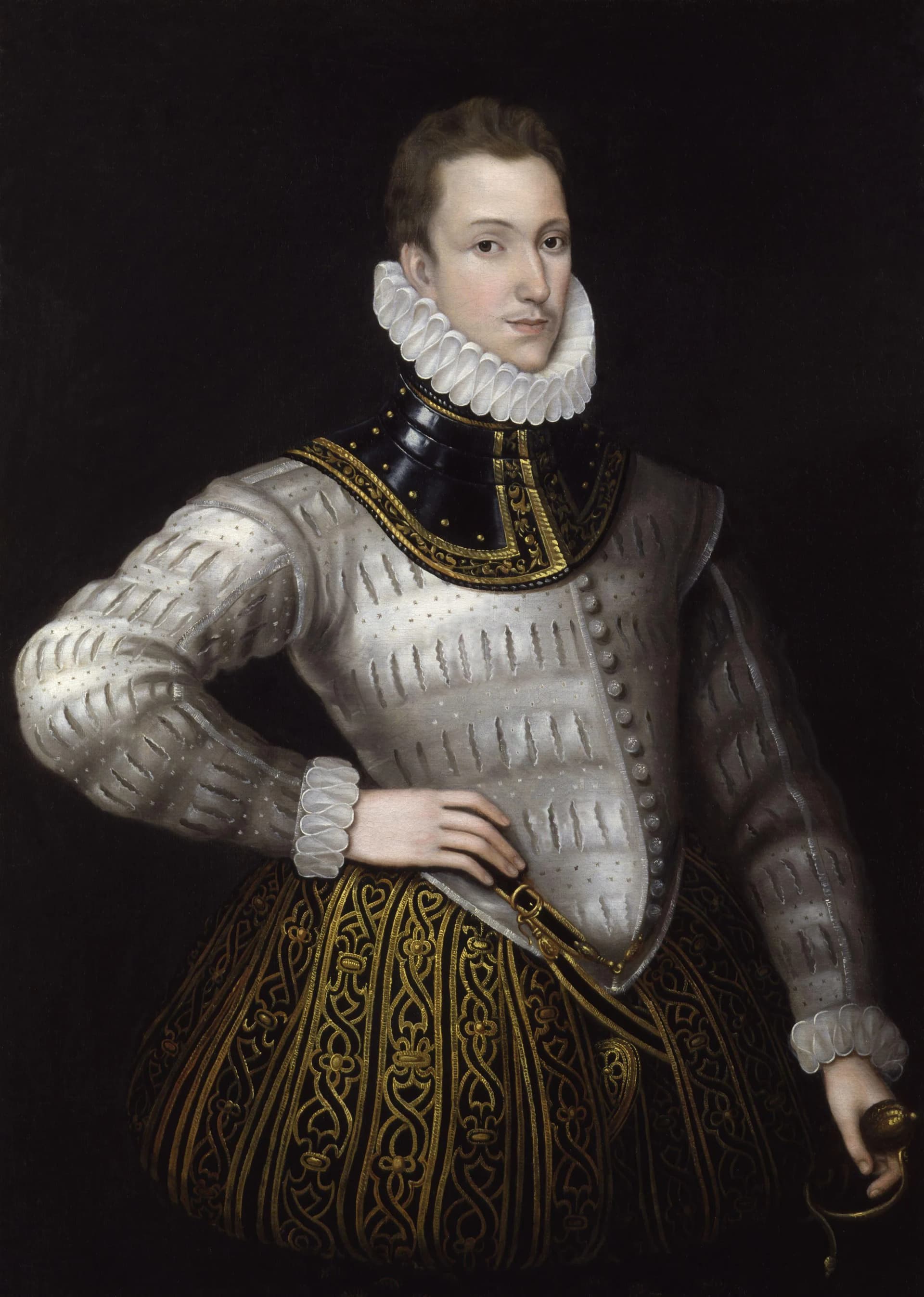
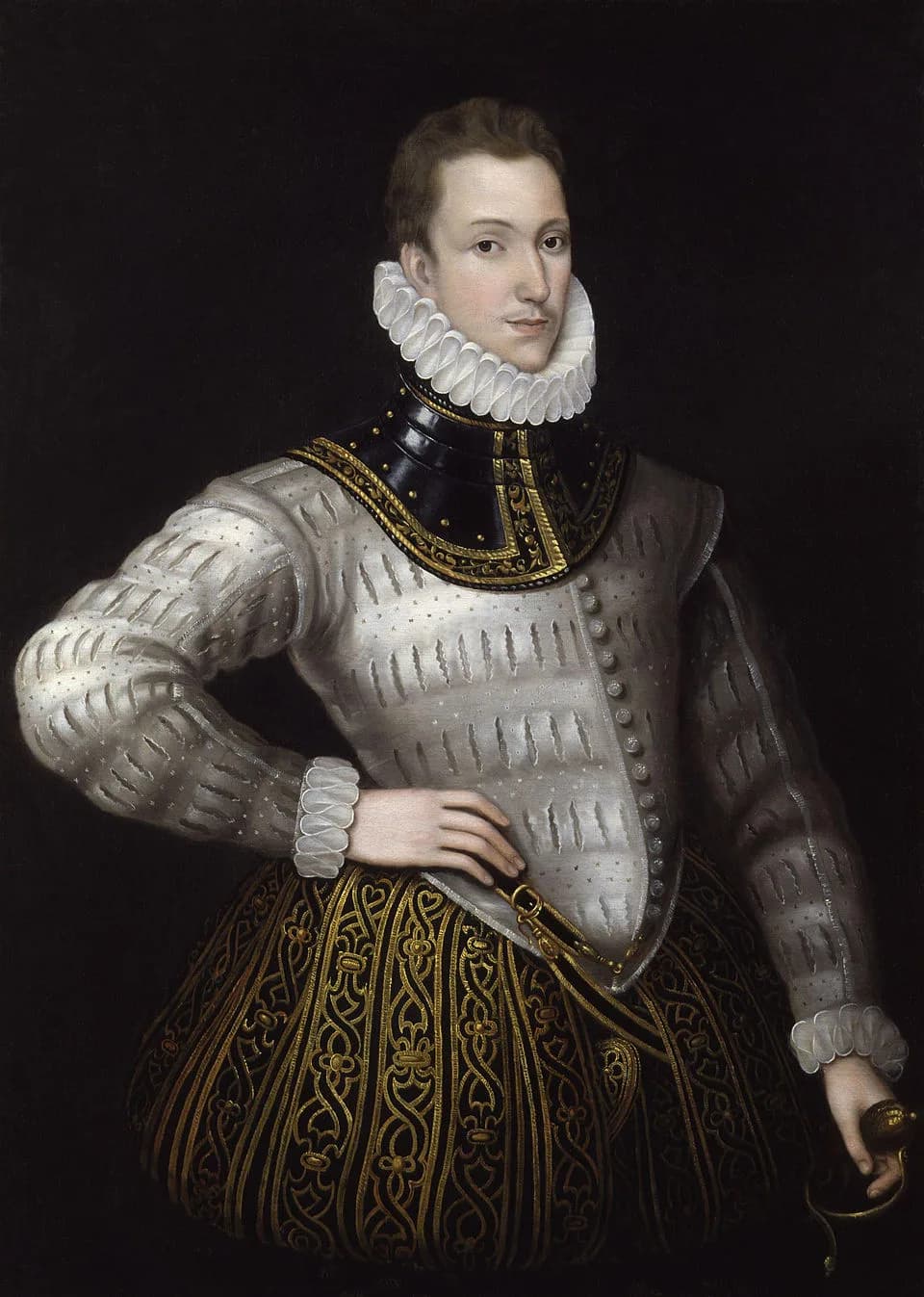
Philip Sidney (1554–1586) was United Kingdom best known for English poet, courtier, diplomat.
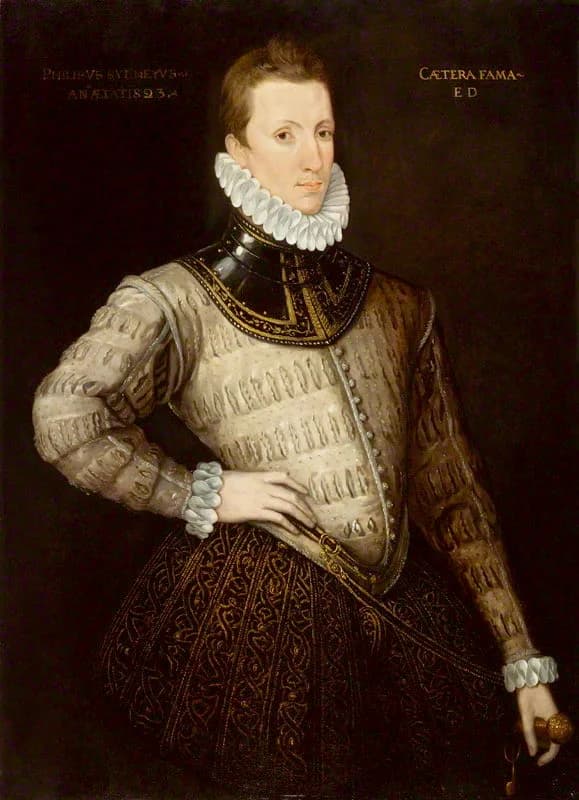
Sir Philip Sidney (December 10, 1554 – October 17, 1586) was an English poet, courtier, and diplomat. He is celebrated as one of the most prominent figures of the Elizabethan age, known for his seminal works like 'Astrophel and Stella' and 'Defence of Poesie'. Sidney's literary and public service contributions continue to be highly regarded.
Et liv i øyeblikk
Øyeblikkene som formet et liv
Kapittel
Livets kapitler
Kapittel 1 · 1554· Kapittel 1 av 6
Early Life and Origins
Born on December 10, 1554, in Penshurst, United Kingdom, Philip Sidney emerged from a distinguished family. His upbringing undoubtedly prepared him for a life of service and scholarly pursuit. This foundation nurtured the various roles he would later assume, including that of a scholar, a soldier, and a statesman.
Penshurst provided the setting for his formative years, shaping the individual who would become celebrated for his intellect and grace. The expectations of his noble lineage instilled in him a commitment to learning and public duty. This early environment cultivated his potential across multiple disciplines, evident in his later professional designations.
Kapittel 2· Kapittel 2 av 6
Career Beginnings
Sidney's entry into public life began within the intricate circles of the Elizabethan court. His natural intellect and charm quickly established him as a respected courtier. This position allowed him to observe and participate in the political workings of England.
His early years were marked by a period of developing his skills as a writer and diplomat. These experiences laid the groundwork for his later, more substantial contributions. He began to gain recognition not only for his courtly demeanor but also for his emerging literary talents.
Kapittel 3· Kapittel 3 av 6
Major Achievements and Career Highlights
Throughout his career, Sir Philip Sidney distinguished himself across several domains, earning recognition as a writer, military personnel, poet, politician, diplomat, and statesperson. His influence extended through various aspects of English public life. He became a trusted figure, engaging in important diplomatic missions.
His work as a diplomat involved representing England's interests abroad, a role requiring keen intelligence and persuasive communication. As a military officer, he served with dedication, a path that ultimately led to his untimely death. Sidney's multifaceted capabilities allowed him to move between the halls of power and the battlefields with equal commitment.
Kapittel 4· Kapittel 4 av 6
Notable Works or Contributions
Sir Philip Sidney's literary output solidified his place as a central figure in English Renaissance literature. Among his most celebrated creations is 'The Coventesse of Pembrokes Arcadia,' a pastoral romance that showcases his narrative skill and lyrical prose. This work demonstrates his mastery of storytelling.
His sonnet sequence, 'Astrophel and Stella,' remains a cornerstone of English love poetry, exploring themes of unrequited affection with profound emotional depth. In 'Defence of Poesie,' Sidney articulates a powerful argument for the value and moral purpose of poetry. These works, along with others like 'The Prose Works of Sir Philip Sidney, Volume 1,' continue to be studied for their artistic merit and historical significance.
Several of his notable poems illustrate his poetic brilliance. In "Sonnet VII: When Nature," he muses, "When Nature made her chief work, Stella's eyes, / In color black why wrapp'd she beams so bright? / Would she in beamy black, like painter wise, / Frame daintiest lustre, mix'd of shades and light?" Another, "Sonnet XVII: His Mother Dear Cupid," explores mythological themes: "His mother dear Cupid offended late, / Because that Mars grown slacker in her love, / With pricking shot he did not throughly more / To keep the pace of their first loving state." These excerpts reveal his gift for vivid imagery and thoughtful introspection.
Further examples of his poetic craft include "Sonnet XLI: Having This Day My Horse," where he recounts, "Having this day my horse, my hand, my lance / Guided so well that I obtain'd the prize, / Both by the judgment of the English eyes / And of some sent from that sweet enemy France." His observations extended to geopolitical matters, as seen in "Sonnet XXX: Whether the Turkish New Moon": "Whether the Turkish new moon minded be / To fill his horns this year on Christian coast; / How Poles' right king means, with leave of host, / To warm with ill-made fire cold Muscovy." Such lines underscore his breadth of interest.
Sidney's artistry in capturing universal human experiences is evident in "Come Sleep, O Sleep! The Certain Knot Of Peace": "Come, Sleep! O Sleep, the certain knot of peace, / The baiting-place of wit, the balm of woe, / The poor man's wealth, the prisoner's release, / Th' indifferent judge between the high and low." These verses showcase his capacity for eloquent and insightful expression, contributing to his lasting reputation as a master poet.
Kapittel 5· Kapittel 5 av 6
Later Years
Sir Philip Sidney's final years were marked by his dedicated service as a military officer. His life culminated in a military campaign in the Netherlands. It was during this service that he met his end, reflecting his commitment to his country.
He died on October 17, 1586, in Arnhem, Netherlands, from wounds sustained in battle. His death at a relatively young age was widely mourned. This tragic loss solidified his image as a heroic figure, a soldier-poet who gave his life for a cause.
Kapittel 6· Kapittel 6 av 6
Legacy and Impact
The legacy of Sir Philip Sidney continues to resonate centuries after his passing. He remains recognized as one of the most prominent figures of the Elizabethan age, influencing generations of writers and thinkers. His contributions helped shape the direction of English poetry and prose.
His works are still studied for their literary merit, their historical context, and their innovative use of language. Sidney's life exemplified the ideal of a Renaissance individual who excelled in both arts and action. His influence on literary style and the development of the English sonnet secured his lasting position in the pantheon of English letters.
Vanlige spørsmål
Vanlige spørsmål
Når døde Philip Sidney?
Philip Sidney døde 17. oktober 1586 i Arnhem, Netherlands, 31 år gammel.
Hvor ble Philip Sidney født?
Philip Sidney ble født i Penshurst, United Kingdom 10. desember 1554.
Hva er Philip Sidney mest kjent for?
Philip Sidney er mest kjent for English poet, courtier, diplomat.
Hvor gammel var Philip Sidney ved døden?
Philip Sidney var 31 år gammel ved dødsfallet.
Hvilken nasjonalitet hadde Philip Sidney?
Philip Sidney kom fra United Kingdom.
Tidslinje
Et liv i et øyekast
Fotogalleri
Et liv i bilder
Klikk på et hvilket som helst polaroidbilde for å forstørre · 24 fotografier
QR-kode
Del denne biografien
Skriv ut og del
Skann for å besøke denne biografisiden. Skriv ut for arrangementer, utstillinger eller undervisningsmateriell.