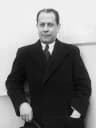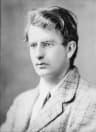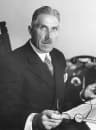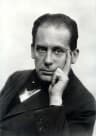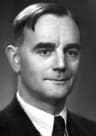
Født
February 17, 1888
Żory, Poland
Døde
August 17, 1969
Berkeley, United States
Kjent for
German-American physicist
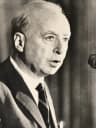
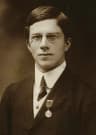
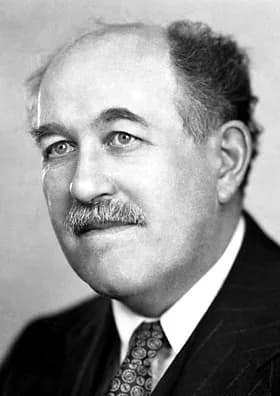
Otto Stern (1888–1969) was a German-American experimental physicist who developed molecular beam techniques and discovered the proton's magnetic moment. He received the 1943 Nobel Prize in Physics and holds the distinction of being the second most nominated person in Nobel Prize history. His experimental innovations became fundamental tools in modern atomic physics.
Kapittel
Livets kapitler
Kapittel 1 · 1888· Kapittel 1 av 6
Early Life and Origins
Otto Stern entered the world on February 17, 1888, in Żory, Poland, during a period when the region experienced significant political changes under different European powers. His early years coincided with major developments in physics, as scientists across Europe began exploring atomic structure and quantum mechanics. The intellectual climate of his formative years would prove crucial to his later scientific pursuits.
Growing up in this environment, Stern developed an interest in the fundamental questions about matter and energy that were captivating physicists of his generation. His educational path led him toward experimental physics, where he would eventually make his most significant contributions to science.
Kapittel 2· Kapittel 2 av 6
Career Beginnings
Stern's early career began as European physics underwent revolutionary changes with the emergence of quantum theory and atomic physics. He established himself in the German academic system, where he began developing the experimental techniques that would define his career. His initial work focused on understanding atomic and molecular behavior through direct experimental observation.
During these formative professional years, Stern began exploring molecular beam techniques, which would become his signature experimental approach. This period laid the groundwork for the discoveries that would eventually earn him international recognition and his Nobel Prize.
Kapittel 3 · 1943· Kapittel 3 av 6
Major Achievements and Career Highlights
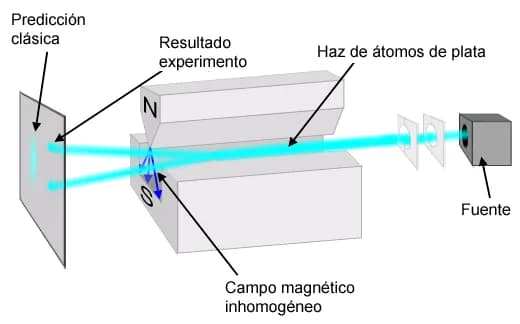
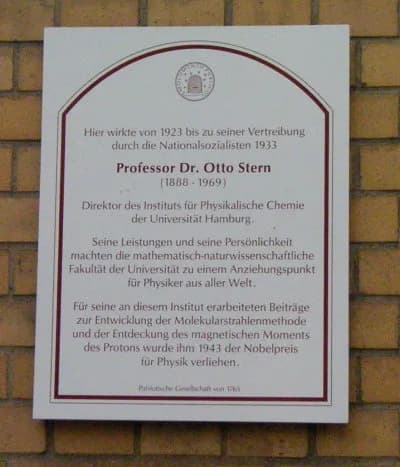
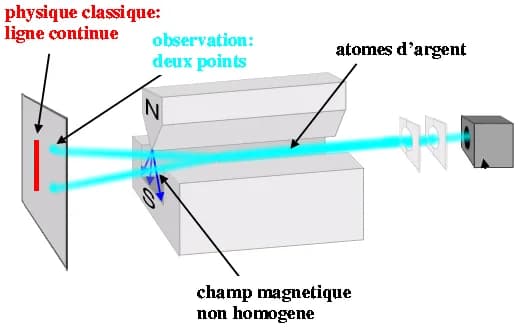
Stern's most celebrated achievement was his development of the molecular ray method, a technique that allowed precise measurement of atomic and molecular properties. This innovative approach enabled him to discover the magnetic moment of the proton, work that earned him the 1943 Nobel Prize in Physics. The Nobel Committee specifically recognized his "contribution to the development of the molecular ray method and his discovery of the magnetic moment of the proton."
Between 1925 and 1945, Stern received 82 Nobel Prize nominations, making him the second most nominated person in the prize's history. This recognition from the international scientific community reflected the broad impact of his experimental innovations. His molecular beam techniques became fundamental tools in atomic physics, enabling countless subsequent discoveries by other researchers.
The precision of his measurements and the elegance of his experimental designs set new standards for experimental physics. His work provided crucial experimental verification for quantum mechanical predictions about atomic structure and behavior.
Kapittel 4 · 1947· Kapittel 4 av 6
Notable Works and Contributions
Stern's scientific publications demonstrate the breadth of his experimental investigations. His 1947 paper "The Free Fall of Atoms and the Measurement of the Velocity Distribution in a Molecular Beam of Cesium Atoms" has been cited 64 times, reflecting its continued relevance to atomic physics research. This work exemplified his precise approach to measuring fundamental atomic properties.
Another significant contribution was his 1949 study "Change in Density of Potassium Chloride Crystals upon Irradiation with X-Rays," which received 51 citations and advanced understanding of radiation effects on crystalline materials. His paper "The Mean Free Paths of Cesium Atoms in Helium, Nitrogen, and Cesium Vapor" (1947) garnered 39 citations and contributed to kinetic theory understanding.
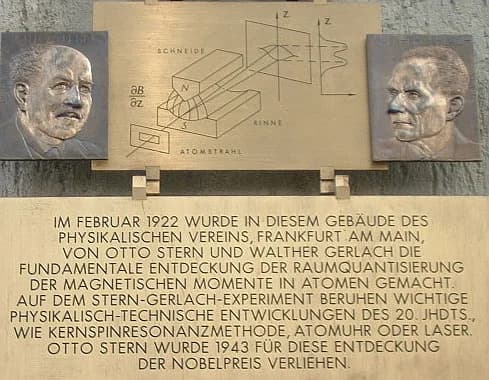
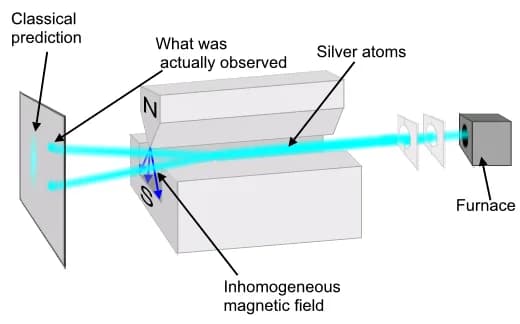
Throughout his career, Stern published 19 papers that achieved an h-index of 8, demonstrating sustained scientific impact. His work "A way towards the experimental examination of spatial quantisation in a magnetic field" and "On the Term k ln n ! in the Entropy" further showcased his range across different areas of physics and physical chemistry.
Kapittel 5· Kapittel 5 av 6
Later Years and Legacy
Stern's later career took him to the United States, where he continued his research and teaching at American institutions. His transition from German to American academic life reflected the broader migration of European scientists during the mid-20th century. He maintained his focus on experimental physics and molecular beam research throughout these years.
As both a physicist and university teacher, Stern influenced a new generation of American scientists. His dual expertise in physics and chemistry allowed him to bridge these disciplines and contribute to the emerging field of physical chemistry. He continued working until his final years, passing away on August 17, 1969, in Berkeley, United States.
Kapittel 6· Kapittel 6 av 6
Impact on Modern Physics
Otto Stern's molecular beam techniques became essential tools in atomic physics laboratories worldwide. His experimental methods enabled precise measurements that were previously impossible, opening new avenues for atomic and molecular research. The magnetic moment measurements he pioneered continue to be fundamental in modern physics.
His work provided crucial experimental foundations for quantum mechanics, helping to verify theoretical predictions about atomic structure. Modern techniques in atomic physics, from laser cooling to atomic clocks, trace their conceptual origins to Stern's innovative experimental approaches. His legacy lives on through the countless experiments that employ variations of his molecular beam methods.
Et liv i øyeblikk
Øyeblikkene som formet et liv
Vanlige spørsmål
Vanlige spørsmål
Når døde Otto Stern?
Otto Stern døde 17. august 1969 i Berkeley, United States, 81 år gammel.
Hvor ble Otto Stern født?
Otto Stern ble født i Żory, Poland 17. februar 1888.
Hva er Otto Stern mest kjent for?
Otto Stern er mest kjent for German-American physicist.
Hvor gammel var Otto Stern ved døden?
Otto Stern var 81 år gammel ved dødsfallet.
Hvilken nasjonalitet hadde Otto Stern?
Otto Stern kom fra Poland.
Tidslinje
Et liv i et øyekast
Fotogalleri
Et liv i bilder
Klikk på et hvilket som helst polaroidbilde for å forstørre · 39 fotografier
QR-kode
Del denne biografien
Skriv ut og del
Skann for å besøke denne biografisiden. Skriv ut for arrangementer, utstillinger eller undervisningsmateriell.