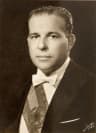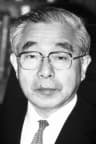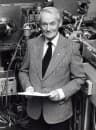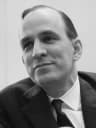
Født
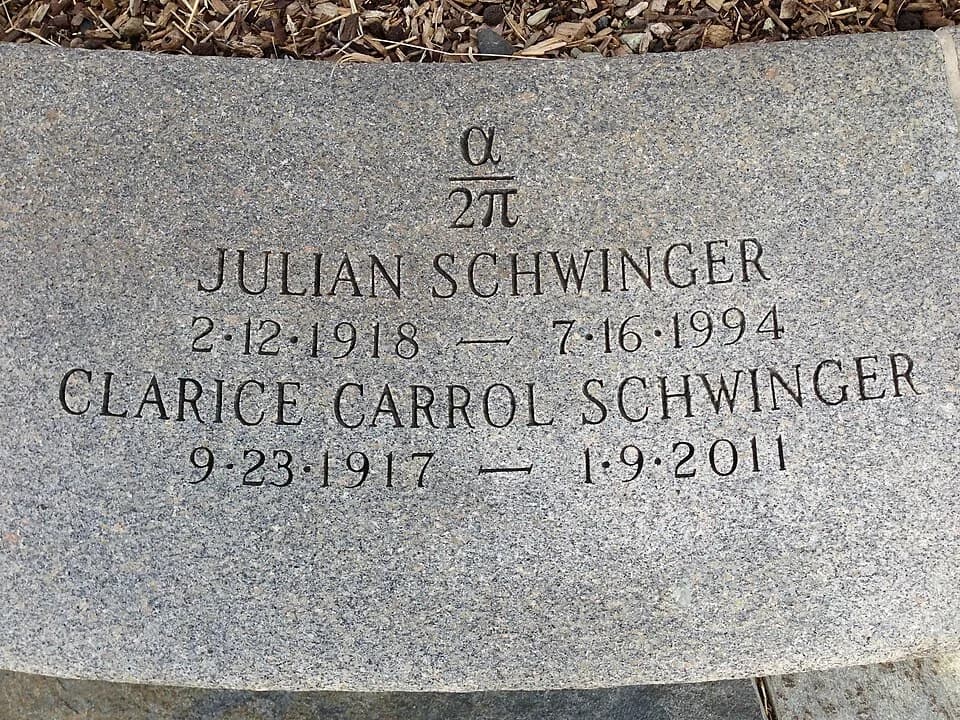
February 12, 1918
New York City, United States
Døde
July 16, 1994
Los Angeles, United States
Kjent for
American theoretical physicist
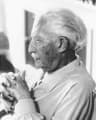
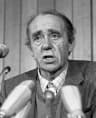
Julian Seymour Schwinger (1918–1994) was United States best known for American theoretical physicist.
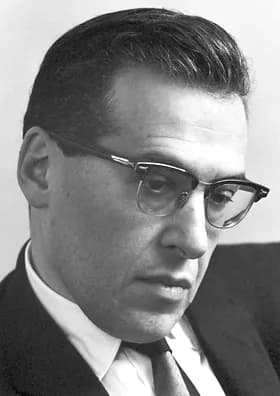
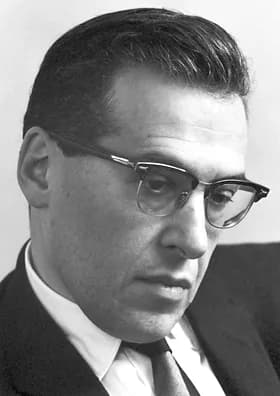
Julian Seymour Schwinger (February 12, 1918 – July 16, 1994) was an American theoretical physicist. He shared the 1965 Nobel Prize in Physics for his fundamental work in quantum electrodynamics, with deep consequences for elementary particle physics. His legacy lies in transforming our understanding of particle interactions.
Kapittel
Livets kapitler
Kapittel 1 · 1918· Kapittel 1 av 7
Early Life and Origins
Julian Seymour Schwinger began his life's journey in New York City, United States, where he was born on February 12, 1918. While specific details about his family background or his earliest educational experiences are not extensively provided, his formative years in a bustling urban environment undoubtedly coincided with a period of intense scientific and intellectual ferment worldwide. This early setting perhaps provided a rich backdrop for the development of the exceptional intellect that would later redefine quantum physics.
Kapittel 2· Kapittel 2 av 7
Career Beginnings
Schwinger embarked upon a distinguished professional career, establishing himself not only as a brilliant physicist but also as a mathematician and a dedicated university teacher. From the outset, his intellectual prowess was evident as he delved into the complex theoretical questions of the era. These early investigations and his role as an educator quickly cemented his reputation within the academic community, setting the stage for the revolutionary theories he would later propose.
Kapittel 3 · 1965· Kapittel 3 av 7
Major Achievements and Career Highlights
A pinnacle of Julian Seymour Schwinger's professional life was the conferment of the 1965 Nobel Prize in Physics, which he shared with Richard Feynman and Shin'ichirō Tomonaga. This prestigious award acknowledged their independent yet convergent fundamental work in quantum electrodynamics (QED). Their combined efforts provided a robust and precise theory explaining how light and matter interact at the quantum level, with consequences that deeply influenced the understanding of elementary particles.
Schwinger's individual contributions to QED were exceptionally significant, notably his development of a relativistically invariant perturbation theory. This sophisticated mathematical apparatus allowed physicists to calculate interactions between particles at high speeds with unprecedented accuracy. Furthermore, he successfully renormalized QED to one loop order, a crucial innovation that systematically removed infinities from the theory and enabled predictions that accurately matched experimental observations, thereby refining quantum field theory.
Kapittel 4· Kapittel 4 av 7
Personal Life
While Julian Seymour Schwinger's professional achievements and scientific contributions were globally recognized and celebrated, specific information concerning his personal life, including family details, relationships, or non-academic interests, is not readily available within the provided biographical data. His profound dedication to his work as a theoretical physicist and educator undeniably constituted a major focus of his remarkable life.
Kapittel 5· Kapittel 5 av 7
Notable Works or Contributions
Julian Seymour Schwinger was an extraordinarily prolific non-fiction writer, consistently contributing to the scientific discourse through a vast array of publications that shaped and documented his theories. His significant bibliography includes seminal works such as "Quantum electrodynamics," which became a foundational text in the field, alongside "On angular momentum" and "Quantum dynamics." These books articulated his complex ideas and mathematical formalisms for a wider scientific audience.
Beyond these core texts, Schwinger also authored specialized volumes like "Nuclear physics" and "Kvantovai͡a kinematika i dinamika," showcasing the broad spectrum of his theoretical interests and research. His keen investigations into electromagnetic phenomena are evident in works such as "Electromagnetic Radiation: Variational Methods," "Waveguides and Accelerators," "Electromagnetic radiation," and "Discontinuities in waveguides." He further contributed to the broader theoretical landscape with "Themes in contemporary physics." His academic publications notably include "Multipoles" (2019, 4 citations) and "Einsteins Erbe : die Einheit von Raum und Zeit" (1987, 2 citations), illustrating a career marked by continuous intellectual output.
Kapittel 6 · 1994· Kapittel 6 av 7
Later Years
Throughout his extensive career, Julian Seymour Schwinger held esteemed positions as a physics professor at several prominent universities, profoundly influencing and mentoring generations of aspiring scientists. He continued to dedicate himself to his work as a theoretical physicist and non-fiction writer, actively participating in and shaping the scientific community through his final years. Schwinger's distinguished life came to an end on July 16, 1994, in Los Angeles, United States, where he passed away at the age of 76.
Kapittel 7· Kapittel 7 av 7
Legacy and Impact
Julian Seymour Schwinger's legacy is immutable, deeply embedded in the very foundations of modern theoretical physics, primarily through his transformative work in quantum electrodynamics. His innovative development of relativistically invariant perturbation theory and his essential contributions to the renormalization process provided indispensable theoretical tools that remain central to understanding elementary particles. He not only advanced the mathematical rigor of quantum field theory but also offered profound conceptual insights that continue to inspire and guide research into the fundamental nature of the universe.
Et liv i øyeblikk
Øyeblikkene som formet et liv
Vanlige spørsmål
Vanlige spørsmål
Når døde Julian Seymour Schwinger?
Julian Seymour Schwinger døde 16. juli 1994 i Los Angeles, United States, 76 år gammel.
Hvor ble Julian Seymour Schwinger født?
Julian Seymour Schwinger ble født i New York City, United States 12. februar 1918.
Hva er Julian Seymour Schwinger mest kjent for?
Julian Seymour Schwinger er mest kjent for American theoretical physicist.
Hvor gammel var Julian Seymour Schwinger ved døden?
Julian Seymour Schwinger var 76 år gammel ved dødsfallet.
Hvilken nasjonalitet hadde Julian Seymour Schwinger?
Julian Seymour Schwinger kom fra United States.
Tidslinje
Et liv i et øyekast
Fotogalleri
Et liv i bilder
Klikk på et hvilket som helst polaroidbilde for å forstørre · 6 fotografier
QR-kode
Del denne biografien
Skriv ut og del
Skann for å besøke denne biografisiden. Skriv ut for arrangementer, utstillinger eller undervisningsmateriell.