Født
October 29, 1897
Rheydt, Germany
Døde
May 1, 1945
Berlin, Margraviate of Brandenburg
Kjent for
Nazi politician and Propaganda Minister
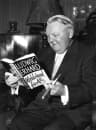
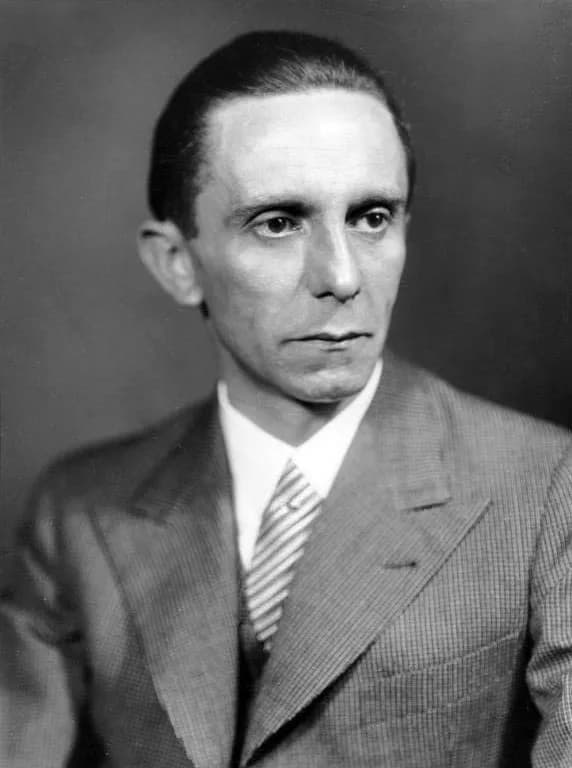
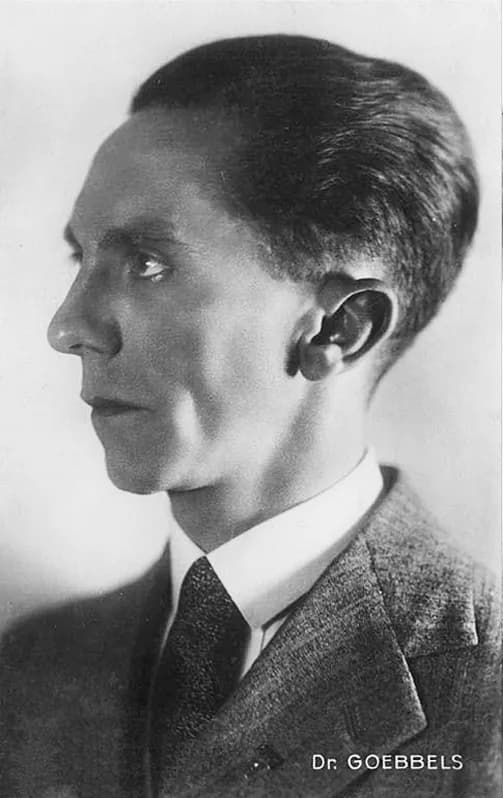
Joseph Goebbels (1897–1945) was Germany best known for Nazi politician and Propaganda Minister.
Joseph Goebbels (October 29, 1897 – May 1, 1945) was a German politician and propagandist from Rheydt, Germany. As Reich Minister of Propaganda, he was a chief architect of Nazi ideology and a Holocaust perpetrator. His extreme antisemitism and demagoguery contributed to immense historical suffering.
Kapittel
Livets kapitler
Kapittel 1 · 1897· Kapittel 1 av 6
Early Life and Origins
Born Paul Joseph Goebbels in the town of Rheydt, Germany, on October 29, 1897, he emerged from a modest, yet deeply devout, Catholic working-class family, an upbringing that undeniably shaped his early understanding of societal structures and communal identity. His formative years were notably characterized by a diligent and ambitious pursuit of education, which saw him attend a succession of German universities across the nation, an unusual path for someone from his background. Goebbels dedicated his intensive academic focus to philology and art history, ultimately achieving a doctorate from the prestigious University of Heidelberg in 1921, a significant intellectual accomplishment that clearly demonstrated his considerable intellectual aptitude and a capacity for rigorous thought, albeit a capacity that would later be tragically and disastrously redirected towards radical political ideologies.
Kapittel 2 · 1924· Kapittel 2 av 6
Career Beginnings
Initially, Goebbels found himself drawn to the professional spheres of writing and journalism, endeavors that aligned seamlessly with his inherent intellectual curiosity and a burgeoning desire to communicate and influence. However, his nascent intellectual inclinations and artistic aspirations soon dramatically gave way to a burgeoning, fervent, and ultimately consuming interest in radical right-wing politics, fundamentally altering his professional and personal trajectory. He became actively and enthusiastically involved with the nascent Nazi Party in 1924, where he very quickly distinguished himself not only through his remarkable organizational abilities but also, crucially, through his unique capacity to articulate the party's burgeoning, often inflammatory, ideology with both undeniable force and chilling clarity. His unmistakable talent for persuasive communication and unwavering dedication did not escape the keen attention of Adolf Hitler, who, recognizing Goebbels' potential as a powerful voice, appointed him Gauleiter of Berlin in 1926, a strategically vital leadership position that allowed him to exert profound and consolidating influence within the party's central command and, more broadly, among the often-unsettled populace of the German capital.
Kapittel 3 · 1933· Kapittel 3 av 6
Major Achievements and Career Highlights
Serving as the Reich Minister of Propaganda from 1933 until his final days in 1945, Joseph Goebbels meticulously constructed, expanded, and managed the vast, intricate, and deeply manipulative propaganda machinery of the Nazi regime, essentially establishing and controlling the entire information landscape of an entire nation. His primary "achievement" in this role was the unparalleled and total control he systematically exerted over German public opinion, a chilling feat accomplished by meticulously crafting and ceaselessly disseminating Nazi ideology to secure widespread and fervent support for Adolf Hitler's increasingly extreme and aggressive policies. Goebbels was profoundly renowned for his exceptional public speaking abilities, consistently utilizing his potent rhetorical skills and charismatic, albeit deeply deceptive, presence to effectively rally enormous crowds, to stir deep emotions, and to consolidate unwavering commitment to the party's extremist agenda, proving a master of mass persuasion. His status as one of Adolf Hitler's closest and most devoted followers cemented his pivotal role as a crucial architect and implementer of the regime's communication strategies, ensuring the Führer's totalitarian vision permeated every aspect of public and private life.
His systematic approach to information control extended to the complete synchronization, or "Gleichschaltung," of all forms of media within Germany, a comprehensive process that ruthlessly eliminated any vestiges of independent thought, critical analysis, or dissenting voice. This all-encompassing control encompassed pervasive radio broadcasts, which became a vital tool for direct address; influential cinematic productions, carefully crafted to entertain and indoctrinate; widely circulated newspaper publications, devoid of genuine journalistic integrity; and various artistic expressions, all meticulously repurposed to serve the singular, monolithic agenda of the state. Through these diverse and meticulously controlled channels, Goebbels relentlessly promoted the Nazi Party's singular, often fabricated, narrative, efficiently stifled any form of internal dissent through intimidation and censorship, and relentlessly demonized groups designated as enemies of the state, particularly Jewish people, cementing them as scapegoats. These calculated and pervasive efforts were instrumental in solidifying the Nazi regime's tyrannical power base and in tragically mobilizing the German populace to support its aggressive expansionist foreign policies and, ultimately, its genocidal domestic objectives.
Kapittel 4· Kapittel 4 av 6
Notable Works or Contributions
Joseph Goebbels' defining "contributions" were profoundly rooted in his sophisticated, yet utterly ruthless and morally devoid, application of propaganda to manipulate public consciousness and establish a totalitarian grip on German society. He masterfully honed the dark art of demagoguery to an unprecedented degree, skillfully deploying potent emotional appeals to bypass reason, grotesquely oversimplified explanations of complex societal issues to create false certainties, and the deliberate construction of easily identifiable scapegoats to deflect blame and consolidate public anger, all designed to sway the opinions and actions of the impressionable masses. His deeply ingrained and extreme antisemitism, a core tenet of his own worldview, was not merely a personal conviction but a central, virulent, and constantly reinforced component of his public persona and every facet of his political messaging, directly and inexorably fueling the party's horrific and escalating racial policies against Jewish people.
Under his direct and unyielding leadership, the propaganda ministry transformed into a prolific generator of venomous anti-Jewish rhetoric, systematically and psychologically preparing the populace for widespread persecution, discrimination, and ultimately, unimaginable violence. Goebbels vigorously championed increasingly harsh discriminatory measures against Jewish people and other designated groups, actively playing a critical and direct role in facilitating their mass extermination during the Holocaust, a crime against humanity. The abhorrent actions he personally orchestrated and oversaw, such as the organization of nationwide boycotts against Jewish businesses, the infamous and brutal Kristallnacht pogrom of November 1938, and the continuous, pervasive vilification of Jewish individuals in every available form of media, directly and unequivocally paved the way for the regime's genocidal agenda. These "contributions" represent an unparalleled and devastating impact on human history, serving as a stark and chilling example of propaganda's catastrophic and destructive capabilities when wielded without ethical restraint, resulting in immeasurable suffering and loss.
Kapittel 5 · 1945· Kapittel 5 av 6
Later Years
As the tide of World War II decisively turned against Germany, with Allied forces closing in from the west and formidable Soviet forces advancing inexorably towards the heart of Berlin from the east, Joseph Goebbels maintained an unwavering, almost fanatical loyalty to Adolf Hitler, remaining steadfast in his commitment to the bitter and inevitable end. He distinguished himself as one of the very few high-ranking Nazi officials who chose to remain with Hitler in the subterranean Führerbunker, enduring the intense and chaotic final days of the conflict as the city crumbled under relentless bombardment around them. Following the suicide of Adolf Hitler on April 30, 1945, Goebbels controversially and briefly assumed the ceremonial role of Chancellor of Germany, a position he grimly held for a mere single day, a symbolic gesture signifying the utter collapse of the regime he had served so devotedly.
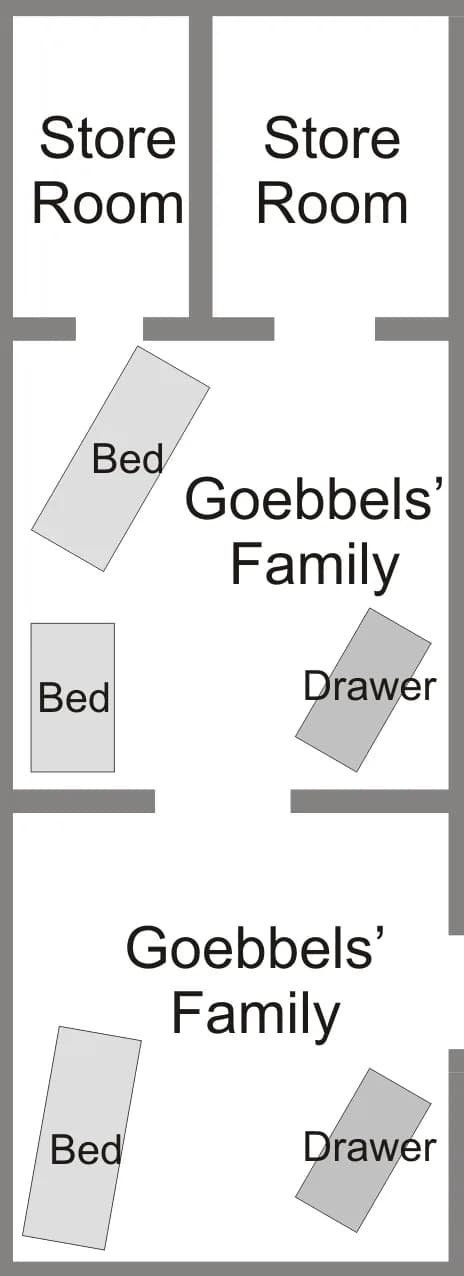
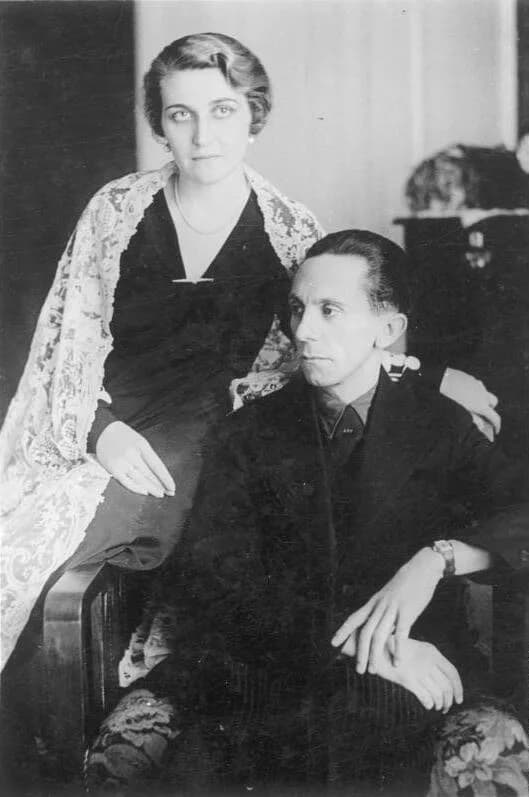
On May 1, 1945, amidst the ruins of the besieged city of Berlin, within the historical Margraviate of Brandenburg, Joseph Goebbels and his wife, Magda, tragically and deliberately took their own lives by cyanide poisoning. In a profoundly disturbing and horrific act preceding their own suicides, they administered poison to their six young children, ensuring their deaths in a bunker garden. This catastrophic sequence of events brought a chilling and definitive end to his life, marking the final, horrifying chapter of his deeply entrenched and destructive involvement in the Nazi regime's campaign of terror, manipulation, and systematic extermination, leaving behind a legacy of unparalleled human tragedy.
Kapittel 6· Kapittel 6 av 6
Legacy and Impact
The legacy of Joseph Goebbels is inextricably and chillingly intertwined with the unparalleled atrocities perpetrated by the Nazi regime and the systematic genocide of the Holocaust, marking him as a central figure in one of humanity's darkest chapters. He is universally remembered by historians and scholars as arguably the most effective and insidious master of propaganda in modern history, whose meticulously crafted and ruthlessly implemented methods chillingly demonstrated the terrifying potential of mass communication to manipulate entire populations, to incite virulent hatred against minorities, and to facilitate unspeakable acts of barbarism and violence. His systematic and total control over media for political ends and the pervasive dissemination of extreme ideologies continues to be rigorously studied by historians and social scientists alike, serving as a permanent and stark warning about the profound dangers of unchecked governmental power, pervasive psychological manipulation, and the deliberate weaponization of propaganda against democratic values.
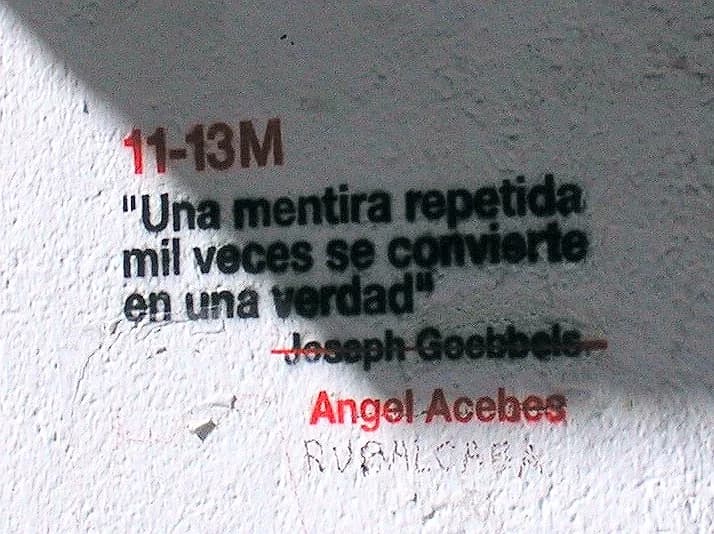
His influence on the development and critical understanding of modern propaganda techniques remains undeniably significant, albeit situated exclusively within a profoundly negative and cautionary historical context, offering lessons on how to counter such tactics. The sinister principles he so effectively employed, such as the strategic propagation of the "big lie" and the relentless technique of constant repetition to embed falsehoods and biases into public consciousness, have been meticulously analyzed by scholars seeking to comprehend the insidious mechanics of totalitarian control and widespread psychological manipulation. Joseph Goebbels' name, therefore, endures as a chilling synonym for calculated deceit, state-sponsored hatred, and the direct perpetration of one of humanity's darkest and most tragic chapters, standing as a perpetual and vital historical lesson on the destructive and enduring consequences of extreme antisemitism and insidious demagoguery that must never be forgotten or repeated.
Et liv i øyeblikk
Øyeblikkene som formet et liv
Vanlige spørsmål
Vanlige spørsmål
Når døde Joseph Goebbels?
Joseph Goebbels døde 1. mai 1945 i Berlin, Margraviate of Brandenburg, 47 år gammel.
Hvor ble Joseph Goebbels født?
Joseph Goebbels ble født i Rheydt, Germany 29. oktober 1897.
Hva er Joseph Goebbels mest kjent for?
Joseph Goebbels er mest kjent for Nazi politician and Propaganda Minister.
Hvor gammel var Joseph Goebbels ved døden?
Joseph Goebbels var 47 år gammel ved dødsfallet.
Hvilken nasjonalitet hadde Joseph Goebbels?
Joseph Goebbels kom fra Germany.
Tidslinje
Et liv i et øyekast
Fotogalleri
Et liv i bilder
Klikk på et hvilket som helst polaroidbilde for å forstørre · 25 fotografier
QR-kode
Del denne biografien
Skriv ut og del
Skann for å besøke denne biografisiden. Skriv ut for arrangementer, utstillinger eller undervisningsmateriell.