जन्म
April 26, 1575
Florence, Kingdom of Italy
निधन
July 3, 1642
Cologne, Germany
को लागि चिनिनुहुन्थ्यो
Queen of France, second wife of King Henry IV of France
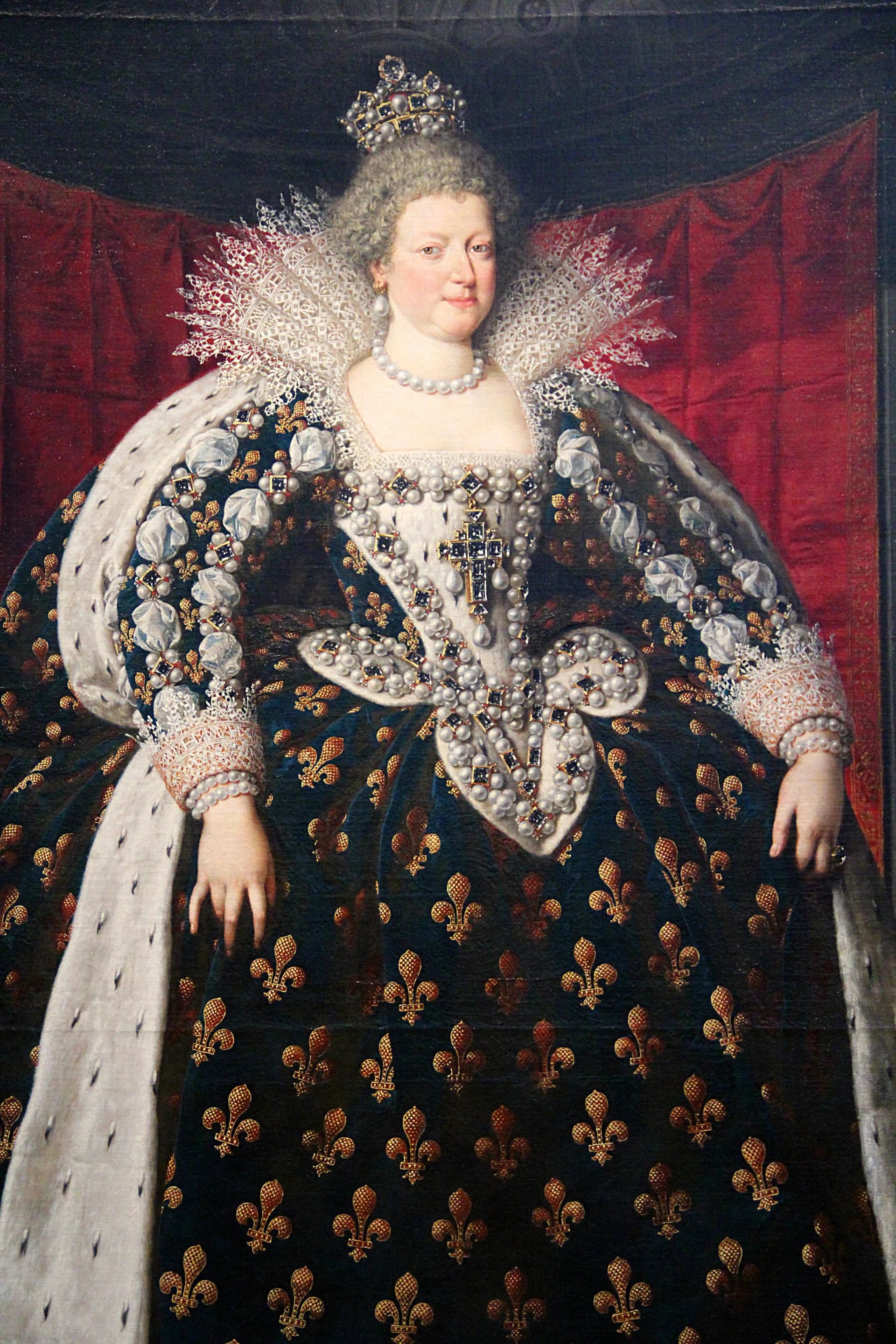
Marie de' Medici (1575–1642) was Kingdom of Italy best known for Queen of France, second wife of King Henry IV of France.
Marie de' Medici (April 26, 1575 – July 3, 1642) was a politician, salonnière, and art collector from Florence, Kingdom of Italy. She served as Queen of France and later as regent during her son Louis XIII's minority. Her influence shaped early 17th-century French court and culture.
अध्याय
जीवनका अध्यायहरू
अध्याय 1 · 1575· कुल 8 मध्ये अध्याय 1
Remembering Marie de' Medici
Marie de' Medici (April 26, 1575 – July 3, 1642) was a compelling figure in early modern European history. Known as a politician, salonnière, and art collector, she left a lasting mark on the French court and cultural landscape. She served primarily as Queen of France and Navarre, and later as a powerful regent during a crucial period for the monarchy.
Her life journey from Florence to the heart of French power illustrates the significant influence she wielded. Marie's roles encompassed royal duties, political governance, and profound cultural contributions. Her story highlights a life spent at the intersection of power, art, and dynastic ambition.
अध्याय 2 · 1575· कुल 8 मध्ये अध्याय 2
Early Life and Origins
Born on April 26, 1575, Marie de' Medici entered the world in Florence, then the capital of the Grand Duchy of Tuscany within the Kingdom of Italy. Her birth into the illustrious Medici family, one of Europe's wealthiest and most powerful dynasties, provided her with an upbringing steeped in privilege. This Florentine lineage connected her to a long tradition of political astuteness and extensive art patronage, which she would later embody.
The Medici family was renowned for its support of artists, architects, and scholars across generations. Marie inherited this deep appreciation for culture and the arts from her formidable ancestors. This early exposure to high culture and the world of power in Florence laid essential groundwork for her future roles as a Queen and a patron in France.
अध्याय 3· कुल 8 मध्ये अध्याय 3
Career Beginnings
Marie de' Medici's public career began definitively with her marriage to King Henry IV, making her his second wife. This union elevated her to the prestigious position of Queen of France and Navarre, placing her directly at the heart of French political and social life. Her arrival in France as Queen was a momentous occasion, solidifying a powerful alliance between the French crown and the wealthy Medici family of Italy.
As Queen, her primary dynastic duty was to provide an heir to the throne, which she fulfilled with the birth of her son, Louis XIII. Beyond this vital role, her position as Queen Consort afforded her considerable influence within the royal court. This period established her presence and prepared her for the significant political responsibilities she would undertake in the future.
अध्याय 4 · 1610· कुल 8 मध्ये अध्याय 4
Major Achievements and Career Highlights
One of Marie de' Medici's most significant achievements was her service as regent of France. Following the assassination of King Henry IV in 1610, she stepped into this powerful role to govern the kingdom during the minority of her young son, Louis XIII. Her regency officially commenced in 1610, requiring her to navigate the complex and often treacherous political landscape of France.
Her mandate as regent legally expired in 1614 when Louis XIII reached the age of majority. However, Marie de' Medici refused to resign from her position, effectively maintaining control over the government for several more years. She continued to serve as regent until she was eventually removed by a coup in 1617, highlighting her determination to retain power.
Beyond her direct political governance, Marie was an active salonnière and an avid art collector. She cultivated a vibrant court culture, regularly hosting intellectual and artistic gatherings that fostered creativity and discussion among leading minds. Her passion for collecting art led to the acquisition of numerous works, significantly enriching the royal collections and influencing the artistic trends of her era.
अध्याय 5· कुल 8 मध्ये अध्याय 5
Personal Life
Marie de' Medici's personal life was inextricably linked with her public duties as a royal figure. Her marriage to King Henry IV was not only a political alliance but also placed her at the center of the French royal family. Through this union, she became the mother of Louis XIII, who would inherit the French throne.
Her dedication to the arts extended into her personal interests and defined her as a patron of considerable taste. She brought a distinctly Italianate aesthetic to the French court, evident in her personal collections and the cultural environment she fostered. This blend of formidable political power and refined cultural appreciation characterized her life at court.
अध्याय 6 · 1610· कुल 8 मध्ये अध्याय 6
Notable Works or Contributions
While Marie de' Medici was not an artist herself, her contributions were profound in both the political and cultural spheres. As a politician, her regency from 1610 to 1617 undeniably shaped the direction of French policy during a crucial period of transition. Her decisions during this time had lasting implications for the French monarchy and its international relations.
Culturally, her role as an extensive art collector and influential salonnière was a significant contribution to France. She supported numerous artists and fostered an environment of artistic patronage at the French court. The grand cultural initiatives she oversaw left a noticeable imprint on the artistic and architectural styles prevalent in early 17th-century France.
अध्याय 7 · 1617· कुल 8 मध्ये अध्याय 7
Later Years
Marie de' Medici's powerful regency concluded dramatically when she was removed from power by a coup in 1617. This event marked a significant turning point in her life, leading to periods of political struggle and eventual exile. Despite her continued attempts to regain influence, her direct involvement in French governance significantly diminished after this point.
She spent her final years away from the central stage of French power. Marie de' Medici passed away on July 3, 1642, in Cologne, Germany, far from the French court she once commanded. Her death in exile symbolized the turbulent and often challenging nature of her later life, contrasting sharply with her earlier powerful position as Queen and regent.
अध्याय 8· कुल 8 मध्ये अध्याय 8
Legacy and Impact
The legacy of Marie de' Medici is multifaceted, reflecting her dynamic roles as Queen, regent, politician, and patron of the arts. She is remembered for her crucial seven-year regency, which provided stability for France after the assassination of Henry IV. Her political actions, while sometimes controversial, were central to the early reign of Louis XIII.
Her lasting impact is also evident in her significant contributions to French art and culture. As an influential salonnière and art collector, she introduced Italian artistic sensibilities to France, enriching the royal court and fostering a vibrant period of artistic patronage. Her name remains associated with the grand artistic flourishing of her era and the complex political landscape of 17th-century France.
जीवनका क्षणहरू
जीवनलाई आकार दिने क्षणहरू
प्रायः सोधिने प्रश्नहरू
बारम्बार सोधिएका प्रश्नहरू
Marie de' Medici कहिले बित्नुभयो?
Marie de' Medici १६४२ जुलाई ३ मा Cologne, Germany मा बित्नुभयो, 67 वर्षको उमेरमा।
Marie de' Medici कहाँ जन्मनुभयो?
Marie de' Medici Florence, Kingdom of Italy मा १५७५ अप्रिल २६ मा जन्मनुभयो।
Marie de' Medici सबैभन्दा बढी केका लागि चिनिनुहुन्छ?
Marie de' Medici Queen of France, second wife of King Henry IV of France का लागि सबैभन्दा बढी चिनिनुहुन्छ।
मृत्युको समयमा Marie de' Medici को उमेर कति थियो?
मृत्युको समयमा Marie de' Medici को उमेर 67 वर्ष थियो।
Marie de' Medici को राष्ट्रियता के थियो?
Marie de' Medici Kingdom of Italy बाट हुनुहुन्थ्यो।
समयरेखा
जीवनको झलक
तस्बिर ग्यालरी
तस्बिरहरूमा जीवन
कुनै पनि पोलारोइड विस्तार गर्न क्लिक गर्नुहोस् · 50 तस्बिरहरू
क्यूआर कोड
यो जीवनी साझा गर्नुहोस्
प्रिन्ट गर्नुहोस् र सेयर गर्नुहोस्
यो जीवनी पृष्ठ हेर्न स्क्यान गर्नुहोस्। कार्यक्रम, प्रदर्शन, वा शैक्षिक सामग्रीका लागि प्रिन्ट गर्नुहोस्।