जन्म
March 18, 1936
Johannesburg, South Africa
निधन
November 11, 2021
Cape Town, South Africa
को लागि चिनिनुहुन्थ्यो
7th state president of South Africa from 1989 to 1994
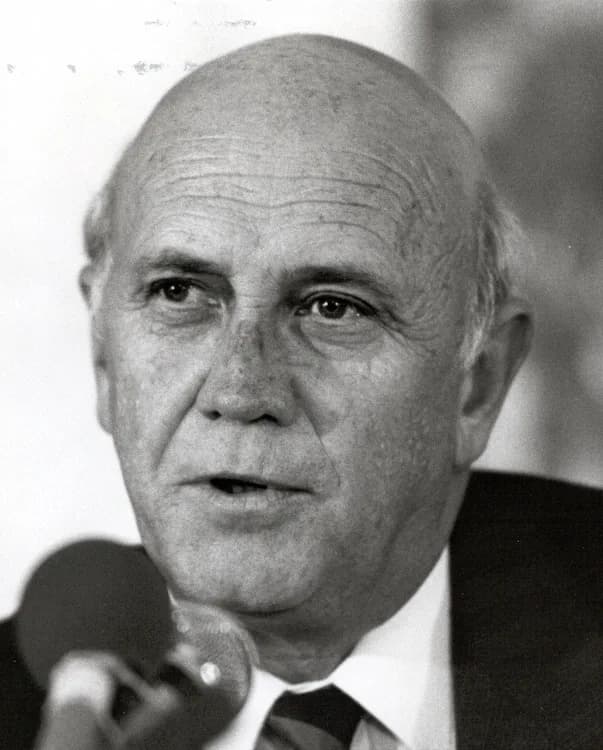
F. W. de Klerk (1936–2021) was South Africa best known for 7th state president of South Africa from 1989 to 1994.
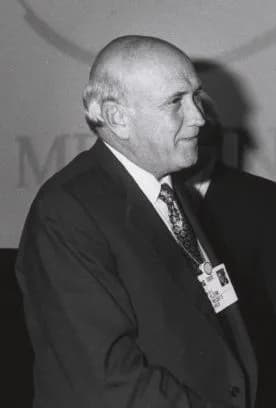
F. W. de Klerk (March 18, 1936 – November 11, 2021) was a South African lawyer and politician. He served as the last state president under white-minority rule, dismantling apartheid and introducing universal suffrage. His actions were central to South Africa's democratic transition.
अध्याय
जीवनका अध्यायहरू
अध्याय 1 · 1936· कुल 6 मध्ये अध्याय 1
Early Life and Origins
Born in Johannesburg, South Africa, on March 18, 1936, Frederik Willem de Klerk's early years unfolded within the nation's prevailing social context. Although specific details of his family and upbringing are not extensively provided, his trajectory led him to pursue a career in law. This educational background in legal studies undoubtedly equipped him with the analytical skills necessary for a life in public service and governance.
अध्याय 2· कुल 6 मध्ये अध्याय 2
Career Beginnings
De Klerk initially established himself as a lawyer, a profession requiring precision and a deep understanding of legal frameworks. His entry into politics saw him serving as a minister in various capacities within the South African government. These initial roles allowed him to gain extensive administrative experience and an understanding of the country's political structures, setting the stage for his eventual national leadership.
अध्याय 3 · 1989· कुल 6 मध्ये अध्याय 3
Major Achievements and Career Highlights
In 1989, F. W. de Klerk ascended to the presidency, becoming South Africa's final state president from the era of white-minority rule. His presidency, spanning from 1989 to 1994, was defined by his bold initiatives to dismantle the apartheid system. Under his administration, his government introduced universal suffrage, a crucial reform that extended voting rights to all citizens, irrespective of race.
These actions effectively ended decades of institutionalized racial segregation and discrimination within the country. De Klerk played a central role in the negotiations that paved the way for South Africa's first multiracial democratic elections in 1994. His commitment to these changes positioned him as a key figure in the nation's peaceful political transition.
अध्याय 4· कुल 6 मध्ये अध्याय 4
Notable Contributions
De Klerk's most significant contributions were his decisive political actions and the legislative reforms implemented during his presidential term. He systematically worked to undo the apartheid policies that had long defined South Africa's social order. This process included the release of political prisoners and initiating open discussions with previously banned political organizations.
His government's efforts directly led to the establishment of a non-racial democracy, enabling all South Africans to participate fully in their nation's governance. These policy shifts fundamentally reshaped the country's social and political foundations. They represented a clear and deliberate move away from past discriminatory practices, forging a new direction for the nation.
अध्याय 5 · 1994· कुल 6 मध्ये अध्याय 5
Later Years
Following the historic 1994 elections, F. W. de Klerk continued to contribute to his country's leadership as deputy president. He served in this role alongside Thabo Mbeki under President Nelson Mandela from 1994 to 1996. De Klerk also maintained his leadership of the National Party until 1997, adapting its role within the emerging democratic dispensation.
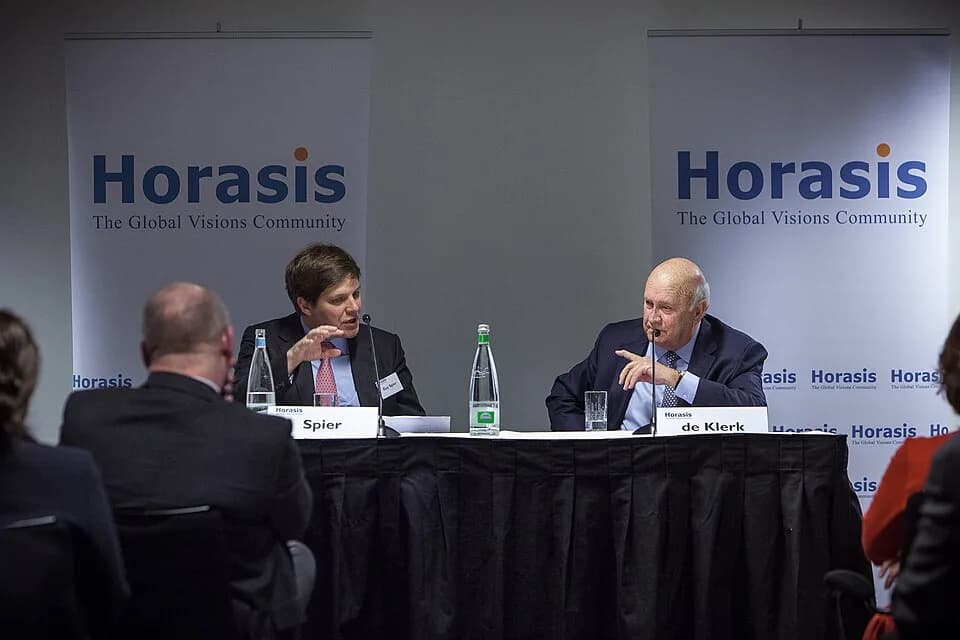
F. W. de Klerk passed away on November 11, 2021, in Cape Town, South Africa, at the age of 85. In his later years, he often reflected on his role in South Africa's history and engaged in international discussions concerning reconciliation and the principles of democratic governance.
अध्याय 6· कुल 6 मध्ये अध्याय 6
Legacy and Impact
The legacy of F. W. de Klerk is closely tied to South Africa's complex journey from apartheid to democracy. As the last head of state from the era of white-minority rule, he made the consequential decision to dismantle the very system he had previously administered. His actions were instrumental in introducing universal suffrage and clearing the path for a truly inclusive South Africa.
His leadership facilitated a peaceful, though intricate, transition to a multiracial government. De Klerk is remembered for his crucial role in initiating the changes that brought an end to white-minority rule and helped establish the democratic South Africa known today. His impact continues to be analyzed and discussed within the context of global democratic developments and national reconciliation processes.
जीवनका क्षणहरू
जीवनलाई आकार दिने क्षणहरू
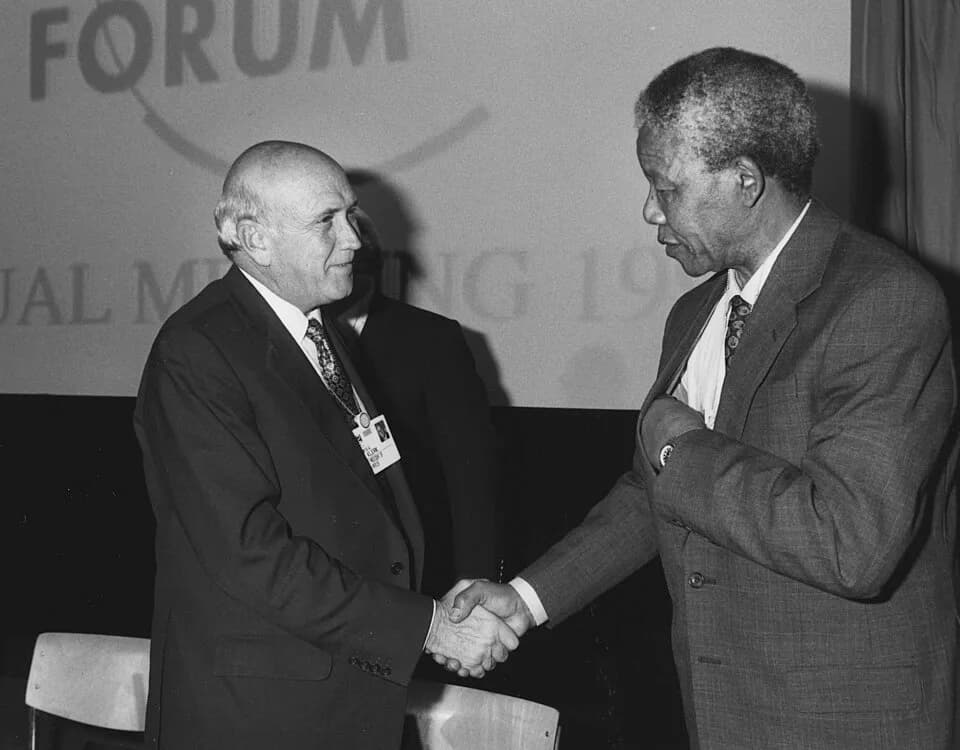
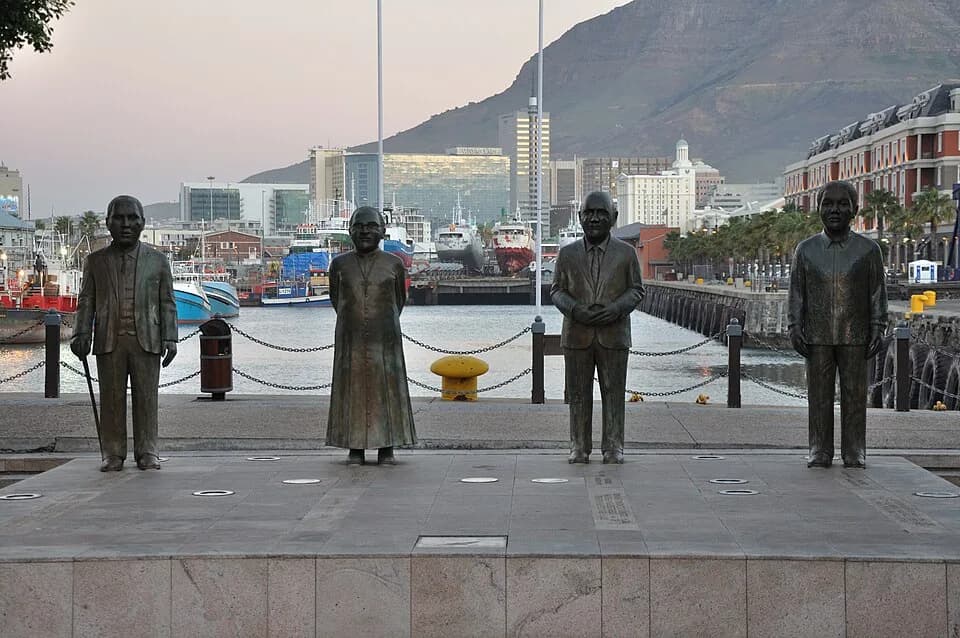
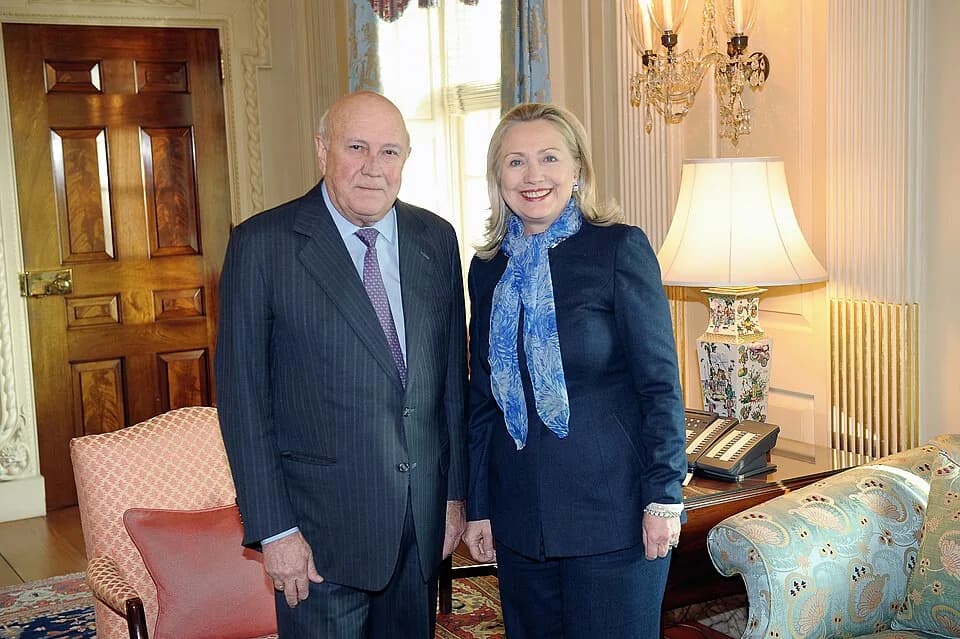
![F. W. de Klerk - F. W. de Klerk, former President of the Republic of South Africa, at the U.S. Department of State in Washington, D.C., on March 6, 2012. [State Department photo/ Public Domain]](/_next/image?url=https%3A%2F%2Fcdn.whowasthisguy.com%2Fgallery_wikimedia_commons_1777926412237_4_00f0fc874a.webp&w=1920&q=75)
प्रायः सोधिने प्रश्नहरू
बारम्बार सोधिएका प्रश्नहरू
F. W. de Klerk कहिले बित्नुभयो?
F. W. de Klerk २०२१ नोभेम्बर ११ मा Cape Town, South Africa मा बित्नुभयो, 85 वर्षको उमेरमा।
F. W. de Klerk कहाँ जन्मनुभयो?
F. W. de Klerk Johannesburg, South Africa मा १९३६ मार्च १८ मा जन्मनुभयो।
F. W. de Klerk सबैभन्दा बढी केका लागि चिनिनुहुन्छ?
F. W. de Klerk 7th state president of South Africa from 1989 to 1994 का लागि सबैभन्दा बढी चिनिनुहुन्छ।
मृत्युको समयमा F. W. de Klerk को उमेर कति थियो?
मृत्युको समयमा F. W. de Klerk को उमेर 85 वर्ष थियो।
F. W. de Klerk को राष्ट्रियता के थियो?
F. W. de Klerk South Africa बाट हुनुहुन्थ्यो।
समयरेखा
जीवनको झलक
तस्बिर ग्यालरी
तस्बिरहरूमा जीवन
कुनै पनि पोलारोइड विस्तार गर्न क्लिक गर्नुहोस् · 41 तस्बिरहरू
क्यूआर कोड
यो जीवनी साझा गर्नुहोस्
प्रिन्ट गर्नुहोस् र सेयर गर्नुहोस्
यो जीवनी पृष्ठ हेर्न स्क्यान गर्नुहोस्। कार्यक्रम, प्रदर्शन, वा शैक्षिक सामग्रीका लागि प्रिन्ट गर्नुहोस्।