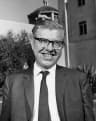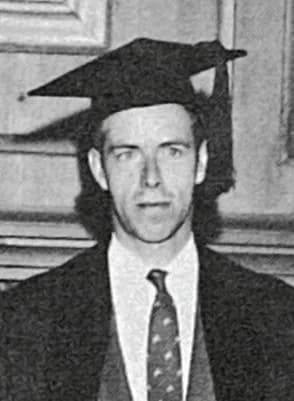
जन्म
January 6, 1915
Kent, United Kingdom
निधन
November 16, 1973
Mount Tamalpais, United States
को लागि चिनिनुहुन्थ्यो
British American author and lecturer
Alan Watts (1915–1973) was United Kingdom best known for British American author and lecturer.
Alan Wilson Watts (January 6, 1915 – November 16, 1973) was a British and American author and lecturer. He was known for interpreting and popularizing Buddhist, Taoist, and Hindu philosophy for a Western audience. His influential works continue to inspire and guide those seeking deeper understanding.
अध्याय
जीवनका अध्यायहरू
अध्याय 1 · 1915· कुल 7 मध्ये अध्याय 1
An Enduring Voice in Western Thought
Alan Wilson Watts (January 6, 1915 – November 16, 1973) was a British and American author, lecturer, and self-styled philosophical entertainer who profoundly influenced Western understanding of Eastern thought. He dedicated his life to interpreting and popularizing Buddhist, Taoist, and Hindu philosophy for a broad audience. His work transcended traditional academic boundaries, making complex spiritual and philosophical ideas accessible to countless individuals seeking deeper meaning.
Watts' unique ability to bridge cultural and philosophical divides cemented his place as a significant figure in the intellectual history of the 20th century. His legacy continues through an extensive body of written and recorded works, which remain a touchstone for those exploring consciousness, spirituality, and the nature of reality. He was a writer, musician, dramaturge, theologian, Anglican priest, philosopher, and videographer, demonstrating a wide array of talents applied to his central mission of philosophical inquiry.
अध्याय 2 · 1915· कुल 7 मध्ये अध्याय 2
Early Life and Origins
Alan Watts was born on January 6, 1915, in Kent, United Kingdom, a setting that provided the backdrop for his formative years. His early experiences in England cultivated an inquiring mind, laying the groundwork for his later deep dives into global philosophical traditions. Watts' intellectual journey began in a time of significant cultural shifts, which undoubtedly shaped his perspective on humanity's evolving understanding of existence.
Growing up in Kent, Watts developed an early fascination with the natural world and various forms of mysticism, hinting at the direction his life's work would take. Though details of his family life are not extensively documented in his public profile, the intellectual and spiritual curiosity he demonstrated from a young age became the defining characteristic of his illustrious career. His British origins provided him with a unique cultural lens through which he would later interpret Eastern philosophies for a Western audience.
अध्याय 3· कुल 7 मध्ये अध्याय 3
Career Beginnings and Spiritual Exploration
Watts' early professional path included a period as an Anglican priest and theologian, reflecting a profound early engagement with Western religious traditions. This background in Christian theology gave him a foundational understanding of spiritual frameworks, which he would later compare and contrast with Eastern philosophies. His theological studies were not merely academic; they were a genuine exploration of spirituality that informed his entire intellectual trajectory.
His early career as a writer also began during this period, establishing his aptitude for articulating complex ideas. The transition from a conventional religious role to a broader philosophical exploration marked a significant turning point, allowing him to expand his focus beyond specific doctrines. This shift enabled him to pursue a more inclusive and comparative approach to understanding human experience and the cosmos, setting the stage for his emergence as a distinct voice in philosophical discourse.
As he moved beyond the confines of traditional Anglicanism, Watts began to deeply immerse himself in Eastern thought, particularly Buddhism, Taoism, and Hinduism. This intensive study was not just academic; it was a personal quest for meaning that he then skillfully translated for others. His early writings and lectures started to gain traction, demonstrating his emerging talent for synthesizing intricate philosophical concepts into comprehensible and engaging narratives for Western minds.
अध्याय 4· कुल 7 मध्ये अध्याय 4
Major Achievements and Career Highlights
Alan Watts became widely known for interpreting and popularizing Buddhist, Taoist, and Hindu philosophy, serving as a crucial bridge between Eastern spiritual traditions and Western audiences. His ability to distill profound wisdom from these ancient systems into relatable terms was a major achievement, making esoteric concepts accessible without trivializing them. He employed a unique style that earned him the self-styled title of a "philosophical entertainer," a role he embraced to engage listeners and readers more deeply.
Throughout his career, Watts delivered countless lectures and seminars, many of which were recorded and later released as albums, extending his reach far beyond physical audiences. His soothing voice and articulate explanations became synonymous with an enlightened understanding of existence. These recordings, such as "This Is IT" (1962), "Om: The Sound of Hinduism" (1967), and "Why Not Now (Dhyana—The Art of Meditation)" (1969), illustrate his commitment to disseminating these philosophies through diverse mediums.
His influential work as a writer also solidified his position as a leading figure in the dissemination of Eastern thought. Watts authored numerous books that became essential reading for those interested in Zen Buddhism, existential philosophy, and comparative religion. These publications were instrumental in shaping the counter-cultural movements of his time, providing intellectual and spiritual foundations for a generation seeking alternatives to conventional Western paradigms.
अध्याय 5· कुल 7 मध्ये अध्याय 5
Notable Works and Contributions
Alan Watts' bibliography is extensive and highly influential, reflecting his prolific output as a writer and philosopher. Among his most celebrated literary contributions is "The Way of Zen," which provided a foundational text for countless Westerners seeking to understand Zen Buddhism. This book skillfully elucidated the principles and practices of Zen, demystifying a tradition that was largely unfamiliar to Western audiences at the time of its publication.
Another seminal work, "The Wisdom of Insecurity," explored themes of anxiety and the human condition, offering a distinctive perspective rooted in both Eastern philosophy and a keen understanding of Western psychological concerns. His ability to connect ancient wisdom with contemporary human struggles made his writings deeply resonant. "Myth and Ritual in Christianity" also showcased his ability to apply a comparative philosophical lens to Western religious traditions, demonstrating the universality of spiritual themes.
Watts also delved into the complex relationship between psychology and spirituality with "Psychotherapy East & West," a work that explored the convergence of therapeutic practices with Eastern philosophical insights. His essay "Beat Zen Square Zen and Zen" provided a critical yet insightful commentary on the nascent Zen movements in the West, offering nuanced distinctions. These works collectively underscored his commitment to rigorous intellectual inquiry combined with practical wisdom.
Beyond his written works, Watts' profound insights were widely shared through his numerous recorded seminars and talks. Albums such as "Om: The Sound of Hinduism" (1967) offered listeners an immersive audio experience into the spiritual traditions of India. "Why Not Now (Dhyana—The Art of Meditation)" (1969), and its subsequent volumes, "Dhyana, the Art of Meditation, Volume 1" (1977) and "Dhyana, the Art of Meditation, Volume 2" (1977), served as practical guides to meditative practices, reflecting his dedication to experiential learning.
His discography also includes thought-provoking titles like "This Is IT" (1962), which encapsulated his philosophical approach to the present moment, and "Zen & Senryu" (1959), demonstrating his appreciation for various art forms and their connection to spiritual understanding. Even posthumous releases such as "The Profound Words Of Alan Watts" (2021) and "Face the Facts: Words by Alan Watts" (2015) continue to introduce new generations to his timeless wisdom, highlighting the enduring relevance of his spoken word. Watts also explored his creativity as a musician, dramaturge, and videographer, further diversifying the mediums through which he conveyed his philosophical messages.
अध्याय 6· कुल 7 मध्ये अध्याय 6
Later Years and Enduring Influence
In his later years, Alan Watts continued his prolific work as a lecturer, writer, and philosophical guide, further solidifying his position as a prominent intellectual figure. Living and working in the United States, he became a voice of profound wisdom for a generation grappling with social and spiritual change. His lectures and writings from this period continued to refine and expand upon his interpretations of Eastern philosophies, consistently drawing large and engaged audiences.
Watts passed away on November 16, 1973, in Mount Tamalpais, United States, leaving behind a vast body of work that continued to resonate globally. His death marked the end of a physical presence, but his intellectual and spiritual contributions were far from concluded. The widespread availability of his recorded talks and published books ensured that his unique perspective on life, consciousness, and Eastern wisdom would continue to reach new seekers for decades to come.
अध्याय 7· कुल 7 मध्ये अध्याय 7
Legacy and Impact
Alan Watts’ legacy is defined by his singular success in bringing the ancient philosophies of the East into the intellectual and spiritual discourse of the West. He demystified complex concepts from Buddhism, Taoism, and Hinduism, presenting them in a manner that was both intellectually rigorous and deeply accessible. His work encouraged a generation to look beyond traditional Western materialism and embrace a more holistic understanding of existence and consciousness.
His influence extended across various fields, inspiring not only philosophers and spiritual seekers but also artists, writers, and counter-cultural movements. Watts’ ability to articulate the interconnectedness of all things and the importance of living in the present moment continues to be a source of inspiration for individuals seeking peace and understanding. His lectures, delivered with wit and clarity, remain highly popular, reaching new listeners through digital platforms and ensuring his ideas endure.
The philosophical conversations initiated by Watts continue to shape contemporary thought on mindfulness, spirituality, and comparative religion. He opened pathways for genuine cross-cultural understanding, fostering an appreciation for diverse perspectives on the human experience. Alan Watts’ life work truly changed the way many in the West perceive and engage with Eastern philosophy, leaving an enduring intellectual and spiritual footprint that continues to grow with time.
जीवनका क्षणहरू
जीवनलाई आकार दिने क्षणहरू
प्रायः सोधिने प्रश्नहरू
बारम्बार सोधिएका प्रश्नहरू
Alan Watts कहिले बित्नुभयो?
Alan Watts १९७३ नोभेम्बर १६ मा Mount Tamalpais, United States मा बित्नुभयो, 58 वर्षको उमेरमा।
Alan Watts कहाँ जन्मनुभयो?
Alan Watts Kent, United Kingdom मा १९१५ जनवरी ६ मा जन्मनुभयो।
Alan Watts सबैभन्दा बढी केका लागि चिनिनुहुन्छ?
Alan Watts British American author and lecturer का लागि सबैभन्दा बढी चिनिनुहुन्छ।
मृत्युको समयमा Alan Watts को उमेर कति थियो?
मृत्युको समयमा Alan Watts को उमेर 58 वर्ष थियो।
Alan Watts को राष्ट्रियता के थियो?
Alan Watts United Kingdom बाट हुनुहुन्थ्यो।
समयरेखा
जीवनको झलक
तस्बिर ग्यालरी
तस्बिरहरूमा जीवन
कुनै पनि पोलारोइड विस्तार गर्न क्लिक गर्नुहोस् · 21 तस्बिरहरू
क्यूआर कोड
यो जीवनी साझा गर्नुहोस्
प्रिन्ट गर्नुहोस् र सेयर गर्नुहोस्
यो जीवनी पृष्ठ हेर्न स्क्यान गर्नुहोस्। कार्यक्रम, प्रदर्शन, वा शैक्षिक सामग्रीका लागि प्रिन्ट गर्नुहोस्।