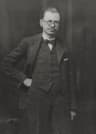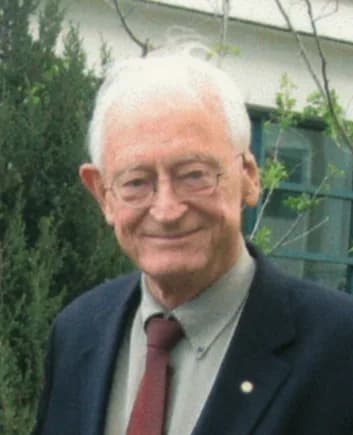
जन्म
April 14, 1927
Masterton, New Zealand
निधन
February 7, 2007
Drexel Hill, United States
को लागि चिनिनुहुन्थ्यो
New Zealand chemist
Alan MacDiarmid (1927–2007) was New Zealand best known for New Zealand chemist.
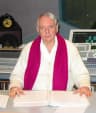
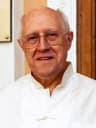
Alan Graham MacDiarmid (April 14, 1927 – February 7, 2007) was a New Zealand-American chemist and university teacher. He was a recipient of the Nobel Prize for Chemistry in 2000 for his discovery and development of conductive polymers. His work fundamentally changed material science, enabling plastics to conduct electricity and inspiring countless technological innovations.
अध्याय
जीवनका अध्यायहरू
अध्याय 1 · 1927· कुल 7 मध्ये अध्याय 1
Early Life and Origins
Born in Masterton, New Zealand, on April 14, 1927, Alan Graham MacDiarmid’s early life unfolded in a nation celebrated for its natural beauty and pioneering spirit. His formative years in New Zealand undoubtedly fostered a deep sense of inquiry and resilience, qualities that would later become hallmarks of his illustrious scientific career. He embarked on a robust educational path, laying a strong foundation in both engineering and chemistry, disciplines that would intertwine throughout his professional life.
His academic pursuits in New Zealand provided him with the initial tools and perspectives necessary for a career dedicated to understanding and manipulating matter at its fundamental level. The educational environment nurtured his innate scientific curiosity, guiding him towards a path where he could explore complex chemical principles and their practical applications. This foundational learning experience in his home country prepared him for the international scientific arena he would later engage with so profoundly.
अध्याय 2· कुल 7 मध्ये अध्याय 2
Career Beginnings
Alan MacDiarmid's professional journey began by embracing the roles of both an engineer and a chemist, illustrating his diverse talents and his desire to bridge theoretical knowledge with practical implementation. His early work focused on various aspects of material science, where he honed his experimental skills and developed a keen eye for innovative research directions. This foundational period was crucial in shaping his approach to scientific problems, enabling him to think creatively about the properties and potential of different substances.
As he transitioned into a role as a university teacher, MacDiarmid began to share his accumulating knowledge and passion for chemistry with aspiring scientists. This dual engagement in research and education allowed him to remain at the forefront of scientific discovery while also fostering the next generation of innovators. His early career laid the essential groundwork for the groundbreaking discoveries that would ultimately define his extraordinary contributions to chemistry, setting the stage for his most famous work with conductive polymers.
अध्याय 3 · 2000· कुल 7 मध्ये अध्याय 3
Major Achievements and Career Highlights
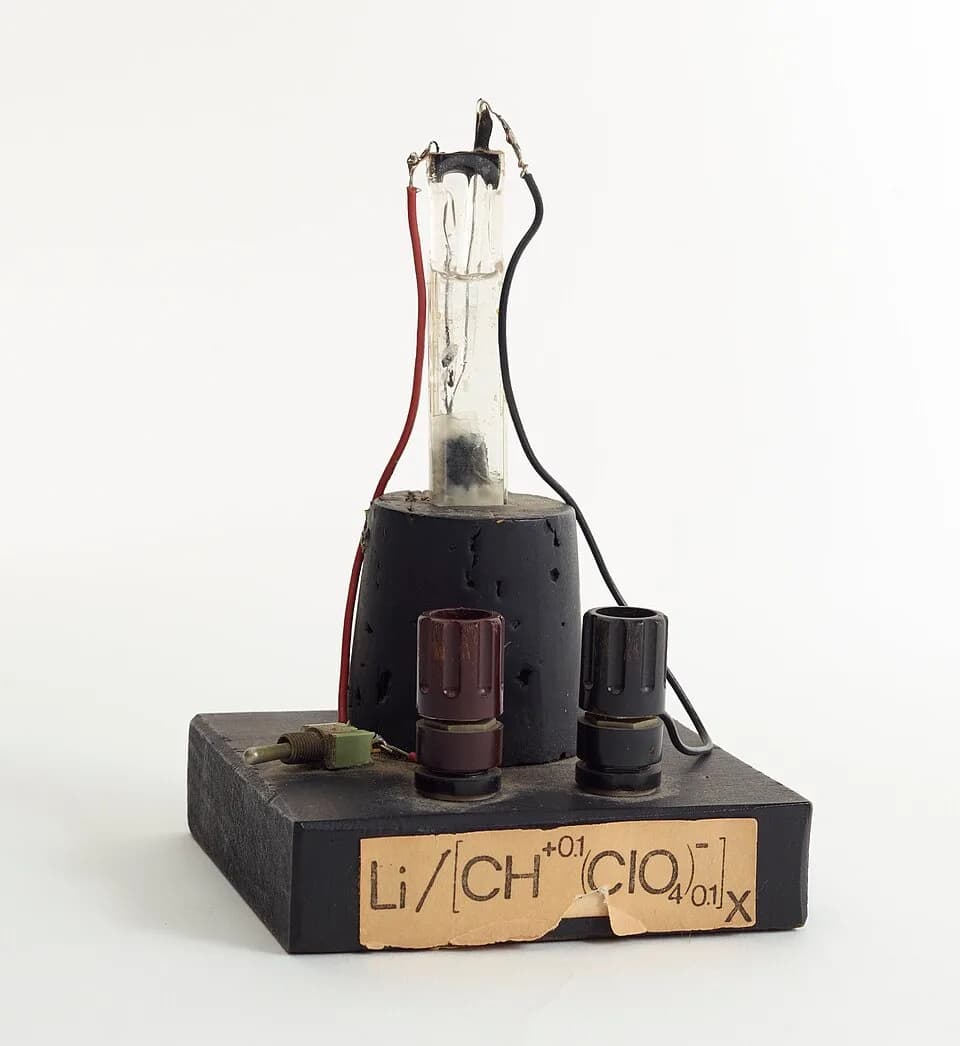
The pinnacle of Alan MacDiarmid's career arrived in 2000 when he was co-awarded the Nobel Prize for Chemistry, recognizing his seminal work on the discovery and development of conductive polymers. This accolade marked a profound moment in material science, as MacDiarmid and his collaborators demonstrated that organic polymers, typically used as electrical insulators, could be processed to exhibit metallic conductivity. This breakthrough fundamentally altered the understanding of polymer physics and chemistry, opening up entirely new possibilities for electronic materials.
His work meant that lightweight, flexible, and inexpensive plastics could potentially replace heavy and rigid metals in various applications, from lightweight batteries and flexible displays to sensors and advanced circuitry. The impact of this discovery extended far beyond the laboratory, initiating a new era in electronics and materials engineering. As a New Zealand-American chemist, MacDiarmid's success also underscored the global and collaborative nature of modern science, showcasing the contributions of scientists who bridge different national scientific communities.
अध्याय 4· कुल 7 मध्ये अध्याय 4
Personal Life
While specific details about Alan MacDiarmid's personal life remain less publicized than his professional achievements, his journey from Masterton, New Zealand, to establishing a distinguished career in the United States speaks volumes about his character. His identity as a New Zealand-American chemist reflects a life lived across continents, dedicated to the pursuit of scientific knowledge. This relocation and establishment of his professional life in the United States highlights a commitment to scientific opportunities and collaborations on an international scale.
His extensive academic and teaching career suggests a life deeply immersed in the world of science, likely surrounded by students and fellow researchers who shared his passion. Though the intricacies of his family life are not widely known, his enduring scientific legacy and the profound impact of his work indicate a life richly fulfilled through intellectual exploration and significant contributions to humanity's understanding of materials.
अध्याय 5· कुल 7 मध्ये अध्याय 5
Notable Works or Contributions
Alan MacDiarmid was an exceptionally prolific scholar, evidenced by his impressive h-index of 108 and a staggering output of 639 academic papers throughout his career. This volume of publication reflects a sustained period of intense research and a consistent contribution of new knowledge to the scientific community. His extensive body of work covers a broad spectrum within material science, consistently pushing the boundaries of what was thought possible with organic materials.
Even after his passing, the influence and relevance of his research continue to be recognized and cited, demonstrating the enduring framework he established in material science. For instance, his foundational ideas are reflected in works like 'Conducting polymers forward,' which received 17 citations by 2020, years after his death, highlighting the lasting impact of his pioneering concepts. Analyses and extensions of his work, such as 'Chapter 2 Conducting Polymers' published in 2017, further attest to the continued study and application of his discoveries.
The trajectory of his research interests is also evident in titles like 'Electrospun Zeolite/Cellulose Acetate Fibers for Ion Exchange of Pb 2+,' published in 2014 with 13 citations, and 'Thermophones using carbon nanotubes and alternative nanostructures for high power sound generation and noise cancellation,' also from 2014 with 3 citations. These examples demonstrate his ongoing influence in areas related to advanced materials and their varied applications. Furthermore, the theme of his research is seen evolving even into contemporary works like 'Carbon-based nanocomposite yarns reinforced with titanium carbide formed by internally reacted titanium and graphene,' cited in 2024, showing how his foundational work continues to inspire new generations of researchers in cutting-edge material development.
अध्याय 6 · 2000· कुल 7 मध्ये अध्याय 6
Later Years
In his later years, Alan MacDiarmid continued to be a dynamic force in the scientific community, even after receiving the Nobel Prize for Chemistry in 2000. This prestigious award did not signal a slowing down of his intellectual pursuits but rather affirmed the global recognition of his profound impact on chemistry and material science. He maintained his roles as an active researcher and an influential university teacher, imparting his wisdom and experience to a new cohort of scientists.
His life concluded on February 7, 2007, when he passed away in Drexel Hill, United States, at the age of 79. Up until his death, he remained engaged with the scientific discourse, contributing to and observing the continued evolution of the fields he had so significantly shaped. His final years were marked by the enduring respect and admiration of his peers and the ongoing application of his revolutionary discoveries in various technological advancements.
अध्याय 7· कुल 7 मध्ये अध्याय 7
Legacy and Impact
Alan MacDiarmid's legacy is deeply woven into the fabric of modern material science and engineering, with his discovery of conductive polymers fundamentally altering our perception of organic materials. His work did not merely expand scientific knowledge; it instigated a technological revolution, opening doors for the creation of new devices that were previously unimaginable. The ability to make plastics conduct electricity has led to innovations in flexible electronics, lightweight batteries, smart textiles, and transparent electrodes, all of which are commonplace in contemporary technology.
Beyond his scientific breakthroughs, MacDiarmid’s impact as a university teacher fostered generations of scientists, instilling in them a rigorous approach to research and a boundless curiosity. His influence extended globally, as a New Zealand-American chemist who bridged scientific communities and inspired collaborative research. His name remains synonymous with innovation and the relentless pursuit of scientific truth, ensuring that his contributions continue to resonate throughout the academic and industrial worlds.
The principles he established in polymer chemistry serve as foundational knowledge for ongoing research into advanced materials, from nanoscale structures to new energy solutions. Alan MacDiarmid’s life was a powerful example of how fundamental scientific discovery can lead to widespread practical applications, truly transforming the world we live in. He will be remembered not only as a Nobel Laureate but as a visionary who reshaped our understanding of matter and its potential.
जीवनका क्षणहरू
जीवनलाई आकार दिने क्षणहरू





प्रायः सोधिने प्रश्नहरू
बारम्बार सोधिएका प्रश्नहरू
Alan MacDiarmid कहिले बित्नुभयो?
Alan MacDiarmid २००७ फेब्रुअरी ७ मा Drexel Hill, United States मा बित्नुभयो, 79 वर्षको उमेरमा।
Alan MacDiarmid कहाँ जन्मनुभयो?
Alan MacDiarmid Masterton, New Zealand मा १९२७ अप्रिल १४ मा जन्मनुभयो।
Alan MacDiarmid सबैभन्दा बढी केका लागि चिनिनुहुन्छ?
Alan MacDiarmid New Zealand chemist का लागि सबैभन्दा बढी चिनिनुहुन्छ।
मृत्युको समयमा Alan MacDiarmid को उमेर कति थियो?
मृत्युको समयमा Alan MacDiarmid को उमेर 79 वर्ष थियो।
Alan MacDiarmid को राष्ट्रियता के थियो?
Alan MacDiarmid New Zealand बाट हुनुहुन्थ्यो।
समयरेखा
जीवनको झलक
तस्बिर ग्यालरी
तस्बिरहरूमा जीवन
कुनै पनि पोलारोइड विस्तार गर्न क्लिक गर्नुहोस् · 17 तस्बिरहरू
क्यूआर कोड
यो जीवनी साझा गर्नुहोस्
प्रिन्ट गर्नुहोस् र सेयर गर्नुहोस्
यो जीवनी पृष्ठ हेर्न स्क्यान गर्नुहोस्। कार्यक्रम, प्रदर्शन, वा शैक्षिक सामग्रीका लागि प्रिन्ट गर्नुहोस्।