Twieled
June 7, 1896
Newburyport, United States
Miet
October 31, 1986
Arlington County, United States
Magħruf Għal
American physicist, chemist and botanical collector
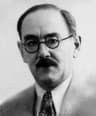
Robert S. Mulliken (1896–1986) was United States best known for American physicist, chemist and botanical collector.
Robert Sanderson Mulliken (June 7, 1896 – October 31, 1986) was an American physicist and chemist. He developed the fundamental molecular orbital theory, revolutionizing the understanding of chemical bonds and electronic structure. His work earned him the Nobel Prize in Chemistry in 1966.
Kapitlu
Kapitli tal-ħajja
Kapitlu 1 · 1925· Kapitlu 1 minn 1
Forging New Tools for Chemistry
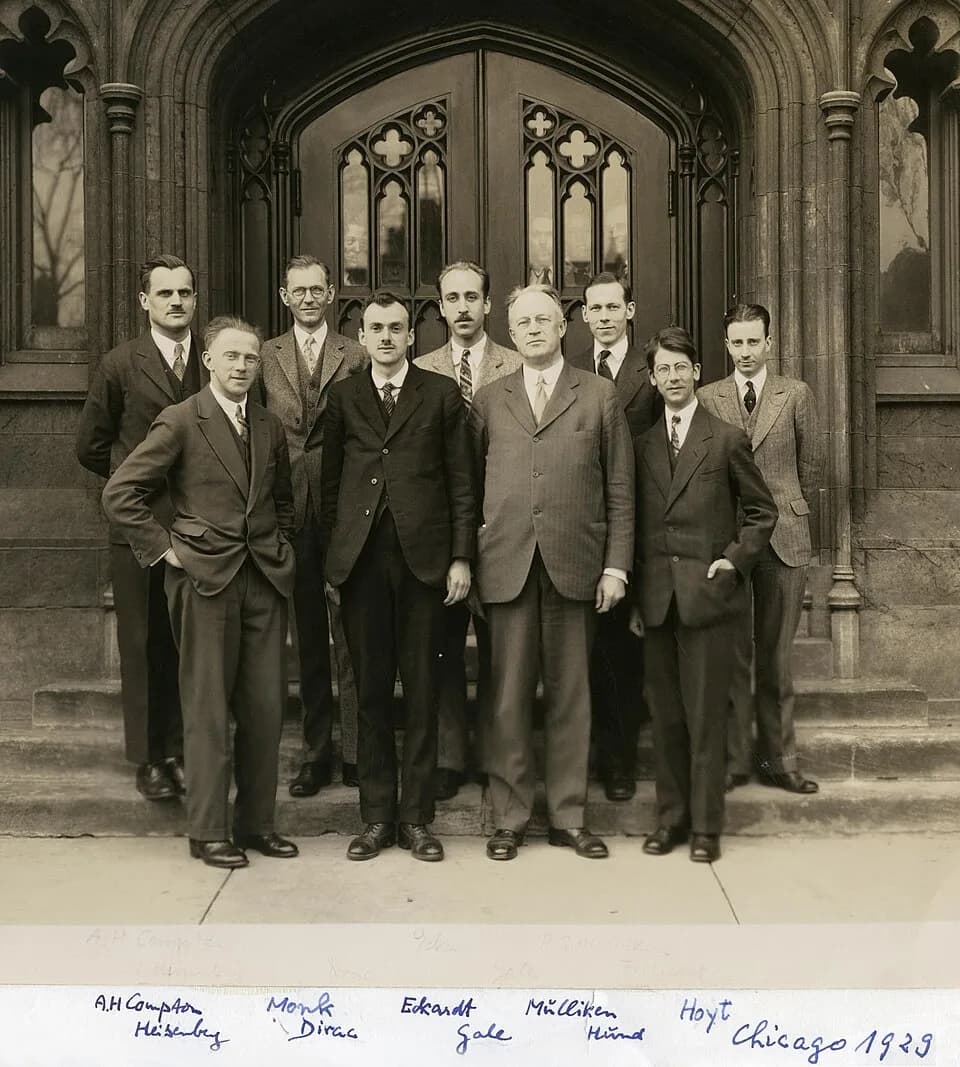
A crucial grant allowed Robert to pursue his research into isotope separation and band spectra, which led him to Harvard University. He then embarked on a transformative journey to Europe in 1925 and 1927. He met the giants of quantum mechanics—Erwin Schrödinger, Paul A. M. Dirac, Werner Heisenberg—but it was Friedrich Hund, working on quantum interpretations of diatomic molecules, who truly shaped his path.
Working with Hund in 1927, Robert developed his molecular orbital theory. This new approach assigned electrons to states that stretched across an entire molecule, fundamentally changing how scientists understood chemical bonds. The theory became so intertwined with their collaboration that it was often called the Hund-Mulliken theory.
Before their work, the Valence-Bond method, popular because it mirrored chemists’ ideas of localized bonds, was the standard. But it often struggled with molecules in excited states. Robert’s molecular-orbital method, describing electron wave functions as delocalized and symmetrical with the molecule itself, proved more versatile. It could be applied to a wider array of molecules and fragments, eventually eclipsing its predecessor.
This deep theoretical insight, which revealed how atoms bond at their most fundamental level, earned Robert Mulliken the Nobel Prize in Chemistry in 1966. He also established a new scale for measuring electronegativity in 1934, defining it as the average of an atom's ionization enthalpy and electron affinity, a concept that closely corresponded with Linus Pauling’s earlier work.
Robert continued his rigorous studies of molecular structure throughout his life, applying quantum mechanics to acid-base reactions and exploring everything from simple diatomic molecules to complex aggregates. In 1929, he married Mary Helen von Noé, with whom he had two daughters. He retired in 1985, a year before his passing.
Robert Mulliken died at 90 years old in Arlington County, Virginia, and was laid to rest in Chicago, the city where his scientific journey truly blossomed.
Ħajja f’mumenti
Il-mumenti li sawru ħajja
FAQ
Mistoqsija frekwenti
Meta miet/mietet Robert S. Mulliken?
Robert S. Mulliken miet/mietet fil-31 ta’ Ottubru 1986 f{place}} other {}}{hasAge, select, yes {, fl-età ta 90 sena.
Fejn twieled/twieldet Robert S. Mulliken?
Robert S. Mulliken twieled/twieldet f{place}{hasDate, select, yes { fil-{date, date, long}} other {}}.
Għal xiex hu/hi l-aktar magħruf(a) Robert S. Mulliken?
Robert S. Mulliken hu/hi l-aktar magħruf(a) għal American physicist, chemist and botanical collector.
Kemm kellu/kellha snin Robert S. Mulliken meta miet/mietet?
Robert S. Mulliken kellu/kellha 90 sena meta miet/mietet.
X'kienet in-nazzjonalità ta' Robert S. Mulliken?
Robert S. Mulliken kien/kienet minn United States.
Linja taż-żmien
Ħajja b’ħarsa
Gallerija tar-ritratti
Ħajja f’ritratti
Ikklikkja kwalunkwe polaroid biex tespandi · 25 ritratti
Kodiċi QR
Aqsam Din il-Bijografija
Stampa u Aqsam
Skennja biex iżżur din il-paġna bijografika. Stampah għal avvenimenti, esibizzjonijiet, jew materjal edukattiv.