Twieled
December 29, 1876
El Vendrell, Spain
Miet
October 22, 1973
San Juan, United States
Magħruf Għal
Spanish cellist, conductor and composer
Pau Casals (1876–1973) was Spain best known for Spanish cellist, conductor and composer.
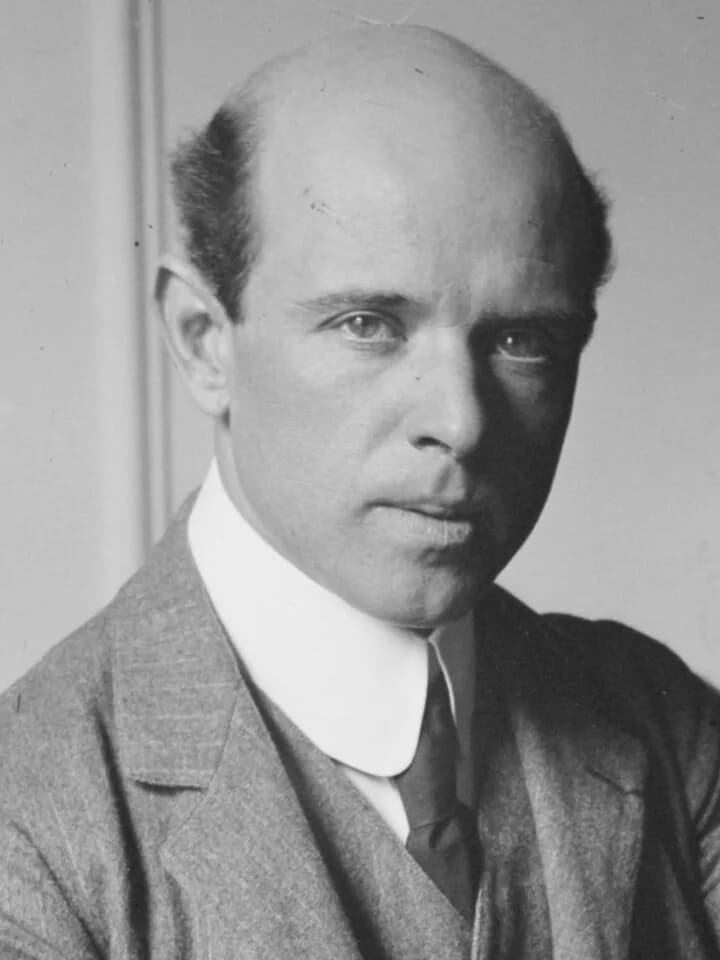
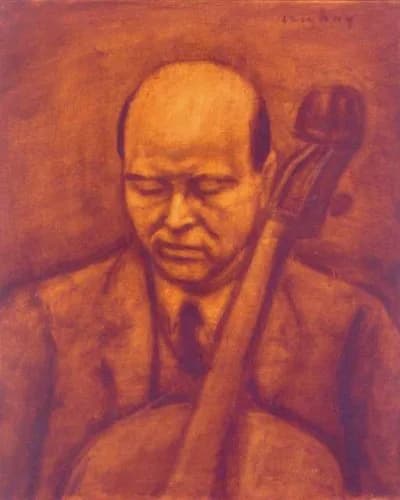
Pau Casals (December 29, 1876 – October 22, 1973) was a Spanish cellist, conductor, and composer. He is widely remembered for his definitive recordings of the Cello Suites by Bach. Casals left an enduring mark on classical music performance and education.
Kapitlu
Kapitli tal-ħajja
Kapitlu 1· Kapitlu 1 minn 7
Early Life and Origins
Born in El Vendrell, Spain, Pau Casals began his musical journey at a young age, immersed in the rich cultural heritage of Catalonia. His birthplace provided the foundation for a life dedicated to artistry and musical expression. This early environment nurtured his talents, guiding him towards a path that would see him become one of the most revered figures in classical music.
Kapitlu 2· Kapitlu 2 minn 7
Career Beginnings
Casals' prodigious talent as a cellist quickly became apparent, setting him on a path to professional musicianship. He began making significant recordings early in his career, exploring a wide range of solo, chamber, and orchestral music. These formative years established him not only as a virtuoso performer but also as a keen musical interpreter, recognized for his deep understanding of the repertoire.
Kapitlu 3 · 1957· Kapitlu 3 minn 7
Major Achievements and Career Highlights
Among Pau Casals' most significant achievements were his groundbreaking recordings of the Cello Suites by Bach, which remain benchmarks for cellists worldwide. These recordings, including the 'Suites pour violoncelle seul N° 1 en sol majeur / N° 2 en ré mineur' and 'Suites pour violoncelle seul N° 5 en do mineur / N° 6 en ré majeur' both released in 1957, captured his unique artistry. Further expanding his discography, he recorded Dvořák's Cello Concerto and Bruch's Kol Nidrei in 1972, showcasing his continued command of the instrument.
Beyond his instrumental performances, Casals also gained recognition as a conductor, leading orchestras in numerous acclaimed performances. His discography reflects this dual mastery, with recordings like 'El Pessebre (Oratori per a veus solistes, cor i orquestra sobre el poema de Joan Alavedra)' from 1974, released posthumously. His multifaceted career saw him not just as a performer, but as a composer and a dedicated university teacher.
Kapitlu 4· Kapitlu 4 minn 7
Personal Life
While the provided details focus largely on his professional achievements, Pau Casals’ life was undeniably centered around his musical endeavors and his commitment to education. His roles as a composer, conductor, and music educator signify a life deeply intertwined with the development and perpetuation of classical music. He also engaged with autobiographical writings, sharing his perspectives and experiences with a wider audience.
Kapitlu 5· Kapitlu 5 minn 7
Notable Works or Contributions
Pau Casals composed several notable pieces, contributing to the classical repertoire with his own unique voice. His compositions include the poignant 'Hymn to the United Nations - O vos Omnes', a significant work reflecting his humanitarian spirit. Other important works include several 'Sonata' pieces and 'Violoncel i Piano Vol. I' and 'Violoncel i Piano Vol. II i Cadències per a violoncel', showcasing his understanding of chamber music.
His contributions also extended to traditional Catalan forms, as seen in his 'Cobla I' and 'Cobla II'. These works highlight his connection to his Spanish roots and his ability to blend classical forms with regional influences. Through his original compositions, Casals enriched the musical landscape, leaving behind a legacy that continues to resonate.
Kapitlu 6 · 1953· Kapitlu 6 minn 7
Later Years
Pau Casals continued to perform, conduct, and record well into his later years, maintaining an active and influential presence in the music world. Recordings such as 'Quintet, op. 163, D. 956' from 1953 and the complete 'The Six Cello Suites' from 1972 demonstrate his sustained artistic output. Even after his death in San Juan, United States, on October 22, 1973, new recordings like 'Sextet No. 1, Op. 18' (1988) and 'Sonatas for Cello & Piano, nos. 3, 4, 5' (1989) were released, testament to the depth of his recorded archives.
His final decades were spent continuing his musical mission, inspiring new generations of musicians and listeners. The release of 'Symphonies nos. 7 & 8' in 1990 further solidified his enduring impact as both a performer and a conductor. Casals' commitment to music remained steadfast until his passing, leaving behind a rich tapestry of performances and compositions.
Kapitlu 7· Kapitlu 7 minn 7
Legacy and Impact
Pau Casals' legacy is multifaceted, extending far beyond his technical mastery of the cello. He redefined the interpretation of Bach's Cello Suites, influencing countless performers and solidifying these works in the standard repertoire. As a conductor, he brought new vitality to orchestral music, while his compositions added to the breadth of classical music.
His influence as a music educator and university teacher shaped the development of aspiring musicians, instilling in them a deep respect for musical artistry and integrity. Casals is remembered not just as a cellist, but as a complete musician, whose passion and dedication continue to inspire. His work ensured that his unique artistry would resonate through generations, cementing his place in music history.
Ħajja f’mumenti
Il-mumenti li sawru ħajja
FAQ
Mistoqsija frekwenti
Meta miet/mietet Pau Casals?
Pau Casals miet/mietet fil-22 ta’ Ottubru 1973 f{place}} other {}}{hasAge, select, yes {, fl-età ta 96 sena.
Fejn twieled/twieldet Pau Casals?
Pau Casals twieled/twieldet f{place}{hasDate, select, yes { fil-{date, date, long}} other {}}.
Għal xiex hu/hi l-aktar magħruf(a) Pau Casals?
Pau Casals hu/hi l-aktar magħruf(a) għal Spanish cellist, conductor and composer.
Kemm kellu/kellha snin Pau Casals meta miet/mietet?
Pau Casals kellu/kellha 96 sena meta miet/mietet.
X'kienet in-nazzjonalità ta' Pau Casals?
Pau Casals kien/kienet minn Spain.
Linja taż-żmien
Ħajja b’ħarsa
Gallerija tar-ritratti
Ħajja f’ritratti
Ikklikkja kwalunkwe polaroid biex tespandi · 47 ritratti
Kodiċi QR
Aqsam Din il-Bijografija
Stampa u Aqsam
Skennja biex iżżur din il-paġna bijografika. Stampah għal avvenimenti, esibizzjonijiet, jew materjal edukattiv.