Twieled
February 29, 1860
Buffalo, United States
Miet
November 17, 1929
Washington, D.C., United States
Magħruf Għal
American statistician and inventor(1860-1929)
Herman Hollerith (1860–1929) was United States best known for American statistician and inventor(1860-1929).
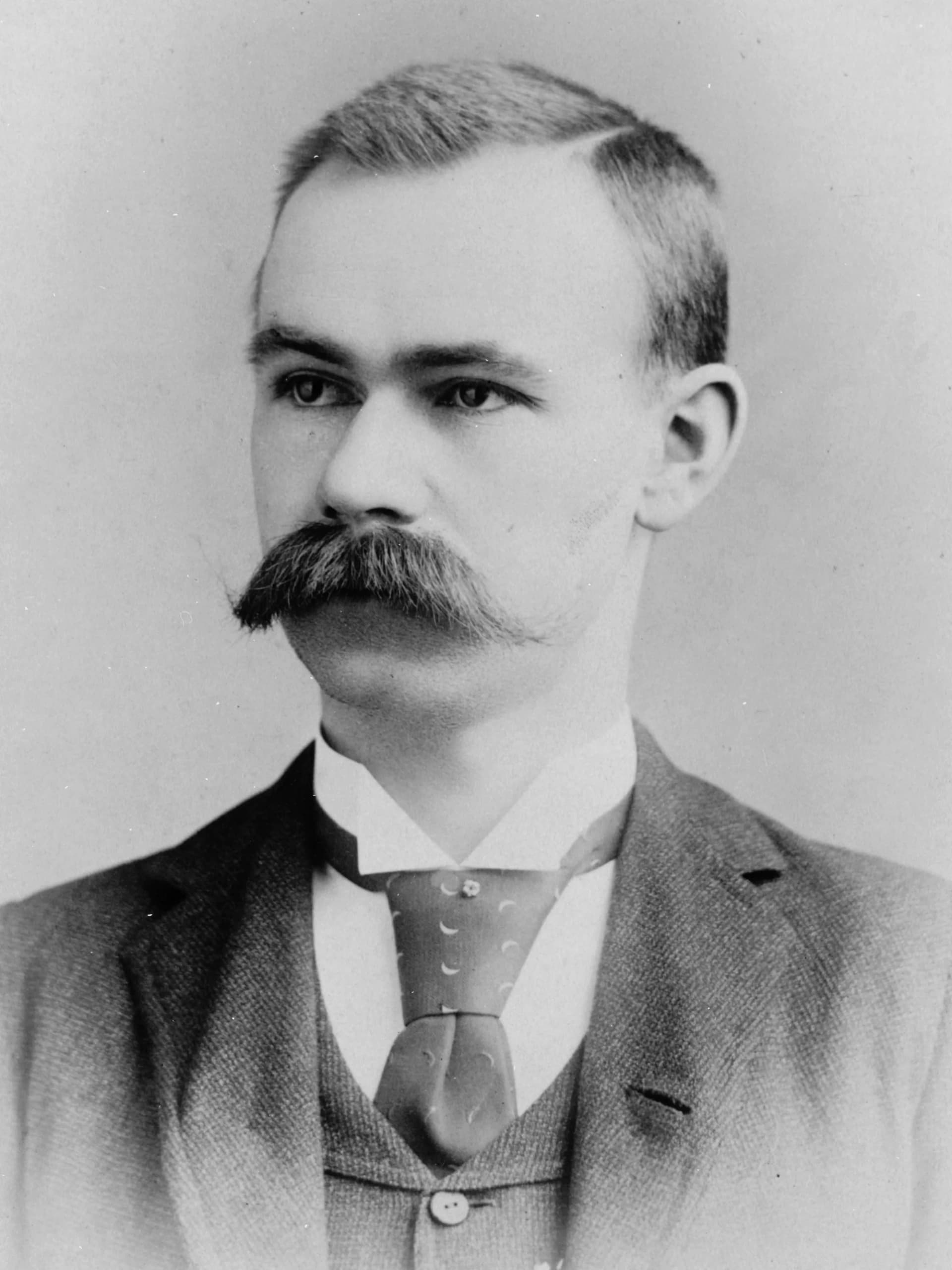
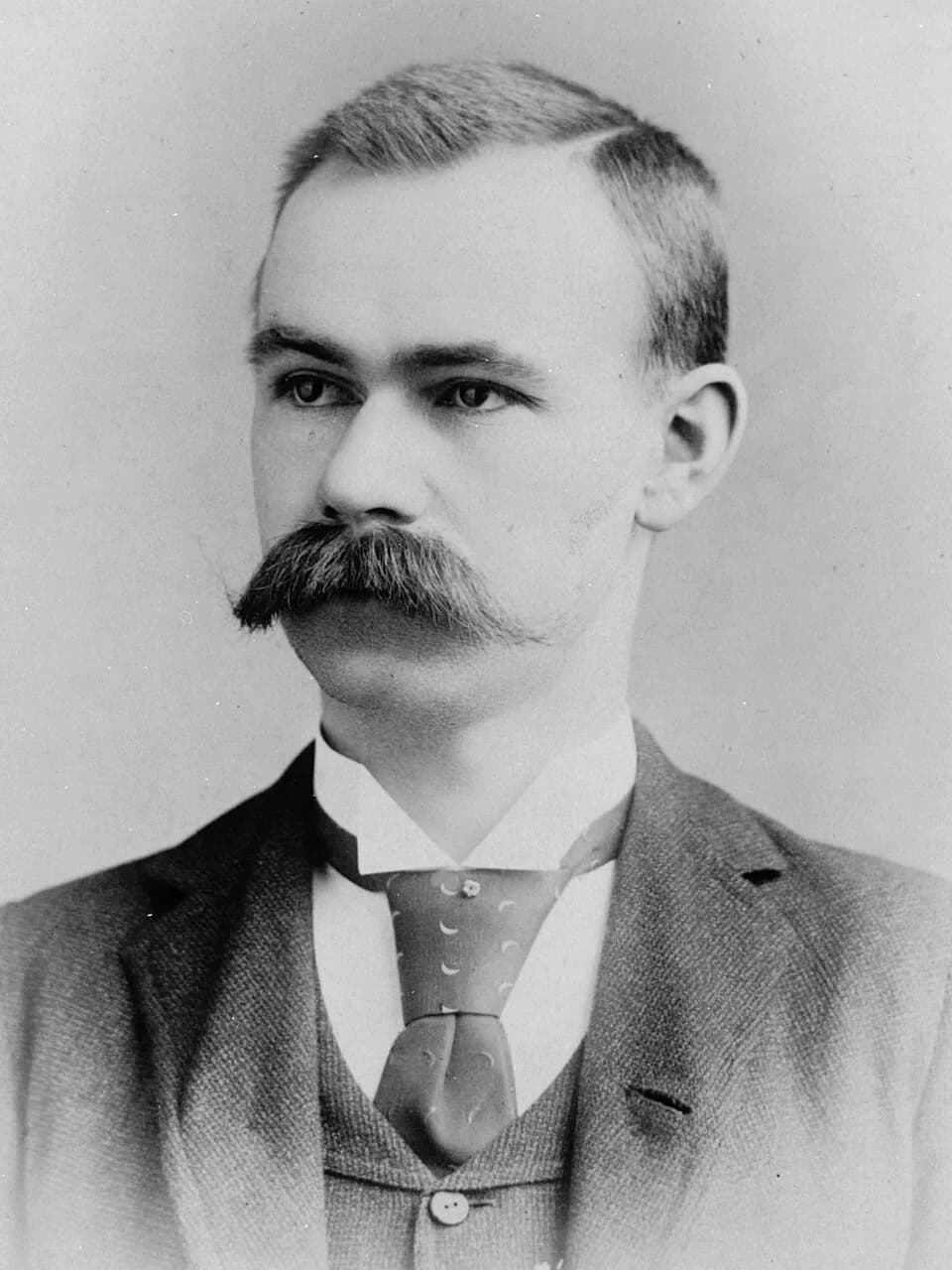
Herman Hollerith (February 29, 1860 – November 17, 1929) was an American statistician and inventor. He developed the electromechanical tabulating machine using punched cards, revolutionizing data processing and accounting. His concept defined data handling for nearly a century, shaping the future of computing.
Kapitlu
Kapitli tal-ħajja
Kapitlu 1 · 1860· Kapitlu 1 minn 10
Early Life and Origins
Born on February 29, 1860, in Buffalo, United States, Herman Hollerith grew up with German-American heritage. While specific details about his family life are not extensively documented, his environment clearly fostered a sharp intellect and an aptitude for problem-solving. His education provided him with a strong foundation in mathematics and engineering, preparing him for a career in invention.
Kapitlu 2· Kapitlu 2 minn 10
Career Beginnings
Hollerith's professional journey began by applying his skills as an engineer and statistician. Early in his career, he encountered the immense challenge of processing large volumes of data manually, particularly during the laborious census operations of the late 19th century. This direct exposure to the inefficiencies of manual tabulation ignited his determination to devise a mechanical solution. He aimed to automate the counting and sorting of statistical information.
Kapitlu 3· Kapitlu 3 minn 10
The Genesis of Innovation
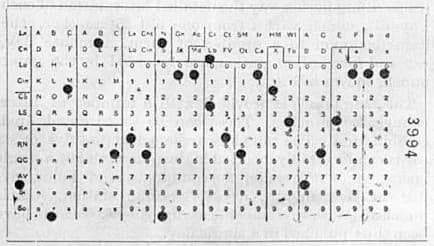
The core of Herman Hollerith’s innovative spirit was his understanding of the need for speed and accuracy in data handling. He envisioned a system that could read, tabulate, and sort data much faster than human operators could. This vision led him to develop the concept of encoding information onto punched cards, a method inspired by punch cards used in jacquard looms.
Kapitlu 4 · 1884· Kapitlu 4 minn 10
Revolutionizing Data Processing: The Tabulating Machine
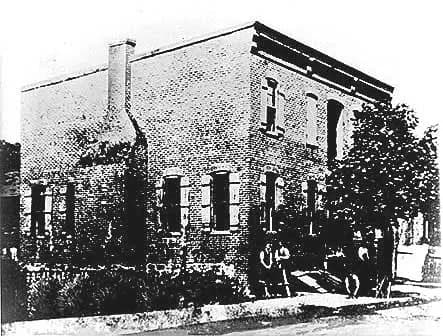
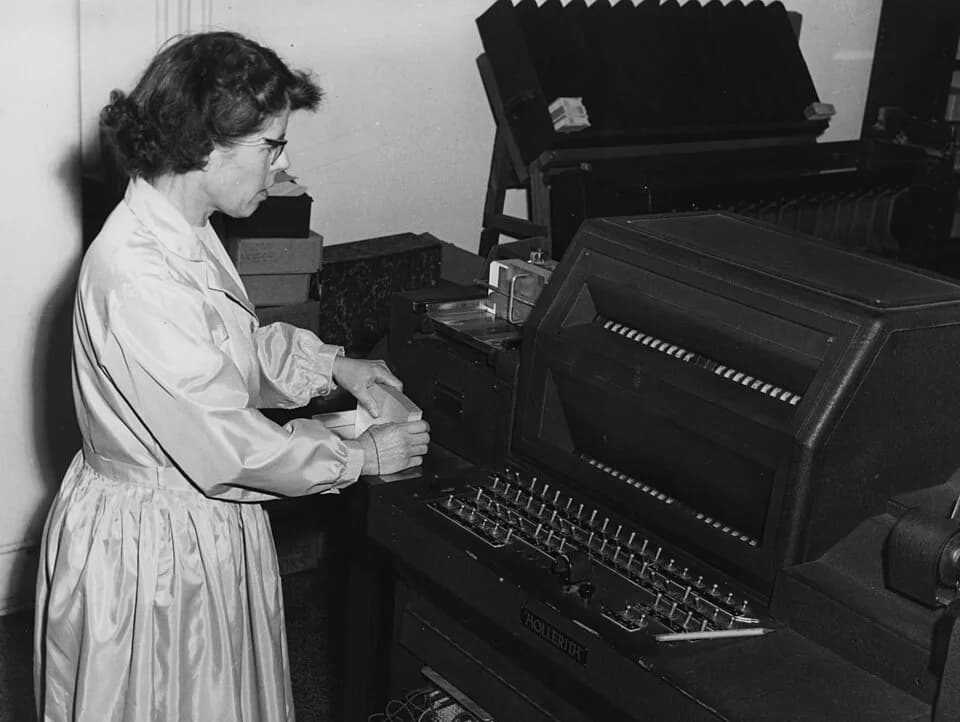
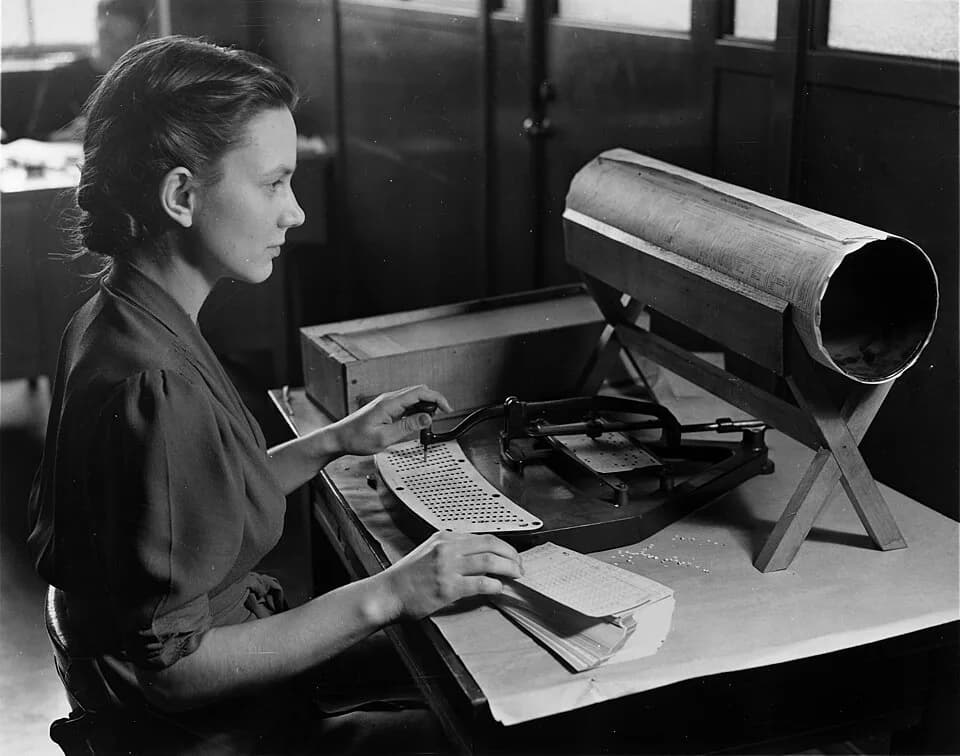
The crowning achievement of Herman Hollerith's career was the invention of his electromechanical tabulating machine, patented in 1884. This revolutionary device utilized punched cards to store and process data, dramatically speeding up information analysis. His machine could count and sort thousands of cards quickly, a stark contrast to previous manual methods.
Kapitlu 5 · 1890· Kapitlu 5 minn 10
Impact on the 1890 U.S. Census
Hollerith's system was famously employed for the 1890 U.S. Census, an event that demonstrated its immense practical value. The census data, which would have taken years to tabulate by hand, was processed in a fraction of the time. This successful application showcased the power of mechanized binary code and semi-automatic data processing systems, marking a turning point in large-scale data management.
Kapitlu 6· Kapitlu 6 minn 10
Entrepreneurial Vision and Company Formation
To commercialize his groundbreaking inventions, Herman Hollerith founded the Tabulating Machine Company. This venture allowed his technology to be widely adopted by governments and businesses for various accounting and statistical tasks. The company eventually merged with other entities, becoming a crucial component of what is now International Business Machines (IBM), a testament to the enduring commercial and technological impact of his ideas.
Kapitlu 7· Kapitlu 7 minn 10
Personal Life
Information regarding Herman Hollerith's personal life, including details about his family, relationships, or non-professional interests, is not provided within the available biographical summary. His legacy is primarily defined by his profound professional contributions and inventions rather than private details. The records focus extensively on his career and its far-reaching implications.
Kapitlu 8 · 1894· Kapitlu 8 minn 10
Scholarly Contributions and Publications
Beyond his physical inventions, Herman Hollerith contributed to the academic record with several significant publications. His paper "The Electrical Tabulating Machine," published in 1894, is a notable work, having received 28 citations. Another publication, "An Electric Tabulating System," appearing in 1982, garnered 16 citations, indicating its continued relevance long after his passing.
He also published "Biographical Sketch of Herman Hollerith" in 1971, which, while biographical, highlights an ongoing interest in his life and work, receiving 4 citations. Furthermore, his early work included "Rate of Natural Increase of Population in United States" in 1891, further demonstrating his engagement with statistical analysis and population trends.
Kapitlu 9 · 1929· Kapitlu 9 minn 10
Later Career and Enduring Influence
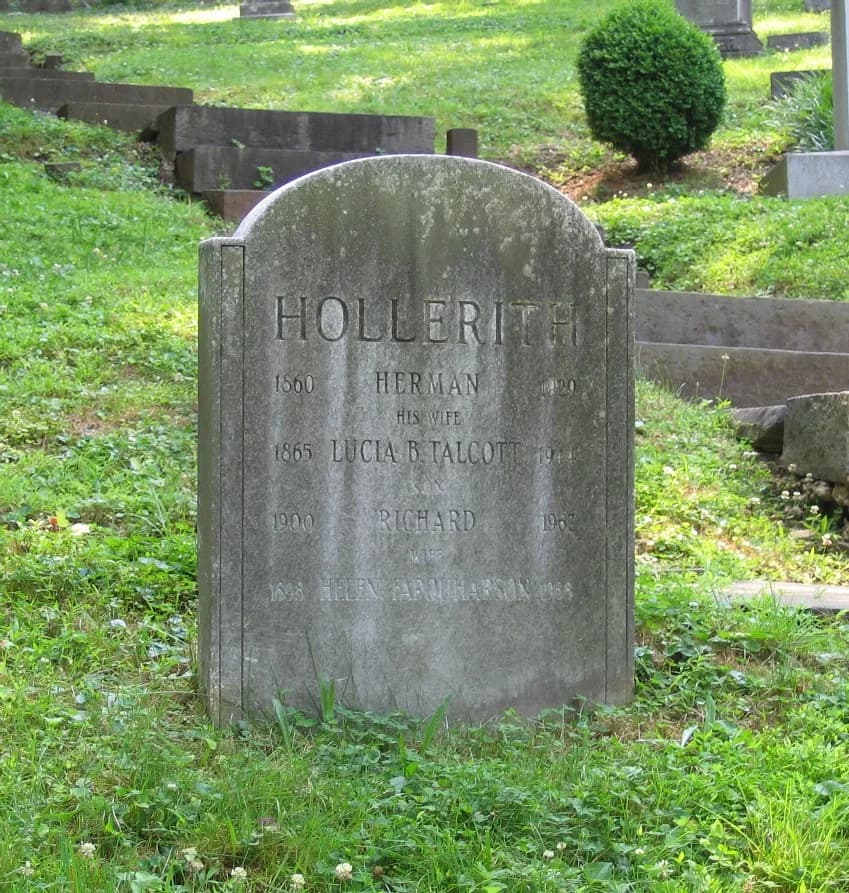
Herman Hollerith continued to innovate and operate as an entrepreneur throughout his later career. His tabulating machines found widespread adoption beyond government census work, being utilized in various businesses for accounting and data management. He oversaw the growth of his company and the expansion of his technology's influence across multiple industries. Herman Hollerith passed away on November 17, 1929, in Washington, D.C., United States, leaving behind a legacy of technological transformation.
Kapitlu 10· Kapitlu 10 minn 10
A Lasting Legacy in Computing
Herman Hollerith's contributions permanently altered the course of information management and computing. His invention of the punched card tabulating machine did more than simply automate existing processes; it introduced a new paradigm for handling vast quantities of data efficiently. This innovation was a crucial precursor to modern computers, establishing the foundational concepts of data input, processing, and storage using binary representation.
His work continues to influence contemporary data science and computational methods, even as technology has evolved. The principles he established for organizing and processing information using discrete units remained central to computing for nearly a century. Herman Hollerith’s visionary ideas cemented his place as a foundational figure in the history of information technology and data processing.
Ħajja f’mumenti
Il-mumenti li sawru ħajja
FAQ
Mistoqsija frekwenti
Meta miet/mietet Herman Hollerith?
Herman Hollerith miet/mietet fil-17 ta’ Novembru 1929 f{place}} other {}}{hasAge, select, yes {, fl-età ta 69 sena.
Fejn twieled/twieldet Herman Hollerith?
Herman Hollerith twieled/twieldet f{place}{hasDate, select, yes { fil-{date, date, long}} other {}}.
Għal xiex hu/hi l-aktar magħruf(a) Herman Hollerith?
Herman Hollerith hu/hi l-aktar magħruf(a) għal American statistician and inventor(1860-1929).
Kemm kellu/kellha snin Herman Hollerith meta miet/mietet?
Herman Hollerith kellu/kellha 69 sena meta miet/mietet.
X'kienet in-nazzjonalità ta' Herman Hollerith?
Herman Hollerith kien/kienet minn United States.
Linja taż-żmien
Ħajja b’ħarsa
Gallerija tar-ritratti
Ħajja f’ritratti
Ikklikkja kwalunkwe polaroid biex tespandi · 25 ritratti
Kodiċi QR
Aqsam Din il-Bijografija
Stampa u Aqsam
Skennja biex iżżur din il-paġna bijografika. Stampah għal avvenimenti, esibizzjonijiet, jew materjal edukattiv.