Twieled
June 4, 1738
Norfolk House, United Kingdom
Miet
January 29, 1820
Windsor Castle, United Kingdom
Magħruf Għal
King of Great Britain and Ireland from 1760 to 1820
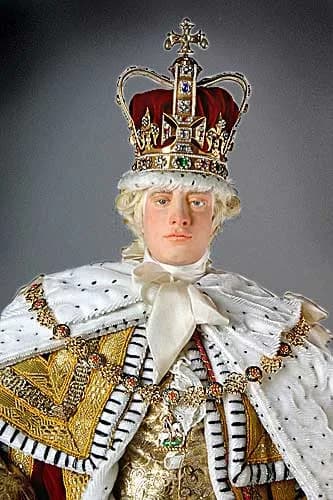
George III of Great Britain (1738–1820) was United Kingdom best known for King of Great Britain and Ireland from 1760 to 1820.
George III of Great Britain (June 4, 1738 – January 29, 1820) was a monarch, politician, and ruler from the United Kingdom. He reigned as King of Great Britain and Ireland for sixty years, overseeing the Acts of Union 1800 that unified the nations. His legacy includes being the first British-born Hanoverian monarch.
Kapitlu
Kapitli tal-ħajja
Kapitlu 1 · 1738· Kapitlu 1 minn 7
Early Life and British Identity
The birth of George III on June 4, 1738, at Norfolk House in the United Kingdom, marked a pivotal moment for the House of Hanover. He was the very first monarch of this esteemed dynasty to be born directly on Great British soil, distinguishing him from his immediate predecessors. This birth location was more than a mere detail; it symbolized a deeper, more integrated connection between the Hanoverian line and the British nation he was destined to lead. His upbringing further solidified this bond, as English was his primary language, a distinct departure from the German-speaking courts of earlier Hanoverian kings. This linguistic affinity ensured a natural connection with his subjects.
A notable aspect of his early life and subsequent reign was his complete absence of visits to Hanover, the ancestral homeland of his family. This decision further underscored his identity as a truly British sovereign, dedicating his entire life and focus to the United Kingdom. His unique position as a British-born, English-speaking monarch was a fundamental aspect of his persona, setting a new precedent for the Hanoverian succession and shaping public perception of the crown. These early foundations helped to define a monarch deeply rooted in the land he served.
Kapitlu 2 · 1760· Kapitlu 2 minn 7
Accession and Early Reign
George III formally began his extensive career as a ruler when he ascended to the throne as King of Great Britain and Ireland on October 25, 1760. This date marked the commencement of what would become one of the longest reigns in British monarchical history, extending over sixty years until his death. From the moment of his accession, he dedicated himself to the demanding roles of monarch, politician, and ruler, navigating complex domestic and international situations. His early reign immediately placed him at the helm of a powerful and expanding empire, facing numerous challenges and opportunities that would shape the course of history.
During these initial years, George III asserted his authority as a monarch who intended to govern actively, engaging directly with political affairs. His involvement in the political sphere was constant, as he worked to uphold the stability and prosperity of his kingdoms. This early period was crucial in establishing his style of leadership, demonstrating his commitment to the crown's responsibilities and setting the stage for the significant events that would unfold under his enduring rule.
Kapitlu 3 · 1800· Kapitlu 3 minn 7
Unification of Realms and Hanoverian Ties
A defining legislative achievement during George III's tenure was the successful passage of the Acts of Union in 1800. These momentous acts served to formally unify the Kingdom of Great Britain and the Kingdom of Ireland, consolidating them into a single, cohesive political entity known as the United Kingdom of Great Britain and Ireland. George III presided over this historic transformation as its reigning king, marking a profound constitutional shift that redefined the nation’s structure for centuries. This unification represented a significant step in the ongoing evolution of the British state, centralizing power and governance.
In addition to his sovereignty over Great Britain and Ireland, George III concurrently held significant titles within the Holy Roman Empire, serving as the duke and prince-elector of Hanover. This dual role reflected the dynastic connections that linked the British crown to continental Europe. His influence in Hanover evolved further when, on October 12, 1814, he officially became the King of Hanover, a title he held alongside his British kingship. This change underscored his continued importance within the European political order, demonstrating the reach of his dynastic and political authority across different realms.
Kapitlu 4· Kapitlu 4 minn 7
Contributions as a Patron and Collector
Beyond his significant political and monarchical duties, George III demonstrated a keen interest in cultural pursuits, establishing himself as both an active art collector and a generous patron of the arts. His personal passions extended into the realms of aesthetics and scholarship, providing crucial support to artists and fostering creative endeavors throughout his reign. This aspect of his character showcased a monarch who understood the importance of culture alongside governance, enriching the national artistic heritage.
Through his patronage, George III contributed to the flourishing of arts and sciences during his time. His efforts as an art collector led to the acquisition of numerous important works, enhancing royal collections and reflecting his personal taste and discernment. These contributions helped to define a period of cultural growth and intellectual curiosity, illustrating a broader vision for the nation that encompassed both political stability and artistic advancement.
Kapitlu 5 · 1800· Kapitlu 5 minn 7
The Acts of Union and Constitutional Shift
The Acts of Union 1800 stand as George III's most enduring political legacy and a singular contribution to the constitutional history of the United Kingdom. Enacted under his direct authority and oversight, these legislative measures brought about a complete re-ordering of the political relationship between Great Britain and Ireland. They culminated in the formal creation of the United Kingdom of Great Britain and Ireland, establishing a unified parliament and a singular monarchical authority over the combined territories. This monumental act transformed the governance of the British Isles, establishing a new legal and administrative framework. The political structure of the British Isles was irrevocably altered by this move, which aimed to consolidate power and ensure greater stability across the two nations, all under George III's unwavering leadership.
Kapitlu 6 · 1820· Kapitlu 6 minn 7
Concluding Years and Enduring Rule
George III maintained his position as King of Great Britain and Ireland until his death on January 29, 1820. His final years brought to a close an exceptionally long and event-filled reign, a period of sixty years that saw immense change both within his kingdoms and across the globe. He passed away at Windsor Castle in the United Kingdom, bringing an end to a life entirely devoted to service. The stability of the crown, despite the numerous challenges of his era, was a testament to his steadfast presence.
His protracted period on the throne meant that generations grew up knowing only George III as their sovereign. This extended rule provided a sense of continuity through turbulent times, including significant international conflicts and profound societal shifts. His physical presence at the head of the nation for so long became a fixture, a symbol of the enduring nature of the British monarchy.
Kapitlu 7 · 1800· Kapitlu 7 minn 7
His Enduring Legacy
The legacy of George III is multifaceted, shaped by his extensive reign and the substantial transformations that occurred under his rule. He is remembered as the first Hanoverian monarch who was not only born in Great Britain but also spoke English as his native language, a fact that powerfully underscored a nascent sense of British national identity. This integration into British life distinguished him significantly from his predecessors and cemented a deeper bond with his subjects. His decisive role in the formal unification of Great Britain and Ireland through the Acts of Union 1800 established a political structure that, in its essence, endured for many years, impacting future generations.
As a monarch, politician, and ruler, George III navigated an era of significant global events, leaving an undeniable mark on the British crown and the trajectory of European history. His long and active involvement in state affairs, coupled with his cultural patronage as an aristocrat and art collector, reflects a sovereign who engaged deeply with both the practicalities of governance and the enrichment of his nation's culture. His life exemplifies a dedication to duty and a significant influence on the shape of the United Kingdom.
Ħajja f’mumenti
Il-mumenti li sawru ħajja



FAQ
Mistoqsija frekwenti
Meta miet/mietet George III of Great Britain?
George III of Great Britain miet/mietet fil-29 ta’ Jannar 1820 f{place}} other {}}{hasAge, select, yes {, fl-età ta 81 sena.
Fejn twieled/twieldet George III of Great Britain?
George III of Great Britain twieled/twieldet f{place}{hasDate, select, yes { fil-{date, date, long}} other {}}.
Għal xiex hu/hi l-aktar magħruf(a) George III of Great Britain?
George III of Great Britain hu/hi l-aktar magħruf(a) għal King of Great Britain and Ireland from 1760 to 1820.
Kemm kellu/kellha snin George III of Great Britain meta miet/mietet?
George III of Great Britain kellu/kellha 81 sena meta miet/mietet.
X'kienet in-nazzjonalità ta' George III of Great Britain?
George III of Great Britain kien/kienet minn United Kingdom.
Linja taż-żmien
Ħajja b’ħarsa
Gallerija tar-ritratti
Ħajja f’ritratti
Ikklikkja kwalunkwe polaroid biex tespandi · 25 ritratti
Kodiċi QR
Aqsam Din il-Bijografija
Stampa u Aqsam
Skennja biex iżżur din il-paġna bijografika. Stampah għal avvenimenti, esibizzjonijiet, jew materjal edukattiv.