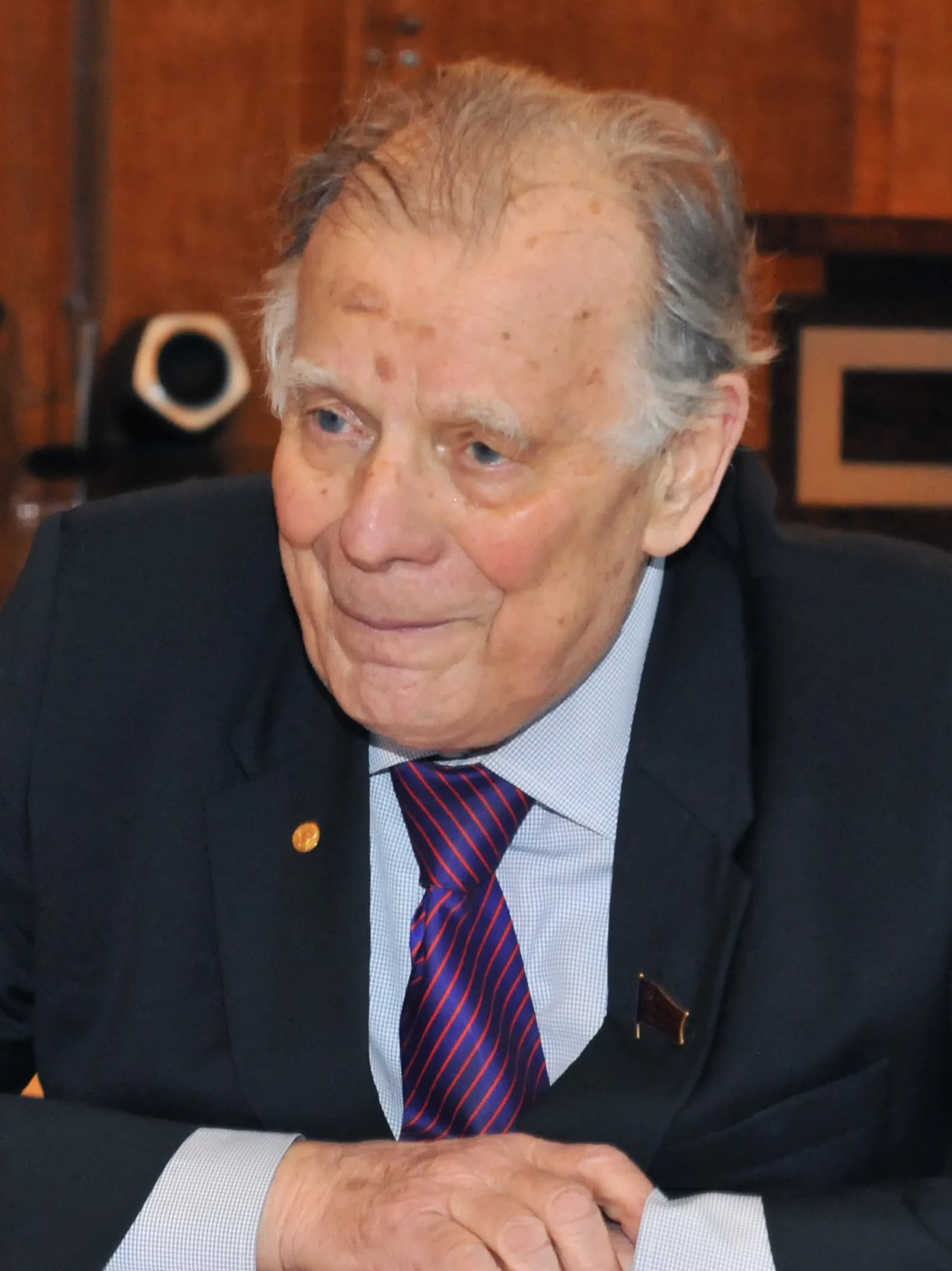
Төрсөн
March 15, 1930
Vitebsk, Belarus
Нас барсан
March 1, 2019
Saint Petersburg, Russia
Түүгээрээ алдартай
Soviet-Russian physicist
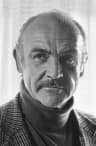
Zhores Alferov (1930–2019) was Belarus best known for Soviet-Russian physicist.
Zhores Ivanovich Alferov (March 15, 1930 – March 1, 2019) was a Soviet-Russian physicist and inventor from Belarus. He significantly contributed to heterostructure physics, sharing the Nobel Prize in Physics in 2000 for developing semiconductor heterojunctions for optoelectronics. His work laid foundations for modern high-speed and optical communication devices.
0-р бүлэг
Амьдралын бүлгүүд
1-р бүлэг · 1930· 7-ийн 1-р бүлэг
Early Life and Origins
Zhores Alferov began his journey in Vitebsk, Belarus, on March 15, 1930. Growing up in the Soviet Union during the mid-20th century, he was immersed in a society that placed high value on scientific and engineering excellence. This cultural emphasis likely fostered his innate curiosity and provided fertile ground for his intellectual development, steering him towards the rigorous pursuit of scientific knowledge. His early environment contributed to cultivating the analytical skills and determination that would define his future career in physics and invention.
2-р бүлэг· 7-ийн 2-р бүлэг
Career Beginnings
Alferov embarked on his professional path as a physicist, dedicating his initial research efforts to exploring the fundamental properties of materials and their potential applications. His early investigations quickly led him into the then-developing field of semiconductors, which promised revolutionary possibilities for electronic devices. As an inventor, he was driven by a vision to translate complex theoretical concepts into tangible, functional technologies, setting a clear trajectory for his innovative work. These early explorations laid the groundwork for the significant breakthroughs that would follow and ultimately reshape contemporary electronics.
3-р бүлэг · 2000· 7-ийн 3-р бүлэг
Major Achievements and Career Highlights
The pinnacle of Zhores Alferov's illustrious scientific career was reached in 2000 when he was jointly awarded the Nobel Prize in Physics. This supreme honor recognized his pivotal work in the development of semiconductor heterostructures, which proved to be revolutionary for both high-speed and opto-electronics. The award underscored the profound significance of his research in enabling devices to operate with unprecedented speed and efficiency by controlling the flow of electrons and photons. This recognition placed him among the most distinguished scientists of his generation, celebrating a lifetime of dedicated inquiry and innovation.
Alferov's specific contribution to this Nobel-winning research involved the ingenious development of the semiconductor heterojunction, a critical component that underpins much of modern optoelectronics. This innovation allowed for the creation of new types of electronic devices that could emit and detect light with remarkable efficiency and precision. His work fundamentally advanced the field of heterostructure physics and electronics, providing essential building blocks for technologies ranging from laser diodes to advanced integrated circuits. Such developments have had a broad and lasting influence on telecommunications, information technology, and numerous other sectors.
4-р бүлэг· 7-ийн 4-р бүлэг
Personal Life
While Zhores Alferov's immense contributions to science and his subsequent political career are extensively documented, the available information does not delve into specific details regarding his private life, family dynamics, or personal interests beyond his professional engagements. His life was predominantly characterized by a deep commitment to scientific inquiry and public service, demonstrating a dedication that spanned both the laboratory and the political arena. This singular focus suggests a life driven by a desire to contribute meaningfully to society and technological progress.
5-р бүлэг· 7-ийн 5-р бүлэг
Notable Works or Contributions
Central to Alferov's scientific legacy is his groundbreaking development of semiconductor heterostructures. These sophisticated material systems involve layering different semiconductor compounds to create interfaces, or heterojunctions, that exhibit unique electronic and optical properties. His research unlocked new ways to manipulate charge carriers and light at an atomic scale, allowing for the precise design of high-performance devices. This innovative approach transformed the capabilities of semiconductor technology, providing the foundation for numerous advancements.
Specifically, his work on the semiconductor heterojunction for optoelectronics proved to be a critical enabler for many ubiquitous technologies. This invention provided the essential basis for efficient light-emitting diodes (LEDs) and semiconductor lasers, which are integral to fiber-optic communication, barcode scanners, and compact disc players. The principles he established facilitated the miniaturization and increased efficiency of electronic components, making high-speed data transfer and sophisticated optical applications widely accessible. His intellectual property and scientific insights continue to influence contemporary material science and device engineering.
6-р бүлэг · 1999· 7-ийн 6-р бүлэг
Later Years
Following a distinguished career in physics and invention, Zhores Alferov transitioned into public service during his later years. Beginning in 1999, he embarked on a new chapter as a politician, serving as a member of the State Duma, which is the lower house of the Federal Assembly of Russia. His affiliation with the Russian Communist Party in this role highlighted a commitment to political engagement and a desire to contribute to the nation's governance. This shift demonstrated his broad intellectual capacity and his dedication to public life.
His tenure in the State Duma allowed him to apply his analytical mind and problem-solving skills to legislative and policy matters, reflecting a broader sense of civic duty. Even as a politician, Alferov remained a respected scientific figure, often advocating for the importance of science and education within governmental spheres. He passed away on March 1, 2019, in Saint Petersburg, Russia, leaving behind a remarkable dual legacy as both a world-renowned physicist and a dedicated public servant who sought to advance his country through both scientific and political means.
7-р бүлэг· 7-ийн 7-р бүлэг
Legacy and Impact
Zhores Alferov's legacy is a cornerstone of modern technological progress, with his innovations underpinning much of the digital world. His foundational work in heterostructure physics and electronics significantly influenced countless aspects of contemporary life. From the high-speed processors that power our computers to the fiber optic cables that transmit global information, his scientific contributions are intrinsically woven into the fabric of modern communication and computing. He effectively transformed theoretical concepts into practical, world-changing technologies.
The Nobel Prize in Physics awarded to him in 2000 serves as a powerful symbol of the monumental significance of his research. It acknowledged not only the development of specific devices but also the establishment of entirely new paradigms for designing semiconductor components. Generations of scientists, engineers, and innovators continue to build upon the principles and devices he pioneered, ensuring that Zhores Alferov's influence will persist far into the future. His life stands as an inspiration for the pursuit of knowledge and its application for the betterment of humanity.
Амьдралын мөчүүд
Амьдралыг бүтээсэн мөчүүд


Асуулт хариулт
Түгээмэл асуултууд
Zhores Alferov хэзээ нас барсан бэ?
Zhores Alferov 2019 оны гуравдугаар сарын 1-нд Saint Petersburg, Russia-д нас барсан, 88 насандаа.
Zhores Alferov хаана төрсөн бэ?
Zhores Alferov Vitebsk, Belarus-д 1930 оны гуравдугаар сарын 15-нд төрсөн.
Zhores Alferov юугаараа алдартай вэ?
Zhores Alferov Soviet-Russian physicist-ээрээ хамгийн алдартай.
Zhores Alferov нас барахдаа хэдэн настай байсан бэ?
Zhores Alferov нас барахдаа 88 настай байсан.
Zhores Alferov ямар үндэстэн байсан бэ?
Zhores Alferov Belarus-аас гаралтай.
Цаг хугацаа
Амьдралын замнал
Зургийн цомог
Зурагт өгүүлсэн амьдрал
Зургийг томруулахын тулд дарна уу · 36 зураг
QR код
Энэхүү намтрыг хуваалцах
Хэвлэх ба хуваалцах
Энэхүү намтрын хуудаст зочлохын тулд уншуулна уу. Үйл явдал, үзэсгэлэн, боловсролын материалын зорилгоор хэвлэнэ үү.