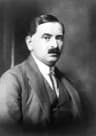
Роден
October 22, 1881
Bloomington, United States
Починал
February 1, 1958
Charlottesville, United States
Познат по
American physicist
Clinton Davisson (1881–1958) was United States best known for American physicist.
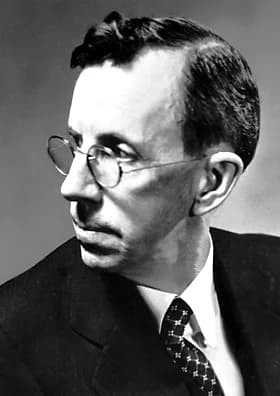
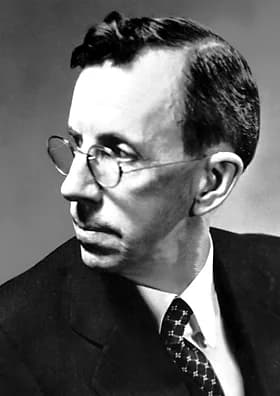
Clinton Joseph Davisson (October 22, 1881 – February 1, 1958) was an American experimental physicist. He shared the 1937 Nobel Prize in Physics for the experimental discovery of electron diffraction by crystals, confirming the wave nature of electrons. His work significantly advanced quantum mechanics.
Поглавје
Животни поглавја
Поглавје 1 · 1881· Поглавје 1 од 5
Early Life and Academic Journey
Born on October 22, 1881, in Bloomington, United States, Clinton Davisson began a journey that would lead him to the forefront of scientific discovery. His early life in Bloomington laid the foundation for a future steeped in rigorous academic pursuit and experimental physics. This formative period cultivated the analytical mind and inquisitive spirit that would define his professional path.
Davisson pursued a path of higher education, ultimately becoming a physicist and a respected university teacher. This dual role allowed him not only to advance the boundaries of scientific knowledge through his own research but also to impart that knowledge to successive generations of students. His commitment to both research and education characterized his long and distinguished career.
Поглавје 2 · 1937· Поглавје 2 од 5
The Breakthrough Discovery
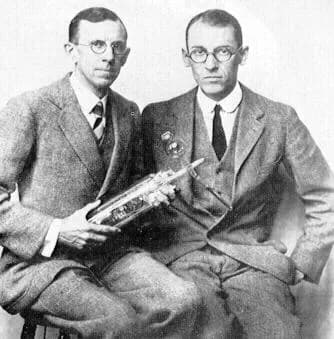
The crowning achievement of Clinton Davisson's career came with his experimental discovery of the diffraction of electrons by crystals. This work, conducted in collaboration with George Paget Thomson, earned them the 1937 Nobel Prize in Physics. Their findings provided crucial experimental evidence for the wave-particle duality of matter, a cornerstone concept in quantum mechanics.
The phenomenon of electron diffraction demonstrated that electrons, previously thought of solely as particles, could also exhibit wave-like properties, similar to light. This discovery was not merely an academic triumph; it fundamentally altered how scientists viewed the subatomic world. It confirmed theoretical predictions and opened new avenues for investigating the structure of materials.
Поглавје 3· Поглавје 3 од 5
A Career of Dedicated Inquiry
Throughout his professional life, Clinton Davisson consistently engaged in rigorous experimental physics, driven by a deep curiosity about the natural world. As a physicist and university teacher, he maintained a steady output of research, exploring various facets of electron behavior and its implications. His work was characterized by meticulous experimentation and thoughtful analysis.
Davisson's career extended beyond the single, celebrated discovery. He pursued a diverse range of topics, reflecting a broad scientific interest. His inquiries often focused on the practical applications and theoretical underpinnings of electron physics, always pushing the boundaries of what was known.
Поглавје 4 · 1938· Поглавје 4 од 5
Key Publications and Scholarly Contributions
Clinton Davisson was a prolific author of academic papers, with an h-index of 11 across 32 published works, demonstrating the sustained impact of his research. Among his most influential contributions was "The discovery of electron waves," published in 1938, which garnered 19 citations. This paper undoubtedly elaborated on his Nobel Prize-winning work and its implications.
Other significant works include "Theory and Practice of Electron Diffraction" from 1940, cited 9 times, which likely provided practical guidance and deeper theoretical insight into the phenomenon. His interest in fundamental physics was also evident in "A New Variation of the Rotation-by-Magnetization Method of Measuring Gyromagnetic Ratios" (1953, 8 citations) and "The Theory of the Transverse Doppler Effect" (1938, 5 citations). These publications showcase the breadth and depth of his scientific exploration, from electron behavior to electromagnetism and relativity.
Поглавје 5 · 1958· Поглавје 5 од 5
Later Life and Enduring Legacy
Clinton Davisson passed away on February 1, 1958, in Charlottesville, United States. His death marked the end of a life dedicated to scientific exploration and discovery. Though he is no longer with us, his intellectual legacy continues to resonate throughout the scientific community, particularly in the fields of physics and materials science.
The experimental confirmation of electron diffraction, for which he received the Nobel Prize, remains a cornerstone of modern physics. It not only solidified the foundations of quantum mechanics but also paved the way for technologies like the electron microscope, which has revolutionized our ability to visualize the microscopic world. Clinton Davisson's work impacted our understanding of matter, ensuring his place as an influential figure in the history of science.
Живот во моменти
Моментите што го обликувале еден живот

ЧПП
Често поставувани
Кога почина Clinton Davisson?
Clinton Davisson почина на 1 февруари 1958 г. во Charlottesville, United States, на возраст од 76 години.
Каде е роден(а) Clinton Davisson?
Clinton Davisson е роден(а) во Bloomington, United States на 22 октомври 1881 г..
По што е најпознат(а) Clinton Davisson?
Clinton Davisson е најпознат(а) по American physicist.
Колку години имаше Clinton Davisson во моментот на смртта?
Clinton Davisson имаше 76 години во моментот на смртта.
Од која националност беше Clinton Davisson?
Clinton Davisson беше од United States.
Хронологија
Живот во преглед
Галерија со фотографии
Живот во слики
Кликнете на која било полароид фотографија за да ја прошириете · 23 фотографии
QR код
Споделете ја оваа биографија
Печати и сподели
Скенирајте за да ја посетите оваа биографска страница. Печатете за настани, изложби или образовни материјали.