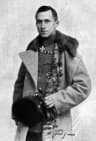
Dzimis
July 10, 1895
Munich, Germany
Miris
March 29, 1982
Munich, Germany
Pazīstams ar
German composer
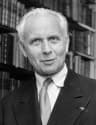
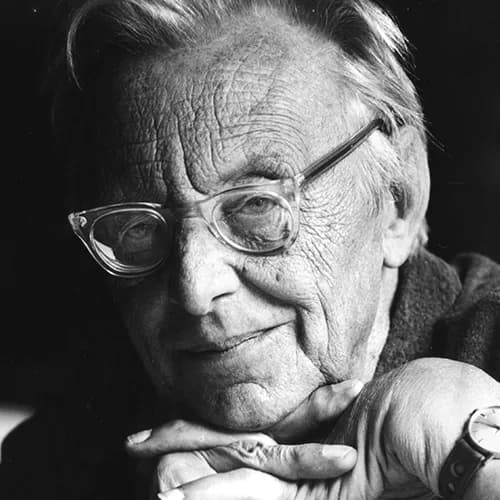
Carl Orff (1895–1982) was Germany best known for German composer.
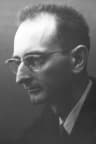
Carl Orff (July 10, 1895 – March 29, 1982) was a German composer and music educator from Munich. He is widely celebrated for his cantata Carmina Burana and his influential Schulwerk concepts for children's music education. His legacy continues to resonate in classical music and pedagogical practices worldwide.
Nodaļa
Dzīves nodaļas
Nodaļa 1 · 1895· Nodaļa 1 no 7
Opening
Carl Heinrich Maria Orff, a towering figure in 20th-century music, was a distinguished German composer and music educator. Born on July 10, 1895, and passing away on March 29, 1982, his life spanned an era of immense musical innovation. Orff's enduring legacy is primarily defined by his iconic cantata Carmina Burana and his revolutionary Schulwerk concepts, which significantly shaped children's music education globally. His varied career saw him excel as a librettist, university teacher, composer, musicologist, and music theorist.
Nodaļa 2 · 1895· Nodaļa 2 no 7
Early Life and Origins
Carl Orff's journey began in the vibrant city of Munich, Germany, where he was born on July 10, 1895. Munich remained a central point throughout his life, serving as both his birthplace and the city where he would eventually pass away. This deep connection to his native city undoubtedly influenced his musical and educational philosophies.
His early environment in Germany provided a fertile ground for the development of his diverse professional interests in music. The cultural richness of Munich at the turn of the century offered ample opportunities for artistic exploration and growth. These initial experiences were foundational to his later groundbreaking work.
Nodaļa 3· Nodaļa 3 no 7
Career Beginnings
From an early age, Carl Orff dedicated himself to the world of music, cultivating a wide array of skills that would define his professional life. He pursued a path that saw him become a renowned librettist, crafting the texts for his vocal works with meticulous care. This allowed him to maintain complete artistic control over his compositions, merging words and music seamlessly.
Orff also committed himself to education, working as a university teacher and significantly impacting the next generation of musicians and educators. These formative years established him as a serious composer, musicologist, and music theorist. His early professional roles provided him with a comprehensive understanding of music's theoretical, historical, and pedagogical dimensions.
Nodaļa 4 · 1937· Nodaļa 4 no 7
Major Achievements and Career Highlights
Among Carl Orff's most significant achievements is the creation of the cantata Carmina Burana, first performed in 1937. This work quickly garnered international acclaim, becoming one of the most frequently performed choral-orchestral pieces of the 20th century. Its powerful rhythms and dramatic storytelling resonated with audiences worldwide.
Beyond his compositions, Orff's influence extended deeply into pedagogy through his Schulwerk. These innovative concepts for children's music education emphasized elemental music-making, combining movement, speech, and song, and have been adopted worldwide. His contributions enriched several music genres, demonstrating his versatility as a composer across classical, ballet, cantata, opera, and orchestral forms. His unique artistic vision blended rhythmic drive with melodic simplicity, creating a sound that was both ancient and modern.
Nodaļa 5 · 1937· Nodaļa 5 no 7
Notable Works or Contributions
The discography of Carl Orff highlights a prolific and impactful career, with Carmina Burana appearing in numerous recordings and versions over decades. The initial composition in 1937 was followed by various interpretations, including Carmina Burana Synthesized (1989), and multiple releases titled Orff: Carmina Burana in 1994 and 1998, among others in 2004 and 1973. This consistent re-recording underscores its enduring appeal and its place as a cornerstone of the classical repertoire.
Beyond his most famous work, Orff composed other significant pieces that further showcase his distinctive style. Catulli Carmina saw releases in 1954 and a remastered version in 1967, reflecting a continued interest in his unique approach to setting classical texts. Other notable recordings include Умница / Симфониетта (1965) and Trionfo di Afrodite (1970).
These works, alongside Dithyrambi from a 1994 compilation and the undated 1017 Carmina Burana Cantiones Profanae, contributed to a rich body of work that explored the power of rhythm, language, and drama in music. Orff's mastery of different musical forms, including ballet, cantata, opera, and orchestral pieces, solidified his reputation as a composer of immense range and vision. He consistently pushed artistic boundaries with his distinct compositional voice.
Nodaļa 6 · 1982· Nodaļa 6 no 7
Later Years
Carl Orff continued to contribute to music throughout his long and distinguished life. He remained active in the musical world, witnessing the continued global success of his compositions and educational philosophies. His passing on March 29, 1982, in his beloved Munich, marked the end of an era for a composer whose music resonated with millions. His final years were spent knowing his work had made a lasting difference and secured its place in history.
Nodaļa 7· Nodaļa 7 no 7
Legacy and Impact
The legacy of Carl Orff is multifaceted, deeply embedded in both the performance hall and the classroom. His Schulwerk revolutionized children's music education, providing an all-encompassing and accessible method for fostering musical creativity and literacy. Educators worldwide continue to implement his principles, recognizing their effectiveness in nurturing young musical minds and encouraging elemental musical expression.
Furthermore, the global recognition and frequent performance of Carmina Burana ensure his enduring presence in classical music. Its powerful choruses and dramatic narrative continue to enthrall audiences, making it a staple of orchestras and choirs around the world. Carl Orff’s work reflects his unique artistic vision and his deep commitment to making music vibrant and accessible for generations.
Dzīve mirkļos
Mirkļi, kas veidoja dzīvi
BUJ
Biežāk uzdotie
Kad nomira Carl Orff?
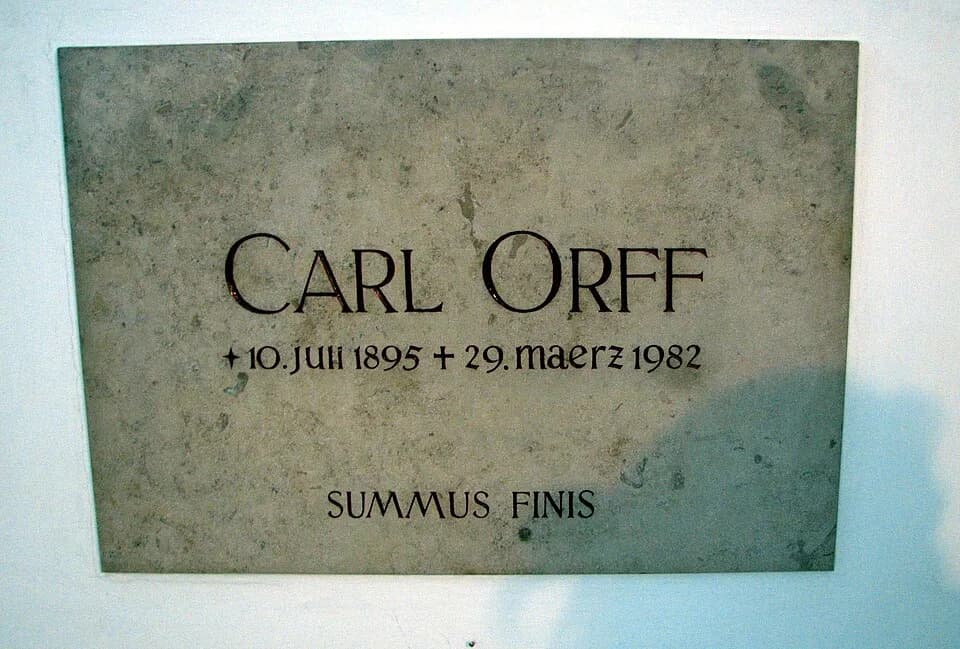
Carl Orff nomira 1982. gada 29. marts Munich, Germany 86 gadu vecumā.
Kur dzima Carl Orff?
Carl Orff dzima Munich, Germany 1895. gada 10. jūlijs.
Ar ko Carl Orff ir vislabāk pazīstams(a)?
Carl Orff ir vislabāk pazīstams(a) ar German composer.
Cik gadu bija Carl Orff nāves brīdī?
Carl Orff nāves brīdī bija 86 gadus vecs(a).
Kādas tautības bija Carl Orff?
Carl Orff bija no Germany.
Laika līnija
Dzīve īsumā
Fotogalerija
Dzīve attēlos
Noklikšķiniet uz jebkura polaroīda, lai izvērstu · 44 fotoattēli
QR kods
Dalīties ar šo biogrāfiju
Drukāt un dalīties
Skenējiet, lai apmeklētu šo biogrāfijas lapu. Drukājiet pasākumiem, izstādēm vai izglītības materiāliem.