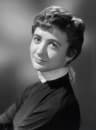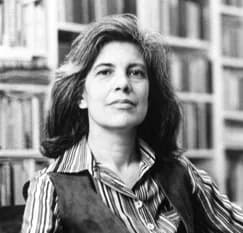
출생
January 16, 1933
New York City, United States
별세
December 28, 2004
New York City, United States
알려진 업적
American writer and filmmaker, professor, and activist
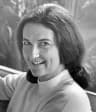
Susan Sontag (1933–2004) was United States best known for American writer and filmmaker, professor, and activist.
Susan Sontag (January 16, 1933 – December 28, 2004) was an American writer, critic, and filmmaker. She was widely known for her insightful essays, including "Notes on 'Camp'" and "On Photography," alongside her novels and activism. Her writings explored diverse cultural and social themes, leaving a significant intellectual mark.
챕터
삶의 챕터
챕터 1 · 1933· 7장 중 1장
Early Life and Origins
Susan Lee Sontag was born on January 16, 1933, in New York City, United States. Her upbringing provided the foundation for her later intellectual pursuits and critical outlook. From an early age, Sontag displayed a keen intellect and a deep curiosity about the world around her.
챕터 2 · 1964· 7장 중 2장
Career Beginnings
Sontag's journey into the literary world began with her early writings and critical engagements. She published her first major work, the influential essay "Notes on 'Camp'", in 1964, quickly establishing her as a distinctive voice in American letters. This essay introduced a new way of understanding aesthetics and cultural phenomena, drawing widespread attention to her analytical capabilities.
챕터 3 · 1966· 7장 중 3장
Major Achievements and Career Highlights
Throughout her career, Susan Sontag achieved recognition across multiple fields, embodying the roles of an author, literary critic, film critic, philosopher, and human rights defender. Her critical works, such as Against Interpretation (1966), On Photography (1977), and Illness as Metaphor (1978), profoundly influenced academic and public understanding of art, culture, and society. These essays demonstrated her unique ability to dissect complex ideas with clarity and intellectual rigor, offering fresh perspectives on contemporary issues.
Sontag was also a distinguished professor and engaged in various forms of activism, including advocating for women's rights and defending human rights globally. Her multidisciplinary approach allowed her to contribute as a journalist, opinion journalist, and even a screenwriter, expanding her reach and influence beyond purely academic circles. She also held roles as a director in both theatre and film, showcasing her diverse artistic talents.
챕터 4· 7장 중 4장
Personal Life
Details of Susan Sontag's personal life are not extensively provided in public records, but her intellectual journey and public persona were deeply integrated with her work. Her profound engagement with art, culture, and politics defined much of her public existence. She remained a private figure in many respects, dedicating her energies to her writing and activism.
챕터 5· 7장 중 5장
Notable Works or Contributions
Susan Sontag's extensive bibliography includes a variety of influential works, primarily essays, but also several novels and short stories. Her essay collections, including Against Interpretation and On Photography, challenged conventional thinking and offered critical frameworks for understanding cultural artifacts and phenomena. These works explored the meaning-making processes in art, the ethical dimensions of imagery, and the societal implications of illness.
Her notable prose extended to fiction, with celebrated novels such as The Volcano Lover (1992) and In America (1999) captivating readers with their historical depth and psychological insight. She also penned the widely recognized short story "The Way We Live Now" (1986), which poignantly addressed the AIDS epidemic. Other significant works include Refusenik!, On Paul Goodman, Selected Stories, AIDS and its metaphors, Antonin Artaud, and Myśl to forma odczuwania.
Sontag's connection to film extended beyond criticism, as she also made an appearance in Woody Allen's 1986 film, Zelig. She explored various literary projects, with titles like Untitled Book on Japan and Untitled Short Stories noted in her bibliography, reflecting her continuous creative output and intellectual curiosity.
챕터 6 · 2003· 7장 중 6장
Later Years
In her later years, Sontag continued to produce significant works, reaffirming her status as a leading public intellectual. Her book Regarding the Pain of Others, published in 2003, offered a meditation on the ethics and aesthetics of war photography, just a year before her passing. This work revisited and deepened themes she had explored decades earlier in On Photography.
Despite her declining health, Susan Sontag remained active in her chosen professions, continuing to write and engage with the world's pressing issues. Her dedication to critical thought and artistic expression remained undiminished until her death on December 28, 2004, in New York City, United States.
챕터 7· 7장 중 7장
Legacy and Impact
Susan Sontag's intellectual legacy is characterized by her expansive critical perspective and her ability to articulate complex cultural ideas with precision. Her contributions as an essayist, novelist, and critic profoundly influenced literary and cultural studies, inspiring generations of thinkers. She taught us to approach art, politics, and social phenomena with a keen, questioning intellect.
Her academic influence endures, with an h-index of 23 and 119 papers citing her work, indicating widespread and ongoing scholarly engagement. Themes from her writings, such as the "double standard of aging," were significantly cited in academic discussions, with related papers appearing as late as 2018. Her seminal essay "Notes on 'Camp'" continues to be referenced, as seen in publications like "CAMP: Notes on Fashion" in 2019, showcasing the enduring relevance of her insights. Sontag's fearless intellectual spirit and her commitment to human rights continue to inspire critical thought and activism globally.
순간 속의 삶
한 삶을 빚어낸 순간들
FAQ
자주 묻는 질문
Susan Sontag은(는) 언제 사망했습니까?
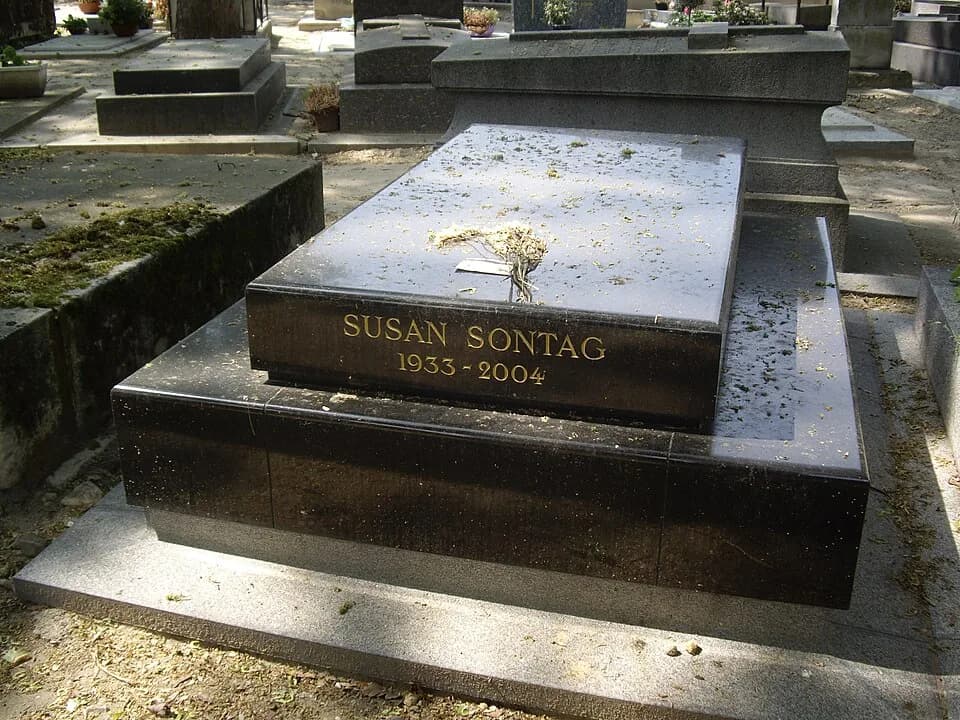
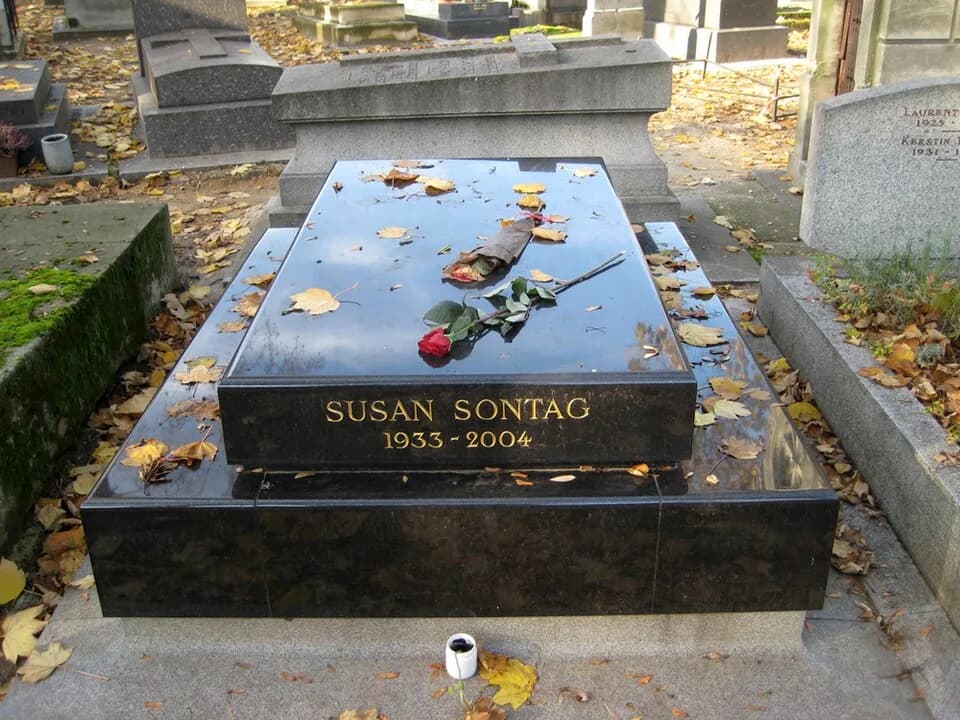
Susan Sontag은(는) 2004년 12월 28일 New York City, United States에서 사망했습니다 (향년 71세).
Susan Sontag은(는) 어디에서 태어났습니까?
Susan Sontag은(는) New York City, United States에서 1933년 1월 16일에 태어났습니다.
Susan Sontag은(는) 무엇으로 가장 잘 알려져 있습니까?
Susan Sontag은(는) American writer and filmmaker, professor, and activist(으)로 가장 잘 알려져 있습니다.
Susan Sontag은(는) 사망 당시 몇 살이었습니까?
Susan Sontag은(는) 사망 당시 71세였습니다.
Susan Sontag의 국적은 무엇이었습니까?
Susan Sontag은(는) United States 출신이었습니다.
연표
한눈에 보는 삶
사진 갤러리
사진으로 보는 삶
폴라로이드를 클릭하여 확대 · 사진 25장
QR 코드
이 전기 공유
인쇄 및 공유
스캔하여 이 전기 페이지를 방문하세요. 행사, 전시회, 교육 자료에 인쇄해 사용하실 수 있습니다.