출생
February 3, 1909
Paris, France
별세
August 24, 1943
Ashford, United Kingdom
알려진 업적
French philosopher, writer, and social activist
Simone Weil (1909–1943) was France best known for French philosopher, writer, and social activist.
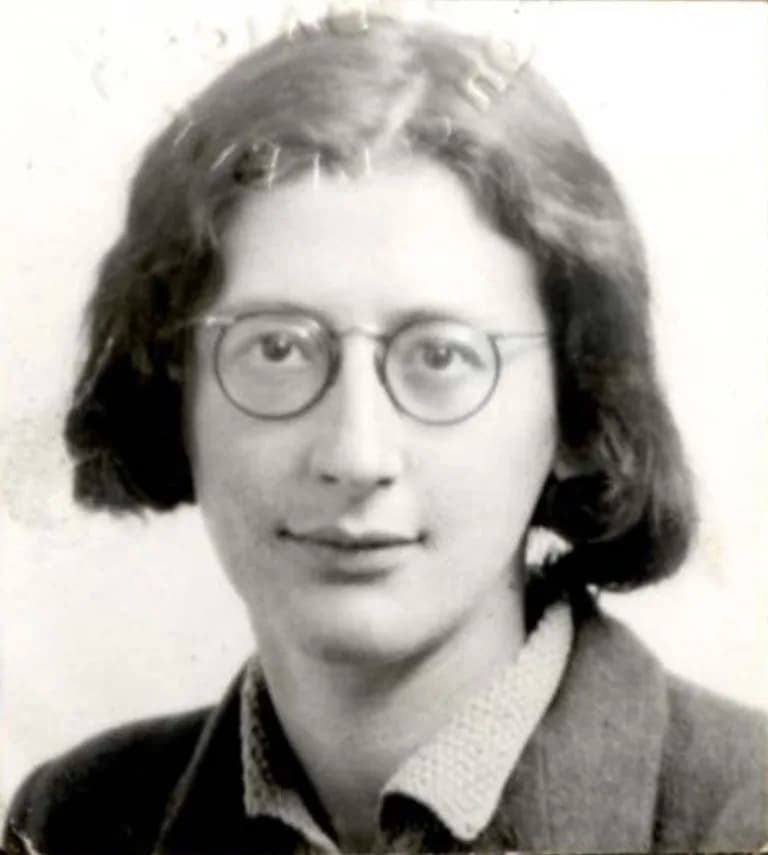
Simone Weil (February 3, 1909 – August 24, 1943) was a French philosopher, writer, and social activist from Paris, France. Her ideas on religion, spirituality, and politics have significantly influenced contemporary philosophy. She lived a life of profound engagement, combining intellectual rigor with practical social action.
챕터
삶의 챕터
챕터 1 · 1909· 8장 중 1장
Opening Paragraph
Simone Adolphine Weil, born on February 3, 1909, and passing on August 24, 1943, was a profound French philosopher, writer, and social activist whose ideas continue to resonate deeply in contemporary thought. Despite her tragically short life, her commitment to justice and her intellectual contributions as a philosopher, poet, translator, teacher, and French Resistance fighter left a significant and lasting mark. Her unique blend of philosophical inquiry, mystic contemplation, and practical engagement with political and social issues defined her singular career.
챕터 2· 8장 중 2장
Early Life and Origins
Simone Weil was born in Paris, France, into an affluent, secular Jewish family. Her intellectual prowess was evident from a young age, nurtured by a stimulating home environment and an exceptional education. She was the younger sister of the mathematician André Weil, and their upbringing fostered rigorous intellectual pursuits.
Weil pursued her studies diligently, excelling in philosophy. She attended the Lycée Henri IV, where she was taught by the prominent philosopher Alain (Émile Chartier), and later entered the École Normale Supérieure in 1928. Her time in Paris, France, during her formative years shaped her critical perspective and deep concern for societal issues.
챕터 3· 8장 중 3장
Career Beginnings
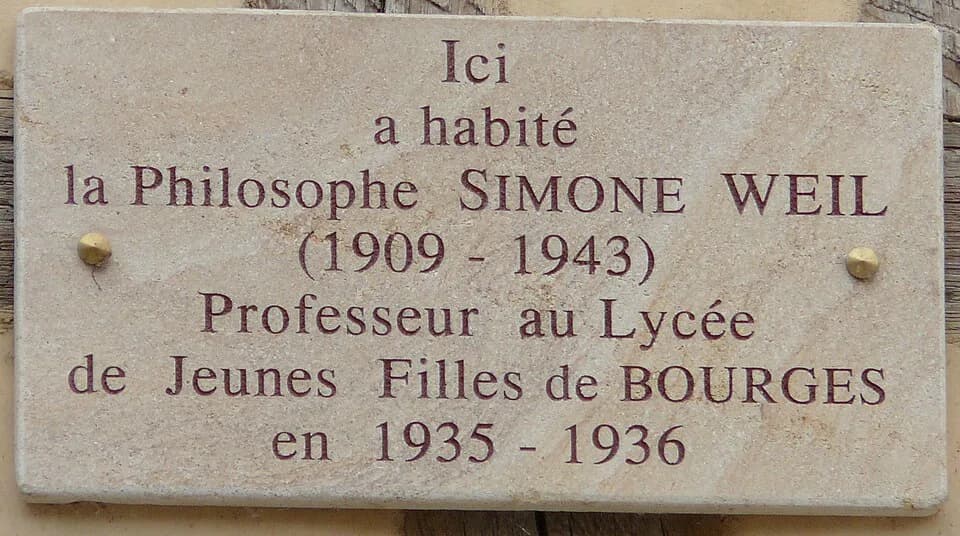
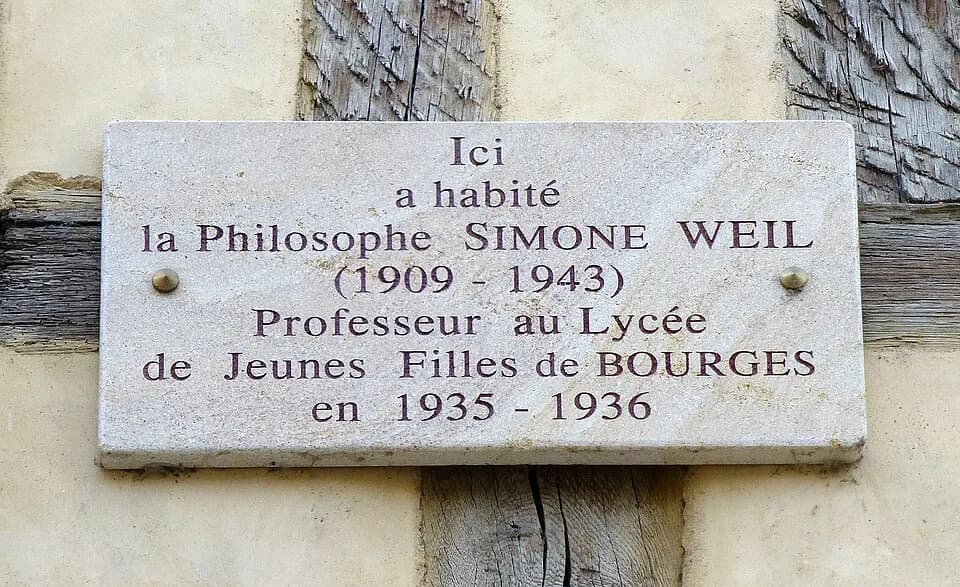
After completing her education, Simone Weil embarked on a career as a secondary school teacher, often taking positions in industrial towns. Her experiences in teaching brought her into direct contact with the working class, fueling her engagement with trade unionism. She actively participated in the labor movement, seeking to understand and alleviate the hardships faced by workers.
This early period saw her not just as an educator, but also as a passionate trade unionist, embodying her philosophical principles through direct action. Her teaching roles provided a platform for both her intellectual development and her social activism. She began to articulate her observations and theories on labor and society, forming the basis of her later writings.
챕터 4 · 1934· 8장 중 4장
Major Achievements and Career Highlights
Simone Weil’s life was a testament to intellectual rigor and unwavering ethical commitment, even though she did not receive traditional academic accolades during her lifetime. Her unique approach integrated theoretical philosophy with direct, often physically demanding, personal experience. She famously took a leave of absence from her teaching post to work in factories, including an Alsthom electrical factory and a Renault factory, experiencing the dehumanizing conditions of industrial labor firsthand in 1934-1935.
Her participation in the Spanish Civil War on the Republican side in 1936 further exemplified her dedication to social justice, although her time there was cut short by an injury. Her experiences in conflict zones and factories allowed her to live out her philosophical convictions, moving beyond abstract thought to grapple with concrete realities. Weil’s courageous actions as a French Resistance fighter during World War II, despite her frail health, showcased her profound commitment to her homeland and her principles.
챕터 5· 8장 중 5장
Personal Life
Simone Weil led a life marked by intense intellectual focus and a deep, often austere, personal commitment to her ideals. Born in Paris, France, into a family that valued intellect, she maintained a close relationship with her elder brother, André Weil, a distinguished mathematician. Her personal life was largely dedicated to her philosophical and social pursuits, with little emphasis on conventional relationships.
Weil's interests extended beyond academic philosophy to include active participation in social and political struggles. Her decision to work in factories and join the Republican forces in Spain demonstrates a profound personal need to understand suffering and injustice directly. Her spiritual journey, which intensified in her later years, also deeply shaped her individual path, leading towards mystic experiences and a unique perspective on religion and spirituality.
챕터 6· 8장 중 6장
Notable Works or Contributions
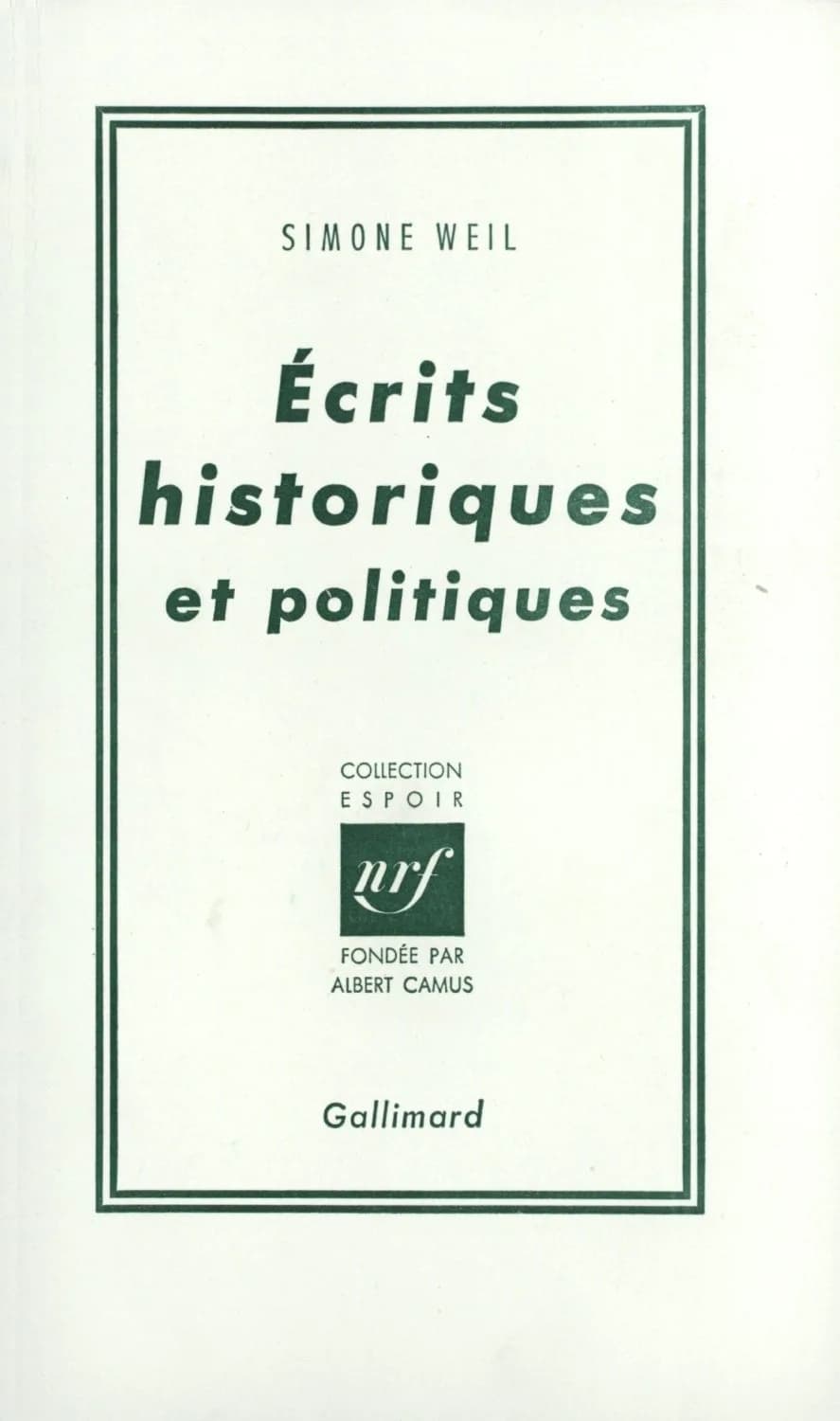
Simone Weil’s posthumously published works are central to her enduring influence, exploring themes of religion, spirituality, politics, and the nature of oppression. Her collection "L'enracinement" (The Need for Roots), written during her time with the French Resistance in London, is a seminal text on the moral and spiritual needs of society, addressing displacement and the human condition. This work, along with "ha-Koved ṿeha-ḥesed" (Gravity and Grace), offers profound insights into divine love, suffering, and the human predicament.
Her philosophical depth is further revealed in "La Ilíada o el poema de la fuerza" (The Iliad, or The Poem of Force), where she analyzes the nature of force and its impact on human beings through the lens of ancient epic poetry. Other significant contributions include her "Notebooks," which contain her reflections, observations, and spiritual meditations, and "Poèmes, suivis de Venise sauvée," showcasing her literary and poetic talents. Works such as "Pensamientos desordenados acerca del amor a Dios" and "Désarroi de notre temps" also delve into her rich spiritual and political thought, solidifying her status as a distinctive voice in 20th-century philosophy.
챕터 7 · 1942· 8장 중 7장
Later Years
In her later years, Simone Weil continued her intellectual and activist endeavors despite declining health. During World War II, she moved to the United States with her family in 1942, before making her way to London, United Kingdom. There, she worked with the Free French forces, contributing her intellectual efforts to the French Resistance. It was during this period in London that she penned some of her most influential writings, including "L'enracinement," expressing her vision for a post-war France.
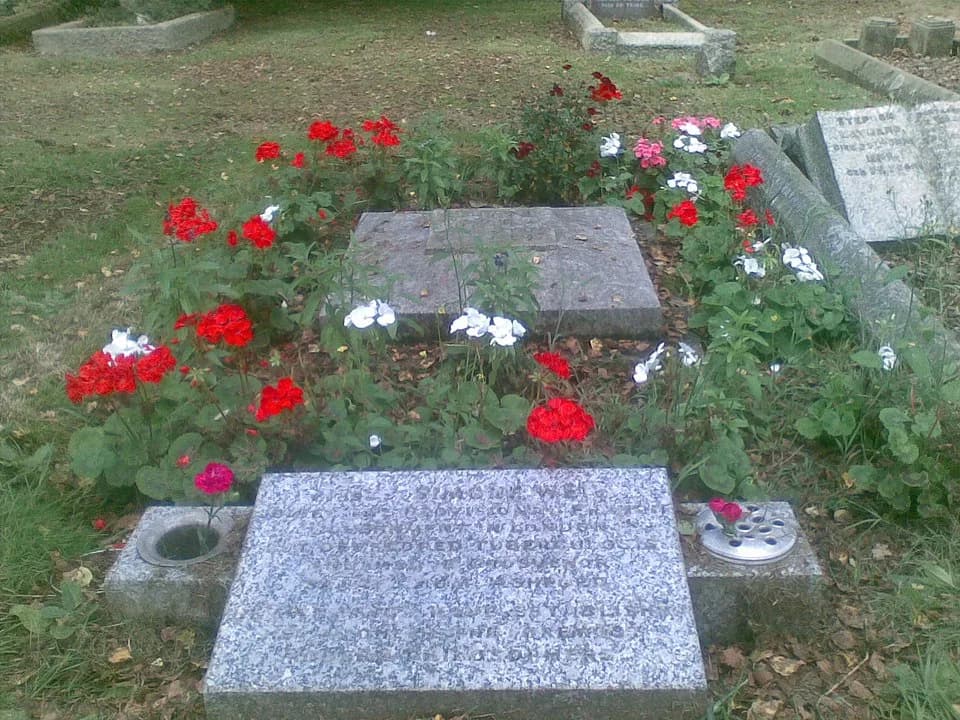
Her health deteriorated significantly due to self-imposed asceticism and the strains of war, leading to her death in Ashford, United Kingdom, on August 24, 1943. She was diagnosed with tuberculosis and refused to eat more than the official rations of her compatriots in occupied France, exacerbating her condition. Her final years were characterized by an unyielding commitment to her moral and political ideals, even at great personal cost.
챕터 8 · 1943· 8장 중 8장
Legacy and Impact
Simone Weil’s ideas concerning religion, spirituality, and politics have remained widely influential in contemporary philosophy, long after her death in 1943. Her unique synthesis of critical thought, mystical experience, and social action has inspired thinkers across various disciplines. She challenged conventional categories, offering a philosophy deeply rooted in human experience and suffering.
Her writings continue to be studied for their profound insights into justice, attention, and the sacred dimension of human life. Weil’s intellectual courage and her willingness to embody her convictions, from working in factories to fighting in the Resistance, provide a powerful example of engaged philosophy. Her short life, ending in Ashford, United Kingdom, left a rich legacy of ideas that continues to provoke and enlighten new generations of readers and scholars.
순간 속의 삶
한 삶을 빚어낸 순간들

FAQ
자주 묻는 질문
Simone Weil은(는) 언제 사망했습니까?
Simone Weil은(는) 1943년 8월 24일 Ashford, United Kingdom에서 사망했습니다 (향년 34세).
Simone Weil은(는) 어디에서 태어났습니까?
Simone Weil은(는) Paris, France에서 1909년 2월 3일에 태어났습니다.
Simone Weil은(는) 무엇으로 가장 잘 알려져 있습니까?
Simone Weil은(는) French philosopher, writer, and social activist(으)로 가장 잘 알려져 있습니다.
Simone Weil은(는) 사망 당시 몇 살이었습니까?
Simone Weil은(는) 사망 당시 34세였습니다.
Simone Weil의 국적은 무엇이었습니까?
Simone Weil은(는) France 출신이었습니다.
연표
한눈에 보는 삶
사진 갤러리
사진으로 보는 삶
폴라로이드를 클릭하여 확대 · 사진 47장
QR 코드
이 전기 공유
인쇄 및 공유
스캔하여 이 전기 페이지를 방문하세요. 행사, 전시회, 교육 자료에 인쇄해 사용하실 수 있습니다.