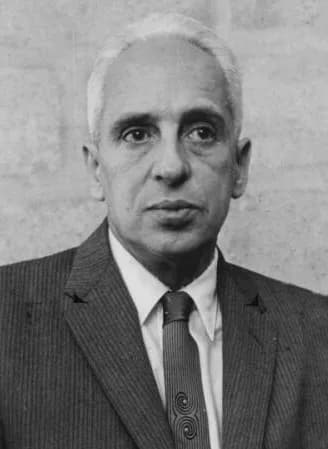
출생
September 24, 1905
Ḷḷuarca, Spain
별세
November 1, 1993
Madrid, Spain
알려진 업적
Spanish physician
Severo Ochoa (1905–1993) was Spain best known for Spanish physician.
Severo Ochoa (September 24, 1905 – November 1, 1993) was a Spanish physician and biochemist. He shared the 1959 Nobel Prize for discovering mechanisms in the biological synthesis of DNA and RNA. His work fundamentally advanced our understanding of genetic processes.
챕터
삶의 챕터
챕터 1 · 1905· 7장 중 1장
Remembering Severo Ochoa: Nobel Laureate in Biochemistry and Physician
Severo Ochoa de Albornoz (1905–1993) was a distinguished Spanish physician and biochemist whose groundbreaking research profoundly advanced our understanding of life itself. He shared the 1959 Nobel Prize in Physiology or Medicine, an honor that recognized his pivotal contributions to deciphering the mechanisms behind the biological synthesis of nucleic acids. Ochoa’s work illuminated the fundamental processes by which genetic information is copied and expressed, leaving an indelible mark on molecular biology. His intellectual journey took him from a practicing physician to a world-renowned scientific visionary.
챕터 2 · 1905· 7장 중 2장
Early Life and Origins
Born on September 24, 1905, in Ḷḷuarca, Spain, Severo Ochoa began his life in a coastal town that would later see him become a global scientific figure. His early education in Spain laid the foundation for a career dedicated to medical and biological inquiry. He initially pursued studies in medicine, a profession that would provide him with a deep appreciation for the complexities of the human body.
This early training as a physician instilled in him a meticulous approach to research and an understanding of biological systems at a fundamental level. Ochoa's formative years shaped his scientific curiosity and set him on a path of relentless investigation. His dedication to learning was evident from his youth, pointing towards a future of significant intellectual contribution.
챕터 3· 7장 중 3장
Career Beginnings
Ochoa's early professional path saw him transition from the clinic to the laboratory, driven by a burgeoning interest in the chemical processes underlying biological functions. His initial work focused on metabolic pathways and enzymatic reactions, laying crucial groundwork for his later, more famous discoveries. This period of intense learning and experimentation honed his skills as a biochemist and set the stage for his future explorations into the very building blocks of life.
His dedication to scientific investigation quickly marked him as a promising young researcher. Ochoa's early research endeavors prepared him for the complex challenges of molecular biology. These foundational experiences were essential in developing the expertise required for his later Nobel Prize-winning work.
챕터 4 · 1959· 7장 중 4장
Major Achievements and Career Highlights
The pinnacle of Severo Ochoa's career arrived in 1959 when he was awarded the Nobel Prize in Physiology or Medicine, an accolade shared with Arthur Kornberg. This prestigious honor celebrated their joint discovery of the "mechanisms in the biological synthesis of deoxyribonucleic acid (DNA) and ribonucleic acid." Ochoa's work specifically focused on the enzymatic synthesis of RNA, identifying the enzyme polynucleotide phosphorylase, which could synthesize RNA in vitro. This breakthrough provided crucial insights into how genetic information is replicated and transmitted within cells.
His extensive academic output reflects a prolific and impactful career, characterized by a detailed exploration of molecular biology. Ochoa's h-index of 11 across 17 papers showcases the significant influence of his contributions within the scientific community. Among his most cited works are "Enzymatic phosphorylation of acetate" from 1954, garnering 306 citations, and "Enzymic synthesis of polynucleotides. I. Polynucleotide phosphorylase of azotobacter vinelandii" from 1956, with 255 citations. Another highly regarded publication was "Enzymatic synthesis of nucleic acidlike polynucleotides" in 1955, accumulating 188 citations. Further notable works include "Regulation of protein synthesis in eukaryotes" (1979, 168 citations) and "MAMMALIAN METHYLMALONYL ISOMERASE AND VITAMIN B(12) COENZYMES" (1960, 81 citations).
챕터 5 · 1969· 7장 중 5장
Notable Works or Contributions
Beyond his landmark Nobel-winning research, Severo Ochoa was a prolific writer and contributor to scientific literature, shaping the discourse in biochemistry. His insights were captured in various publications that spanned decades of active research and reflection. These include the "Jiménez Díaz memorial lectures, 1969-1974," which highlighted his perspectives on key scientific advancements.
He also authored or contributed to significant texts such as "Viruses, oncogenes and cancer," showcasing his interest in the molecular underpinnings of disease. Further testament to his intellectual breadth includes "Homenaje al profesor Severo Ochoa en su 70 aniversario," a collection honoring his profound influence on the scientific community. His work "Base molecular de la expresión del mensaje genético" delved into the fundamental principles of genetic expression, an area central to his lifelong research. Additionally, "Trabajos reunidos de Severo Ochoa, 1928-1975" provides a comprehensive overview of his extensive research output, while "Escritos" collects various other writings, cementing his legacy as both a researcher and a communicator of science.
챕터 6· 7장 중 6장
Later Years
Severo Ochoa continued his dedication to scientific inquiry and education throughout his later years. He served as a university teacher, sharing his vast knowledge and inspiring new generations of scientists. His commitment to research remained steadfast, even as the scientific landscape evolved around him. He actively participated in academic discussions and continued to contribute to the scientific community's understanding of biological processes.
Ochoa passed away on November 1, 1993, in Madrid, Spain, leaving behind a world significantly enriched by his scientific discoveries and intellectual leadership. His later years were marked by continued engagement with the fields he so greatly impacted. The scientific community deeply felt the loss of such an influential figure.
챕터 7· 7장 중 7장
Legacy and Impact
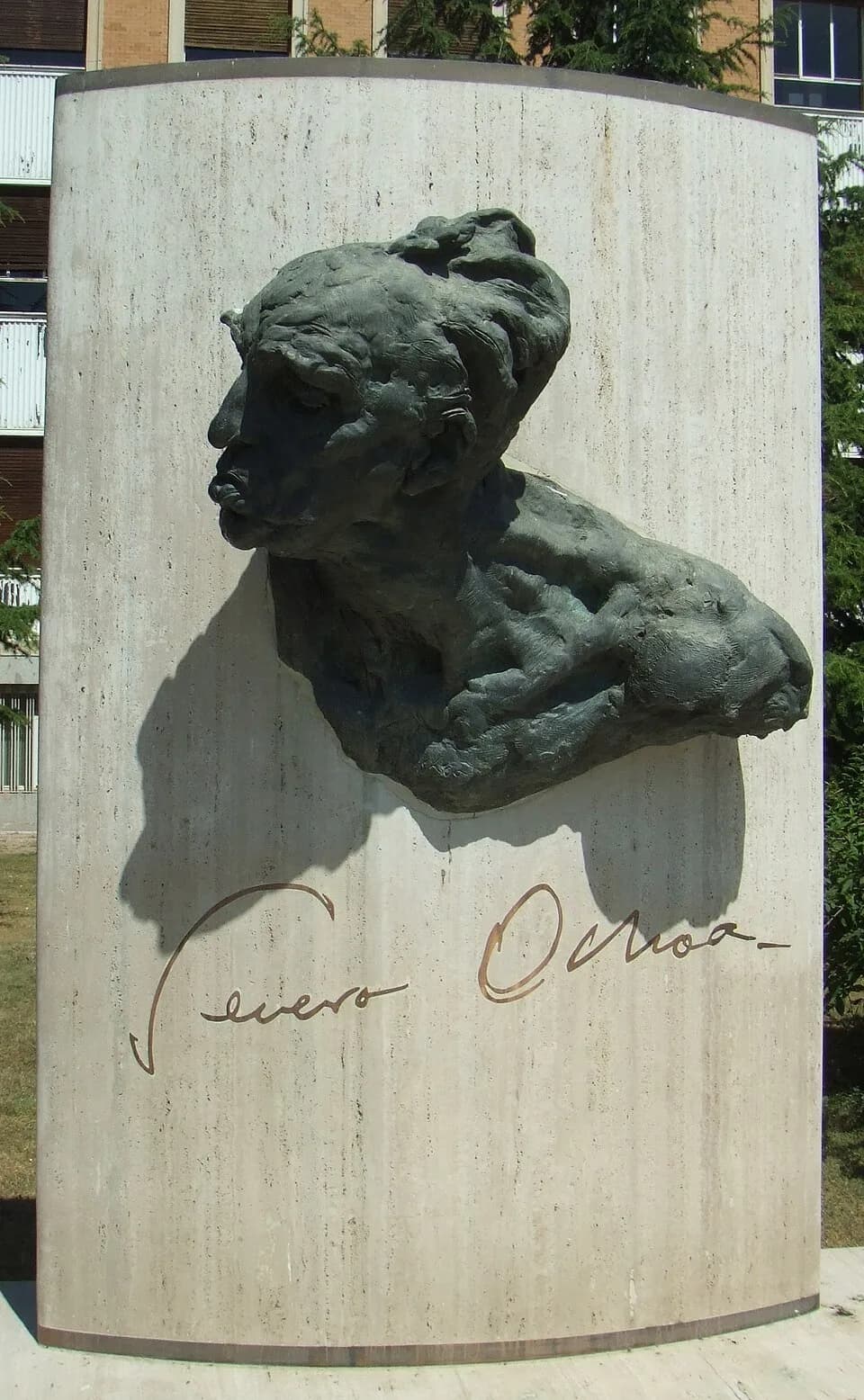
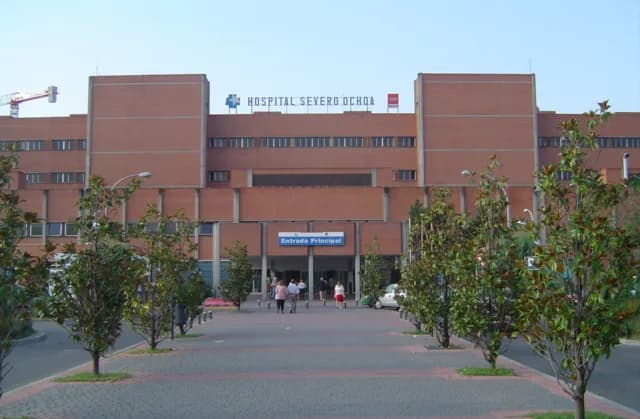
Severo Ochoa's scientific contributions irrevocably altered the course of biochemistry and molecular biology. His elucidation of the mechanisms for nucleic acid synthesis provided the foundational knowledge required to understand how genetic information is stored, copied, and translated. This work paved the way for subsequent breakthroughs in genetic engineering, biotechnology, and medicine. Ochoa’s pioneering spirit and meticulous research methodology continue to inspire scientists globally.
His legacy endures not only in textbooks and scientific papers but also in the ongoing advancements that build upon his fundamental discoveries in the molecular basis of life. The impact of his Nobel Prize-winning work resonates through countless research projects and applications today. Ochoa's insights remain a cornerstone of modern molecular biology, shaping how we approach genetic research and therapeutic development.
순간 속의 삶
한 삶을 빚어낸 순간들
FAQ
자주 묻는 질문
Severo Ochoa은(는) 언제 사망했습니까?
Severo Ochoa은(는) 1993년 11월 1일 Madrid, Spain에서 사망했습니다 (향년 88세).
Severo Ochoa은(는) 어디에서 태어났습니까?
Severo Ochoa은(는) Ḷḷuarca, Spain에서 1905년 9월 24일에 태어났습니다.
Severo Ochoa은(는) 무엇으로 가장 잘 알려져 있습니까?
Severo Ochoa은(는) Spanish physician(으)로 가장 잘 알려져 있습니다.
Severo Ochoa은(는) 사망 당시 몇 살이었습니까?
Severo Ochoa은(는) 사망 당시 88세였습니다.
Severo Ochoa의 국적은 무엇이었습니까?
Severo Ochoa은(는) Spain 출신이었습니다.
사진 갤러리
사진으로 보는 삶
폴라로이드를 클릭하여 확대 · 사진 23장
QR 코드
이 전기 공유
인쇄 및 공유
스캔하여 이 전기 페이지를 방문하세요. 행사, 전시회, 교육 자료에 인쇄해 사용하실 수 있습니다.