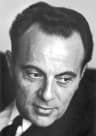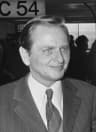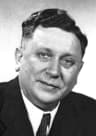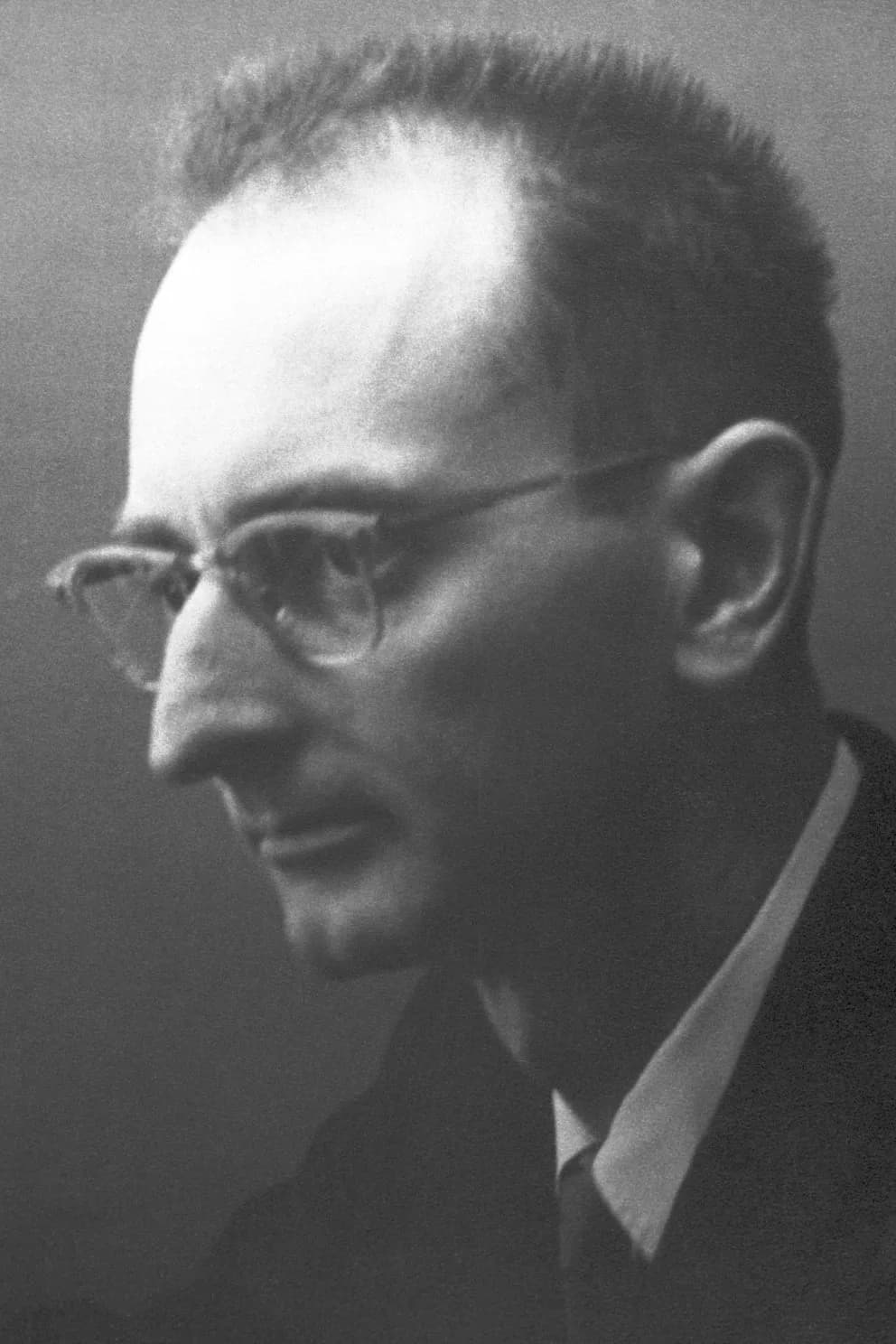
출생
July 10, 1920
San Francisco, United States
별세
February 28, 2006
Berkeley, United States
알려진 업적
American physicist
Owen Chamberlain (1920–2006) was United States best known for American physicist.
Owen Chamberlain (July 10, 1920 – February 28, 2006) was an American physicist from San Francisco, United States. He shared the Nobel Prize in Physics in 1959 for his discovery of the antiproton, a sub-atomic antiparticle. His work validated theories of antimatter and significantly influenced modern particle physics.
챕터
삶의 챕터
챕터 1 · 1920· 7장 중 1장
Owen Chamberlain: A Life in Physics
Owen Chamberlain (1920–2006) was a distinguished American physicist whose work significantly expanded humanity's understanding of sub-atomic particles. Born in San Francisco and passing away in Berkeley, his career as a physicist and university teacher left a lasting mark on scientific inquiry. He is most widely recognized for his discovery of the antiproton, a feat that earned him the Nobel Prize in Physics. This achievement represented a crucial validation of theoretical predictions concerning antimatter.
챕터 2 · 1920· 7장 중 2장
Early Life and Origins
Owen Chamberlain was born on July 10, 1920, in the vibrant city of San Francisco, United States. His early life unfolded during a period of significant scientific and technological advancement. While detailed aspects of his family and upbringing are not extensively documented, his formative years in California undoubtedly prepared him for a future in scientific exploration. This foundation would eventually lead him to become a prominent figure in the academic and scientific communities of the United States.
챕터 3· 7장 중 3장
Career Beginnings
Chamberlain embarked on a career dedicated to both experimental physics and education. He served as a university teacher, influencing countless students through his lectures and mentorship. His professional path involved significant contributions to the academic institutions where he taught and conducted his experiments. This dual commitment allowed him to both push the boundaries of knowledge and effectively share his expertise with the next generation of scientists.
챕터 4 · 1959· 7장 중 4장
Major Achievements and Career Highlights
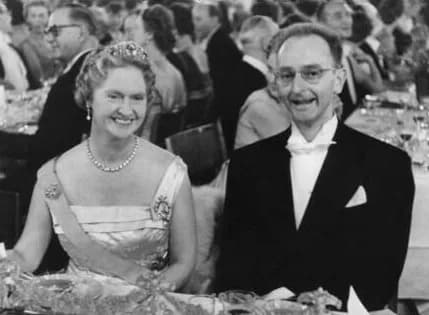
The zenith of Owen Chamberlain's professional life arrived in 1959 when he was awarded the Nobel Prize in Physics. He shared this esteemed honor with his colleague, Emilio Segrè, for their collaborative work. The prize specifically recognized their monumental discovery of the antiproton, a sub-atomic antiparticle. This experimental confirmation provided tangible proof for a particle previously existing only in theoretical models, validating key aspects of particle physics.
Their meticulously conducted research provided undeniable empirical evidence for the existence of antimatter at the subatomic level. This breakthrough had substantial implications for the understanding of matter's fundamental constituents. The Nobel Prize acknowledged not only the discovery itself but also the rigor and innovation of their experimental methods.
챕터 5· 7장 중 5장
Notable Works or Contributions
Beyond his Nobel-winning research, Owen Chamberlain was a prolific contributor to scientific literature. He maintained an impressive h-index of 22, associated with a body of work encompassing 144 published papers. These publications spanned decades of active research and varied experimental investigations.
Among his most cited academic contributions is "The Compton polarimeter at the SLC," published in 1992, which garnered 11 citations. Another significant work, "FIRST MEASUREMENT OF THE LEFT-RIGHT ASYMMETRY IN Z-BOSON PRODUCTION," appeared in 1993, receiving 1 citation. His commitment to research continued into later years, evidenced by titles such as "Lawrence Berkeley National Laboratory Recent Work Title POLARIZED PROTON TARGET FOR USE IN INTENSE ELECTRON AND PHOTON BEAMS Permalink" from 2012, and "POLARIZED TARGET EXPERIMENT AT FERMILAB - eScholarship" from 2010. These specific works illustrate his sustained engagement with advanced physics experiments and instrumentation.
챕터 6 · 2006· 7장 중 6장
Later Years
Owen Chamberlain remained involved in the scientific community for many years following his Nobel recognition. He passed away on February 28, 2006, in Berkeley, United States. His death occurred in the same geographical region where much of his most significant scientific work took place. His long life was a testament to persistent inquiry and dedication to scientific discovery.
챕터 7· 7장 중 7장
Legacy and Impact
Owen Chamberlain's legacy is defined by his pivotal role in the discovery of the antiproton. This achievement not only confirmed a crucial aspect of theoretical physics but also opened new avenues for understanding the fundamental symmetry between matter and antimatter. His experimental genius helped solidify the foundations of modern particle physics. The principles and techniques he helped develop continue to influence research into the universe's most basic building blocks. His contributions are a permanent fixture in the history of science.
순간 속의 삶
한 삶을 빚어낸 순간들
FAQ
자주 묻는 질문
Owen Chamberlain은(는) 언제 사망했습니까?
Owen Chamberlain은(는) 2006년 2월 28일 Berkeley, United States에서 사망했습니다 (향년 85세).
Owen Chamberlain은(는) 어디에서 태어났습니까?
Owen Chamberlain은(는) San Francisco, United States에서 1920년 7월 10일에 태어났습니다.
Owen Chamberlain은(는) 무엇으로 가장 잘 알려져 있습니까?
Owen Chamberlain은(는) American physicist(으)로 가장 잘 알려져 있습니다.
Owen Chamberlain은(는) 사망 당시 몇 살이었습니까?
Owen Chamberlain은(는) 사망 당시 85세였습니다.
Owen Chamberlain의 국적은 무엇이었습니까?
Owen Chamberlain은(는) United States 출신이었습니다.
사진 갤러리
사진으로 보는 삶
폴라로이드를 클릭하여 확대 · 사진 19장
QR 코드
이 전기 공유
인쇄 및 공유
스캔하여 이 전기 페이지를 방문하세요. 행사, 전시회, 교육 자료에 인쇄해 사용하실 수 있습니다.