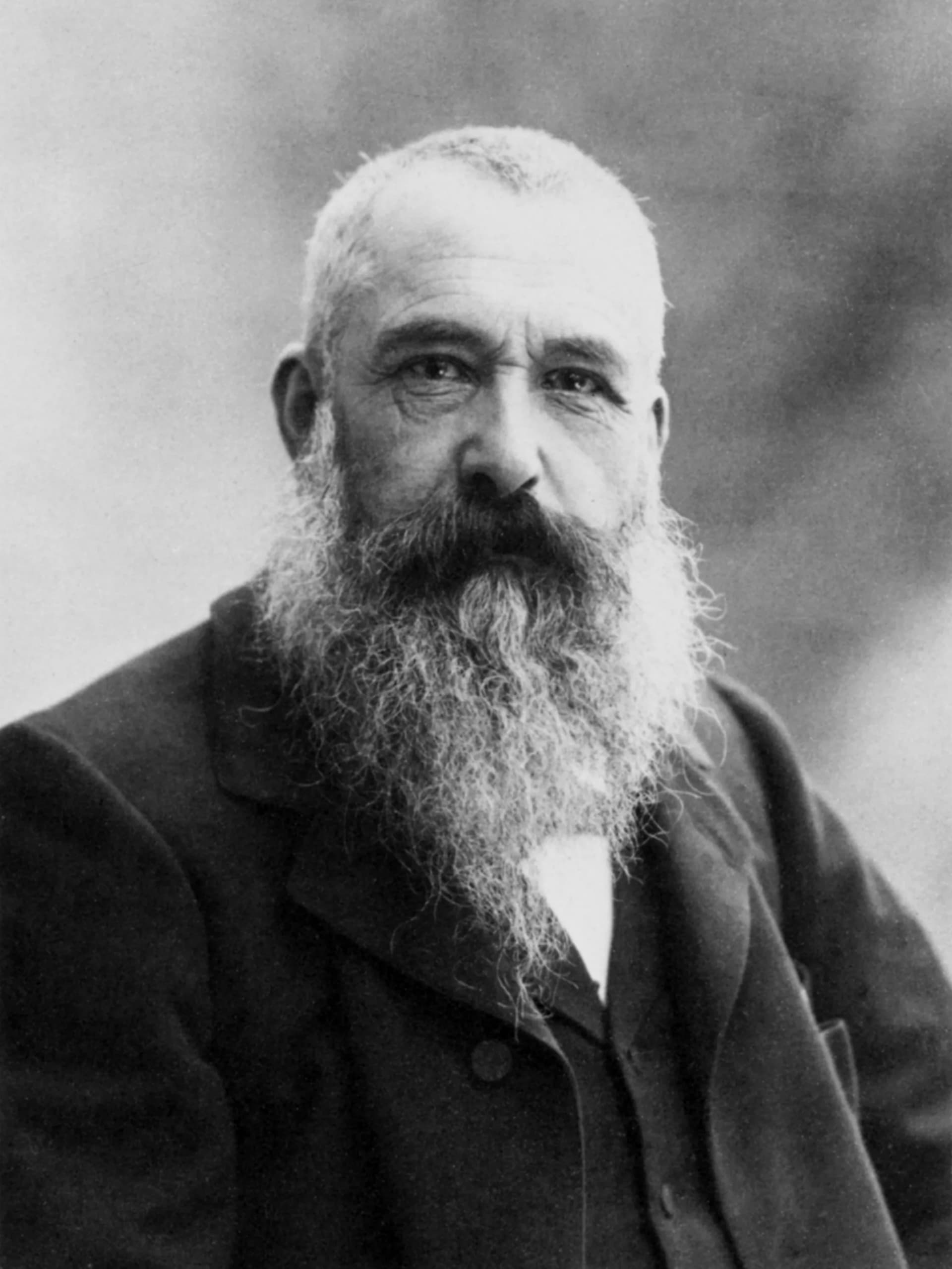
출생
November 14, 1840
Paris, France
별세
December 5, 1926
Giverny, France
알려진 업적
French painter
Claude Monet (1840–1926) was France best known for French painter.
Oscar-Claude Monet (November 14, 1840 – December 5, 1926) was a French painter and the founder of Impressionism. He was a key precursor to modernism, known for his prolific practice of expressing perceptions of nature, especially through plein air landscape painting. His work profoundly influenced how light and subjective experience were depicted in art.
챕터
삶의 챕터
챕터 1 · 1840· 7장 중 1장
Early Life and Origins
Claude Monet was born on November 14, 1840, in Paris, France. His early life in the vibrant city likely exposed him to diverse artistic influences, though specific details of his upbringing beyond his birthplace are not provided. He began his artistic journey by exploring the paths of a graphic artist, laying the groundwork for his eventual mastery of paint.
챕터 2 · 1874· 7장 중 2장
Career Beginnings
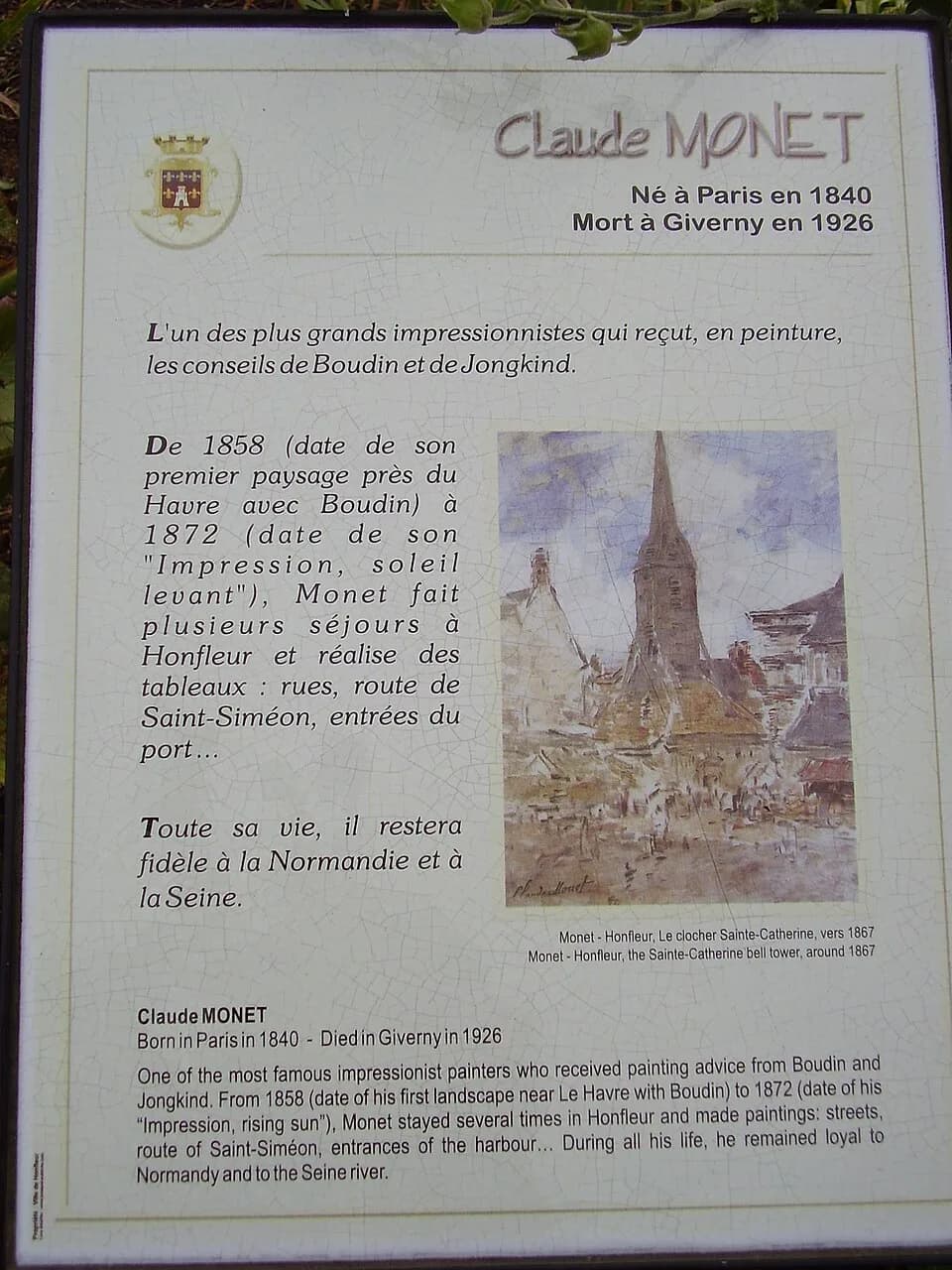
Monet transitioned from a graphic artist to a dedicated painter, soon becoming a central figure in a revolutionary art movement. He was the driving force behind the initiation of the First Impressionist Exhibition in 1874, an alternative showcase for artists dissatisfied with the traditional Salon. It was the title of his painting, Impression, Sunrise, exhibited at this pivotal event, that famously gave the Impressionist movement its name.
챕터 3· 7장 중 3장
Major Achievements and Career Highlights
Throughout his extensive career, Monet emerged as the most consistent and prolific practitioner of Impressionism's core philosophy. His commitment to expressing personal perceptions of nature, especially through plein air (outdoor) landscape painting, was unparalleled. This innovative approach solidified his status as a key precursor to modernism, fundamentally altering the trajectory of art by prioritizing subjective experience and the fleeting qualities of light.
챕터 4 · 1847· 7장 중 4장
Personal Life
While details of Claude Monet's personal relationships are not extensively provided, his art often reflected his life and surroundings. He famously depicted members of his family, such as in the painting Camille Monet (1847–1879) on a Garden Bench from 1873. He eventually settled in Giverny, France, where he spent his later years deeply engaged with his artistic endeavors.
챕터 5 · 1873· 7장 중 5장
Notable Works or Contributions
Claude Monet's legacy is preserved through a remarkable collection of artworks held in prestigious institutions worldwide. The Metropolitan Museum of Art (Met Museum) proudly exhibits several of his creations, including Spring (Fruit Trees in Bloom) (1873), Poppy Fields near Argenteuil (1875), and La Grenouillère (1869). Also housed there are The Bodmer Oak, Fontainebleau Forest (1865) and the personal portrait Camille Monet (1847–1879) on a Garden Bench (1873).
The Art Institute of Chicago (AIC) is home to an equally impressive array of his paintings, showcasing his diverse subjects and periods. Among these are iconic pieces like Water Lilies (1906) and Water Lily Pond (1900), along with Arrival of the Normandy Train, Gare Saint-Lazare (1877). The collection also features his famed series, including Stacks of Wheat (End of Summer) (1890–91) and Stacks of Wheat (End of Day, Autumn) (1890–91).
Further works at the AIC demonstrate his breadth, such as Cliff Walk at Pourville (1882), The Beach at Sainte-Adresse (1867), and Bordighera (1884). His deep connection to the French countryside is evident in Branch of the Seine near Giverny (Mist) (1897) and On the Bank of the Seine, Bennecourt (1868). These pieces collectively illustrate his masterful ability to capture atmospheric conditions and the ephemeral qualities of light across various landscapes.
챕터 6 · 1906· 7장 중 6장
Later Years
Claude Monet continued his prolific artistic output well into his later years, creating some of his most celebrated and introspective works. His iconic Water Lilies series, with examples like the 1906 painting and the 1900 Water Lily Pond, became synonymous with his exploration of light and reflection. He passed away on December 5, 1926, in Giverny, France, the place that inspired many of his enduring masterpieces.
챕터 7· 7장 중 7장
Legacy and Impact
Claude Monet's legacy as the founder of Impressionism profoundly influenced the course of art history. His commitment to painting nature as he perceived it, particularly through plein air methods, offered a new way for artists to interpret the world. He remains a celebrated figure whose pioneering vision continues to resonate, inspiring artists and art enthusiasts to appreciate the subjective beauty of light and color.
순간 속의 삶
한 삶을 빚어낸 순간들

FAQ
자주 묻는 질문
Claude Monet은(는) 언제 사망했습니까?
Claude Monet은(는) 1926년 12월 5일 Giverny, France에서 사망했습니다 (향년 86세).
Claude Monet은(는) 어디에서 태어났습니까?
Claude Monet은(는) Paris, France에서 1840년 11월 14일에 태어났습니다.
Claude Monet은(는) 무엇으로 가장 잘 알려져 있습니까?
Claude Monet은(는) French painter(으)로 가장 잘 알려져 있습니다.
Claude Monet은(는) 사망 당시 몇 살이었습니까?
Claude Monet은(는) 사망 당시 86세였습니다.
Claude Monet의 국적은 무엇이었습니까?
Claude Monet은(는) France 출신이었습니다.
연표
한눈에 보는 삶
사진 갤러리
사진으로 보는 삶
폴라로이드를 클릭하여 확대 · 사진 47장
QR 코드
이 전기 공유
인쇄 및 공유
스캔하여 이 전기 페이지를 방문하세요. 행사, 전시회, 교육 자료에 인쇄해 사용하실 수 있습니다.