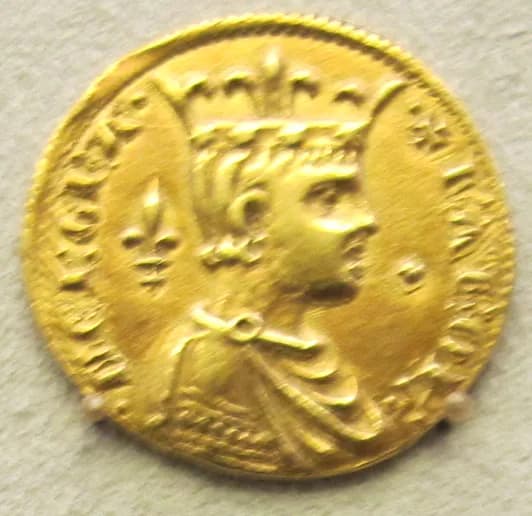
출생
March 21, 1226
Paris, France
별세
January 14, 1285
Foggia, Italy
알려진 업적
King of Sicily
Charles I of Naples (1226–1285) was France best known for King of Sicily.
Charles I of Naples (March 21, 1226 – January 14, 1285) was a politician who served as King of Sicily. He founded the House of Anjou-Sicily and expanded his rule to include Albania, Jerusalem, and Achaea. His reign marked a significant period of Capetian influence across various Mediterranean territories.
챕터
삶의 챕터
챕터 1 · 1226· 7장 중 1장
Early Life and Origins
Born in Paris, France, on March 21, 1226, Charles I was a direct member of the prestigious Capetian dynasty. He was often referred to as Charles of Anjou or Charles d'Anjou, names that signified his noble heritage and territorial associations. His upbringing within such a prominent royal house undoubtedly shaped his ambitions and prepared him for a life of political leadership and conquest.
챕터 2 · 1246· 7장 중 2장
Career Beginnings
Charles I's ascent to power began with important countships in various European territories. From 1246 until his death in 1285, he served as the Count of Provence and Forcalquier, holding sway within the Holy Roman Empire. During this same extensive period, he also held the titles of Count of Anjou and Maine in France, solidifying his standing within the French nobility. These early administrative roles provided him with crucial experience in governance and territorial management.
챕터 3 · 1266· 7장 중 3장
Major Achievements and Career Highlights
The zenith of Charles I's career came with his coronation as King of Sicily in 1266, a title he retained until 1285. His reign marked the foundation of the illustrious House of Anjou-Sicily, a new branch of the Capetian lineage that would exert considerable influence. Charles I's strategic acumen led to a remarkable expansion of his dominion across the Mediterranean world. In 1272, his power was further recognized when he was proclaimed King of Albania.
His political influence continued to grow through strategic acquisitions and inheritances. In 1277, Charles I successfully purchased a claim to the revered Kingdom of Jerusalem, underscoring his ambition to extend his authority into the Levant. Just one year later, in 1278, he became the Prince of Achaea, a significant principality, following the death of its previous ruler, William of Villehardouin, who passed without direct heirs. These expanded territories reflected his strategic vision and diplomatic skill in consolidating power.
챕터 4· 7장 중 4장
Personal Life
While Charles I of Naples was a towering figure in European politics, the provided historical records focus predominantly on his public and professional life. Details regarding his personal relationships, immediate family beyond his dynastic ties, or individual interests are not extensively documented in the available information. His monumental political and territorial achievements remain the central narrative of his historical account.
챕터 5· 7장 중 5장
Notable Works or Contributions
Charles I's most significant and lasting contribution was undeniably the establishment of the House of Anjou-Sicily. This new dynasty he founded reshaped the political map of Southern Italy and beyond. He was instrumental in consolidating various disparate territories—from Sicily to Albania and Achaea—under a centralized Capetian authority. His actions forged a powerful political entity that would endure for generations.
챕터 6 · 1285· 7장 중 6장
Later Years
Charles I of Naples remained actively engaged in his kingly and princely duties throughout his later years, governing his extensive territories. His long and impactful reign concluded with his death on January 14, 1285. He passed away in Foggia, Italy, bringing to a close a dynamic period of political expansion and dynastic founding in the Mediterranean region.
챕터 7· 7장 중 7장
Legacy and Impact
The legacy of Charles I of Naples is profound, fundamentally altering the political and dynastic landscape of 13th-century Europe. As the founder of the House of Anjou-Sicily, he extended the reach of the Capetian dynasty across multiple kingdoms and principalities. His rule solidified a powerful presence in Sicily, Albania, and Achaea, influencing subsequent regional power dynamics for centuries. Charles I's ambition and strategic governance ensured his enduring place in history as a pivotal Capetian monarch.
순간 속의 삶
한 삶을 빚어낸 순간들



FAQ
자주 묻는 질문
Charles I of Naples은(는) 언제 사망했습니까?
Charles I of Naples은(는) 1285년 1월 14일 Foggia, Italy에서 사망했습니다 (향년 58세).
Charles I of Naples은(는) 어디에서 태어났습니까?
Charles I of Naples은(는) Paris, France에서 1226년 3월 21일에 태어났습니다.
Charles I of Naples은(는) 무엇으로 가장 잘 알려져 있습니까?
Charles I of Naples은(는) King of Sicily(으)로 가장 잘 알려져 있습니다.
Charles I of Naples은(는) 사망 당시 몇 살이었습니까?
Charles I of Naples은(는) 사망 당시 58세였습니다.
Charles I of Naples의 국적은 무엇이었습니까?
Charles I of Naples은(는) France 출신이었습니다.
연표
한눈에 보는 삶
사진 갤러리
사진으로 보는 삶
폴라로이드를 클릭하여 확대 · 사진 23장
QR 코드
이 전기 공유
인쇄 및 공유
스캔하여 이 전기 페이지를 방문하세요. 행사, 전시회, 교육 자료에 인쇄해 사용하실 수 있습니다.