출생
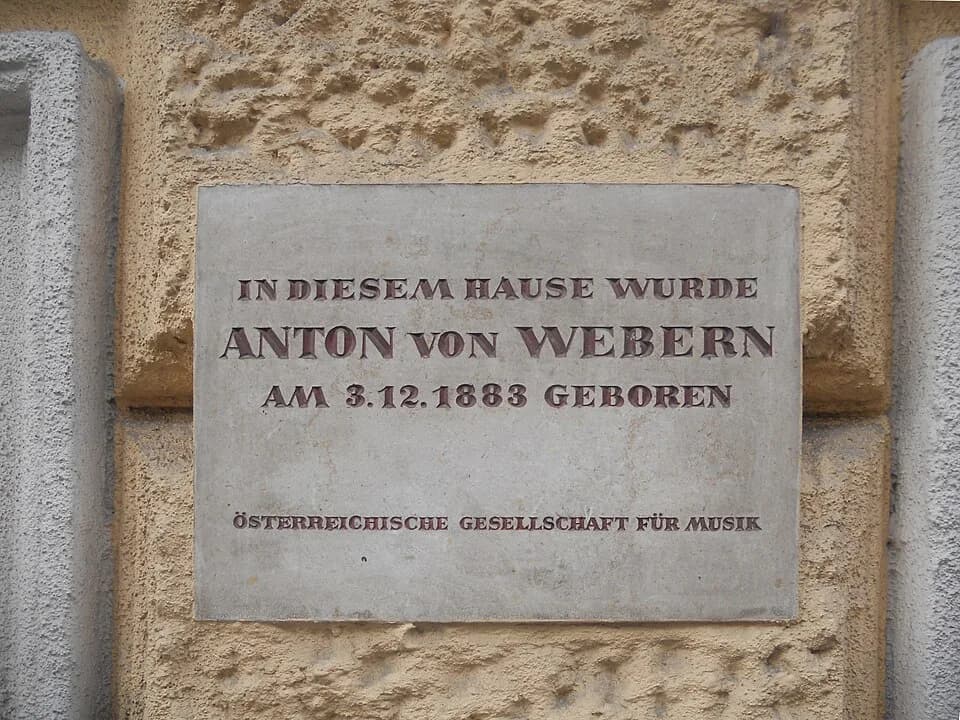
December 3, 1883
Vienna, Austria
별세
September 15, 1945
Mittersill, Austria
알려진 업적
Austrian composer and conductor
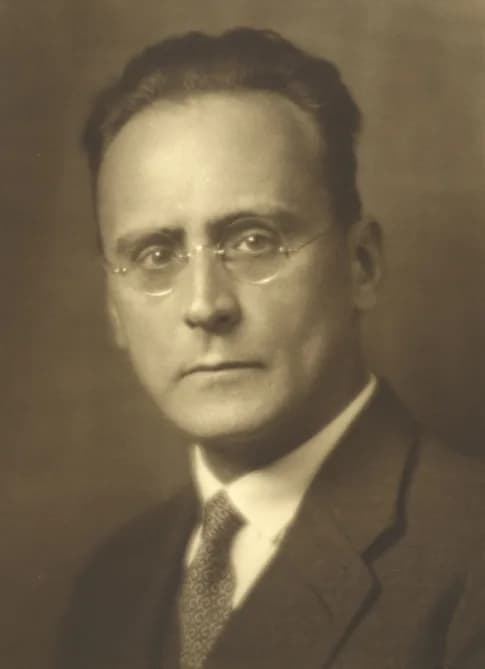
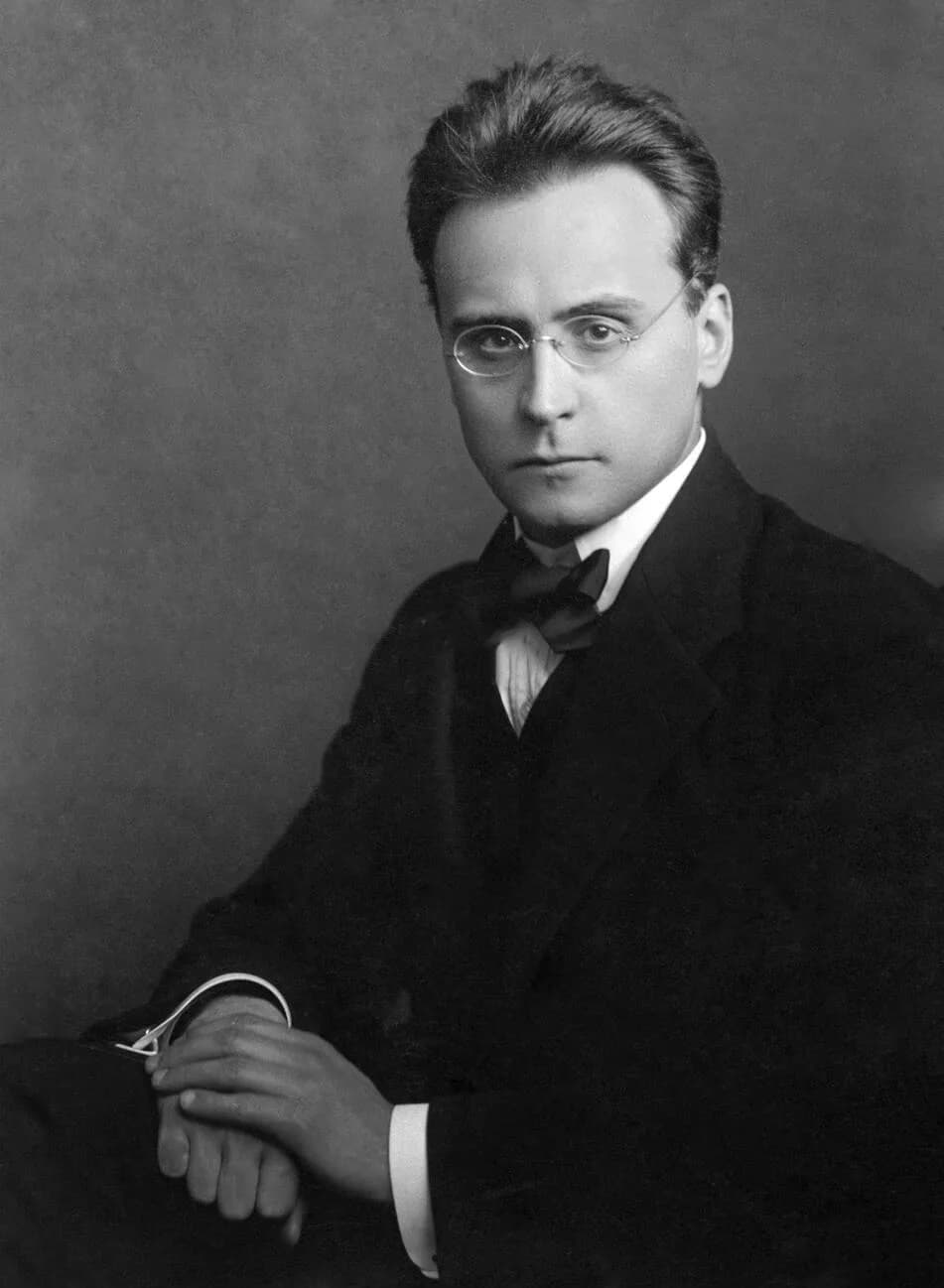
Anton Webern (1883–1945) was Austria best known for Austrian composer and conductor.
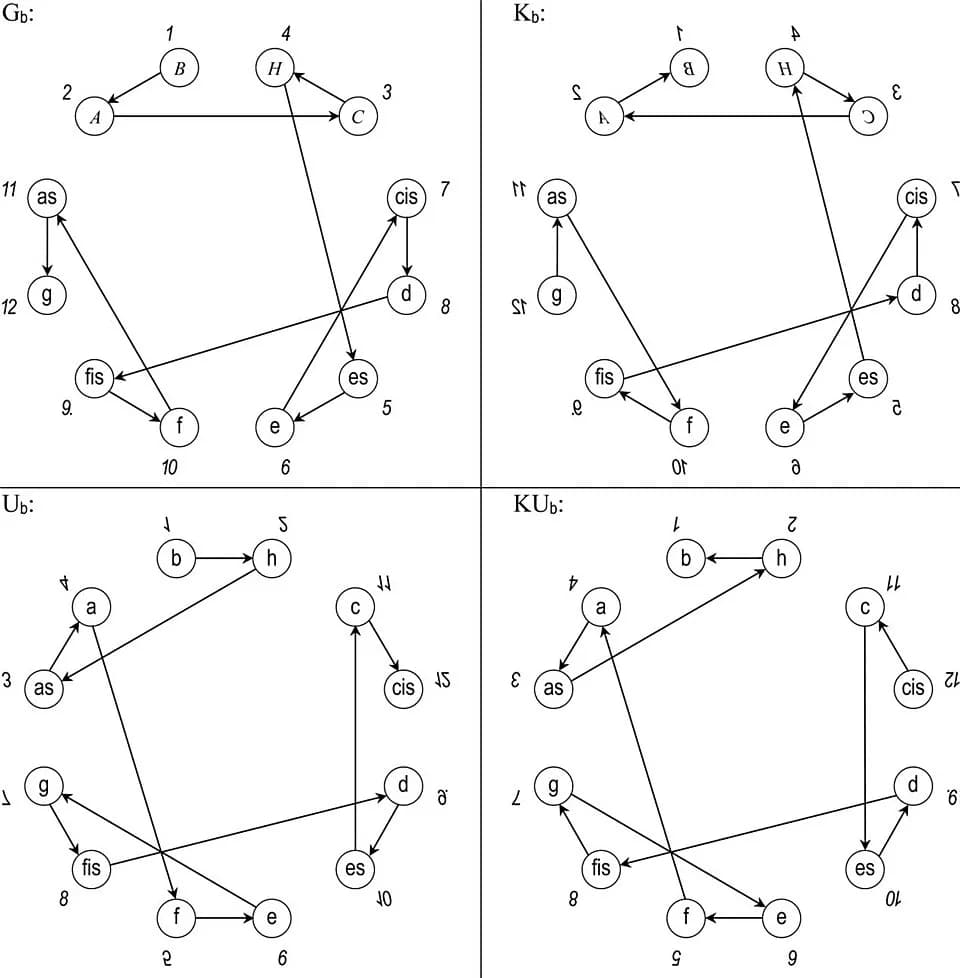
Anton Webern (December 3, 1883 – September 15, 1945) was an Austrian composer, conductor, and musician. He was a central figure in the Second Viennese School, pioneering atonal and twelve-tone techniques. His lyrical and concise modernist music left a lasting mark on classical composition.
챕터
삶의 챕터
챕터 1 · 1883· 6장 중 1장
Early Life and Origins
Anton Webern's journey began in the vibrant cultural heart of Vienna, Austria, a city steeped in centuries of rich musical tradition and innovation. Born into this intellectually stimulating environment on December 3, 1883, his early life was undoubtedly shaped by the artistic currents that flowed through the Austro-Hungarian Empire. This foundational period in Vienna provided the fertile ground for his nascent musical inclinations to blossom, setting the stage for his future revolutionary work.
His formal education included significant studies in musicology, notably under the esteemed Guido Adler, where he delved into the intricacies of the Franco-Flemish School. This academic rigor, focusing on historical and structural aspects of music, was instrumental in shaping Webern's own methodical and analytical approach to composition. Such early academic pursuits laid the intellectual groundwork for the disciplined and structurally conscious composer he would become, influencing his distinctive style.
챕터 2· 6장 중 2장
Career Beginnings
Webern embarked on his professional path as a composer, conductor, and musician, quickly establishing himself within the burgeoning modernist movement. His early career saw him gravitate towards the then-radical approaches to tonality, aligning with emerging ideas that sought to break away from conventional harmonic systems. This period marked the beginning of his exploration into new musical languages, distinguishing him from his contemporaries.
A critical turning point in Webern’s development was his association with Arnold Schoenberg, whose teachings on structural integrity, drawing inspiration from Johann Sebastian Bach, the First Viennese School, and Johannes Brahms, profoundly influenced his compositional philosophy. This mentorship helped solidify Webern’s commitment to a rigorous and disciplined methodology in his own creative output. Alongside Schoenberg and Alban Berg, Webern became a central figure, contributing to the formation and core principles of what would become famously known as the Second Viennese School.
챕터 3· 6장 중 3장
Major Achievements and Career Highlights
Anton Webern's artistic achievements are largely defined by his pioneering work in modernist music, which stood out for its remarkable lyrical and poetic concision. His rigorous approach to composition, informed by his studies and Schoenberg's structural emphasis, led to the development of music that was both innovative and meticulously crafted. This unique stylistic signature garnered him recognition as a leading voice in new music.
Being at the core of the Second Viennese School, alongside Arnold Schoenberg and Alban Berg, was a defining highlight of his career, marking him as one of the most influential figures in the evolution of atonal and twelve-tone music. His unwavering commitment to these novel techniques established a new paradigm for classical composition. Webern's dedication to pushing musical boundaries solidified his position as a visionary composer and conductor whose work challenged and redefined the expectations of his era.
챕터 4 · 1950· 6장 중 4장
Notable Works or Contributions
Webern's discography showcases a selection of works that are central to the modern classical repertoire, demonstrating his consistent application of atonal and twelve-tone techniques with characteristic concision. His “Symphony, op. 21,” recorded in 1950, stands as a quintessential example of his mature style, exhibiting the intricate structural organization and sparse textures he championed. This piece, along with others, reflects his pursuit of extreme musical economy and expressive depth.
Further contributions to chamber music include the “Trio op. 20” and “Quartet op. 22,” which were notably featured in a 1967 recording alongside works by Schönberg. These compositions underscore his mastery in applying twelve-tone principles to smaller ensembles, creating dense yet transparent musical fabrics. The “Complete Music for String Quartet” from 1970 and “Neue Wiener Schule: Die Streichquartette” in 1971 further highlight the significant role his string quartet compositions played in the Second Viennese School's output.
His orchestral and vocal works also reveal the breadth of his experimental vision, with early pieces like “Orchestral Music: op. 1 / op. 6 / op. 10 / op. 21 / op. 30 / Ricercata” (1980) showcasing his evolving techniques. The inclusion of his “Zwei Lieder, op. 8” and “Fünf Canon, op. 16” in the 1971 recording with Schoenberg's “Pierrot lunaire” demonstrates his command of vocal writing within the atonal framework. Anton Webern's compositions, captured in various notable discographies like “The Complete Music Recorded Under the Direction of Robert Craft” (1957), serve as critical documents of his radical aesthetic and methodical craftsmanship, influencing generations of composers.
챕터 5 · 1945· 6장 중 5장
Later Years
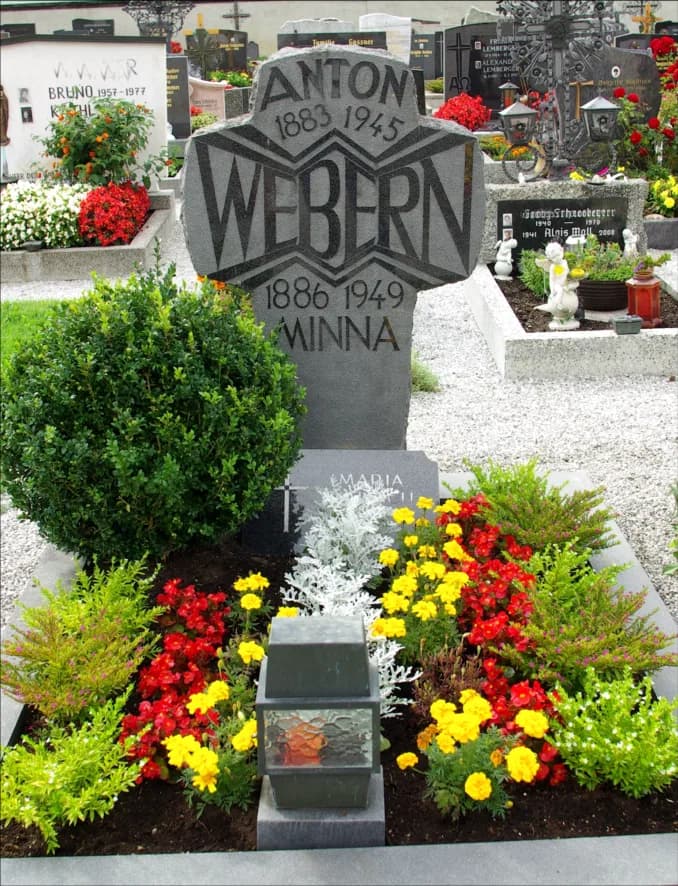
Anton Webern's final years culminated in a tragic end on September 15, 1945, in Mittersill, Austria, marking the close of a life dedicated to musical innovation. His passing occurred shortly after the conclusion of World War II, a period of immense global upheaval and transition. Though specific details of his later career and personal circumstances leading up to his death are concise in the provided information, his creative output maintained its characteristic intensity and commitment to his unique compositional voice until the very end.
His death in Mittersill signifies a poignant moment in music history, bringing an abrupt halt to the ongoing evolution of a composer whose ideas were consistently ahead of their time. The period immediately following the war was a complex one, and Webern's final days in this Austrian town underscore the personal and historical context in which his extraordinary musical journey concluded. Despite the brevity of his life, his influence continued to grow posthumously, solidifying his stature.
챕터 6· 6장 중 6장
Legacy and Impact
Anton Webern's legacy as a composer, conductor, and musician is deeply etched into the fabric of 20th-century classical music, profoundly reshaping its direction. His pioneering embrace of atonal and twelve-tone techniques proved to be highly influential, opening new avenues for musical expression and challenging the traditional tonal system. He demonstrated that profound emotional impact could be achieved through extreme concision and rigorous structural organization, an idea that resonated widely.
As a central figure of the Second Viennese School, alongside Arnold Schoenberg and Alban Berg, Webern helped to define a critical period of musical modernism, inspiring countless future composers. His meticulous approach to composition and his commitment to developing a coherent, albeit complex, musical language left an enduring mark on the classical and modern classical genres. The rigor and intellectual depth of his work continue to be studied and admired, forming an essential part of contemporary music education.
Webern’s influence extends far beyond his immediate contemporaries, affecting generations of composers who sought to explore new sonorities and formal structures. His insistence on clarity, economy of means, and the systematic organization of pitch elements became foundational concepts for post-war avant-garde music. The continued performance and analysis of his works, exemplified by compilations like “Second Viennese School: Complete String Quartets” (2000), confirm his lasting relevance and his role as a true innovator in the history of music.
순간 속의 삶
한 삶을 빚어낸 순간들
FAQ
자주 묻는 질문
Anton Webern은(는) 언제 사망했습니까?
Anton Webern은(는) 1945년 9월 15일 Mittersill, Austria에서 사망했습니다 (향년 61세).
Anton Webern은(는) 어디에서 태어났습니까?
Anton Webern은(는) Vienna, Austria에서 1883년 12월 3일에 태어났습니다.
Anton Webern은(는) 무엇으로 가장 잘 알려져 있습니까?
Anton Webern은(는) Austrian composer and conductor(으)로 가장 잘 알려져 있습니다.
Anton Webern은(는) 사망 당시 몇 살이었습니까?
Anton Webern은(는) 사망 당시 61세였습니다.
Anton Webern의 국적은 무엇이었습니까?
Anton Webern은(는) Austria 출신이었습니다.
연표
한눈에 보는 삶
사진 갤러리
사진으로 보는 삶
폴라로이드를 클릭하여 확대 · 사진 25장
QR 코드
이 전기 공유
인쇄 및 공유
스캔하여 이 전기 페이지를 방문하세요. 행사, 전시회, 교육 자료에 인쇄해 사용하실 수 있습니다.