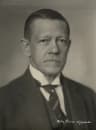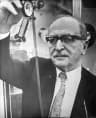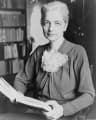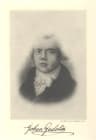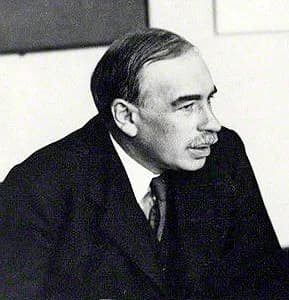
Туылды
June 5, 1883
Cambridge, United Kingdom
Қайтыс болды
April 21, 1946
Firle, United Kingdom
Несімен танымал
British economist
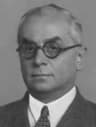
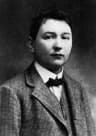
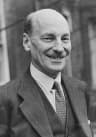
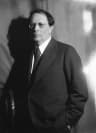
John Maynard Keynes (1883–1946) was United Kingdom best known for British economist.
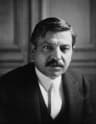
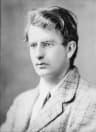
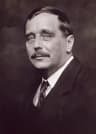
John Maynard Keynes (June 5, 1883 – April 21, 1946) was a British economist from Cambridge, United Kingdom. He is celebrated as the "father of macroeconomics" for developing Keynesian economics, a school of thought foundational to mainstream macroeconomics. His influential ideas continue to shape economic policy and theory globally.
Бөлім
Өмір тараулары
Бөлім 1 · 1883· Бөлім 1 / 7
Early Life and Origins
Born on June 5, 1883, in Cambridge, United Kingdom, John Maynard Keynes entered a world of academic rigor and intellectual curiosity. His early education focused on mathematics, a discipline that provided him with a robust analytical foundation for his later economic theories. This mathematical training enabled him to approach complex economic problems with precision and logical structure.
Cambridge, his birthplace, also became the environment where he developed his initial academic interests and began to formulate the ideas that would eventually challenge conventional economic wisdom. His upbringing immersed him in an academic atmosphere, setting the stage for a career dedicated to understanding and improving economic stability. He honed his intellectual skills early, preparing him for a life of significant academic and practical contribution.
Бөлім 2· Бөлім 2 / 7
Career Beginnings
Keynes's professional journey began by building upon and refining existing work concerning the causes of business cycles, even as he was initially trained in mathematics. His early research sought to explain the inherent fluctuations in economic activity, a topic that would remain central to his entire body of work. He recognized the limitations of classical economic theory in explaining these recurring patterns.
From these foundational efforts, he diversified into a multitude of roles, demonstrating his broad capabilities and intellectual versatility. His early career saw him engage as a professor, a role in which he undoubtedly shaped the minds of future economists and thinkers. This period was crucial for his intellectual development, allowing him to test and refine his nascent theories against real-world observations and academic discourse.
Бөлім 3· Бөлім 3 / 7
Major Achievements and Career Highlights
John Maynard Keynes is best known for developing Keynesian economics, a school of thought that fundamentally changed how economists and policymakers viewed the role of government in stabilizing economies. His ideas provided a theoretical basis for government intervention to counteract recessions and depressions. This intellectual framework became foundational to mainstream macroeconomics, redefining the field.
He is frequently referred to as the "father of macroeconomics" due to the extensive influence and lasting relevance of his work. His groundbreaking insights helped to explain unemployment, inflation, and the workings of national economies on a large scale. Keynes's analytical rigor and innovative thinking cemented his status as one of the most influential economists of the 20th century, profoundly shaping economic policy for decades.
Keynes's work involved a careful refinement of earlier economic theories, building upon existing knowledge to create a more comprehensive understanding of economic phenomena. His contributions extended beyond mere theory, influencing international diplomacy and practical economic management. He consistently applied his intellect to address pressing economic challenges of his era, leaving an enduring mark on global economic governance.
Бөлім 4· Бөлім 4 / 7
Personal Life
While the provided information highlights John Maynard Keynes's extensive professional achievements and intellectual contributions, specific details about his personal life beyond his birthplace and death place are not available. His time was largely dedicated to his multifaceted professional roles as an economist, businessperson, politician, professor, mathematician, diplomat, author, and philosopher. These diverse engagements shaped his public persona and intellectual legacy.
His focus was evidently on the study and practical application of economic principles, which consumed much of his active life. The depth of his professional engagement suggests a life deeply interwoven with the intellectual and political currents of his time. His work and public service remain the primary narrative available regarding his journey.
Бөлім 5 · 1936· Бөлім 5 / 7
Notable Works or Contributions
John Maynard Keynes produced an array of significant writings that continue to be studied and debated globally. Among his most famous works is "就業, 利息與貨幣的一般理論," widely known in English as "The General Theory of Employment, Interest and Money." This book, published in 1936, revolutionized economic thinking by challenging classical economics and introducing concepts like aggregate demand and the role of government in managing economic cycles.
Other important contributions include "貨幣通論" (A Treatise on Money), which explored monetary theory in depth and laid groundwork for his later general theory. He also authored "Probability" (A Treatise on Probability), showcasing his mathematical foundation and its application to risk and uncertainty. These works highlight his broad intellectual range and his ability to tackle complex subjects across different domains of knowledge.
Keynes’s bibliography also features "A short view of Russia" and "Der Friedensvertrag von Versailles," which reflected his insights into international relations and post-war economic reconstruction. His historical and societal analysis extended to works like "The history of the National mutual life assurance society, 1830-1930." Each publication provided unique perspectives derived from his extensive experience as an economist, diplomat, and philosopher, contributing significantly to public discourse and academic understanding.
Бөлім 6 · 1946· Бөлім 6 / 7
Later Years
John Maynard Keynes continued his influential work until his passing on April 21, 1946, in Firle, United Kingdom. Even in his later years, his intellect remained sharp, and his contributions continued to shape economic thought during a critical period of post-war reconstruction. His ideas provided a crucial framework for rebuilding economies and establishing new international financial institutions.
His death in Firle marked the end of a life dedicated to understanding and improving economic conditions on both national and international scales. The immediate aftermath of World War II saw the world grapple with immense economic challenges, and Keynes’s insights were more relevant than ever. His active participation in shaping the global economic order showcased his continued commitment to practical policy application.
Бөлім 7· Бөлім 7 / 7
Legacy and Impact
The legacy of John Maynard Keynes is truly immense, profoundly altering the trajectory of economic thought and policy. His development of Keynesian economics provided a new paradigm for understanding and addressing issues of unemployment, recessions, and economic growth. This framework became the dominant approach to macroeconomics for much of the 20th century.
Even after his death, Keynes’s ideas continued to evolve and inspire new branches of economic theory, notably through the emergence of New Keynesianism. This demonstrates the enduring adaptability and relevance of his foundational concepts in different economic contexts. His analytical methods and theoretical constructs remain integral to current economic discourse, providing a lens through which contemporary challenges are often viewed.
Keynes's influence extends far beyond academia, shaping the fiscal and monetary policies adopted by governments worldwide. His emphasis on the role of government in managing demand to stabilize economies has guided numerous policy decisions, from stimulus packages to unemployment benefits. He forever changed the conversation around economic stability, solidifying his place as a giant in the history of economic thought.
Өмір сәттері
Өмірді қалыптастырған сәттер


ЖҚС
Жиі қойылатын сұрақтар
John Maynard Keynes қашан қайтыс болды?
John Maynard Keynes 1946 ж. 21 сәуір күні Firle, United Kingdom-да, 62 жасында қайтыс болды.
John Maynard Keynes қайда дүниеге келді?
John Maynard Keynes Cambridge, United Kingdom-да 1883 ж. 5 маусым күні дүниеге келді.
John Maynard Keynes немен танымал?
John Maynard Keynes көбінесе British economist арқылы танымал.
John Maynard Keynes қайтыс болған кезде неше жаста еді?
John Maynard Keynes қайтыс болған кезде 62 жаста еді.
John Maynard Keynes-нің ұлты қандай еді?
John Maynard Keynes United Kingdom-нан болған.
Хронология
Өмірге шолу
Фотогалерея
Суреттердегі өмір
Кеңейту үшін кез келген суретті басыңыз · 50 фотосурет
QR коды
Бұл өмірбаянмен бөлісу
Басып шығару және бөлісу
Бұл өмірбаян парағына өту үшін сканерлеңіз. Іс-шаралар, көрмелер немесе білім беру материалдары үшін басып шығарыңыз.