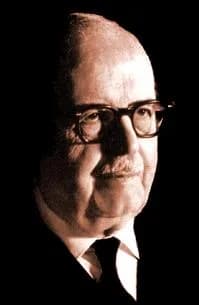
Туылды
April 10, 1887
Buenos Aires, Argentina
Қайтыс болды
September 21, 1971
Buenos Aires, Argentina
Несімен танымал
Argentine physician
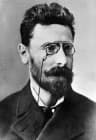
Bernardo Houssay (1887–1971) was Argentina best known for Argentine physician.
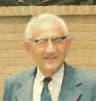
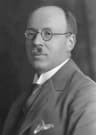
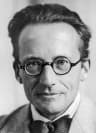
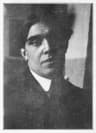
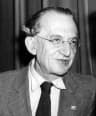
Bernardo Houssay (April 10, 1887 – September 21, 1971) was an Argentine physician from Buenos Aires. He received the 1947 Nobel Prize for his discovery of the role pituitary hormones play in regulating glucose in animals. Houssay is celebrated as the first Latin American Nobel laureate in the sciences.
Бөлім
Өмір тараулары
Бөлім 1 · 1887· Бөлім 1 / 8
Opening
Bernardo Alberto Houssay, a revered Argentine physician and physiologist, made enduring contributions to medical science during his lifetime from April 10, 1887, to September 21, 1971. Born and passing in his native Buenos Aires, Houssay's extensive career spanned various scientific disciplines. He was a pioneering figure, widely recognized for his groundbreaking research that fundamentally changed our understanding of bodily functions.
Бөлім 2 · 1887· Бөлім 2 / 8
Early Life and Origins
Bernardo Houssay began his life in Buenos Aires, Argentina, on April 10, 1887. His early years in the vibrant city laid the foundation for a future dedicated to rigorous scientific inquiry. He pursued a remarkably broad education, becoming proficient across multiple scientific fields.
Houssay was not only a physician but also a trained pharmacist, chemist, entomologist, and biologist, demonstrating an early passion for diverse aspects of natural science. This extensive foundational knowledge provided him with a unique perspective for his later physiological investigations.
Бөлім 3· Бөлім 3 / 8
Career Beginnings
Houssay's scientific career began with this solid, multi-disciplinary educational background. His early professional life was marked by a deep commitment to research and understanding the complexities of living organisms. He quickly established himself as a dedicated scientist with a keen eye for experimental design.
This rigorous approach propelled him into the forefront of physiological research in Argentina, where he embarked on the studies that would eventually earn him global acclaim. His meticulous work ethic and intellectual curiosity were evident from the very start of his professional journey.
Бөлім 4 · 1947· Бөлім 4 / 8
Major Achievements and Career Highlights
The pinnacle of Bernardo Houssay's career arrived in 1947 when he was awarded the Nobel Prize for Physiology or Medicine. He shared this prestigious honor with Carl Ferdinand Cori and Gerty Cori. Houssay was specifically recognized for his discovery of the part played by the hormone of the anterior pituitary lobe in the metabolism of sugar.
This significant finding illuminated how pituitary hormones regulate glucose levels in animals, a crucial advancement in endocrinology. His Nobel Prize made him the first Latin American Nobel laureate in the sciences, a distinction that underscored his pioneering spirit and the global impact of his work.
Бөлім 5· Бөлім 5 / 8
Personal Life
While much of Bernardo Houssay's public record focuses on his immense scientific accomplishments, details regarding his personal life and family are not extensively documented in the provided information. His enduring dedication to scientific research and education was a defining characteristic of his life. He lived and worked primarily in Buenos Aires, a city that remained central to his professional journey and personal environment.
Бөлім 6 · 1989· Бөлім 6 / 8
Notable Works or Contributions
Throughout his productive career, Bernardo Houssay authored an impressive body of work, comprising 190 scientific papers. His commitment to research resulted in an h-index of 22, reflecting the significant impact and citation of his publications within the scientific community. Among his important contributions, "The Discovery of Pancreatic Diabetes" (1989) stands out as a key work that likely summarized or further elaborated on his significant findings regarding metabolic regulation.
This extensive written output ensured his research findings were widely disseminated and accessible to other scientists globally. His detailed academic contributions served as a foundation for further advancements in understanding metabolic processes and endocrine functions.
Бөлім 7· Бөлім 7 / 8
Later Years
Bernardo Houssay continued his influential work in physiology into his later years. His discoveries had already fundamentally altered the scientific understanding of metabolic processes. Even after receiving the Nobel Prize, his commitment to scientific inquiry and education remained unwavering.
He passed away in his beloved hometown of Buenos Aires, Argentina, on September 21, 1971, leaving behind a profound scientific legacy. His life's work continued to inspire and inform subsequent generations of medical researchers and practitioners.
Бөлім 8· Бөлім 8 / 8
Legacy and Impact
The influence of Bernardo Houssay on the fields of physiology and medicine is lasting. His Nobel-winning work on pituitary hormones and glucose regulation laid foundational knowledge for understanding and treating metabolic disorders. This fundamental research continues to inform modern endocrinology.
As the first Latin American scientist to receive a Nobel Prize, he not only advanced scientific understanding but also inspired generations of researchers across the continent. His multidisciplinary approach and dedication to rigorous experimentation continue to serve as a model for scientific excellence.
Өмір сәттері
Өмірді қалыптастырған сәттер
ЖҚС
Жиі қойылатын сұрақтар
Bernardo Houssay қашан қайтыс болды?
Bernardo Houssay 1971 ж. 21 қыркүйек күні Buenos Aires, Argentina-да, 84 жасында қайтыс болды.
Bernardo Houssay қайда дүниеге келді?
Bernardo Houssay Buenos Aires, Argentina-да 1887 ж. 10 сәуір күні дүниеге келді.
Bernardo Houssay немен танымал?
Bernardo Houssay көбінесе Argentine physician арқылы танымал.
Bernardo Houssay қайтыс болған кезде неше жаста еді?
Bernardo Houssay қайтыс болған кезде 84 жаста еді.
Bernardo Houssay-нің ұлты қандай еді?
Bernardo Houssay Argentina-нан болған.
Хронология
Өмірге шолу
Фотогалерея
Суреттердегі өмір
Кеңейту үшін кез келген суретті басыңыз · 33 фотосурет
QR коды
Бұл өмірбаянмен бөлісу
Басып шығару және бөлісу
Бұл өмірбаян парағына өту үшін сканерлеңіз. Іс-шаралар, көрмелер немесе білім беру материалдары үшін басып шығарыңыз.