Туылды
November 11, 1500
Florence, Kingdom of Italy
Қайтыс болды
February 23, 1571
Florence, Kingdom of Italy
Несімен танымал
Florentine sculptor and goldsmith
Benvenuto Cellini (1500–1571) was Kingdom of Italy best known for Florentine sculptor and goldsmith.
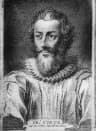
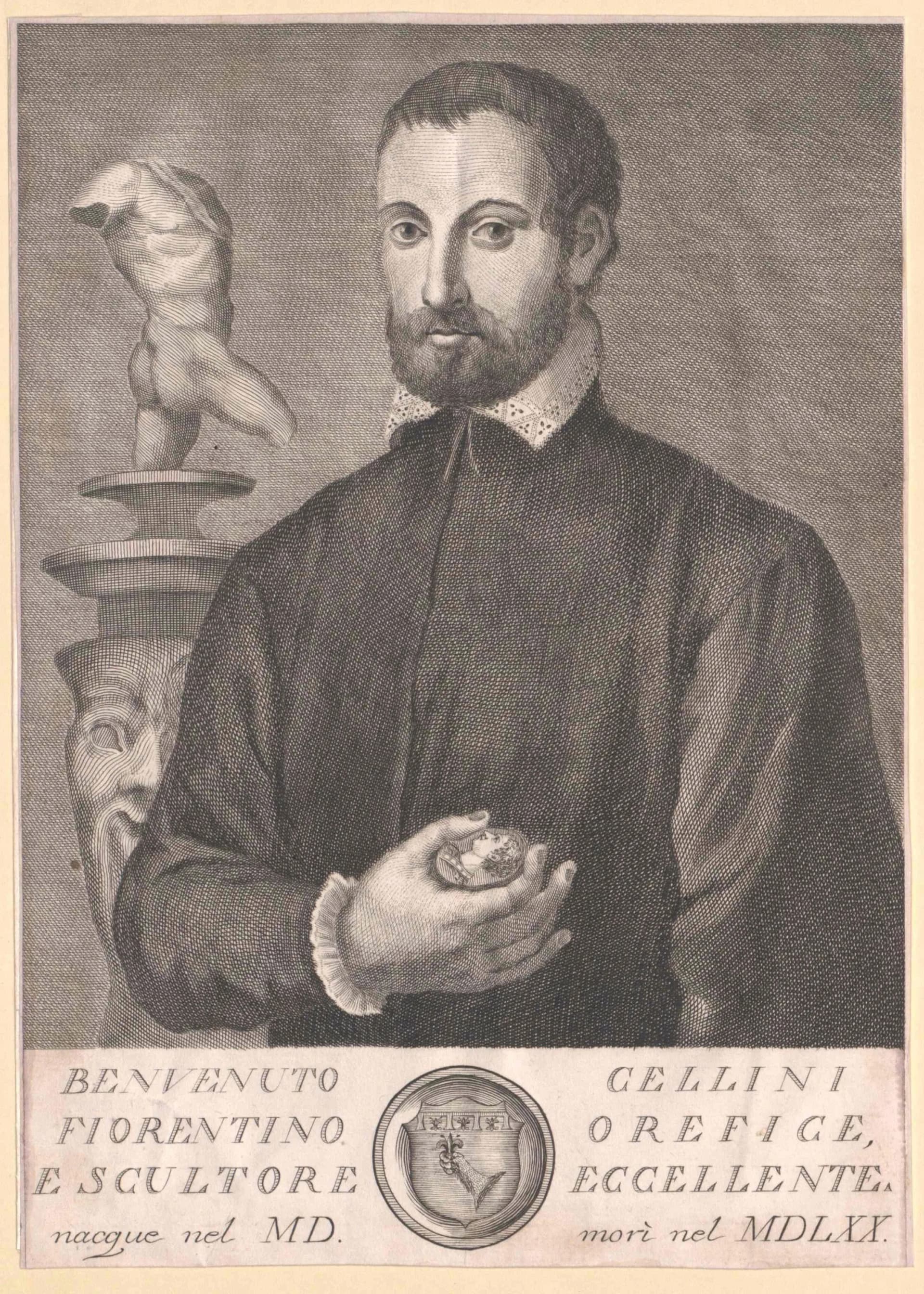
Benvenuto Cellini (November 11, 1500 – February 23, 1571) was a Florentine sculptor and goldsmith from the Kingdom of Italy. He is best known for his iconic sculpture of <em>Perseus with the Head of Medusa</em> and his autobiography, a vital document of the 16th century. Cellini's masterful works continue to define the Mannerist style.
Бөлім
Өмір тараулары
Бөлім 1 · 1500· Бөлім 1 / 6
Early Life and Origins
Benvenuto Cellini was born on November 11, 1500, in the culturally rich city of Florence, Kingdom of Italy. Growing up in Florence, a prominent center of Renaissance art and humanism, provided him with a fertile environment for artistic development. This early exposure to the city's artistic traditions undoubtedly laid the foundation for his future endeavors as a versatile artist.
Бөлім 2· Бөлім 2 / 6
Career Beginnings
Cellini began his artistic journey by cultivating a wide range of skills that would serve him throughout his career. He became highly proficient as a goldsmith, jeweler, and silversmith, mastering the intricate techniques required for working with precious metals. His diverse talents also included musicianship and architectural draftsmanship, showcasing a broad creative foundation that underpinned his later work as a sculptor.
Бөлім 3· Бөлім 3 / 6
Major Achievements and Career Highlights
Among Cellini's most iconic and enduring contributions to art are the exquisite Cellini Salt Cellar and the monumental bronze sculpture of Perseus with the Head of Medusa. The Cellini Salt Cellar, created for King Francis I of France, stands as a prime example of Mannerist goldsmithing, renowned for its intricate details and symbolic complexity. His dynamic sculpture of Perseus with the Head of Medusa, located in the Loggia dei Lanzi in Florence, showcases his command of large-scale bronze casting and dramatic narrative.
Beyond his visual art, Cellini's autobiography, often described as "one of the most important documents of the 16th century," cemented his place in history. This personal account offers invaluable insights into his life, his artistic process, and the social and political landscape of Renaissance Italy. His candid writing provides a vivid portrait of a driven and complex artist.
Бөлім 4· Бөлім 4 / 6
Notable Works or Contributions
Benvenuto Cellini's artistic output included a variety of significant works across different mediums. His sculptural legacy at the Met Museum includes pieces such as Jupiter (late 16th century) and Minerva (second half 16th century), showcasing his distinct style and mastery of form. The Met Museum also features a Tazza (19th century, after 16th century original) and Ganymede with eagle and eaglet (probably 18th century), which highlight his lasting influence through subsequent interpretations of his designs.
As a writer, Cellini left behind an extensive bibliography, with his autobiography being his most famous literary contribution. This work is known by several titles, including The life of Benvenuto Cellini written by himself, Vita, and The Autobiography of Benvenuto Cellini. He also authored technical treatises like Due trattati, vno intorno alle otto principali arti dell'oreficeria, l'altro in materia dell'arte della scultura, offering practical guidance and theoretical reflections on goldsmithing and sculpture.
Бөлім 5 · 1571· Бөлім 5 / 6
Later Years
Benvenuto Cellini' passed away on February 23, 1571, in his cherished birthplace, Florence, Kingdom of Italy. He continued to work and reside in the city that had fostered his talents and witnessed his greatest artistic triumphs. His passing marked the end of a prolific career that spanned the heart of the Italian Renaissance.
Бөлім 6· Бөлім 6 / 6
Legacy and Impact
Cellini's enduring legacy as a Florentine sculptor and goldsmith continues to influence and inspire artists and art historians. His works, particularly the Perseus with the Head of Medusa and the Cellini Salt Cellar, remain masterpieces of Mannerist art, celebrated for their technical brilliance and expressive power. Furthermore, his autobiography offers an invaluable historical document, providing a unique, first-person perspective on the art world and societal norms of the 16th century. Through his artistry and his writings, Benvenuto Cellini remains a captivating figure whose contributions profoundly shaped the narrative of Renaissance culture.
Өмір сәттері
Өмірді қалыптастырған сәттер
ЖҚС
Жиі қойылатын сұрақтар
Benvenuto Cellini қашан қайтыс болды?
Benvenuto Cellini 1571 ж. 23 ақпан күні Florence, Kingdom of Italy-да, 70 жасында қайтыс болды.
Benvenuto Cellini қайда дүниеге келді?
Benvenuto Cellini Florence, Kingdom of Italy-да 1500 ж. 11 қараша күні дүниеге келді.
Benvenuto Cellini немен танымал?
Benvenuto Cellini көбінесе Florentine sculptor and goldsmith арқылы танымал.
Benvenuto Cellini қайтыс болған кезде неше жаста еді?
Benvenuto Cellini қайтыс болған кезде 70 жаста еді.
Benvenuto Cellini-нің ұлты қандай еді?
Benvenuto Cellini Kingdom of Italy-нан болған.
Хронология
Өмірге шолу
Фотогалерея
Суреттердегі өмір
Кеңейту үшін кез келген суретті басыңыз · 48 фотосурет
QR коды
Бұл өмірбаянмен бөлісу
Басып шығару және бөлісу
Бұл өмірбаян парағына өту үшін сканерлеңіз. Іс-шаралар, көрмелер немесе білім беру материалдары үшін басып шығарыңыз.