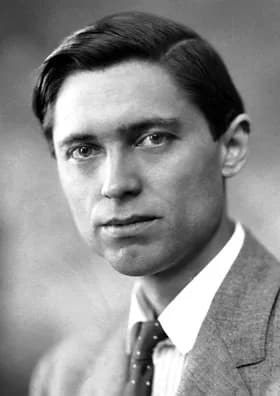
誕生
August 30, 1884
Valbo, Sweden
永眠
February 25, 1971
Örebro, Sweden
知られていること
Swedish chemist
Theodor Svedberg (1884–1971) was Sweden best known for Swedish chemist.
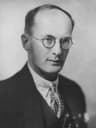
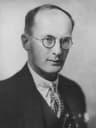
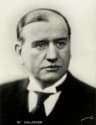
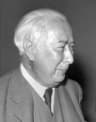
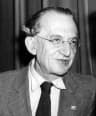
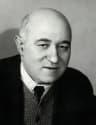
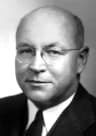
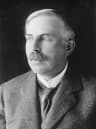
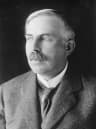
Theodor Svedberg (August 30, 1884 – February 25, 1971) was a Swedish chemist from Valbo, Sweden. He received the Nobel Prize for his pioneering research on colloids and proteins using the ultracentrifuge. His work greatly advanced the understanding of macromolecular science.
第0章
人生の章
第1章 · 1884年· 全6章中第1章
Early Life and Origins
Theodor Svedberg was born on August 30, 1884, in Valbo, Sweden. While details of his early family life and specific upbringing are not extensively documented, his formative years in Sweden undoubtedly laid the foundation for his scientific curiosity. This period would have instilled in him a foundational understanding of the world, preparing him for his eventual academic and research career.
第2章· 全6章中第2章
Career Beginnings
Svedberg's academic journey led him to Uppsala University, where he began his active involvement in scientific research around the mid-1900s. He started his tenure at the university as a docent, a respected academic position allowing him to teach and conduct research. His dedication and growing expertise quickly became evident, leading to significant advancements in his career at Uppsala.
By 1912, Svedberg's leadership capabilities and scientific contributions were recognized, and he was appointed as the head of the university's physical chemistry department. This role placed him at the forefront of chemical research and education in Sweden, providing him with the resources and platform to pursue his most celebrated investigations. His leadership marked a new era for physical chemistry at Uppsala University.
第3章· 全6章中第3章
Major Achievements and Career Highlights
Theodor Svedberg's most celebrated achievement was his pioneering research on colloids and proteins, a field he revolutionized through the invention and application of the ultracentrifuge. This innovative instrument allowed scientists to study the sedimentation of large molecules with unprecedented precision, providing critical insights into their size and shape. His meticulous work unveiled the true nature of proteins as macromolecules, challenging previous assumptions.
For his significant contributions, Svedberg was awarded the Nobel Prize in Chemistry in 1926, recognizing his seminal work on dispersed systems. This prestigious award solidified his place as a leading figure in physical chemistry globally. Beyond the Nobel Prize, his scientific excellence was acknowledged by various international bodies, demonstrating the widespread impact of his discoveries.
His international recognition included being named a Foreign Member of the Royal Society in 1944, a testament to his high standing among the global scientific community. The following year, in 1945, Svedberg also became part of the esteemed National Academy of Sciences. These memberships highlighted the universal significance of his research and the respect he garnered from peers worldwide.
第4章· 全6章中第4章
Notable Works or Contributions
The ultracentrifuge stands as Theodor Svedberg's signature contribution to scientific instrumentation and methodology. This sophisticated device allowed for the application of immense centrifugal forces, enabling the separation and analysis of particles that were previously impossible to study. Its development was crucial for understanding the properties of complex biological molecules.
Through the ultracentrifuge, Svedberg meticulously investigated the molecular weights and distributions of proteins, laying the groundwork for modern biochemistry and molecular biology. His research helped establish the macromolecular nature of proteins, demonstrating that they are indeed large, distinct molecules rather than aggregates of smaller units. The Svedberg unit (S), a measure of sedimentation rate, is named in his honor, reflecting the lasting legacy of his work.
第5章 · 1949年· 全6章中第5章
Later Years
Theodor Svedberg concluded his distinguished tenure at Uppsala University in 1949, marking the end of nearly five decades of dedicated service and scientific leadership. Following his departure from Uppsala, he continued his commitment to research and scientific administration. He took on the significant responsibility of leading the Gustaf Werner Institute.
Svedberg remained in charge of the Gustaf Werner Institute until 1967, continuing to contribute his expertise and guidance to scientific endeavors well into his later years. Even after stepping down from this leadership role, his influence on Swedish science remained strong. Theodor Svedberg passed away on February 25, 1971, in Örebro, Sweden, at the age of 86, leaving behind a monumental scientific legacy.
第6章· 全6章中第6章
Legacy and Impact
Theodor Svedberg's work left an enduring mark on multiple scientific disciplines, fundamentally altering the understanding of colloids and proteins. His ultracentrifuge remains a vital tool in biochemistry, biophysics, and polymer chemistry, continuing to be used for research and industrial applications today. He established methodologies that allowed for quantitative analysis of large molecules, which was a paradigm shift in the early 20th century.
His contributions paved the way for future discoveries in molecular biology, enabling scientists to decipher the structures and functions of complex biological systems. Svedberg's commitment to rigorous experimentation and his innovative spirit continue to inspire generations of chemists and physicists. The clarity and precision he brought to the study of macromolecules cemented his place as one of the most important scientific figures of his era.
瞬間の中の人生
人生を形作った瞬間
FAQ
よくある質問
Theodor Svedbergはいつ亡くなりましたか?
Theodor Svedbergは1971年2月25日にÖrebro, Swedenで亡くなりました(享年86歳)。
Theodor Svedbergはどこで生まれましたか?
Theodor Svedbergは1884年8月30日にValbo, Swedenで生まれました。
Theodor Svedbergは何で最もよく知られていますか?
Theodor SvedbergはSwedish chemistで最もよく知られています。
Theodor Svedbergは何歳で亡くなりましたか?
Theodor Svedbergは亡くなった時86歳でした。
Theodor Svedbergの国籍はどこですか?
Theodor SvedbergはSwedenの出身です。
年表
人生の概要
写真ギャラリー
写真の中の人生
ポラロイドをクリックして拡大 · 30枚の写真
QRコード
この経歴を共有
印刷して共有
スキャンしてこの経歴ページを訪問。イベント、展示会、教育資料に印刷してご利用ください。