誕生
October 30, 1900
Riihimäki, Finland
永眠
March 12, 1991
Stockholm, Sweden
知られていること
Finnish scientist
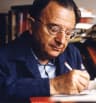
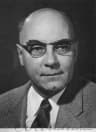
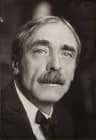
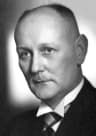
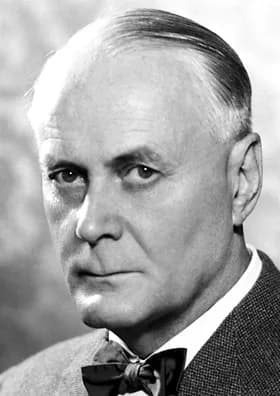
Ragnar Granit (1900–1991) was Finland best known for Finnish scientist.
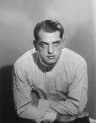
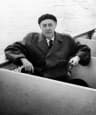
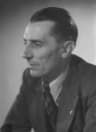
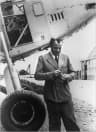
Ragnar Granit (October 30, 1900 – March 12, 1991) was a Finnish neuroscientist and physiologist. He was awarded the Nobel Prize in Physiology or Medicine in 1967 for his discoveries concerning visual processes in the eye. His work significantly advanced the understanding of both vision and neural control of movement.
第0章
人生の章
第1章 · 1900年· 全6章中第1章
Early Life and Origins
Ragnar Arthur Granit was born in Riihimäki, Finland, on October 30, 1900. His early life in Finland provided the foundation for a remarkable journey into scientific discovery and exploration. Granit's identity encompassed both Finnish and Swedish heritage, enriching his perspective and contributing to his scientific career across two nations. This formative environment undoubtedly nurtured his inherent intellectual curiosity, driving him towards a life of rigorous academic pursuit.
第2章· 全6章中第2章
Career Beginnings
Granit commenced his professional life as a physician, a role that equipped him with a deep, practical understanding of human physiology. He soon expanded his expertise, becoming a respected pedagogue and a dedicated university teacher, passionately educating future generations. His early scientific endeavors focused intently on the complex functions of the retina and the physiological mechanisms underlying color vision. This foundational research was diligently conducted at the esteemed University of Helsinki, where he first began to shape his significant scientific reputation.
第3章 · 1967年· 全6章中第3章
Major Achievements and Career Highlights
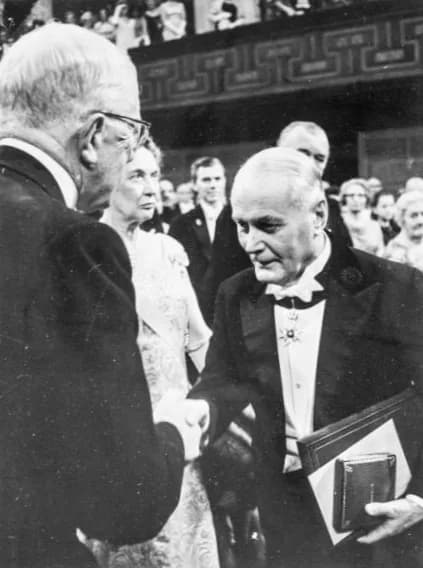
The crowning achievement of Ragnar Granit's career arrived in 1967 when he was jointly awarded the Nobel Prize in Physiology or Medicine. He shared this esteemed recognition with fellow scientists Haldan Keffer Hartline and George Wald. Their collective accolade was specifically granted "for their discoveries concerning the primary physiological and chemical visual processes in the eye." Granit's pioneering research significantly illuminated the complex relationship between light and perception, building upon his focused early studies at the University of Helsinki. Furthermore, his scientific curiosity extended beyond vision; he also rigorously investigated the neural control of movement during his tenure at the Karolinska Institutet in Stockholm.
第4章 · 1936年· 全6章中第4章
Notable Works or Contributions
Ragnar Granit's prolific scientific output is evidenced by an h-index of 3, derived from 14 published papers that shaped his field. Among his foundational works is "Die elektrophysiologie der netzhaut und des sehnerven : mit besonderer berücksichtigung der theoretischen begründung der Flimmermethode," published in 1936, which has received 3 citations. This early publication showcased his meticulous approach to understanding the electrophysiology of the retina and optic nerve, critically examining methods for flicker measurement.
His contributions also include "Die Aktivierung der Muskelspindeln vom motorischen Cortex der Katze," a work cited 4 times, reflecting his detailed research into motor control mechanisms. Another significant paper, "Über die Wirkung von Strychnin auf den Streckreflex," garnered 3 citations, exploring pharmacological influences on neural reflexes. Granit also authored "Zusammenwirken der verschiedenen Steuerungskreise der Tonusregulierung," cited once, delving into the coordination of muscle tone regulation. His research even touched upon nutritional science, with "Über eine Steigerung des Reizeffektes am Herzvagus der Ratte bei Mangel an fettlöslichen Vitaminen in der Nahrung1," also cited once, illustrating the breadth of his scientific interests.
第5章 · 1991年· 全6章中第5章
Later Years
Ragnar Granit maintained an active and influential presence within the scientific community throughout his long and distinguished life. His continued research and academic leadership at institutions like the Karolinska Institutet further cemented his legacy. He remained dedicated to advancing neurophysiology and understanding complex biological processes until his final years. Granit passed away on March 12, 1991, in Stockholm, Sweden, leaving behind a significant and lasting contribution to his scientific disciplines.
第6章· 全6章中第6章
Legacy and Impact
Ragnar Granit’s scientific legacy is deeply embedded in the foundational principles of neurophysiology. His Nobel Prize-winning investigations provided crucial and enduring insights into how the eye processes visual information, particularly concerning the specific details of color vision. He also significantly expanded our understanding of the sophisticated neural mechanisms governing movement control, effectively bridging different critical areas of physiological research. Granit's meticulous inquiry, intellectual rigor, and unwavering dedication to discovery continue to inspire and inform generations of researchers in neuroscience and physiology worldwide.
瞬間の中の人生
人生を形作った瞬間
FAQ
よくある質問
Ragnar Granitはいつ亡くなりましたか?
Ragnar Granitは1991年3月12日にStockholm, Swedenで亡くなりました(享年90歳)。
Ragnar Granitはどこで生まれましたか?
Ragnar Granitは1900年10月30日にRiihimäki, Finlandで生まれました。
Ragnar Granitは何で最もよく知られていますか?
Ragnar GranitはFinnish scientistで最もよく知られています。
Ragnar Granitは何歳で亡くなりましたか?
Ragnar Granitは亡くなった時90歳でした。
Ragnar Granitの国籍はどこですか?
Ragnar GranitはFinlandの出身です。
写真ギャラリー
写真の中の人生
ポラロイドをクリックして拡大 · 23枚の写真
QRコード
この経歴を共有
印刷して共有
スキャンしてこの経歴ページを訪問。イベント、展示会、教育資料に印刷してご利用ください。