誕生
October 20, 1893
Gatundu, Kenya
永眠
August 22, 1978
Mombasa, Kenya
知られていること
first Prime Minister (1963 to 1964) and President (1964 to 1978) of self-governing Kenya
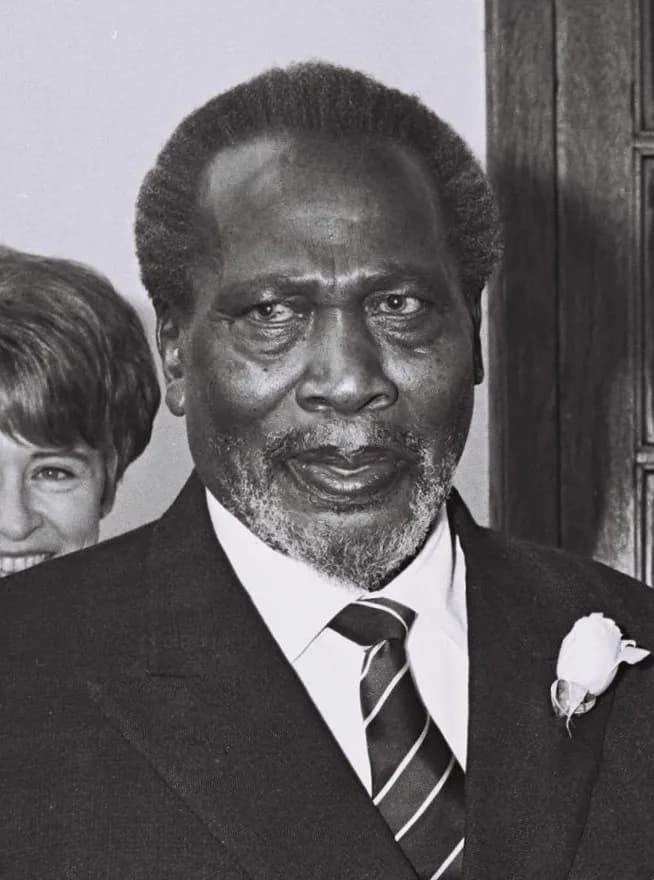
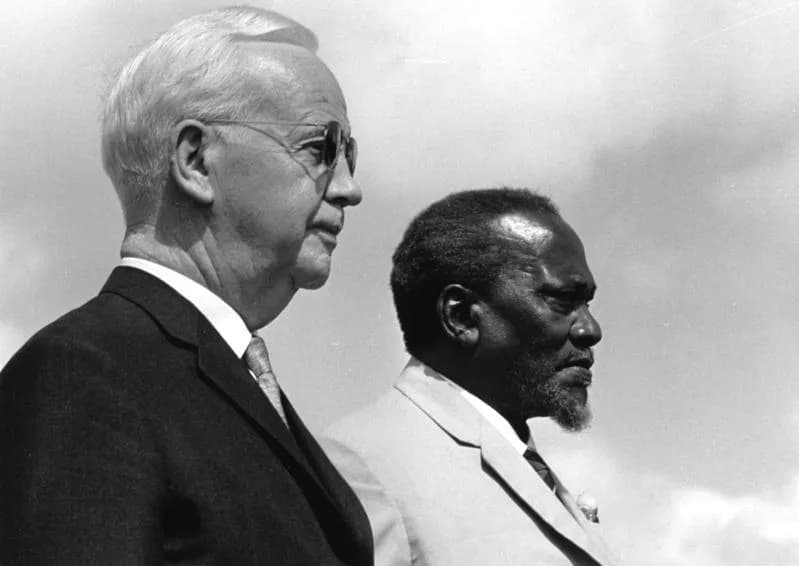
Jomo Kenyatta (1893–1978) was Kenya best known for first Prime Minister (1963 to 1964) and President (1964 to 1978) of self-governing Kenya.
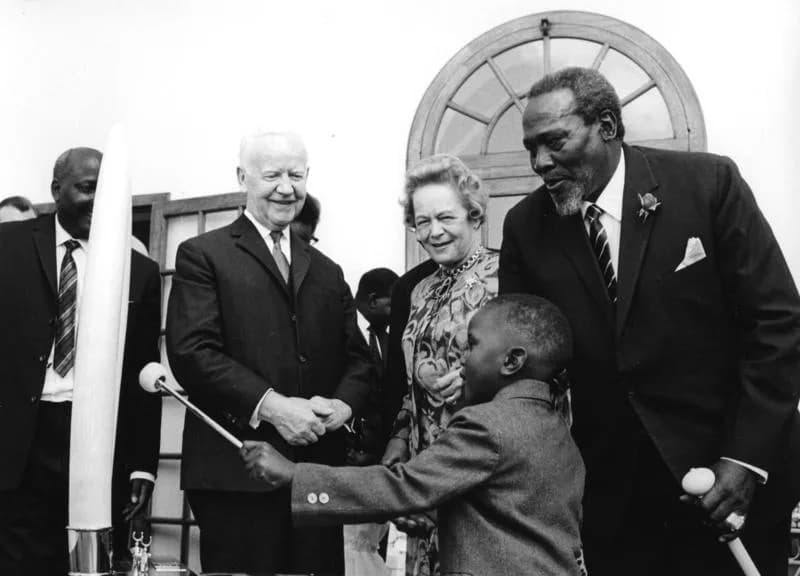
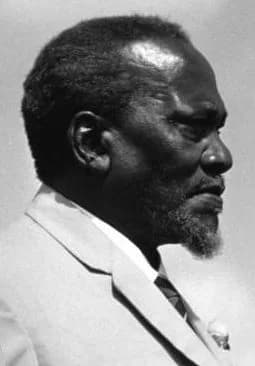
Jomo Kenyatta (October 20, 1893 – August 22, 1978) was a Kenyan politician and journalist. He served as Kenya's first Prime Minister (1963–1964) and President (1964–1978), leading the nation from British colonial rule to independence. His legacy as Kenya's founding father is deeply ingrained in the nation's history.
第0章
人生の章
第1章 · 1893年· 全7章中第1章
Early Life and Origins
Jomo Kenyatta was born in Gatundu, Kenya, on October 20, 1893. His early life was rooted in the rich cultural heritage of Kenya. While specific details about his family and upbringing are not extensively provided in available records, his origins in Gatundu placed him firmly within the fabric of Kenyan society.
第2章· 全7章中第2章
Career Beginnings
Kenyatta's career began with a dual focus on journalism and politics, establishing himself as a significant anti-colonial activist. He channeled his journalistic skills into advocating for the rights and independence of his people, becoming a powerful voice against British rule. His early political engagement laid the groundwork for his eventual leadership role in Kenya's struggle for self-determination.
His involvement with the Kenya African National Union (KANU) party began in 1961, where he quickly rose to prominence. As a leader within KANU, Kenyatta championed the cause of African nationalism and worked tirelessly to mobilize support for independence. His efforts were crucial in shaping the political landscape of Kenya during this volatile period.
第3章 · 1963年· 全7章中第3章
Major Achievements and Career Highlights
Jomo Kenyatta's political career reached its zenith with Kenya's independence. He was appointed as the first Prime Minister of self-governing Kenya in 1963, a position he held until 1964. This period marked a critical transition for the newly independent nation, as it began to establish its own governance structures.
In 1964, Kenya officially became a republic, and Jomo Kenyatta was inaugurated as its first President. He served in this esteemed role from 1964 until his passing in 1978. His long tenure as president saw the transformation of Kenya from a former British colony into an independent republic, a monumental achievement in African history.
Ideologically, Kenyatta was known as an African nationalist and a conservative. He led the KANU party from 1961 until his death, providing stable leadership during Kenya's formative years. His significant role in this transformation cemented his legacy as a pivotal figure in Kenya's history.
第4章· 全7章中第4章
Personal Life
While Jomo Kenyatta's public and political life is well-documented, specific details regarding his personal family relationships and private interests beyond his political and literary pursuits are not extensively provided in the available information. His dedication to Kenya's independence and governance largely defined his public persona.
第5章 · 1938年· 全7章中第5章
Notable Works or Contributions
Beyond his political achievements, Jomo Kenyatta was also a prolific writer and journalist. His literary contributions offer insights into his political thought and his deep understanding of Kenyan culture. Among his most recognized works is "Facing Mount Kenya: the tribal life of the Gikuyu," a seminal ethnographical study published in 1938.
Other notable works include "Suffering without bitterness," which offers a personal account of his experiences and struggles. He also compiled his significant addresses in "HARAMBEE! The Prime Minister of Kenya's Speeches 1963-1964," providing a record of his leadership during a crucial period. Additional titles attributed to him include "Naushangilia mlima wa Kenya," "African Short Stories," "The challenge of Uhuru," and "Mawaidha ya Jomo Kenyatta," further showcasing his literary range and commitment to expressing Kenyan identity and aspirations.
第6章 · 1978年· 全7章中第6章
Later Years
Jomo Kenyatta continued to serve as the President of Kenya throughout his later years, leading the nation until his death on August 22, 1978. He passed away in Mombasa, Kenya, a significant port city within the country he helped establish. His presidency was a period of consolidation for the young republic, as he worked to build national unity and economic stability.
第7章· 全7章中第7章
Legacy and Impact
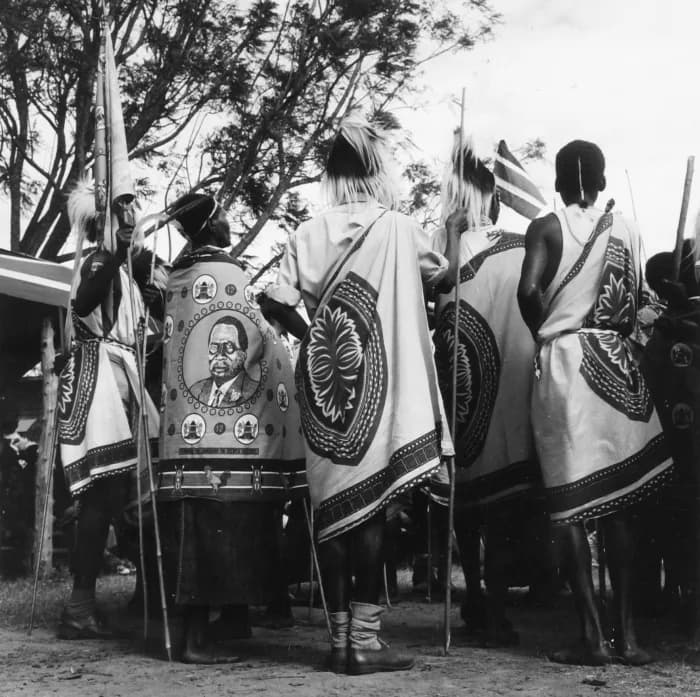
Jomo Kenyatta's legacy is defined by his indelible role in Kenya's journey to independence and its establishment as a sovereign nation. He is widely revered as Kenya's founding father, having skillfully navigated the complexities of anti-colonial struggle and post-colonial nation-building. His vision for Kenya, encapsulated in the philosophy of Harambee, meaning 'pulling together' in Swahili, continues to inspire collective effort and national unity.
As an African nationalist and conservative leader, Kenyatta set the course for Kenya's political and economic development for decades. His leadership transformed a British colony into a self-governing republic, laying down the fundamental structures of governance and national identity. His influence remains a cornerstone of Kenyan history and national consciousness.
瞬間の中の人生
人生を形作った瞬間
FAQ
よくある質問
Jomo Kenyattaはいつ亡くなりましたか?
Jomo Kenyattaは1978年8月22日にMombasa, Kenyaで亡くなりました(享年84歳)。
Jomo Kenyattaはどこで生まれましたか?
Jomo Kenyattaは1893年10月20日にGatundu, Kenyaで生まれました。
Jomo Kenyattaは何で最もよく知られていますか?
Jomo Kenyattaはfirst Prime Minister (1963 to 1964) and President (1964 to 1978) of self-governing Kenyaで最もよく知られています。
Jomo Kenyattaは何歳で亡くなりましたか?
Jomo Kenyattaは亡くなった時84歳でした。
Jomo Kenyattaの国籍はどこですか?
Jomo KenyattaはKenyaの出身です。
写真ギャラリー
写真の中の人生
ポラロイドをクリックして拡大 · 48枚の写真
QRコード
この経歴を共有
印刷して共有
スキャンしてこの経歴ページを訪問。イベント、展示会、教育資料に印刷してご利用ください。