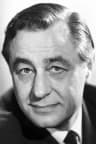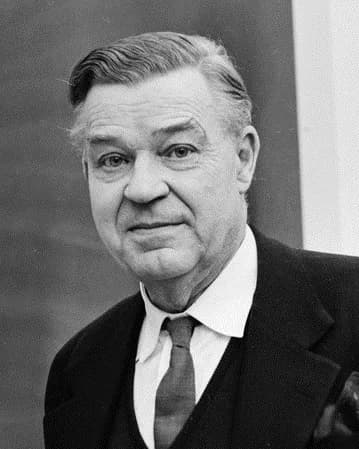
誕生
December 6, 1898
Skattunge Parish, Sweden
永眠
May 17, 1987
Danderyd, Sweden
知られていること
Swedish economist
Gunnar Myrdal (1898–1987) was Sweden best known for Swedish economist.
Karl Gunnar Myrdal (1898-1987) was a Swedish economist and sociologist who won the 1974 Nobel Memorial Prize in Economic Sciences. He pioneered analysis of the interdependence between economic, social, and institutional phenomena. His work significantly influenced development economics and institutional analysis.
第0章
人生の章
第1章 · 1898年· 全7章中第1章
Early Life and Origins
Gunnar Myrdal was born on December 6, 1898, in Skattunge Parish, a rural area of Sweden. Growing up in the Swedish countryside during the early 1900s, he witnessed firsthand the social and economic transformations that would later inform his scholarly work. His upbringing in this traditional Swedish community provided him with insights into the relationship between social structures and economic development that would become central to his later theoretical contributions.
第2章· 全7章中第2章
Career Beginnings
Myrdal began his professional journey as an economist and university teacher, combining academic research with practical engagement in policy matters. His early work established him as a thoughtful analyst of economic systems and their social implications. He also entered the political arena, serving as a politician while maintaining his academic pursuits, demonstrating his commitment to applying economic theory to real-world problems.
第3章 · 1974年· 全7章中第3章
Major Achievements and Career Highlights
The pinnacle of Myrdal's career came in 1974 when he was awarded the Nobel Memorial Prize in Economic Sciences, sharing the honor with Friedrich Hayek. The Nobel Committee recognized their "pioneering work in the theory of money and economic fluctuations and for their penetrating analysis of the interdependence of economic, social and institutional phenomena." This recognition highlighted Myrdal's unique approach to economics, which emphasized the inseparable connections between economic systems and social structures.
When his wife Alva Myrdal received the Nobel Peace Prize in 1982, they became the fourth married couple in history to win Nobel Prizes. More significantly, they were the first and only couple to win their respective prizes independently of each other, each recognized for their distinct contributions to their fields.
第4章· 全7章中第4章
Personal Life
Myrdal's marriage to Alva Myrdal represented not just a personal partnership but also an intellectual collaboration between two individuals dedicated to social progress. Their relationship exemplified the possibility of maintaining independent scholarly careers while sharing common values about improving society. The fact that both achieved Nobel recognition speaks to the exceptional intellectual environment they created together.
第5章 · 1968年· 全7章中第5章
Notable Works and Contributions
Among Myrdal's significant academic publications, "Teoría económica y regiones subdesarrolladas" (Economic Theory and Underdeveloped Regions) from 1968 stands out as his most cited work, receiving 66 citations and demonstrating his focus on development economics. His 1980 publication "Contra la corriente: ensayos críticos sobre economía" (Against the Stream: Critical Essays on Economics) reflected his willingness to challenge conventional economic thinking. "El Estado del Futuro" (The Future State) from 1962 showcased his forward-thinking approach to governance and economic policy.
His later works included "El problema negro, la guerra y la democracia" (The Black Problem, War and Democracy) published in 2002, and "El papel de los economistas jovenes en los paises subdesarrollados" (The Role of Young Economists in Underdeveloped Countries) from 1987, which continued his focus on development issues and the social responsibility of economists.
第6章 · 1987年· 全7章中第6章
Later Years
Myrdal continued his scholarly work well into his later years, publishing his final major work in 1987, the same year he passed away. His commitment to addressing the challenges faced by developing nations remained strong throughout his career. He spent his final years in Sweden, where he died on May 17, 1987, in Danderyd, having lived a full life dedicated to understanding and improving the human condition through economic and social analysis.
第7章· 全7章中第7章
Legacy and Impact
Gunnar Myrdal's lasting contribution to economics lies in his insistence that economic phenomena cannot be understood in isolation from their social and institutional contexts. His work helped establish the field of institutional economics and influenced generations of scholars to consider the broader implications of economic policies. His focus on development economics and the problems of underdeveloped regions continues to inform contemporary discussions about global inequality and economic development.
The recognition he received, culminating in the Nobel Prize, established him as one of the most important economic thinkers of his era. His approach to economics as an inherently social science has had lasting influence on how economists approach their research and policy recommendations.
瞬間の中の人生
人生を形作った瞬間
FAQ
よくある質問
Gunnar Myrdalはいつ亡くなりましたか?
Gunnar Myrdalは1987年5月17日にDanderyd, Swedenで亡くなりました(享年88歳)。
Gunnar Myrdalはどこで生まれましたか?
Gunnar Myrdalは1898年12月6日にSkattunge Parish, Swedenで生まれました。
Gunnar Myrdalは何で最もよく知られていますか?
Gunnar MyrdalはSwedish economistで最もよく知られています。
Gunnar Myrdalは何歳で亡くなりましたか?
Gunnar Myrdalは亡くなった時88歳でした。
Gunnar Myrdalの国籍はどこですか?
Gunnar MyrdalはSwedenの出身です。
写真ギャラリー
写真の中の人生
ポラロイドをクリックして拡大 · 50枚の写真
QRコード
この経歴を共有
印刷して共有
スキャンしてこの経歴ページを訪問。イベント、展示会、教育資料に印刷してご利用ください。