誕生
August 16, 1845
Bonnevoie, Luxembourg
永眠
July 13, 1921
Atlantic Ocean
知られていること
Luxembourgish physicist nationalized French
Gabriel Lippmann (1845–1921) was Luxembourg best known for Luxembourgish physicist nationalized French.
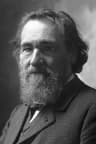
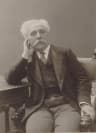
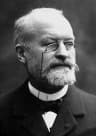
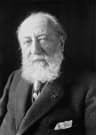
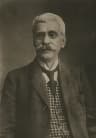
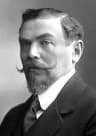
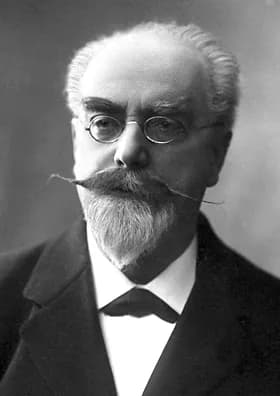
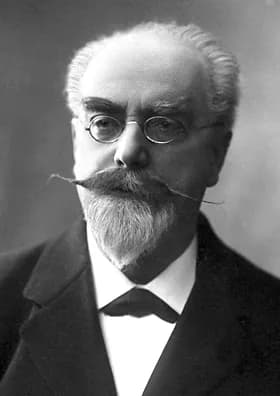
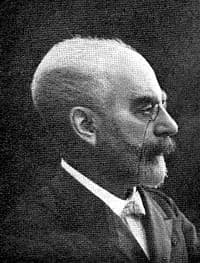
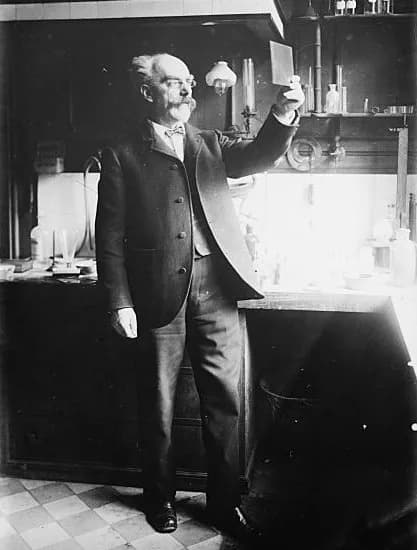
Gabriel Lippmann (August 16, 1845 – July 13, 1921) was a Luxembourgish physicist nationalized French. He received the Nobel Prize in Physics in 1908 for his invention of the Lippmann plate, a photographic method to reproduce colors. His work significantly advanced the field of photography.
第0章
人生の章
第1章 · 1845年· 全7章中第1章
Early Life and Origins
Gabriel Lippmann began his life in Bonnevoie, Luxembourg, on August 16, 1845. His early years in Luxembourg set the stage for a career that would span multiple scientific disciplines and national identities. He was initially known as a Luxembourgish physicist before his nationalization as a French citizen, reflecting a life lived across national borders and scientific communities.
第2章 · 1877年· 全7章中第2章
Career Beginnings
Details of Lippmann's initial academic pursuits or very early career steps are not extensively documented beyond his eventual rise to prominence. However, his early engagement with scientific inquiry is evidenced by his academic publications from the late 19th century. Works like his 1877 publication, "J.-H. GLADSTONE ET ALFRED TRIBE. — Note on the electrolytic conduction of some organic bodies (Conductibilité électrique de quelques corps organiques); Proceedings of the royal Society, mars 1877," show his early interests in the electrical properties of organic materials.
His research continued to develop with papers such as "The Conservation of Electricity" published in 1881, which garnered one citation, indicating early recognition within scientific circles. Another early contribution, "On a thermoscopic method for the determination of the ohm" from 1882, further showcased his diverse investigative focus within physics.
第3章· 全7章中第3章
Major Achievements and Career Highlights
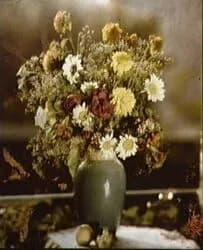
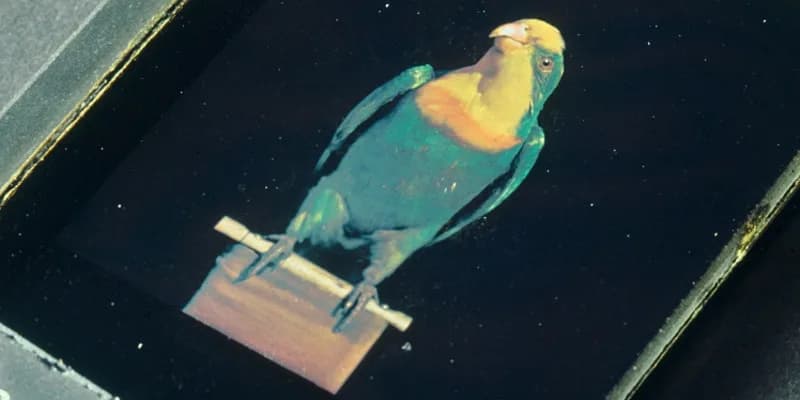
Gabriel Lippmann's most significant and widely recognized achievement was the invention of the Lippmann plate. This innovative method allowed for the photographic reproduction of colors, which was a revolutionary step in photography. His technique was ingeniously based on the phenomenon of interference, a principle where waves superpose to form a resultant wave of greater, lower, or the same amplitude.
This remarkable scientific breakthrough earned him the prestigious Nobel Prize in Physics in 1908. The Nobel Committee specifically honored him "for his method of reproducing colours photographically based on the phenomenon of interference." His work fundamentally changed how colors could be captured and preserved, pushing the boundaries of photographic science.
第4章· 全7章中第4章
Personal Life
While Gabriel Lippmann's professional and scientific contributions are well-documented, details regarding his personal life, family, relationships, or specific personal interests beyond his scientific endeavors are not readily available in the provided information. His public persona was largely defined by his dedication to physics and his pioneering inventions.
第5章 · 2020年· 全7章中第5章
Notable Works or Contributions
Lippmann's academic career was marked by numerous publications, contributing to his h-index of 2 across 15 papers. Among his top works, "Colour Photography" published in 2020 (posthumously, indicating a retrospective compilation or reissue of his earlier work) received 5 citations, affirming the ongoing relevance of his foundational research.
Another key paper, "On colour photography by the interferential method," also garnered 5 citations and directly detailed the principles behind his Nobel-winning invention. Beyond color photography, his interests extended to electricity, as seen in "The Conservation of Electricity" (1881), which had one citation. Earlier still, he contributed to the study of electrical conduction with "J.-H. GLADSTONE ET ALFRED TRIBE. — Note on the electrolytic conduction of some organic bodies (Conductibilité électrique de quelques corps organiques); Proceedings of the royal Society, mars 1877." His commitment to precise measurement was also evident in "On a thermoscopic method for the determination of the ohm" (1882).
第6章 · 1921年· 全7章中第6章
Later Years
Gabriel Lippmann continued his scientific work and life until his passing in 1921. His life concluded on July 13, 1921, while he was on the Atlantic Ocean. This final journey marked the end of a prolific career dedicated to understanding and manipulating the physical world, leaving behind a legacy of innovation.
第7章 · 1908年· 全7章中第7章
Legacy and Impact
Gabriel Lippmann's legacy is firmly etched in the history of physics and photography, primarily through his invention of the Lippmann plate. His method for photographically reproducing colors based on the interference phenomenon stands as a testament to his inventive genius. The Nobel Prize in Physics he received in 1908 cemented his place among the most influential scientists of his time.
His contributions transformed the nascent field of color photography, demonstrating that capturing the full spectrum of visible light was scientifically achievable. As a Luxembourgish physicist nationalized French, his work bridged different scientific communities and national identities, impacting generations of scientists and photographers who followed. His name remains synonymous with the pursuit of capturing the world's true colors.
瞬間の中の人生
人生を形作った瞬間
FAQ
よくある質問
Gabriel Lippmannはいつ亡くなりましたか?
Gabriel Lippmannは1921年7月13日にAtlantic Oceanで亡くなりました(享年75歳)。
Gabriel Lippmannはどこで生まれましたか?
Gabriel Lippmannは1845年8月16日にBonnevoie, Luxembourgで生まれました。
Gabriel Lippmannは何で最もよく知られていますか?
Gabriel LippmannはLuxembourgish physicist nationalized Frenchで最もよく知られています。
Gabriel Lippmannは何歳で亡くなりましたか?
Gabriel Lippmannは亡くなった時75歳でした。
Gabriel Lippmannの国籍はどこですか?
Gabriel LippmannはLuxembourgの出身です。
年表
人生の概要
写真ギャラリー
写真の中の人生
ポラロイドをクリックして拡大 · 48枚の写真
QRコード
この経歴を共有
印刷して共有
スキャンしてこの経歴ページを訪問。イベント、展示会、教育資料に印刷してご利用ください。