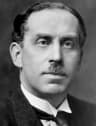
誕生
September 2, 1877
Eastbourne, United Kingdom
永眠
September 22, 1956
Brighton, United Kingdom
知られていること
English radiochemist
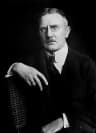
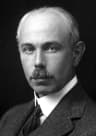
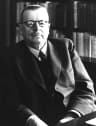
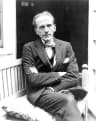
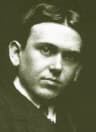
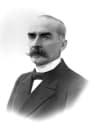
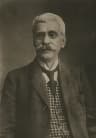
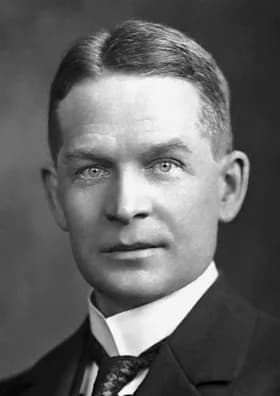
Frederick Soddy (1877–1956) was United Kingdom best known for English radiochemist.
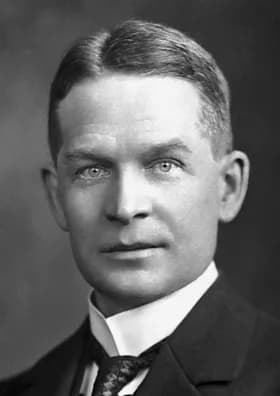
Frederick Soddy (September 2, 1877 – September 22, 1956) was an English radiochemist from Eastbourne. He was awarded the Nobel Prize in Chemistry for his work on radioactive substances and the origin of isotopes. His research fundamentally advanced our understanding of nuclear reactions.
第0章
人生の章
第1章 · 1877年· 全8章中第1章
Opening
Frederick Soddy, born on September 2, 1877, and passing on September 22, 1956, was a distinguished English radiochemist whose work significantly reshaped our understanding of the atomic world. He was a Nobel laureate, recognized for his essential investigations into radioactive substances and the fundamental nature of isotopes. As a physicist, professor, chemist, pharmacist, and researcher, Soddy's career spanned a period of immense scientific discovery. His collaborative efforts and individual insights laid foundational principles for modern nuclear science.
第2章 · 1877年· 全8章中第2章
Early Life and Origins
Frederick Soddy began his life in Eastbourne, a town nestled on the southern coast of the United Kingdom, where he was born in 1877. Details of his early family life and specific upbringing are not provided. However, his eventual rise to a prominent scientific career suggests a nurturing environment that supported his intellectual development. This early grounding in the United Kingdom would pave the way for his future scientific explorations.
第3章· 全8章中第3章
Career Beginnings
While the specifics of Frederick Soddy's initial professional steps are not detailed, his path quickly led him into the emerging field of radiochemistry. His early work involved a crucial partnership with Ernest Rutherford. Together, they undertook research that would illuminate the mysterious processes of radioactivity. This collaboration marked a significant moment in the history of physics and chemistry.
第4章 · 1921年· 全8章中第4章
Major Achievements and Career Highlights
Frederick Soddy's career was characterized by several monumental scientific achievements. Alongside Ernest Rutherford, he provided the explanation that radioactivity arises from the transmutation of elements, a process now understood to involve nuclear reactions. Soddy further solidified his scientific standing by conclusively proving the existence of isotopes for certain radioactive elements. These discoveries were not only significant but also earned him the prestigious Nobel Prize in Chemistry in 1921.
The Royal Swedish Academy of Sciences awarded him this honor "for his contributions to our knowledge of the chemistry of radioactive substances, and his investigations into the origin and nature of isotopes." This recognition cemented his place as a leading figure in early 20th-century science. His membership as an FRS (Fellow of the Royal Society) further highlighted his esteemed standing among his peers.
第5章· 全8章中第5章
Personal Life
While Frederick Soddy's professional contributions are extensively documented, specific details regarding his personal life, family relationships, or hobbies are not readily available in the provided information. His dedication to scientific inquiry, however, is evident through the breadth and depth of his published work and academic accolades. His life was clearly immersed in the pursuit of scientific understanding.
第6章 · 1910年· 全8章中第6章
Notable Works or Contributions
Throughout his career, Frederick Soddy authored and co-authored several important academic publications that advanced the scientific discourse. Although an h-index of 2 with 8 papers is listed, his works included foundational texts and research papers. Among his published contributions are "La table périodique des éléments," an influential work that garnered 4 citations. He also published "Essais pour valuer la priode de l'ionium" in 1910, which similarly received 4 citations.
His 1913 contributions included a collection titled "(1) Modern Electrical Theory (2) Les Idées Modernes sur la Constitution de la Matière Conférences Faites en 1912 (3) Researches in Physical Optics, with especial reference to the Radiation of Electrons," which recorded 1 citation. The provided data also lists "Amélioration des outils géochimiques pour l'investigation des paléoenvironnements" (2014, 0 citations) and "Le Radium: Interprétation et Enseignement de la Radicactivité" (null, 0 citations) as part of his intellectual output.
第7章 · 1956年· 全8章中第7章
Later Years
Frederick Soddy continued his intellectual pursuits, serving as a physicist, professor, chemist, pharmacist, and researcher throughout much of his life. He passed away on September 22, 1956, in Brighton, another significant location in the United Kingdom. Although specific details about his retirement or final activities are not available, his legacy continued to grow long after his active research period. His work remained a foundational pillar in scientific education and advanced study.
第8章· 全8章中第8章
Legacy and Impact
Frederick Soddy's contributions left a lasting mark on the scientific community and continue to shape our understanding of the universe. His explanation of radioactivity as elemental transmutation, developed with Ernest Rutherford, completely altered the prevailing atomic theories of his time. Furthermore, his rigorous proof of isotopes revolutionized chemistry and physics, providing a clearer picture of atomic structure. Soddy was truly a polymath, demonstrating mastery across diverse fields including chemistry, nuclear physics, statistical mechanics, finance, and economics. His pioneering work remains fundamental to the fields of nuclear science and geochemistry, ensuring his enduring influence for generations of scientists.
瞬間の中の人生
人生を形作った瞬間
FAQ
よくある質問
Frederick Soddyはいつ亡くなりましたか?
Frederick Soddyは1956年9月22日にBrighton, United Kingdomで亡くなりました(享年79歳)。
Frederick Soddyはどこで生まれましたか?
Frederick Soddyは1877年9月2日にEastbourne, United Kingdomで生まれました。
Frederick Soddyは何で最もよく知られていますか?
Frederick SoddyはEnglish radiochemistで最もよく知られています。
Frederick Soddyは何歳で亡くなりましたか?
Frederick Soddyは亡くなった時79歳でした。
Frederick Soddyの国籍はどこですか?
Frederick SoddyはUnited Kingdomの出身です。
写真ギャラリー
写真の中の人生
ポラロイドをクリックして拡大 · 36枚の写真
QRコード
この経歴を共有
印刷して共有
スキャンしてこの経歴ページを訪問。イベント、展示会、教育資料に印刷してご利用ください。