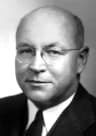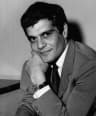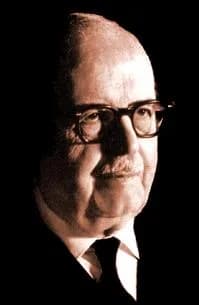
誕生
April 10, 1887
Buenos Aires, Argentina
永眠
September 21, 1971
Buenos Aires, Argentina
知られていること
Argentine physician
Bernardo Houssay (1887–1971) was Argentina best known for Argentine physician.
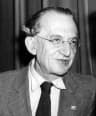
Bernardo Houssay (April 10, 1887 – September 21, 1971) was an Argentine physician from Buenos Aires. He received the 1947 Nobel Prize for his discovery of the role pituitary hormones play in regulating glucose in animals. Houssay is celebrated as the first Latin American Nobel laureate in the sciences.
第0章
人生の章
第1章 · 1887年· 全8章中第1章
Opening
Bernardo Alberto Houssay, a revered Argentine physician and physiologist, made enduring contributions to medical science during his lifetime from April 10, 1887, to September 21, 1971. Born and passing in his native Buenos Aires, Houssay's extensive career spanned various scientific disciplines. He was a pioneering figure, widely recognized for his groundbreaking research that fundamentally changed our understanding of bodily functions.
第2章 · 1887年· 全8章中第2章
Early Life and Origins
Bernardo Houssay began his life in Buenos Aires, Argentina, on April 10, 1887. His early years in the vibrant city laid the foundation for a future dedicated to rigorous scientific inquiry. He pursued a remarkably broad education, becoming proficient across multiple scientific fields.
Houssay was not only a physician but also a trained pharmacist, chemist, entomologist, and biologist, demonstrating an early passion for diverse aspects of natural science. This extensive foundational knowledge provided him with a unique perspective for his later physiological investigations.
第3章· 全8章中第3章
Career Beginnings
Houssay's scientific career began with this solid, multi-disciplinary educational background. His early professional life was marked by a deep commitment to research and understanding the complexities of living organisms. He quickly established himself as a dedicated scientist with a keen eye for experimental design.
This rigorous approach propelled him into the forefront of physiological research in Argentina, where he embarked on the studies that would eventually earn him global acclaim. His meticulous work ethic and intellectual curiosity were evident from the very start of his professional journey.
第4章 · 1947年· 全8章中第4章
Major Achievements and Career Highlights
The pinnacle of Bernardo Houssay's career arrived in 1947 when he was awarded the Nobel Prize for Physiology or Medicine. He shared this prestigious honor with Carl Ferdinand Cori and Gerty Cori. Houssay was specifically recognized for his discovery of the part played by the hormone of the anterior pituitary lobe in the metabolism of sugar.
This significant finding illuminated how pituitary hormones regulate glucose levels in animals, a crucial advancement in endocrinology. His Nobel Prize made him the first Latin American Nobel laureate in the sciences, a distinction that underscored his pioneering spirit and the global impact of his work.
第5章· 全8章中第5章
Personal Life
While much of Bernardo Houssay's public record focuses on his immense scientific accomplishments, details regarding his personal life and family are not extensively documented in the provided information. His enduring dedication to scientific research and education was a defining characteristic of his life. He lived and worked primarily in Buenos Aires, a city that remained central to his professional journey and personal environment.
第6章 · 1989年· 全8章中第6章
Notable Works or Contributions
Throughout his productive career, Bernardo Houssay authored an impressive body of work, comprising 190 scientific papers. His commitment to research resulted in an h-index of 22, reflecting the significant impact and citation of his publications within the scientific community. Among his important contributions, "The Discovery of Pancreatic Diabetes" (1989) stands out as a key work that likely summarized or further elaborated on his significant findings regarding metabolic regulation.
This extensive written output ensured his research findings were widely disseminated and accessible to other scientists globally. His detailed academic contributions served as a foundation for further advancements in understanding metabolic processes and endocrine functions.
第7章· 全8章中第7章
Later Years
Bernardo Houssay continued his influential work in physiology into his later years. His discoveries had already fundamentally altered the scientific understanding of metabolic processes. Even after receiving the Nobel Prize, his commitment to scientific inquiry and education remained unwavering.
He passed away in his beloved hometown of Buenos Aires, Argentina, on September 21, 1971, leaving behind a profound scientific legacy. His life's work continued to inspire and inform subsequent generations of medical researchers and practitioners.
第8章· 全8章中第8章
Legacy and Impact
The influence of Bernardo Houssay on the fields of physiology and medicine is lasting. His Nobel-winning work on pituitary hormones and glucose regulation laid foundational knowledge for understanding and treating metabolic disorders. This fundamental research continues to inform modern endocrinology.
As the first Latin American scientist to receive a Nobel Prize, he not only advanced scientific understanding but also inspired generations of researchers across the continent. His multidisciplinary approach and dedication to rigorous experimentation continue to serve as a model for scientific excellence.
瞬間の中の人生
人生を形作った瞬間
FAQ
よくある質問
Bernardo Houssayはいつ亡くなりましたか?
Bernardo Houssayは1971年9月21日にBuenos Aires, Argentinaで亡くなりました(享年84歳)。
Bernardo Houssayはどこで生まれましたか?
Bernardo Houssayは1887年4月10日にBuenos Aires, Argentinaで生まれました。
Bernardo Houssayは何で最もよく知られていますか?
Bernardo HoussayはArgentine physicianで最もよく知られています。
Bernardo Houssayは何歳で亡くなりましたか?
Bernardo Houssayは亡くなった時84歳でした。
Bernardo Houssayの国籍はどこですか?
Bernardo HoussayはArgentinaの出身です。
写真ギャラリー
写真の中の人生
ポラロイドをクリックして拡大 · 33枚の写真
QRコード
この経歴を共有
印刷して共有
スキャンしてこの経歴ページを訪問。イベント、展示会、教育資料に印刷してご利用ください。