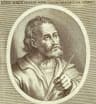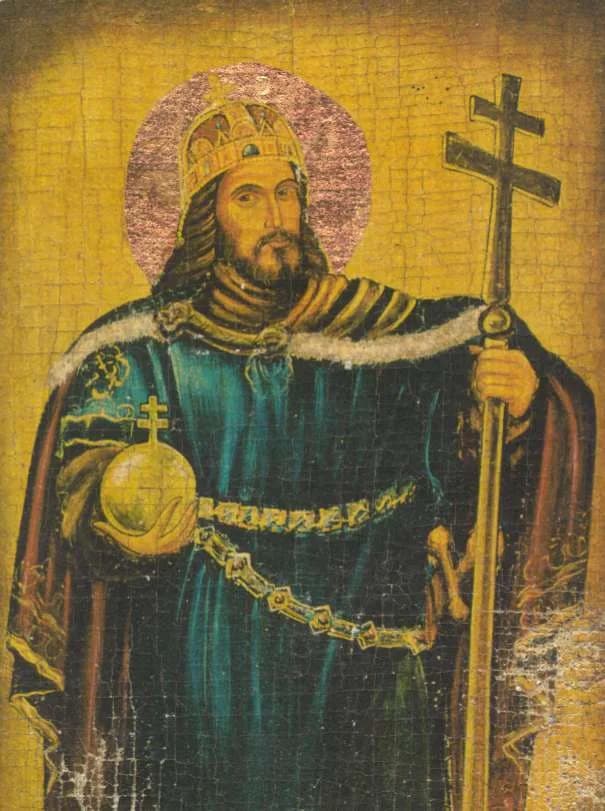
Fædd/ur
January 1, 975
Esztergom, Hungary
Lést
August 21, 1038
Szentkirály (Esztergom), Kingdom of Hungary
Þekkt/ur fyrir
11th-century king of Hungary and saint
Stephen I of Hungary (975–1038) was Hungary best known for 11th-century king of Hungary and saint.
Stephen I of Hungary (January 1, 975 – August 21, 1038) was an 11th-century monarch. He was the last grand prince and the first king of Hungary, renowned for establishing the Christian Kingdom of Hungary. His devout faith and transformative leadership led to his veneration as a saint.
Kafli
Kaflar lífs
Kafli 1· Kafli 1 af 6
Early Life and Origins
Stephen's early life began in Esztergom, Hungary, though the exact year of his birth remains somewhat uncertain, with historical details suggesting it occurred in or after 975. At the time of his birth, he was given the pagan name Vajk, a reflection of the established traditions and cultural practices of his people before the widespread adoption of Christianity. This early naming highlights the societal context into which Stephen was born, a world on the cusp of significant religious change.
He was the only son of Grand Prince Géza and his wife, Sarolt, who hailed from a prominent family of gyulas, a detail that speaks to his noble lineage and early upbringing. Although both Grand Prince Géza and Sarolt had undergone baptism, Stephen distinguished himself as the first member of his family to fully embrace and practice devout Christianity. This personal conviction would later become a cornerstone of his reign and his lasting legacy, guiding his actions as a national leader.
His personal connections were further solidified through his marriage to Gisela of Bavaria, a distinguished scion of the powerful imperial Ottonian dynasty. This strategic union not only provided personal companionship but also forged crucial political and cultural ties with one of Europe's most influential imperial families. The marriage brought prestige and stability to Stephen's burgeoning rule, connecting his emerging state to the established Christian powers of the continent.
Kafli 2 · 1000· Kafli 2 af 6
Career Beginnings
Stephen's ascent to leadership began with his tenure as the last grand prince of the Hungarians, a crucial period spanning between 997 and 1000 or 1001. This transitional role positioned him at the helm of a changing society, requiring astute leadership to navigate internal and external challenges. The grand principality represented a significant political entity, one he skillfully managed before ushering in an even greater transformation for his people.
The pivotal shift occurred around the turn of the millennium, either in 1000 or 1001, when Stephen was crowned as the very first king of Hungary. This momentous event marked the official transformation of the Hungarian polity from a grand principality into a recognized European kingdom. His elevation to kingship established a new form of governance and a distinct national identity, fundamentally redefining the state's international standing and internal structure.
Kafli 3· Kafli 3 af 6
Major Achievements and Career Highlights
King Stephen I's reign was defined by monumental achievements that fundamentally reshaped the Hungarian nation, leaving an indelible imprint on its history. His most significant accomplishment was undoubtedly the establishment of Hungary as a unified, Christian kingdom, moving beyond its previous status as a grand principality. This act of nation-building laid the foundations for centuries of Hungarian sovereignty and cultural development, integrating the nation into the broader European framework.
He steered his people towards Christianity, becoming the first truly devout Christian leader in his family and fostering its widespread adoption throughout his realm. This religious transformation was not merely personal but a strategic and spiritual conversion for the entire nation, guiding its moral and legal codes. Through his efforts, Hungary integrated into the Christian world of Europe, solidifying its place among Western nations and fostering new alliances.
His strategic marriage to Gisela of Bavaria, a member of the imperial Ottonian dynasty, also cemented important political alliances and diplomatic ties, strengthening the fledgling kingdom's position on the European stage. This matrimonial bond secured external support and recognition, crucial for the stability and growth of the newly formed kingdom. The comprehensive reforms enacted under his rule established administrative, legal, and ecclesiastical structures that endured for centuries.
Kafli 4· Kafli 4 af 6
Personal Life
Stephen I's personal life was deeply intertwined with his public mission, particularly through his significant family connections and profound faith. He was the only son of Grand Prince Géza and Sarolt, a detail that underscores the weight of expectation and responsibility placed upon him as the sole heir to the grand principality. This unique position meant that the future of his family's lineage and, ultimately, the nation, rested squarely on his shoulders.
His marriage to Gisela of Bavaria, a woman from the esteemed imperial Ottonian dynasty, was not only a personal union but a powerful political alliance that brought prestige and strategic connections to the nascent Hungarian state. Their union symbolized the merging of cultures and political interests, bridging Hungary with the more established Western European powers. Gisela's influence, stemming from her prominent lineage, was a valuable asset in Stephen's mission to integrate Hungary into Christian Europe.
Beyond his royal duties and familial obligations, Stephen distinguished himself through his personal piety and unwavering commitment to Christianity. While his parents had been baptized, it was Stephen who embraced and practiced a devout form of Christianity, making him a unique and pioneering figure within his own lineage. This profound personal faith guided many of his decisions as a monarch and ultimately contributed to his veneration as a saint, highlighting his spiritual dedication.
Kafli 5 · 1038· Kafli 5 af 6
Later Years
King Stephen I continued to lead his kingdom with vision and steadfastness until his passing on August 21, 1038, concluding a long and impactful reign. His tenure, which commenced either in 1000 or 1001, spanned several decades, a testament to his enduring leadership during a period of significant national formation and consolidation. Throughout these later years, he dedicated himself to solidifying the foundations of the Hungarian state and further embedding Christian institutions within its fabric.
His final days were spent in Szentkirály, a location within the broader Esztergom region of the Kingdom of Hungary, where his life's journey concluded. This place, deeply connected to his origins, became his resting place after decades of transformative rule. His death marked the end of an era, but the structures and principles he established continued to guide the nation for generations, ensuring the longevity of his vision.
Kafli 6· Kafli 6 af 6
Legacy and Impact
The legacy of Stephen I of Hungary is truly monumental, defining the very identity of the Hungarian nation for over a millennium and profoundly shaping its historical trajectory. As the first king of Hungary and subsequently recognized as a saint, his impact resonates through every facet of the country's history and culture. He courageously transformed a tribal grand principality into a Christian kingdom, an act that ensured Hungary's place within the European family of nations.
His visionary leadership established not just a monarchy, but also the institutional framework for a new society, guided by Christian values and laws. This enduring influence on religion, governance, and national identity secures his place as one of the most significant figures in Hungarian history, a patriarch of the nation. Stephen I's work created a lasting foundation, shaping the spiritual and political character of Hungary that endures to this day and continues to inspire national pride.
Líf í augnablikum
Augnablikin sem mótuðu líf

Algengar spurningar
Algengar spurningar
Hvenær lést Stephen I of Hungary?
Stephen I of Hungary lést 21. ágúst 1038 í Szentkirály (Esztergom), Kingdom of Hungary, 63 ára gamall(ll).
Hvar fæddist Stephen I of Hungary?
Stephen I of Hungary fæddist í Esztergom, Hungary 1. janúar 975.
Fyrir hvað er Stephen I of Hungary þekktastur/þekktust?
Stephen I of Hungary er þekktastur/þekktust fyrir 11th-century king of Hungary and saint.
Hve gamall/gömul var Stephen I of Hungary við andlátið?
Stephen I of Hungary var 63 ára gamall/gömul við andlátið.
Af hvaða þjóðerni var Stephen I of Hungary?
Stephen I of Hungary var frá Hungary.
Tímalína
Líf í hnotskurn
- 1000
Career Beginnings
- 1038
Later Years
Myndasafn
Líf í myndum
Smelltu á hvaða Polaroid sem er til að stækka · 34 myndir
QR-kóði
Deila þessari ævisögu
Prenta og deila
Skannaðu til að heimsækja þessa ævisögu. Prentaðu fyrir viðburði, sýningar eða fræðsluefni.