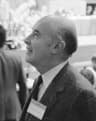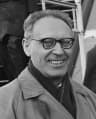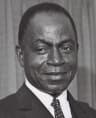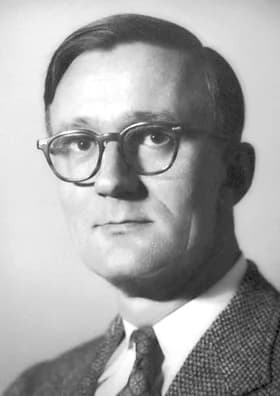
Fædd/ur
January 26, 1911
Blankenburg, Germany
Lést
March 20, 1993
Dallas, United States
Þekkt/ur fyrir
German-American physicist
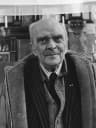
Polykarp Kusch (1911–1993) was Germany best known for German-American physicist.
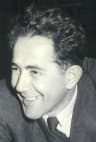
Polykarp Kusch (January 26, 1911 – March 20, 1993) was a German-American physicist from Blankenburg, Germany. He shared the 1955 Nobel Prize in Physics for accurately determining the electron's magnetic moment, which was greater than its theoretical value. This finding spurred innovations in quantum electrodynamics.
Kafli
Kaflar lífs
Kafli 1 · 1911· Kafli 1 af 8
Opening Tribute
Polykarp Kusch (January 26, 1911 – March 20, 1993) was a distinguished German-American physicist whose rigorous experimental work significantly advanced our understanding of quantum mechanics. His career as a physicist and university teacher left a lasting mark on scientific inquiry. He is primarily celebrated for his precision determination of the electron's magnetic moment, a discovery that earned him the Nobel Prize in Physics.
Kafli 2 · 1911· Kafli 2 af 8
Early Life and Origins
Born in Blankenburg, Germany, on January 26, 1911, Polykarp Kusch began his life in a period of intense scientific and social change. His early upbringing in Germany laid the foundation for a life dedicated to meticulous observation and scientific investigation. He later immigrated to the United States, where he would pursue his higher education and establish his illustrious career.
Kafli 3· Kafli 3 af 8
Career Beginnings
Kusch cultivated his skills as a physicist through dedicated study and early professional roles. He eventually became a respected university teacher, sharing his knowledge and inspiring future generations of scientists. His initial work focused on atomic and molecular beam experiments, which provided the tools for his later, more famous measurements.
Kafli 4 · 1955· Kafli 4 af 8
Major Achievements and Career Highlights
The zenith of Polykarp Kusch's career came in 1955 when he shared the Nobel Prize in Physics with Willis Eugene Lamb. This prestigious award recognized his accurate determination that the electron magnetic moment was notably greater than its previously calculated theoretical value. This experimental finding was not merely a confirmation but a challenge to existing theory, prompting a re-evaluation within the physics community.
His precise measurements were crucial for developing a deeper understanding of fundamental particles. The disparity he found between the theoretical and observed values of the electron's magnetic moment necessitated new theoretical frameworks. This work directly contributed to significant innovations in the field of quantum electrodynamics.
Kafli 5· Kafli 5 af 8
Personal Life
While the specifics of Polykarp Kusch's personal life beyond his professional endeavors are not widely documented, his dedication to scientific research was clear. His work required immense patience and precision, traits that likely influenced various aspects of his daily life. He maintained residences in the United States throughout his impactful career.
Kafli 6· Kafli 6 af 8
Notable Contributions
Kusch's Nobel-winning contribution was his precision determination of the magnetic moment of the electron. This involved carefully designed experiments using atomic beam resonance methods. The result, showing the electron's magnetic moment to be slightly larger than predicted by Dirac's theory, was a vital piece of empirical evidence.
This experimental evidence directly led to reconsiderations and subsequent innovations in quantum electrodynamics, the theory describing how light and matter interact. His work demonstrated the necessity of accounting for quantum field corrections, refining the theoretical models of elementary particles. Without his rigorous experimental verification, the theoretical advancements might have taken a different, slower path.
Kafli 7 · 1993· Kafli 7 af 8
Later Years
Polykarp Kusch continued his work in physics and academia for many years following his Nobel recognition. He passed away on March 20, 1993, in Dallas, United States. His passing marked the end of a life committed to scientific discovery and education.
Kafli 8· Kafli 8 af 8
Legacy and Impact
Polykarp Kusch's legacy endures through his fundamental contributions to physics. His meticulous experimental work reshaped understanding of the electron and its properties. By challenging the existing theoretical framework with precise data, he spurred significant developments in quantum electrodynamics.
His work continues to influence physicists studying fundamental particle interactions. Kusch’s dedication to experimental accuracy set a high standard for scientific research. He is remembered as a physicist whose insights and careful measurements profoundly advanced a core area of modern physics.
Líf í augnablikum
Augnablikin sem mótuðu líf
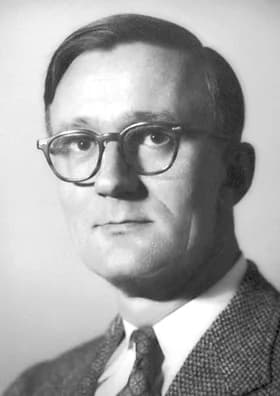
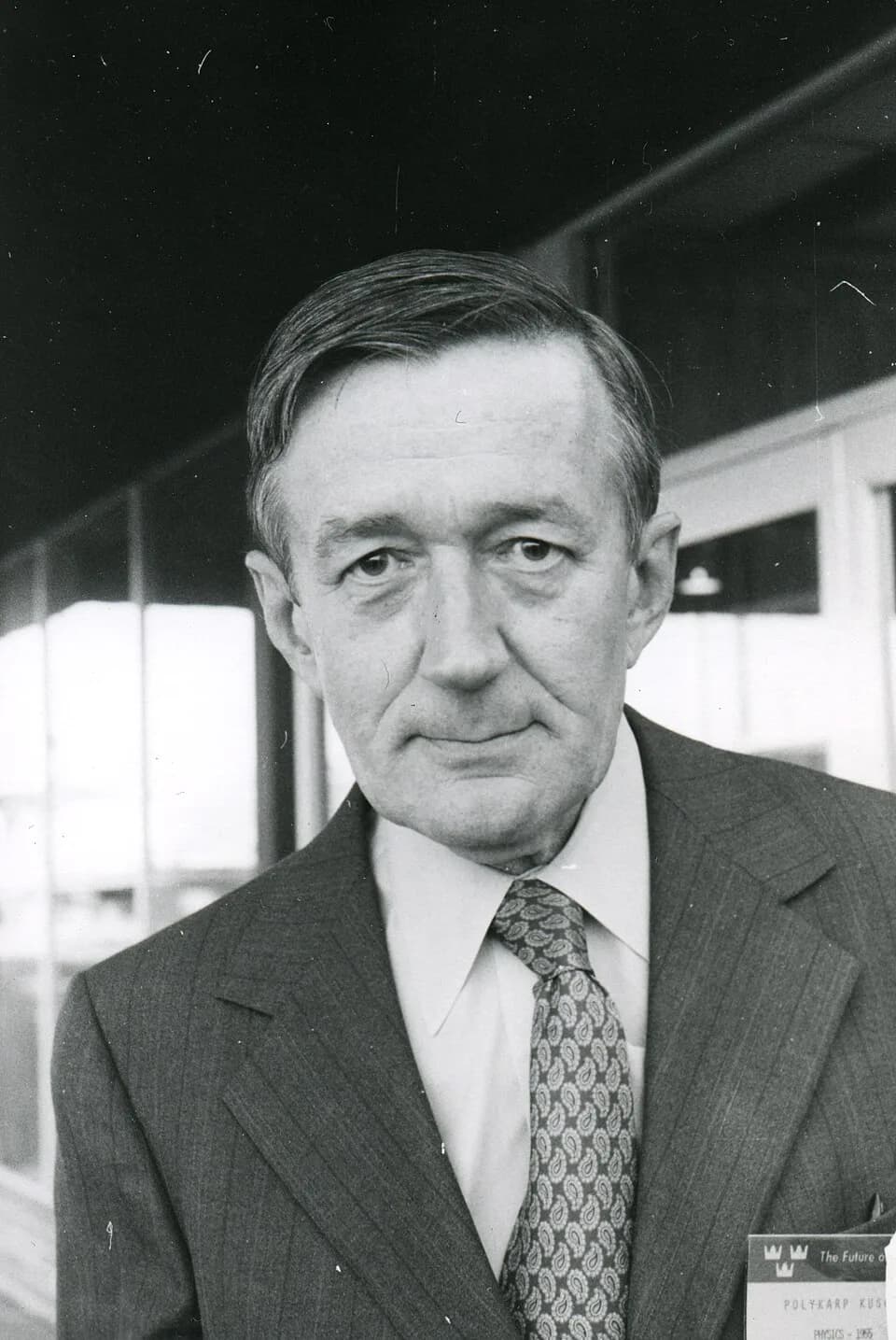
![Polykarp Kusch - Collectie / Archief : Fotocollectie Anefo
Reportage / Serie : [ onbekend ]
Beschrijving : Uitreiking Nobelprijzen door koning Gustaaf Adolf van Zweden , De prijswinnaars scheikunde (V](/_next/image?url=https%3A%2F%2Fcdn.whowasthisguy.com%2Fgallery_wikimedia_commons_1781701873611_1_c864f095f1.webp&w=1920&q=75)
Algengar spurningar
Algengar spurningar
Hvenær lést Polykarp Kusch?
Polykarp Kusch lést 20. mars 1993 í Dallas, United States, 82 ára gamall(ll).
Hvar fæddist Polykarp Kusch?
Polykarp Kusch fæddist í Blankenburg, Germany 26. janúar 1911.
Fyrir hvað er Polykarp Kusch þekktastur/þekktust?
Polykarp Kusch er þekktastur/þekktust fyrir German-American physicist.
Hve gamall/gömul var Polykarp Kusch við andlátið?
Polykarp Kusch var 82 ára gamall/gömul við andlátið.
Af hvaða þjóðerni var Polykarp Kusch?
Polykarp Kusch var frá Germany.
Tímalína
Líf í hnotskurn
Myndasafn
Líf í myndum
Smelltu á hvaða Polaroid sem er til að stækka · 20 myndir
QR-kóði
Deila þessari ævisögu
Prenta og deila
Skannaðu til að heimsækja þessa ævisögu. Prentaðu fyrir viðburði, sýningar eða fræðsluefni.