Ævisaga · New Zealand-born English physicist and biologist

5 min read · 1,038 words

Maurice Wilkins

1916 · 2004

Lifuð ár
87
Myndir
43
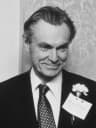
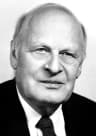
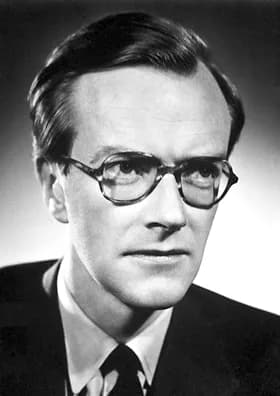
Maurice Wilkins portrait

Fædd/ur

December 15, 1916

Pongaroa, New Zealand

Lést

October 5, 2004

Blackheath, United Kingdom

Þekkt/ur fyrir

New Zealand-born English physicist and biologist

Maurice Hugh Frederick Wilkins (December 15, 1916 – October 5, 2004) was a New Zealand-born English physicist and biologist. He pioneered X-ray diffraction studies on DNA at King's College London, which was crucial for discovering its double helix structure. His Nobel Prize-winning work clarified the significance of nucleic acids for information transfer.

Líf í augnablikum

Augnablikin sem mótuðu líf

Skrifað á English

Kafli

Kaflar lífs

Kafli 1 · 1916· Kafli 1 af 8

Opening

Maurice Hugh Frederick Wilkins (1916–2004) was a distinguished New Zealand-born English physicist and biologist, whose significant contributions fundamentally advanced the scientific understanding of molecular biophysics. Born on December 15, 1916, and passing on October 5, 2004, Wilkins achieved the esteemed status of a Nobel laureate, recognized internationally for his essential role in a monumental biological discovery. His extensive research career encompassed a wide array of fields, ranging from the study of phosphorescence and isotope separation to optical microscopy, yet he is most widely celebrated for his instrumental work leading to the discovery of the double helix structure of DNA.

Kafli 2 · 1916· Kafli 2 af 8

Early Life and Origins

Maurice Wilkins began his life in Pongaroa, New Zealand, a location geographically distant from the major European scientific hubs where he would later make his name. His birth on December 15, 1916, established the beginnings of a life dedicated to rigorous scientific inquiry and discovery. Although detailed accounts of his early family life and upbringing are not extensively provided, his origins in New Zealand highlight an early international dimension to his eventual globally recognized scientific journey.

Kafli 3· Kafli 3 af 8

Career Beginnings

Wilkins initiated his professional scientific journey as a physicist, a foundational discipline that equipped him with analytical rigor and experimental prowess. He subsequently transitioned into the specialized and emerging field of biophysics, applying physical principles to biological problems. His early research efforts demonstrated a broad intellectual curiosity, exploring complex topics such as phosphorescence, which involves the emission of light, and the intricate processes of isotope separation. These initial studies showcased his versatility and a keen interest in fundamental scientific mechanisms, effectively setting the stage for his later, more celebrated work in molecular biology.

Kafli 4· Kafli 4 af 8

Major Achievements and Career Highlights

Maurice Wilkins is most prominently recognized for his pioneering endeavors at King's College London, where he took the initiative to lead crucial X-ray diffraction studies focused on DNA. This highly technical and exacting work involved bombarding DNA molecules with X-rays to deduce their structural arrangement from the resulting diffraction patterns. His methodical approach and dedicated leadership in this specific area were absolutely vital for systematically collecting the precise data necessary to understand the physical form of the genetic material.

The X-ray diffraction images meticulously generated under Wilkins' direction proved to be immensely valuable, offering unprecedented insights into the regular, crystalline-like arrangement of DNA molecules. This sophisticated scientific undertaking required both innovative experimental setup and careful interpretation of complex visual data. The precise structural information gleaned from these studies provided essential clues and foundational evidence that were indispensable in enabling the eventual discovery of the double helix structure of DNA, a truly defining moment in the history of science and medicine.

The significant impact of Maurice Wilkins’ research was formally recognized with the awarding of the Nobel Prize in Physiology or Medicine in 1962. This esteemed accolade was bestowed "for their discoveries concerning the molecular structure of nucleic acids and its significance for information transfer in living material." The Nobel Committee specifically acknowledged his central contributions to revealing how DNA, the molecule of heredity, stores and transmits biological information. This prestigious award underscored the enduring importance of his work, confirming its monumental effect on genetics and our fundamental understanding of life's processes.

Kafli 5· Kafli 5 af 8

Personal Life

While the provided information does not offer extensive details regarding Maurice Wilkins' personal relationships, family life, or specific leisure activities outside of his professional and literary pursuits, his published works offer glimpses into his character. His authorship of poetic collections such as "Sonnets of love and friendship" and "Poems of love & human freedom" suggests a thoughtful, creative individual with a rich inner world. These artistic expressions hint at a broader spectrum of interests and reflections beyond the strict confines of the scientific laboratory, indicating a well-rounded and deeply contemplative personality.

Kafli 6· Kafli 6 af 8

Notable Works or Contributions

Beyond his numerous academic publications in physics and biophysics, Maurice Wilkins also distinguished himself as an author, sharing his perspectives through various written forms. His memoir, titled "The Third Man of the Double Helix," stands as a significant contribution, providing a firsthand account and unique historical perspective on the momentous discovery of DNA's structure. This book offers invaluable insights into the scientific process and the collaborative environment surrounding one of the twentieth century's most important scientific races.

Wilkins' literary range extended considerably beyond scientific narratives, showcasing a versatile intellect and diverse interests. His bibliography includes a children's book, "I Spy Halloween," demonstrating a playful side to his writing. He also contributed to historical remembrance with "Old boys of Bangor Grammar School killed in Second World War (1939-1945)," a poignant record. Further highlighting his poetic inclinations, he authored collections such as "The seeker," "Sonnets of love and friendship," and "Poems of love & human freedom," revealing a commitment to exploring human experience through verse.

Kafli 7 · 2004· Kafli 7 af 8

Later Years

Maurice Wilkins maintained an active and dedicated career as a researcher and biophysicist throughout his later professional life, consistently contributing to the advancement of scientific knowledge. While precise details concerning his retirement phase are not explicitly outlined in the available records, his commitment to scientific exploration clearly spanned many decades. He eventually passed away on October 5, 2004, in Blackheath, United Kingdom, concluding a profoundly influential life dedicated to unraveling the secrets of the biological world.

Kafli 8· Kafli 8 af 8

Legacy and Impact

The enduring legacy of Maurice Wilkins is fundamentally intertwined with his absolutely central role in illuminating the molecular structure of DNA. His pioneering and rigorous experimental efforts with X-ray diffraction at King's College London were not merely supportive; they provided the indispensable experimental evidence that served as the scientific bedrock for all subsequent structural models of this crucial molecule. The data he generated was critical in forming the conceptual framework required for understanding DNA's physical form.

The groundbreaking understanding of DNA's structure, which was significantly enabled by Wilkins' precise research, has utterly revolutionized the fields of biology and medicine, continuing to shape them today. His receipt of the 1962 Nobel Prize in Physiology or Medicine explicitly recognized the enormous "significance for information transfer in living material" that his work clarified. Wilkins' contributions effectively ushered in a new era in molecular biology, profoundly influencing modern genetics, advanced biotechnology, and our ever-deepening comprehension of the fundamental processes of life itself, marking him as a giant in scientific history.

Tímalína

Líf í hnotskurn

  1. 1916

    Opening

  2. 1916

    Early Life and Origins

  3. 2004

    Later Years

Myndasafn

Líf í myndum

Smelltu á hvaða Polaroid sem er til að stækka · 30 myndir

QR-kóði

Deila þessari ævisögu

Prenta og deila

Skannaðu til að heimsækja þessa ævisögu. Prentaðu fyrir viðburði, sýningar eða fræðsluefni.
Hver var Maurice Wilkins? (1916-2004) | WhoWasThisGuy.com