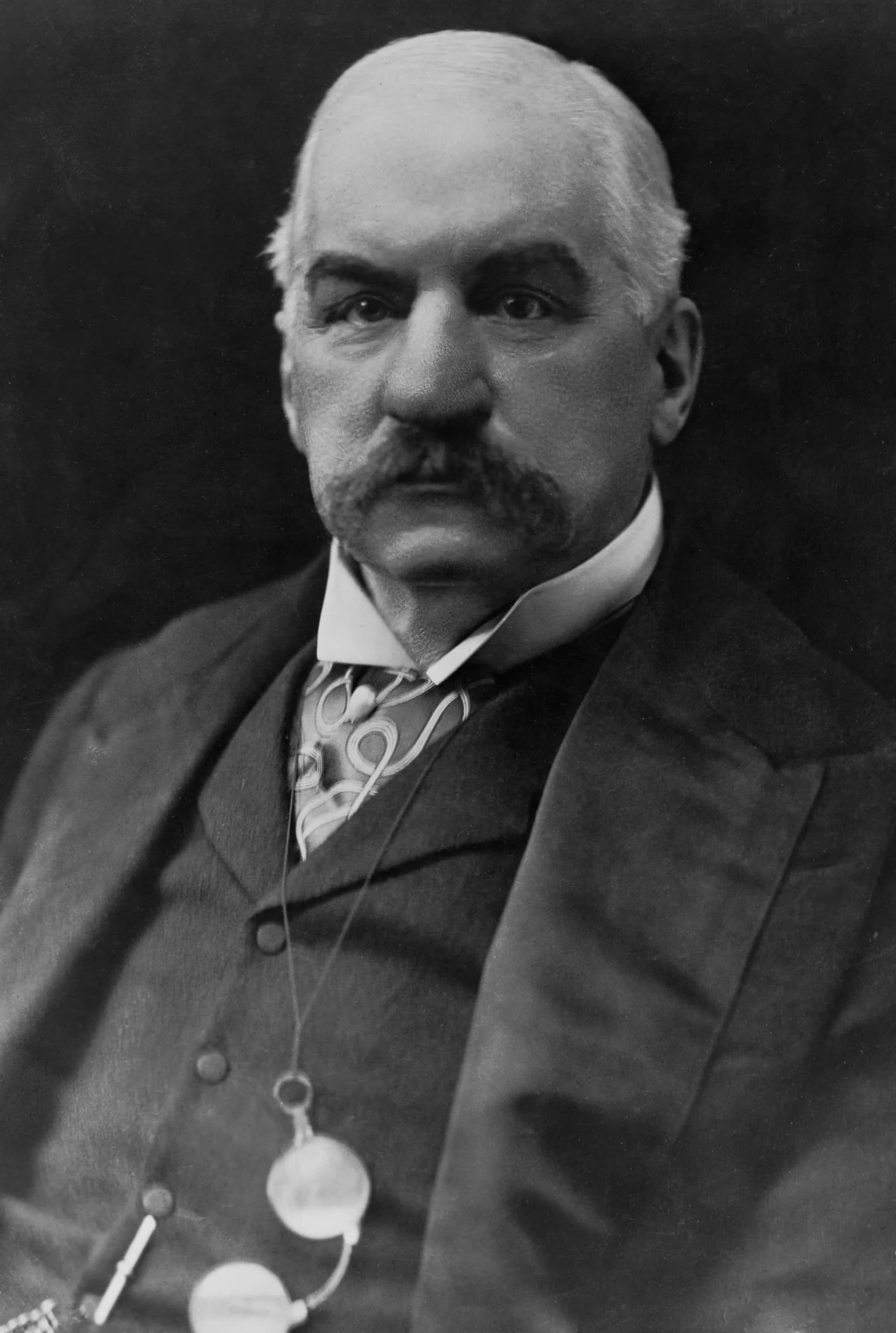
Fædd/ur
April 17, 1837
Hartford, United States
Lést
March 31, 1913
Rome, Italy
Þekkt/ur fyrir
American financier, banker, and art collector
J. P. Morgan (1837–1913) was United States best known for American financier, banker, and art collector.
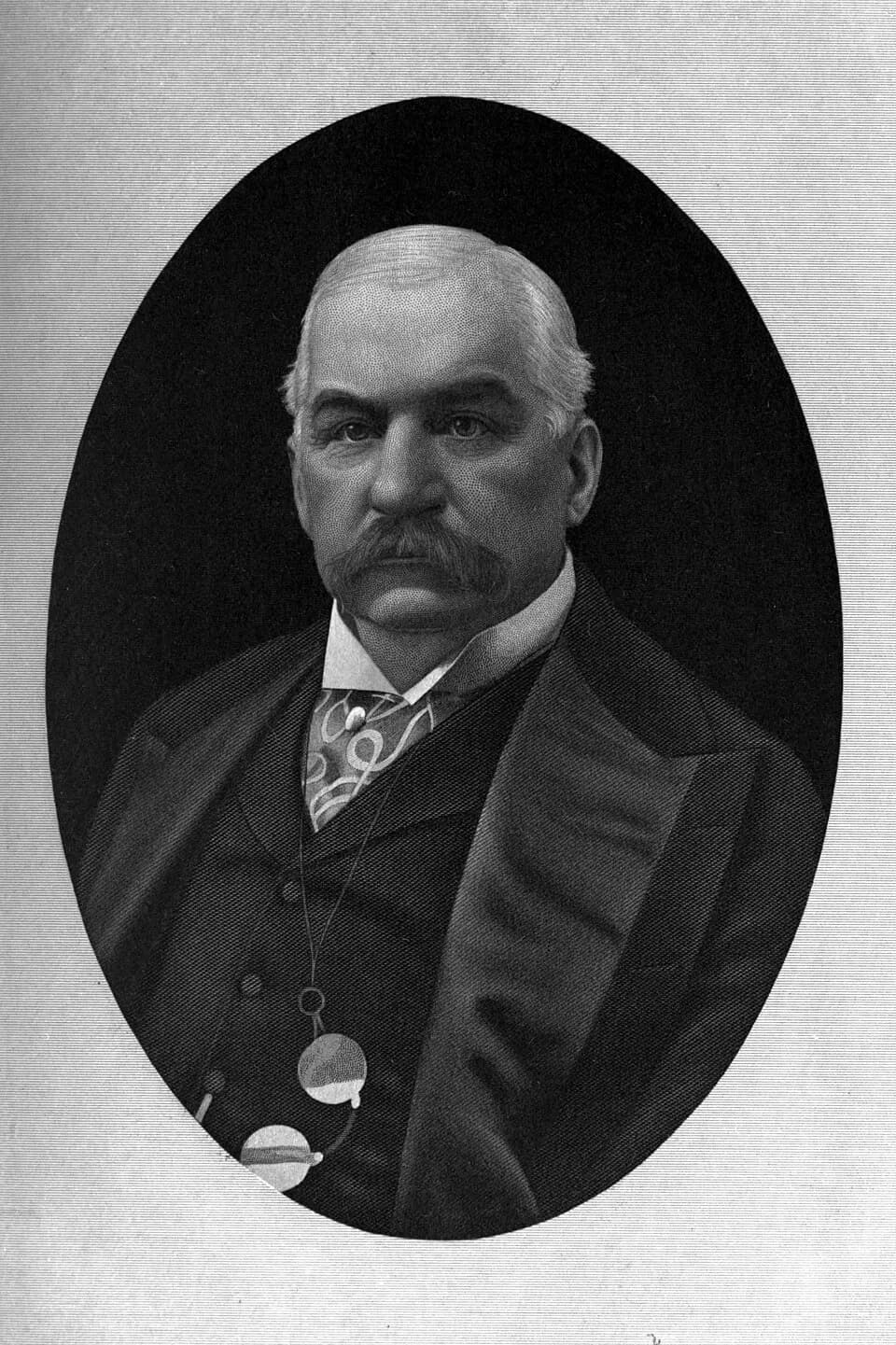
John Pierpont Morgan Sr. (April 17, 1837 – March 31, 1913) was an American financier, banker, and art collector. He dominated Wall Street corporate finance and spearheaded industrial consolidations during the Gilded Age. His legacy includes forming JPMorgan Chase & Co. and enriching public institutions with his art collection.
Kafli
Kaflar lífs
Kafli 1 · 1837· Kafli 1 af 7
Early Life and Origins
John Pierpont Morgan was born in Hartford, United States, on April 17, 1837, into a family with established connections in finance and business. His father, Junius Spencer Morgan, was an accomplished banker who founded J.S. Morgan & Co. in London, providing a direct lineage to the world of international finance. This familial background offered young J.P. Morgan an immediate entrée and a strong foundation for his future endeavors.
His upbringing included a comprehensive education, with periods of study in Europe, which broadened his perspective on global commerce and banking practices. This international exposure was crucial in developing his astute understanding of financial markets and preparing him for a career that would ultimately transcend national boundaries. The combination of his family's legacy and his rigorous education equipped him with the tools to navigate and eventually dominate the complex financial world.
Kafli 2· Kafli 2 af 7
Career Beginnings
Morgan commenced his professional journey within the financial sector, initially gaining practical experience through his father's banking operations in London. This early hands-on involvement allowed him to absorb the intricate workings of the global financial system firsthand. He subsequently relocated to New York City, a move that would prove instrumental in establishing his own unique financial empire.
In 1871, J. Pierpont Morgan & Company was founded, marking a significant personal milestone and the beginning of what would become a legendary financial institution. This firm, which later evolved into the globally recognized JPMorgan Chase & Co., quickly asserted itself as a central pillar of American finance. His initial projects and investments were diverse, systematically laying the essential groundwork for the extensive market influence and large-scale consolidations that characterized his later career.
Kafli 3· Kafli 3 af 7
Major Achievements and Career Highlights
Throughout his remarkably impactful career, J. P. Morgan was consistently the driving force behind a series of monumental industrial consolidations that fundamentally restructured the United States economy at the turn of the twentieth century. He skillfully orchestrated the mergers that resulted in the creation of some of the largest and most powerful corporations of his era, effectively stabilizing and professionalizing nascent industries. Notable examples of these achievements include the formation of industrial giants such as General Electric and U.S. Steel, which each represented a new scale of corporate organization.
His influence extended beyond mere corporate mergers; Morgan was recognized for his crucial role in mitigating national financial crises, most famously during the Panic of 1907. In this critical period, he personally convened and rallied fellow bankers, leveraging his immense prestige and resources to stabilize the reeling market and prevent a wider collapse. Such acts demonstrated his standing as a towering figure in American finance, a man whose actions could significantly sway economic outcomes. His firm also became an essential financier for a wide array of industries, from the burgeoning railroad sector to the foundational steel industry, thereby actively fostering national economic growth and efficiency.
Kafli 4· Kafli 4 af 7
Personal Life
Beyond his formidable presence in financial markets and boardrooms, J. P. Morgan cultivated a passionate interest in the arts, becoming an ardent collector and a significant patron. His extensive personal collection encompassed a wide array of treasures, including important paintings, rare books, and numerous historical artifacts. This deep dedication to culture offered a different perspective on his character, revealing a strong appreciation for beauty, history, and intellectual pursuits.
Much of his magnificent collection was eventually bequeathed to public institutions, enriching the cultural heritage of the United States and making art accessible to a broader audience. This philanthropic aspect underscored his understanding of the importance of culture and education in society. His personal interests, extending beyond the strict confines of finance, highlighted a complex individual who sought to contribute to society in multiple meaningful ways.
Kafli 5 · 1901· Kafli 5 af 7
Notable Works or Contributions
While J. P. Morgan's contributions were not in the traditional sense of artistic or scientific 'works,' his most significant and lasting impacts stemmed from his monumental financial reorganizations and his role in the creation of industrial giants. The formation of the U.S. Steel Corporation in 1901 stands as a primary example of his strategic prowess; this consolidation brought together several major steel companies into a single, dominant entity. This undertaking exemplified his bold vision for large-scale industrial efficiency and market leadership, fundamentally reshaping the steel industry.
Similarly, his instrumental involvement in the creation of General Electric in 1892, achieved through the merger of Edison General Electric and Thomson-Houston Electric Company, further illustrates his transformative impact on American industry. His banking firm also provided critical financing for the vast expansion of railroads across the country, an effort that was absolutely essential for the development and connectivity of the American economy. These complex and strategic financial arrangements facilitated the massive infrastructure growth that defined the Progressive Era, showcasing Morgan's unique ability to bring order and stability to volatile sectors through strategic consolidation.
Kafli 6· Kafli 6 af 7
Later Years
In his advancing years, J. P. Morgan maintained an active and commanding presence within the global financial sphere. Despite the passage of time, he continued to meticulously oversee his extensive financial empire, engaging in significant and influential transactions. His continued engagement demonstrated an enduring commitment to the financial world he had so profoundly shaped.
He passed away on March 31, 1913, while traveling in Rome, Italy, bringing to a close a life of extraordinary financial accomplishment and influence. His death marked the definitive end of an era, one that had been largely characterized by his singular, powerful influence on Wall Street and the broader panorama of American industry, leaving a void that was deeply felt across the financial world.
Kafli 7· Kafli 7 af 7
Legacy and Impact
The legacy of J. P. Morgan is truly immense, having indisputably defined the course of corporate finance and industrial development throughout both the Gilded Age and the Progressive Era. The banking firm he so powerfully led ultimately evolved into what is known today as JPMorgan Chase & Co., a globally recognized financial institution that continues to honor his name and carry forward a tradition of financial innovation and leadership. His innovative methods of consolidation, while sometimes eliciting public debate and scrutiny, undeniably streamlined numerous industries, fostering unprecedented economic growth and stability across the nation.
Moreover, he left behind not only a colossal financial empire but also a significant cultural footprint, largely through his extensive art collection and his substantial philanthropic contributions. His influence permeated far beyond the strict confines of banking, impacting the very structure of American society and significantly enriching its cultural institutions. Morgan's lasting influence as a financier, entrepreneur, and dedicated patron of the arts continues to be a subject of extensive study and widespread recognition, underscoring his lasting importance in American history.
Líf í augnablikum
Augnablikin sem mótuðu líf
Algengar spurningar
Algengar spurningar
Hvenær lést J. P. Morgan?
J. P. Morgan lést 31. mars 1913 í Rome, Italy, 75 ára gamall(ll).
Hvar fæddist J. P. Morgan?
J. P. Morgan fæddist í Hartford, United States 17. apríl 1837.
Fyrir hvað er J. P. Morgan þekktastur/þekktust?
J. P. Morgan er þekktastur/þekktust fyrir American financier, banker, and art collector.
Hve gamall/gömul var J. P. Morgan við andlátið?
J. P. Morgan var 75 ára gamall/gömul við andlátið.
Af hvaða þjóðerni var J. P. Morgan?
J. P. Morgan var frá United States.
Tímalína
Líf í hnotskurn
Myndasafn
Líf í myndum
Smelltu á hvaða Polaroid sem er til að stækka · 24 myndir
QR-kóði
Deila þessari ævisögu
Prenta og deila
Skannaðu til að heimsækja þessa ævisögu. Prentaðu fyrir viðburði, sýningar eða fræðsluefni.