Fædd/ur
October 14, 1784
Royal Monastery of San Lorenzo de El Escorial, Spain
Lést
September 29, 1833
Royal Palace of Madrid, Spain
Þekkt/ur fyrir
King of Spain (1784–1833) (r. 1808; 1813–1833)
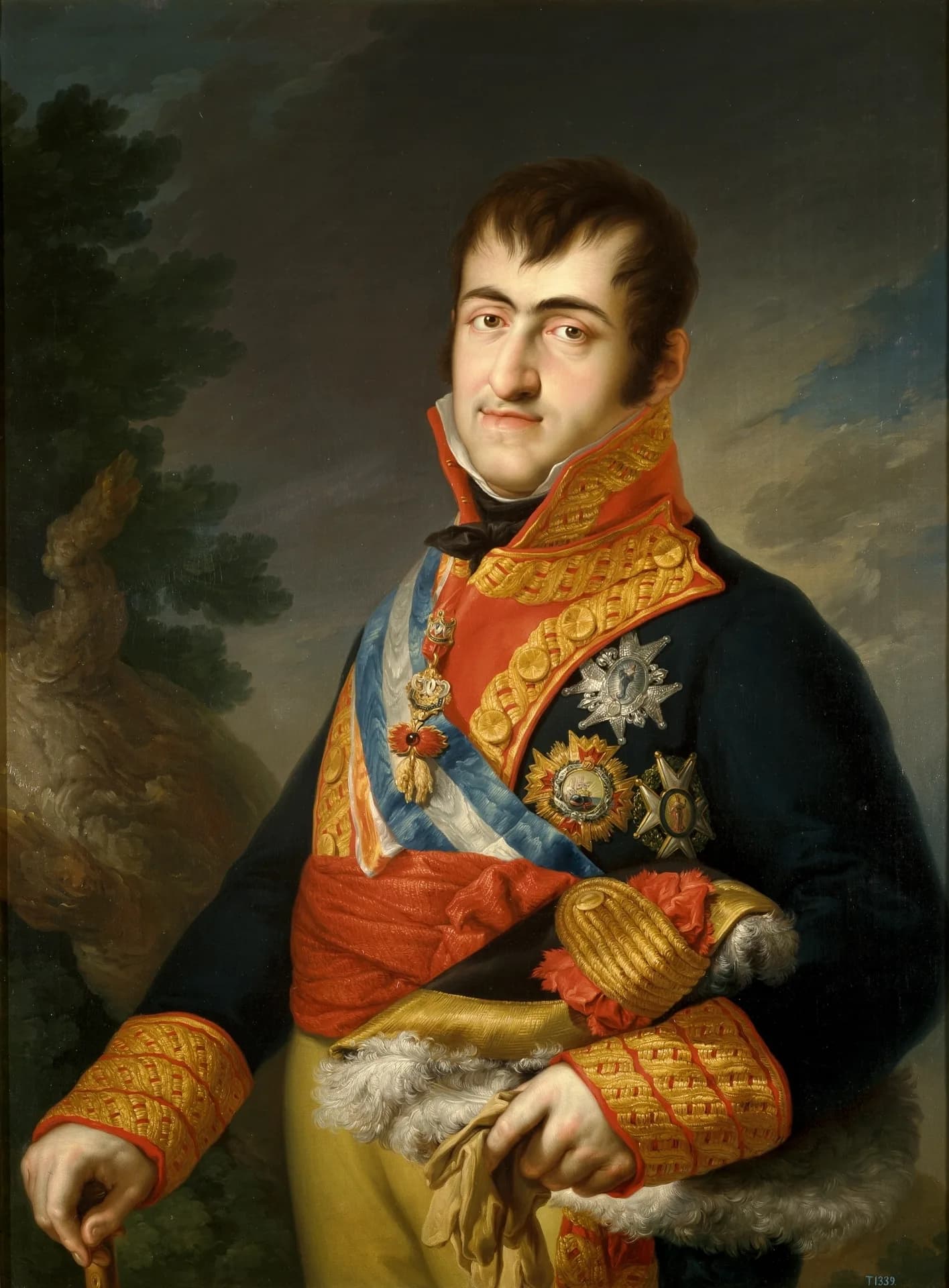
Ferdinand VII of Spain (1784–1833) was Spain best known for King of Spain (1784–1833) (r. 1808; 1813–1833).
Ferdinand VII (October 14, 1784 – September 29, 1833) was a ruler from Spain. He reigned as King during a period of intense political upheaval, oscillating between absolutism and forced constitutional rule. His actions led to the loss of most American possessions and civil war upon his death.
Kafli
Kaflar lífs
Kafli 1 · 1814· Kafli 1 af 3
A King Returns to Turmoil
Ferdinand's journey to Madrid in March 1814 was a slow procession, encouraged by conservatives and the Church to reject the new order. And reject it he did. Within months, he abolished the Constitution of 1812 and had its liberal architects arrested, reasserting the Bourbon belief that sovereignty resided solely in his person. This act, while welcomed by some, ignited a deep rift in Spain. His government, guided by a small circle of favorites, proved unstable. Ministers changed every few months, and by 1815, one observer noted the king had "so debased himself that he has become no more than the leading police agent and prison warden of his country."
Meanwhile, Spain's American colonies were declaring independence, interrupting the flow of vital tax revenues. The country was financially broken. The king's ardent opposition to Freemasonry, seeing it as a root of liberal revolution, led to arrests and suppression of lodges, further polarizing the nation.
Kafli 2 · 1820· Kafli 2 af 3
Years of Revolt
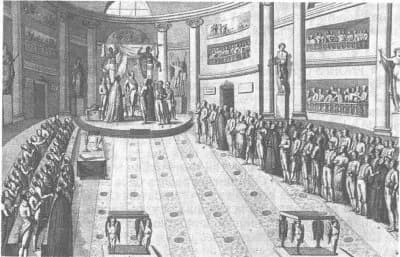
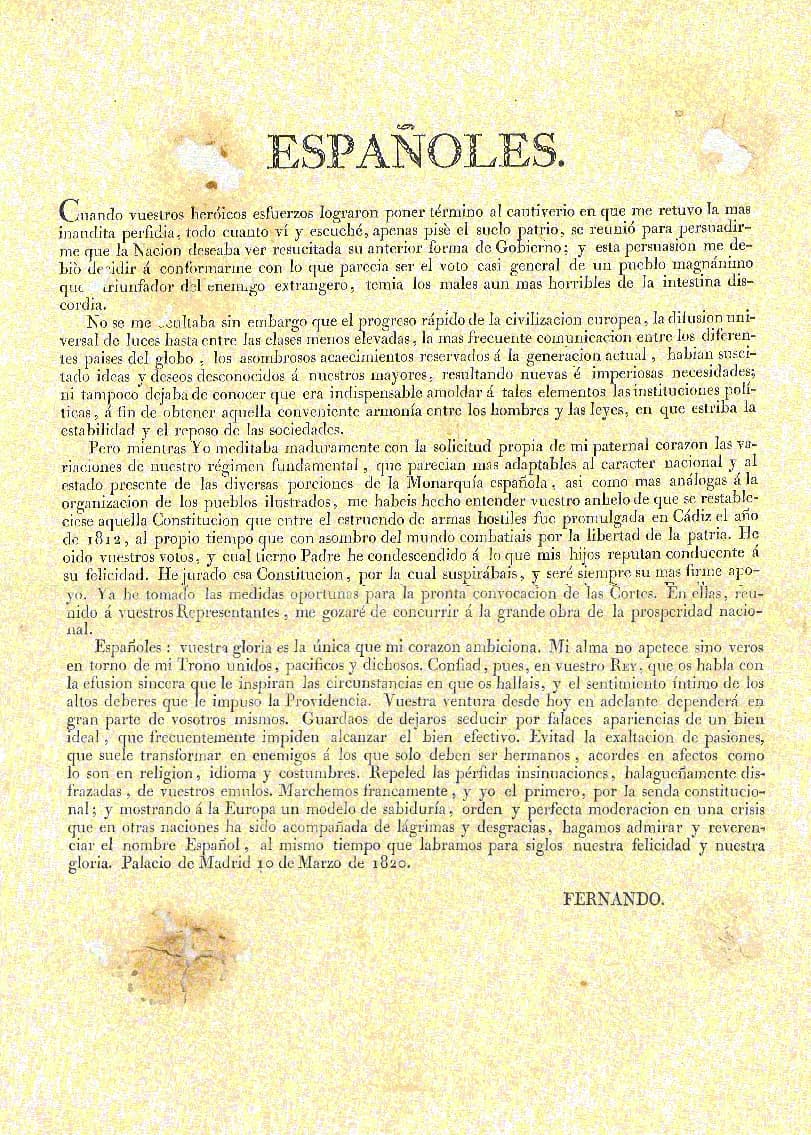
This absolutism wasn't without challenge. Several military uprisings, or pronunciamientos, dotted his early restored reign. The most successful came in 1820, when troops under Rafael del Riego mutinied, forcing Ferdinand to restore the Constitution of 1812, ushering in the three-year Liberal Triennium. During this period, Ferdinand, previously a restorer of the Jesuits, saw them again identified with repression and targeted by liberals. Twenty-five Jesuits were killed in Madrid in 1822. His capture by the revolutionary party, moving him to Cádiz, showcased his vulnerability.
It took another French intervention, authorized by the Congress of Verona in 1823, to restore Ferdinand to absolute power. Once freed, reprisals against liberals followed, though the French commander, the Duc d'Angoulême, notably refused Spanish decorations, protesting Ferdinand's broken promises of amnesty.
Kafli 3 · 1830· Kafli 3 af 3
A Final Pragmatic Act
The final decade of his rule, sometimes called the "Ominous Decade," saw a more stable absolutism, with traditional university programs re-established and firm suppression of opposition. Yet, a final, crucial decision shaped Spain's future. In May 1830, Ferdinand published the Pragmatic Sanction, a decree originally approved in 1789 but never promulgated, which allowed daughters to succeed to the throne. When his wife gave birth to Isabella later that year, she displaced his brother, Carlos, in the line of succession. This act, ensuring his daughter's claim, led directly to the Carlist Wars upon his death in September 1833, as Carlos revolted. It was a legacy of conflict, born from a lifetime of navigating a changing world, always striving to hold onto a crown that had once been "desired" but ultimately defined by division.
Líf í augnablikum
Augnablikin sem mótuðu líf
Algengar spurningar
Algengar spurningar
Hvenær lést Ferdinand VII of Spain?
Ferdinand VII of Spain lést 29. september 1833 í Royal Palace of Madrid, Spain, 48 ára gamall(ll).
Hvar fæddist Ferdinand VII of Spain?
Ferdinand VII of Spain fæddist í Royal Monastery of San Lorenzo de El Escorial, Spain 14. október 1784.
Fyrir hvað er Ferdinand VII of Spain þekktastur/þekktust?
Ferdinand VII of Spain er þekktastur/þekktust fyrir King of Spain (1784–1833) (r. 1808; 1813–1833).
Hve gamall/gömul var Ferdinand VII of Spain við andlátið?
Ferdinand VII of Spain var 48 ára gamall/gömul við andlátið.
Af hvaða þjóðerni var Ferdinand VII of Spain?
Ferdinand VII of Spain var frá Spain.
Tímalína
Líf í hnotskurn
Myndasafn
Líf í myndum
Smelltu á hvaða Polaroid sem er til að stækka · 45 myndir
QR-kóði
Deila þessari ævisögu
Prenta og deila
Skannaðu til að heimsækja þessa ævisögu. Prentaðu fyrir viðburði, sýningar eða fræðsluefni.