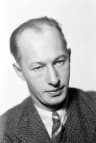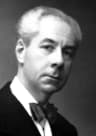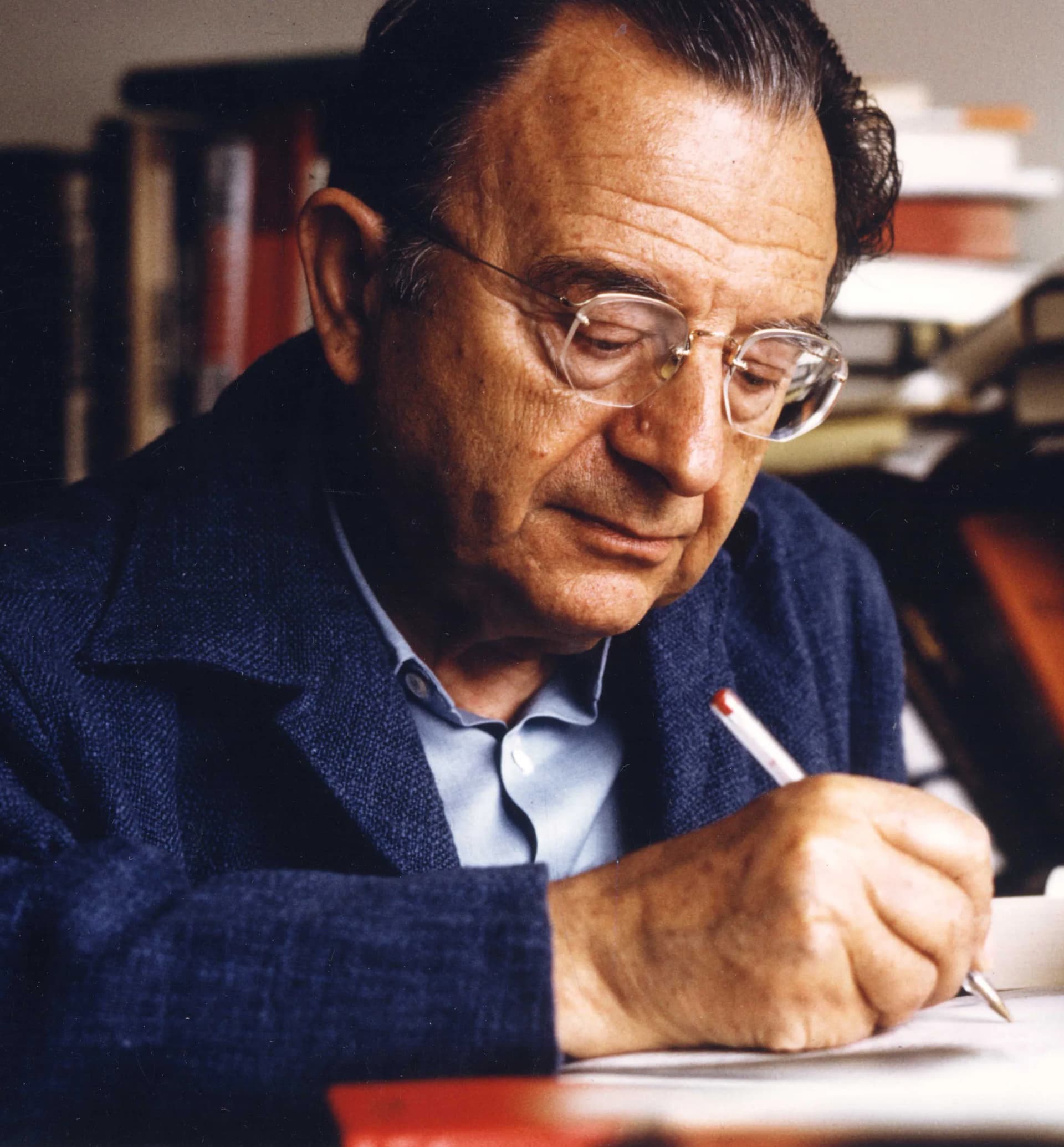
Fædd/ur
March 23, 1900
Frankfurt, Francia
Lést
March 18, 1980
Muralto, Switzerland
Þekkt/ur fyrir
German sociologist and psychoanalyst
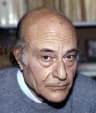
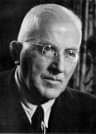
Erich Fromm (1900–1980) was Francia best known for German sociologist and psychoanalyst.
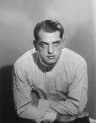
Erich Fromm (March 23, 1900 – March 18, 1980) was a German sociologist and psychoanalyst. He was a foundational figure in humanistic psychology and critical theory, known for his incisive critiques of modern society. His work explored the human need for freedom and connection.
Kafli
Kaflar lífs
Kafli 1 · 1900· Kafli 1 af 8
Opening
Erich Fromm (March 23, 1900 – March 18, 1980) was a distinguished German sociologist and psychoanalyst whose extensive work encompassed social psychology, humanistic philosophy, and critical theory. A German-American thinker, he profoundly influenced discussions on the individual's relationship with society and the nature of freedom. His broad career saw him embrace roles as a writer, economist, psychologist, university teacher, sociologist, psychoanalyst, and philosopher, leaving a significant intellectual legacy.
Kafli 2 · 1900· Kafli 2 af 8
Early Life and Origins
Erich Seligmann Fromm was born in Frankfurt, Francia, on March 23, 1900. His early life as a German Jew in the early 20th century placed him amidst significant historical shifts and cultural complexities. This background undeniably shaped his developing intellect and his later inquiries into social structures and the human condition, contributing to his nuanced understanding of societal forces.
The escalating political turmoil in Germany, culminating in the rise of the Nazi regime, presented an existential threat to Fromm and many other Jewish intellectuals. Facing severe persecution and an oppressive political climate, Fromm was compelled to make the difficult decision to flee his homeland. His relocation to the United States marked a significant turning point in his life, allowing him to continue his academic and therapeutic work in a new environment.
Kafli 3· Kafli 3 af 8
Career Beginnings
Upon settling in the United States, Erich Fromm swiftly established himself as a prominent intellectual figure. He became one of the key founders of The William Alanson White Institute of Psychiatry, Psychoanalysis and Psychology in New York City, contributing significantly to the development of psychoanalytic thought in America. This institution provided a vital platform for his clinical practice and theoretical explorations.
Fromm was also closely associated with the Frankfurt School of critical theory, an influential group of thinkers who challenged conventional societal norms and explored the connection between culture, power, and individual psychology. His engagement with this school emphasized his commitment to analyzing societal structures and their impact on human development. His diverse professional life began to take shape during this period, encompassing his roles as a psychologist, sociologist, and philosopher.
Kafli 4· Kafli 4 af 8
Major Achievements and Career Highlights
Throughout his career, Erich Fromm distinguished himself as a humanistic philosopher and a democratic socialist, contributing unique perspectives to these fields. His approach integrated insights from psychology, sociology, and economics to understand the complexities of human existence and societal organization. He championed a humanistic worldview, emphasizing individual growth, reason, and ethical responsibility.
His academic contributions were extensive, evidenced by an h-index of 38 across 377 published papers. This metric highlights the considerable influence and wide dissemination of his scholarly work. Fromm's relentless pursuit of understanding the human psyche within its social context earned him a reputation as a leading voice in interdisciplinary studies.
Kafli 5· Kafli 5 af 8
Personal Life
Erich Fromm's personal journey was deeply intertwined with the turbulent events of the 20th century. His identity as a German Jew directly led to his necessary flight from Nazi Germany, a decision that irrevocably altered the course of his life and career. This forced migration from Europe to the United States reflected a profound personal experience of displacement and adaptation, shaping his understanding of human resilience and vulnerability.
Later in his life, Fromm chose to reside in Switzerland, specifically in Muralto, where he spent his final years. This move provided him with a new setting for his continued intellectual pursuits and personal reflection. He passed away in Muralto on March 18, 1980, just days before his 80th birthday.
Kafli 6· Kafli 6 af 8
Notable Works or Contributions
Erich Fromm's extensive bibliography reflects his broad intellectual interests and his dedication to exploring fundamental questions about humanity. Among his impactful works are "The dogma of Christ," which explores the psychological dimensions of religious thought, and "פסיכואנליזה ודת" (Psychoanalysis and Religion), further examining the intersection of these two critical domains. His extensive body of work is also captured in "Gesamtausgabe," a likely collection of his complete writings.
Other significant publications include "希望的革命" (The Revolution of Hope), "禪與心理分析" (Zen Buddhism and Psychoanalysis), and "精神分析と宗敎" (Psychoanalysis and Religion, another variation or edition). He also authored "自我的追寻" (Man for Himself: An Inquiry into the Psychology of Ethics), "מעבר לאזיקי האשליה" (Beyond the Chains of Illusion), and "悪について" (On Being Human). His work "مرۆڤ له روانگهی مارکسهوه" (Man from the Perspective of Marx) showcased his engagement with Marxist thought, illustrating his wide-ranging intellectual curiosity.
Fromm's academic publications include influential titles such as "The Fear of Freedom," published in 2021 with 22 citations, and "Mechanisms of Escape," also from 2021. Other significant works like "Psychology of Nazism," "Freedom—A Psychological Problem?," and "Freedom in the Age of the Reformation," all published in 2021, demonstrate his enduring relevance and the continued study of his early contributions.
Kafli 7· Kafli 7 af 8
Later Years
In his later years, Erich Fromm continued to be an active and prolific scholar, maintaining his professional roles as a writer, economist, psychologist, university teacher, sociologist, psychoanalyst, and philosopher. His move to Switzerland provided a serene environment for his ongoing intellectual endeavors and reflections. He continued to shape contemporary thought through his writings and theoretical contributions, which explored complex human dilemmas.
Fromm remained dedicated to his work until his passing. He died shortly before his 80th birthday, in Muralto, Switzerland, on March 18, 1980. His enduring commitment to understanding the human condition characterized his final years, leaving behind a rich body of work for future generations to explore and build upon.
Kafli 8· Kafli 8 af 8
Legacy and Impact
Erich Fromm's legacy is defined by his significant contributions to social psychology, psychoanalysis, and humanistic philosophy. He challenged conventional understandings of freedom, authority, and the individual's role in society, offering insightful critiques that remain relevant today. His association with the Frankfurt School further solidified his place in the history of critical thought, influencing generations of scholars.
Fromm's emphasis on humanity's potential for growth, self-realization, and ethical behavior continues to inspire scholars and practitioners across various disciplines. His work provides a framework for understanding alienation in modern society and offers pathways toward a more authentic and fulfilling existence. He left a lasting mark on both academic discourse and popular understanding of the human psyche and its social dimensions.
Líf í augnablikum
Augnablikin sem mótuðu líf
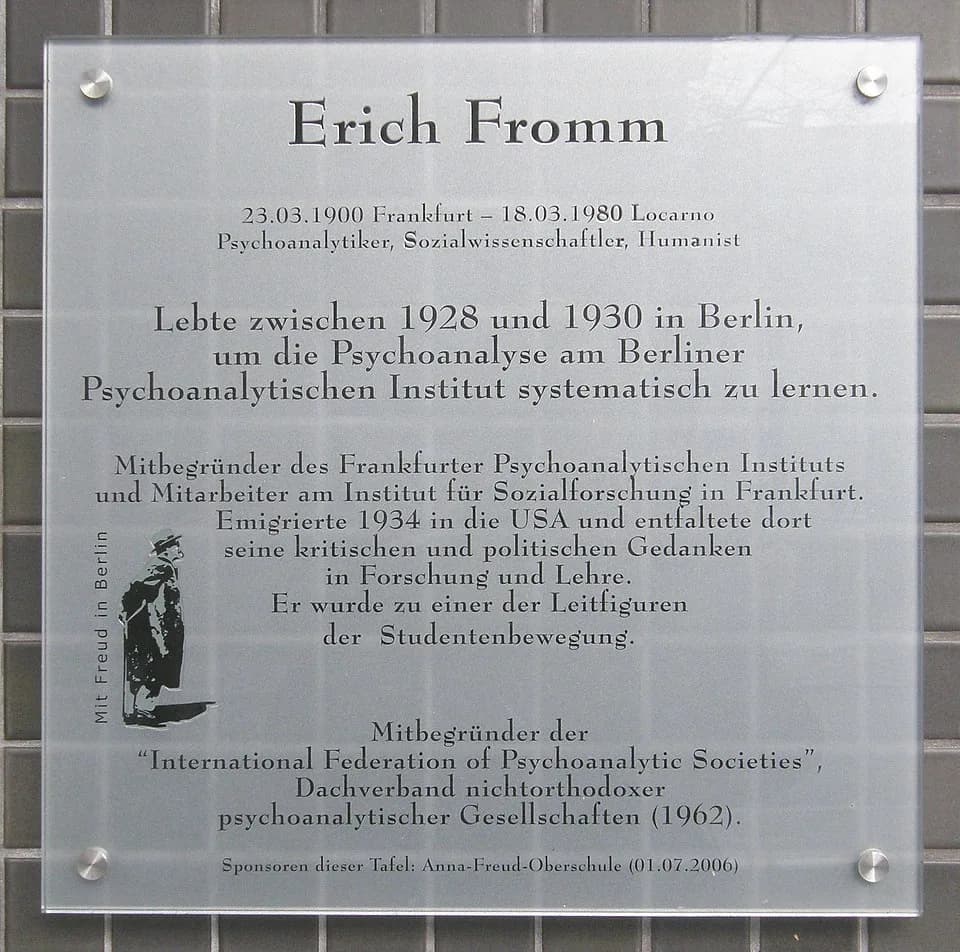
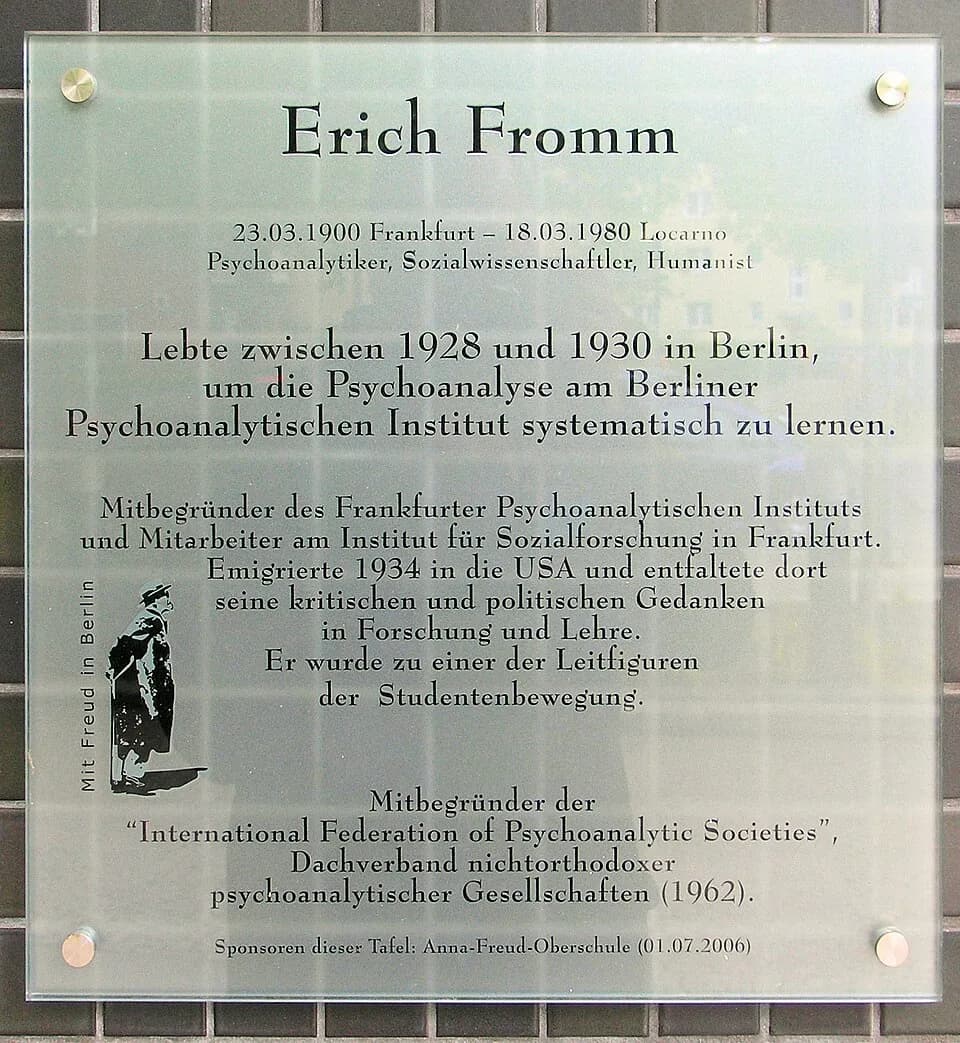
Algengar spurningar
Algengar spurningar
Hvenær lést Erich Fromm?
Erich Fromm lést 18. mars 1980 í Muralto, Switzerland, 79 ára gamall(ll).
Hvar fæddist Erich Fromm?
Erich Fromm fæddist í Frankfurt, Francia 23. mars 1900.
Fyrir hvað er Erich Fromm þekktastur/þekktust?
Erich Fromm er þekktastur/þekktust fyrir German sociologist and psychoanalyst.
Hve gamall/gömul var Erich Fromm við andlátið?
Erich Fromm var 79 ára gamall/gömul við andlátið.
Af hvaða þjóðerni var Erich Fromm?
Erich Fromm var frá Francia.
Tímalína
Líf í hnotskurn
- 1900
Opening
- 1900
Early Life and Origins
Myndasafn
Líf í myndum
Smelltu á hvaða Polaroid sem er til að stækka · 37 myndir
QR-kóði
Deila þessari ævisögu
Prenta og deila
Skannaðu til að heimsækja þessa ævisögu. Prentaðu fyrir viðburði, sýningar eða fræðsluefni.