Fædd/ur
May 3, 1826
Stockholm, Sweden
Lést
September 18, 1872
Malmö, Sweden
Þekkt/ur fyrir
King of Sweden and Norway
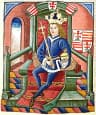
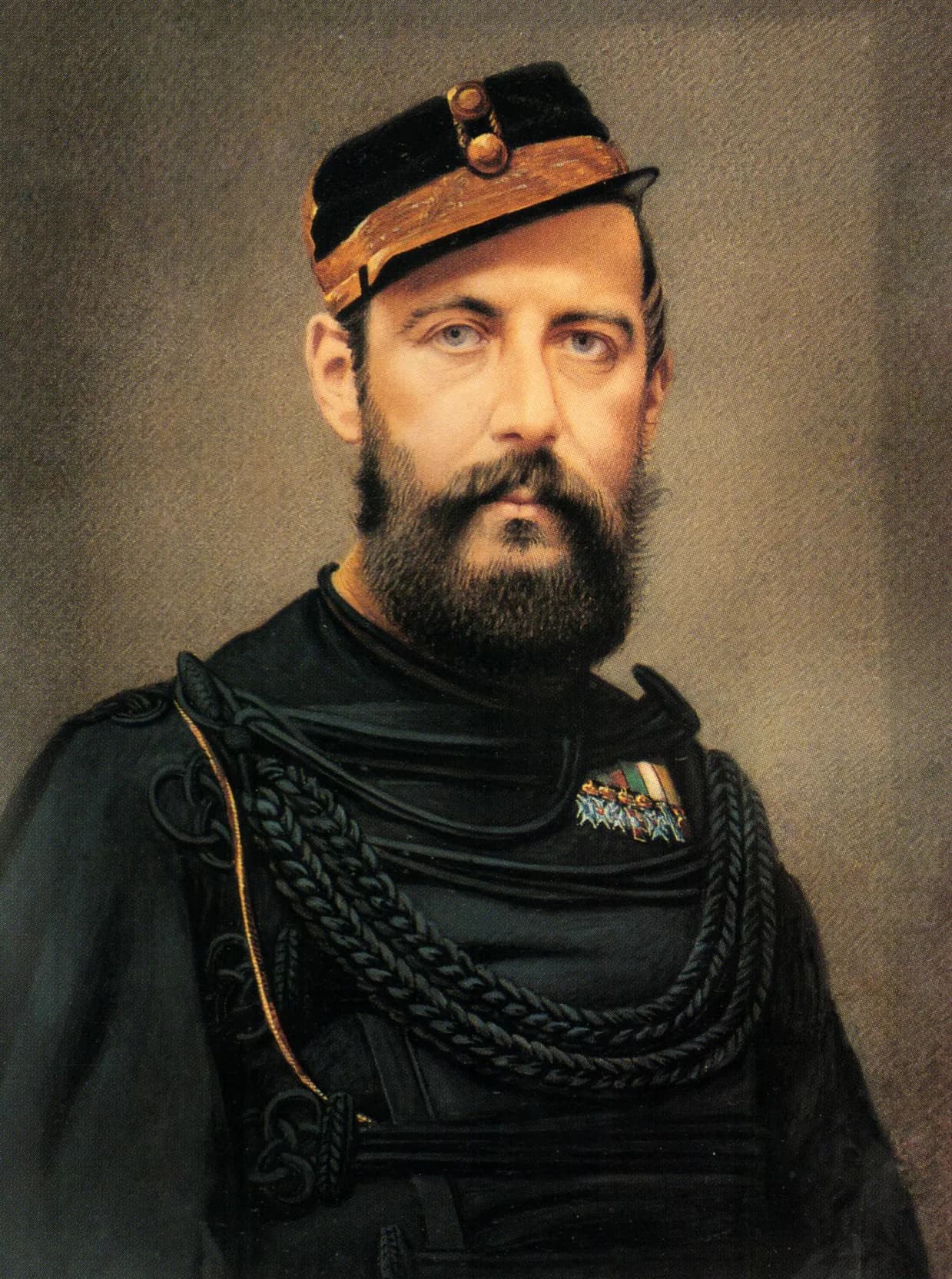
Carl XV of Sweden (1826–1872) was Sweden best known for King of Sweden and Norway.
Carl XV (May 3, 1826 – September 18, 1872) was King of Sweden and Norway, known affectionately as 'Crown-Charlie.' He enacted far-reaching legal reforms, including municipal and criminal law, and declared legal majority for unmarried women in 1858. His reign modernized governance and saw new diplomatic ties with Japan.
Kafli
Kaflar lífs
Kafli 1 · 1862· Kafli 1 af 3
A King of Reforms
Upon his accession, Carl XV quickly proved himself a constitutional ruler, guided by the motto: "With law shall the land be built." His reign became a period of significant change for Sweden and Norway. He oversaw comprehensive updates to the nation's municipal law in 1862 and ecclesiastical law in 1863. The criminal law was also reformed in 1864, solidifying a modern legal framework. Beyond these, Carl XV was instrumental in Louis De Geer's reform of the Parliament of Sweden in 1866. Perhaps most forward-thinking was his declaration of legal majority for unmarried women in 1858, a progressive move that saw his own sister, Princess Eugenie, become one of the first to benefit.
Kafli 2 · 1864· Kafli 2 af 3
A Northern Vision
Like his father, Oscar I, Carl XV championed Scandinavianism, believing in the political solidarity of the three northern kingdoms. His close friendship with Frederick VII of Denmark fueled hopes of aid during the 1864 war, though Sweden's unpreparedness ultimately forced neutrality. Nevertheless, his diplomatic reach extended far beyond the Nordic region. In 1868, through Dutch diplomat Dirk de Graeff van Polsbroek, he signed a significant "Friendship, Trade and Maritime Treaty" with Japan, opening several ports to Swedish and Norwegian traders and establishing consular jurisdiction.
Kafli 3 · 1850· Kafli 3 af 3
The Man Behind the Crown
While his public life was marked by reform and diplomacy, Carl XV’s private world held its own complexities. He married Louise of the Netherlands in 1850, but the union was shadowed by his disappointment in her appearance and his preference for other women. Louise, deeply in love with him, often felt neglected. Yet, his relationship with their only daughter, Louise, was warm and close. Despite the royal duties, he nurtured his artistic talents as a painter and poet, offering a glimpse into a sensitive side. In the final years of his life, personal plans for a controversial, non-morganatic marriage to Polish countess Maria Beatrix Krasińska were cut short by his failing health.
Carl XV succumbed to abdominal tuberculosis in Malmö in 1872. Though his only legitimate son died in infancy, and no subsequent Swedish king is his direct descendant, his bloodline continues through his daughter Louise on the thrones of Denmark, Luxembourg, Belgium, and Norway, a quiet echo of his reign across European royalty.
Líf í augnablikum
Augnablikin sem mótuðu líf
Algengar spurningar
Algengar spurningar
Hvenær lést Carl XV of Sweden?
Carl XV of Sweden lést 18. september 1872 í Malmö, Sweden, 46 ára gamall(ll).
Hvar fæddist Carl XV of Sweden?
Carl XV of Sweden fæddist í Stockholm, Sweden 3. maí 1826.
Fyrir hvað er Carl XV of Sweden þekktastur/þekktust?
Carl XV of Sweden er þekktastur/þekktust fyrir King of Sweden and Norway.
Hve gamall/gömul var Carl XV of Sweden við andlátið?
Carl XV of Sweden var 46 ára gamall/gömul við andlátið.
Af hvaða þjóðerni var Carl XV of Sweden?
Carl XV of Sweden var frá Sweden.
Tímalína
Líf í hnotskurn
Myndasafn
Líf í myndum
Smelltu á hvaða Polaroid sem er til að stækka · 49 myndir
QR-kóði
Deila þessari ævisögu
Prenta og deila
Skannaðu til að heimsækja þessa ævisögu. Prentaðu fyrir viðburði, sýningar eða fræðsluefni.