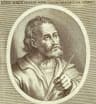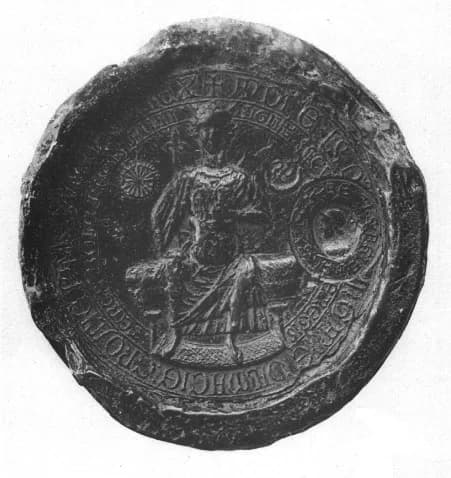
Fædd/ur
January 1, 1175
Lést
November 2, 1235
Buda, Hungary
Þekkt/ur fyrir
King of Hungary
Andrew II of Hungary (1175–1235) is remembered for their life and work best known for King of Hungary.
Andrew II of Hungary (January 1, 1175 – November 2, 1235) was a monarch and politician. He reigned as King of Hungary and Croatia for three decades, navigating complex political landscapes. His rule included significant territorial shifts and responsibilities.
Kafli
Kaflar lífs
Kafli 1 · 1175· Kafli 1 af 6
Early Life and Royal Heritage
Born in 1175, Andrew II was the younger son of Béla III of Hungary. His early life as a prince was shaped by the expectations of the Hungarian royal court. This lineage placed him directly in the succession, though not as the immediate heir to the throne.
Kafli 2 · 1188· Kafli 2 af 6
Initial Forays into Governance
Andrew's first significant role came in 1188 when his father, Béla III, entrusted him with the administration of the newly conquered Principality of Halych. However, his rule in this region proved unpopular among the local boyars. This discontent ultimately led to his expulsion from the principality shortly thereafter, demonstrating the early challenges he faced in governance.
Béla III's will later stipulated property and money for Andrew, with the specific obligation that he lead a crusade to the Holy Land. Despite this directive, Andrew pursued immediate political objectives closer to home. Instead of the crusade, he focused on consolidating his own power within the Hungarian realm.
Kafli 3 · 1197· Kafli 3 af 6
Ascension to the Throne and Reign
In 1197, Andrew forced his elder brother, Emeric, who was then King of Hungary, to cede Croatia and Dalmatia to him as an appanage. This assertive move demonstrated Andrew's ambition and strategic acumen in acquiring significant territories. The following year, in 1198, he further expanded his influence by occupying the region of Hum.
Andrew II officially became King of Hungary and Croatia in 1205, a position he would hold until 1235. His long reign as monarch saw him navigate complex political landscapes and consolidate royal authority. During this period, he also briefly ruled the Principality of Halych once more, between 1208/1209 and 1210.
Kafli 4· Kafli 4 af 6
Crusading Obligations and Territorial Expansion
The obligation to lead a crusade, stemming from his father's will, remained a background element throughout his reign. While the immediate political climate often diverted his attention, the commitment to the Holy Land was a noted aspect of his royal duties. His territorial gains in Croatia, Dalmatia, and Hum significantly reshaped the borders of the Hungarian kingdom.
His rule was characterized by a strong monarchical presence, albeit with varying degrees of popular support. Andrew's political decisions and military actions frequently aimed at strengthening his royal domain and projecting Hungarian power. His time as King saw both periods of stability and internal challenges.
Kafli 5 · 1235· Kafli 5 af 6
Later Years and End of Reign
Andrew II continued his rule as King of Hungary and Croatia until his death in 1235. He passed away on November 2, 1235, in Buda, Hungary. His long and eventful reign concluded in the heart of his kingdom.
Kafli 6· Kafli 6 af 6
Legacy and Historical Context
Andrew II's legacy is defined by his extensive three-decade tenure as King of Hungary and Croatia. He is remembered as a monarch who actively expanded his territories and asserted his political will. His early administration of Halych, though brief and unpopular, and his later re-establishment of rule there, show his persistent engagement in regional power dynamics.
The political landscape he navigated, from inheriting a crusading obligation to seizing territories from his brother, highlights his role as a shrewd politician. His reign laid important groundwork for future Hungarian history. Andrew II remains a notable figure in the annals of Central European monarchy.
Líf í augnablikum
Augnablikin sem mótuðu líf
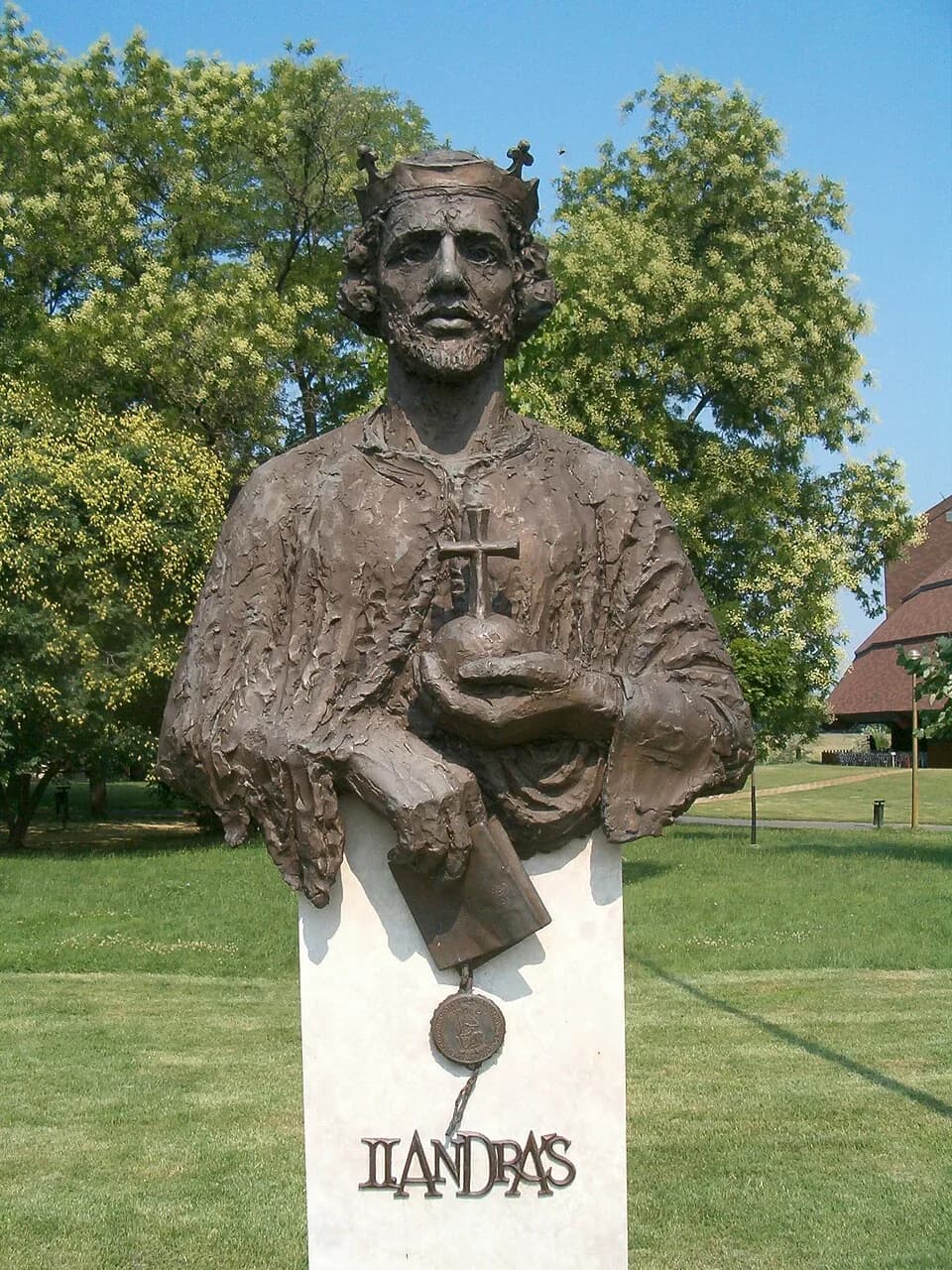
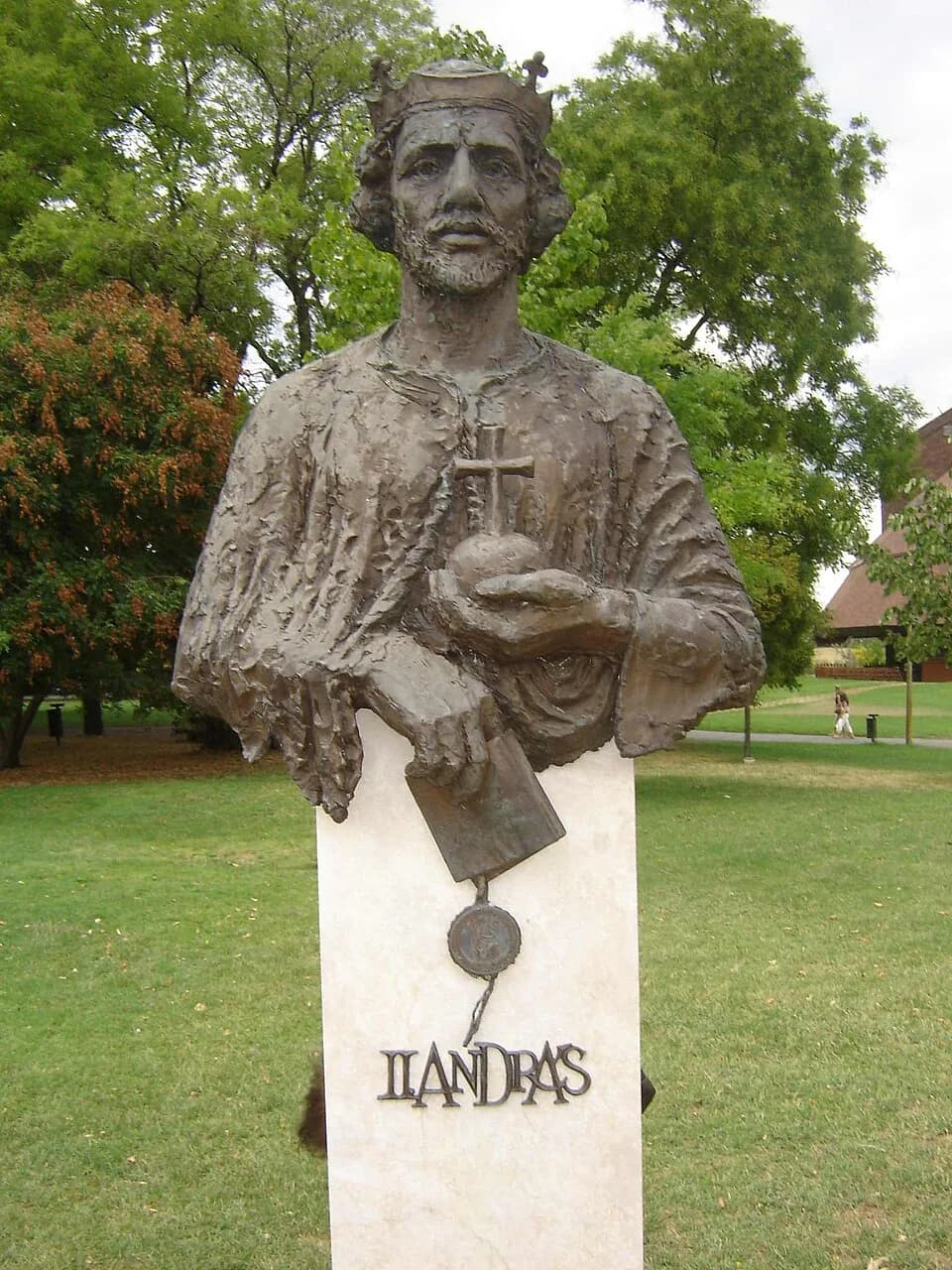
Algengar spurningar
Algengar spurningar
Hvenær lést Andrew II of Hungary?
Andrew II of Hungary lést 2. nóvember 1235 í Buda, Hungary, 60 ára gamall(ll).
Fyrir hvað er Andrew II of Hungary þekktastur/þekktust?
Andrew II of Hungary er þekktastur/þekktust fyrir King of Hungary.
Hve gamall/gömul var Andrew II of Hungary við andlátið?
Andrew II of Hungary var 60 ára gamall/gömul við andlátið.
Tímalína
Líf í hnotskurn
Myndasafn
Líf í myndum
Smelltu á hvaða Polaroid sem er til að stækka · 17 myndir
QR-kóði
Deila þessari ævisögu
Prenta og deila
Skannaðu til að heimsækja þessa ævisögu. Prentaðu fyrir viðburði, sýningar eða fræðsluefni.