Született
November 24, 1293
Fontainebleau, France
Elhunyt
August 30, 1350
Reims, France
Ismert mint
King of France from 1328 to 1350
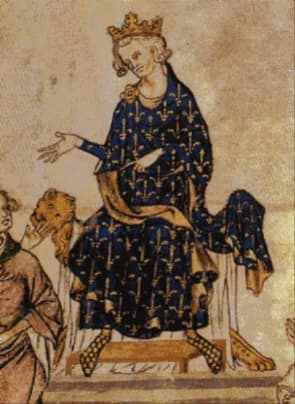
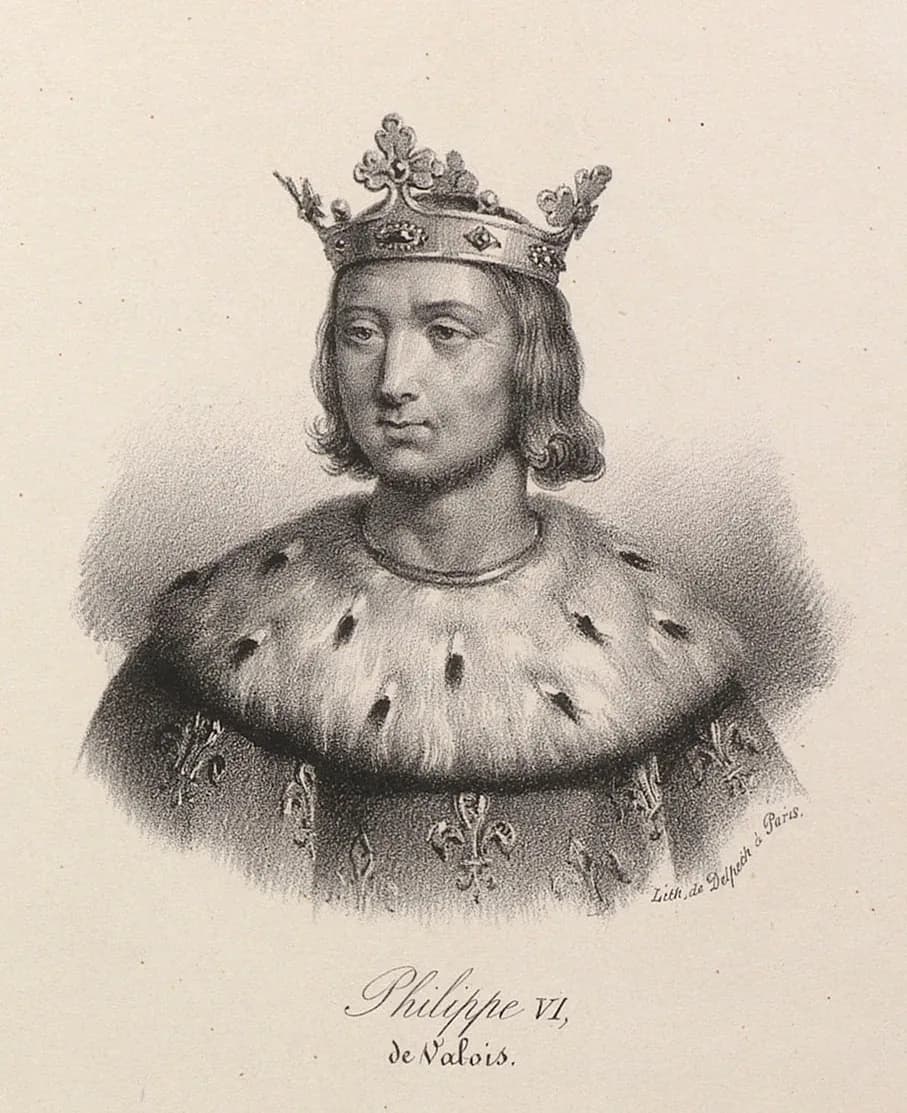
Philip VI of France (1293–1350) was France best known for King of France from 1328 to 1350.
Philip VI of France (November 24, 1293 – August 30, 1350) was a sovereign and the first King of France from the House of Valois. He reigned from 1328 until his death, a period marked by a significant succession dispute. His ascension established a new royal dynasty.
0. fejezet
Élet fejezetei
1. fejezet · 1293· 1. fejezet a(z) 7-ből
Early Life and Origins
Born on November 24, 1293, in Fontainebleau, France, Philip was a member of the French royal family by birth. He was the son of Charles, Count of Valois, and Margaret of Anjou. As such, he was the paternal cousin of King Charles IV, who was the last direct Capetian monarch.
Philip's early life would have involved an upbringing befitting a prince of the blood, steeped in the traditions and expectations of the French court. Although not initially destined for the throne, his lineage placed him in a prominent position within the royal hierarchy. This foundational period prepared him for the political challenges that would eventually define his career.
2. fejezet · 1328· 2. fejezet a(z) 7-ből
Career Beginnings
The death of King Charles IV in 1328 without a direct male heir created a significant crisis in French succession. This event directly opened the path for Philip to ascend to the throne. Edward III of England, Charles IV's sororal nephew, presented a claim to the French crown through his mother, Isabella, who was Charles IV's sister.
However, the French nobility decisively favored Philip of Valois, Charles IV's paternal cousin. They invoked a growing interpretation of Salic law, which generally excluded succession through the female line, and chose Philip. This momentous decision led to his coronation as Philip VI, establishing him as the first king from the new House of Valois.
3. fejezet · 1328· 3. fejezet a(z) 7-ből
Major Achievements and Career Highlights
Philip VI's reign as King of France formally spanned from 1328 until his death in 1350. His time on the throne was almost entirely shaped by the severe consequences of the succession dispute that brought him to power. This initial challenge quickly escalated into a prolonged and bitter conflict with Edward III of England, which would later be known as the Hundred Years' War.
His administration faced the daunting task of consolidating royal authority in the face of external claims and internal pressures. Philip VI's diplomatic efforts were often directed at securing alliances and marshaling resources to defend his claim and the kingdom's sovereignty. The initial years of his rule were focused on establishing the legitimacy of the Valois dynasty against powerful opposition.
4. fejezet· 4. fejezet a(z) 7-ből
Personal Life
Details regarding Philip VI's personal life beyond his immediate royal duties and political actions are not extensively detailed in the provided historical records. As a sovereign, his public persona and political responsibilities naturally overshadowed private matters in historical accounts. His primary focus remained the governance and defense of the French kingdom.
Like many monarchs of his era, Philip VI's marriages and family life would have been intertwined with dynastic strategy and political alliances. While specific anecdotes are not provided, his role as a husband and father would have been viewed through the lens of succession and the perpetuation of the Valois line.
5. fejezet · 1328· 5. fejezet a(z) 7-ből
Notable Works or Contributions
Philip VI's most enduring contribution was the successful establishment of the House of Valois as the ruling dynasty of France. By securing the throne in 1328, he effectively ended the direct Capetian line and began a new royal lineage. This new house would govern France for over two centuries, deeply influencing the nation's political and cultural development.
His actions in the succession dispute set a precedent for French royal inheritance, reinforcing the principle that the crown could not pass through the female line. This institutional change was a fundamental redefinition of the French monarchy's structure. It solidified a system that would guide royal succession for generations to come.
6. fejezet · 1350· 6. fejezet a(z) 7-ből
Later Years
Philip VI continued to rule France until his death on August 30, 1350, having reigned for twenty-two years. He passed away in Reims, France, a city often associated with French royal coronations. His later years were undoubtedly dominated by the ongoing tensions and the initial phases of the protracted conflict with England, which grew out of the succession dispute.
The challenges of warfare, finance, and maintaining stability during this turbulent period would have consumed much of his attention. His reign concluded amidst the burgeoning conflict that would define the next century of French history, leaving his successors to grapple with its vast implications.
7. fejezet· 7. fejezet a(z) 7-ből
Legacy and Impact
Philip VI's legacy is primarily defined by his instrumental role in founding the Valois dynasty and the far-reaching impact of the succession dispute over the French throne. The French nobility's decisive preference for Philip over Edward III of England directly contributed to the outbreak of the Hundred Years' War.
This conflict profoundly shaped medieval European history, influencing political alliances, military strategies, and national identities for generations. Philip VI fundamentally altered the course of French history by securing the crown for his house and initiating a period of significant geopolitical transformation.
Egy élet pillanatokban
A pillanatok, amelyek egy életet alakítottak
GYIK
Gyakran kérdezett
Mikor halt meg Philip VI of France?
Philip VI of France 1350. augusztus 30. Reims, France-ban halt meg, 56 éves korában.
Hol született Philip VI of France?
Philip VI of France Fontainebleau, France-ban született, 1293. november 24..
Miről ismert leginkább Philip VI of France?
Philip VI of France leginkább arról ismert, hogy King of France from 1328 to 1350.
Hány éves volt Philip VI of France, amikor meghalt?
Philip VI of France 56 éves volt halálakor.
Milyen nemzetiségű volt Philip VI of France?
Philip VI of France France származású volt.
Idővonal
Élet egy pillantásra
Fotógaléria
Egy élet képekben
Kattintson bármely polaroidra a kibontáshoz · 50 fénykép
QR-kód
Életrajz megosztása
Nyomtatás és megosztás
Olvassa be az életrajz oldalának megnyitásához. Nyomtassa ki rendezvényekre, kiállításokra vagy oktatási anyagokhoz.