Született
May 10, 1886
Basel, Switzerland
Elhunyt
December 10, 1968
Basel, Switzerland
Ismert mint
Swiss Protestant theologian
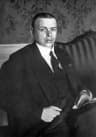
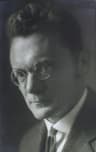
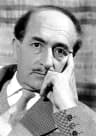
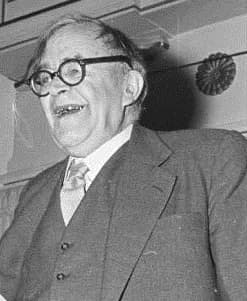
Karl Barth (May 10, 1886 – December 10, 1968) was a Swiss Protestant theologian from Basel, Switzerland. He is renowned for his influential commentary *The Epistle to the Romans* and his leadership in the Confessing Church. His extensive work, including *The Church Dogmatics*, shaped 20th-century theology.
Egy élet pillanatokban
A pillanatok, amelyek egy életet alakítottak
0. fejezet
Élet fejezetei
1. fejezet · 1886· 1. fejezet a(z) 7-ből
Early Life and Origins
Karl Barth's life began on May 10, 1886, in the distinguished city of Basel, Switzerland. His birth in this prominent Swiss cultural and intellectual center provided the foundational environment for his formative years and burgeoning intellectual development. While specific details about his immediate family and childhood upbringing are not extensively chronicled, his Swiss heritage undoubtedly contributed to the bedrock of his foundational perspectives and his understanding of Reformed Protestantism.
His early education would have prepared him for a life of rigorous theological inquiry and academic pursuit. Growing up in a context where Reformed theology had deep historical roots, Barth was exposed to the rich traditions that would later become both the subject of his profound study and the context for his radical reinterpretation. The intellectual climate of late 19th-century Switzerland, alongside his family background, laid the essential groundwork for his later theological breakthroughs.
2. fejezet· 2. fejezet a(z) 7-ből
Career Beginnings
Karl Barth embarked on his professional journey initially as a pastor, directly engaging with congregational life and the practical realities of faith within communities. This firsthand experience in ministry provided a crucial perspective that informed his academic work, preventing his theology from becoming purely theoretical or detached from everyday spiritual concerns. His pastoral duties undoubtedly shaped his understanding of the human condition and the church's role in society.
Following his time in pastoral ministry, Barth transitioned into the academic sphere, taking on roles as a university teacher and eventually a full-fledged theologian. These early positions allowed him to deepen his scholarly engagement with theological questions and to begin formulating the distinct ideas that would soon define his thought. His initial experiences in both the pulpit and the lecture hall were instrumental in laying the intellectual and experiential groundwork for the monumental theological contributions he would make in the decades that followed.
3. fejezet · 1919· 3. fejezet a(z) 7-ből
Major Achievements and Career Highlights
One of Karl Barth's earliest yet most significant accomplishments was the publication of his highly influential commentary, *The Epistle to the Romans* (Römerbrief), first appearing in 1919 and then in a radically revised second edition in 1922. This work ignited fresh theological debate and drew renewed, intense attention to the profound implications embedded within the biblical texts of Paul's letter to the Romans, significantly reshaping contemporary interpretations. Its publication marked a critical turning point for Protestant theology across Europe and beyond, challenging prevailing liberal theological trends and advocating for a radical re-emphasis on the sovereignty of God and the revelatory nature of Christ.
Barth also played a profoundly crucial and courageous role in the Confessing Church (Bekennende Kirche), a movement that fiercely resisted the encroaching influence of Nazi ideology on German Protestantism during a tumultuous historical period. His active involvement in this dissenting movement was a clear demonstration of his deep theological convictions and his ethical responsibilities in the face of political oppression. He viewed the church's submission to state control as a betrayal of its true mission and its allegiance to God.
As a leading intellectual voice within the Confessing Church, Karl Barth was the primary author of the seminal Barmen Declaration, adopted in 1934. This foundational document articulated a firm theological opposition to the Nazi regime's attempts to co-opt the church for state purposes, providing a powerful statement against totalitarianism. The Barmen Declaration asserted the church's sole allegiance to Jesus Christ as its head, offering a robust theological basis for spiritual autonomy and resistance against governmental demands that overstepped their bounds.
Karl Barth's widespread influence extended remarkably well beyond the confines of academic theological circles, reaching into mainstream culture and public discourse. This broader recognition of his intellectual stature and the societal impact of his ideas was notably acknowledged when he was featured on the cover of Time magazine. This prominent appearance occurred on April 20, 1962, marking a significant moment in which his profound theological work gained extensive public visibility and underscored his relevance to a wider international audience.
4. fejezet· 4. fejezet a(z) 7-ből
Personal Life
While the provided information does not extensively detail specific aspects of Karl Barth's personal life, such as his family relationships or particular hobbies and interests outside of his professional work, his dedication to his theological pursuits undeniably defined his public persona. His life was intensely focused on his demanding roles as a writer, pastor, theologian, and university teacher, reflecting an extraordinary commitment to his chosen vocation. This unwavering devotion to his calling suggests a life deeply integrated with his intellectual and spiritual work.
The absence of explicit personal anecdotes does not diminish the profound human impact of his work, which resonated deeply with countless individuals seeking theological clarity and moral guidance. His public life, characterized by scholarly rigor and ethical courage, effectively served as a testament to his personal convictions. His identity was inextricably linked to his monumental contributions to theology, demonstrating a personal life lived in service of his intellectual and spiritual mission.
5. fejezet· 5. fejezet a(z) 7-ből
Notable Works or Contributions
Karl Barth authored an extensive and influential body of theological literature throughout his distinguished and prolific career. Among his most celebrated and enduring contributions is the unfinished multi-volume theological summa known as *The Church Dogmatics* (Die Kirchliche Dogmatik). This monumental work systematically explored the entirety of Christian doctrine with unparalleled depth and rigor, becoming a central reference point and a defining achievement for modern theology that continues to be studied globally.
Beyond the immense scope of *The Church Dogmatics*, Barth produced numerous other significant texts that addressed various theological subjects and intellectual currents. His profound engagement with fundamental theological tenets is evidenced by works such as *Credo*, which outlined his essential theological beliefs in a concise yet powerful manner. He also demonstrated his scholarly breadth and historical engagement through studies like *The theology of John Calvin*, providing his unique interpretation of a foundational figure in Reformed thought.
Barth made complex theological concepts accessible to a wider audience, as seen in works like *Theologie für Jedermann* (Theology for Everyone), which sought to engage lay readers with essential Christian doctrines. His careful attention to specific Christian practices and their theological underpinnings is evident in titles such as *洗礼とは何か* (What is Baptism?), exploring sacramental theology with characteristic depth. His early and revolutionary influence was initially solidified by his commentaries on the Pauline epistles, notably *The Epistle to the Romans*, also known as *《羅馬書》釋義* in Chinese translations, which radically reinterpreted Paul's message for the 20th century.
His literary output further included thoughtful explorations of biblical narratives and figures, such as *イスカリオテのユダ* (Judas Iscariot), which delves into the complexities of faith and betrayal. He also considered the practical dimensions of faith and ministry in works like *說教の本質と実際* (The Essence and Practice of Preaching), offering insights into the art and theological significance of proclamation. The comprehensive nature of his theological project is further highlighted by specific volumes of *Die Kirchliche Dogmatik. Studienausgabe*, such as Band 14. Teil III. 2, which focuses meticulously on the doctrine of creation (Die Lehre Von der Schopfung).
Further demonstrating the painstaking detail of his systematic theology, Barth published multiple volumes dedicated to the doctrine of God. These include Band 10. Teil II. 2, covering aspects of God's being and activity (Die Lehre Von Gott), and Band 8. Teil II. 1, which also extensively explores the nature of God (Die Lehre Von Gott) within the larger framework of *The Church Dogmatics*. These detailed publications collectively showcase the intellectual depth, meticulousness, and relentless pursuit of theological truth that characterized his decades-long inquiry.
6. fejezet· 6. fejezet a(z) 7-ből
Later Years
In his later years, Karl Barth continued to actively pursue his influential work as a dedicated writer, a thoughtful pastor, a renowned theologian, and a respected university teacher. His sustained intellectual productivity and unwavering commitment ensured that his profound ideas remained at the very forefront of theological discussion and academic inquiry throughout his life. Even as his career progressed, his dedication to both his scholarly pursuits and his pastoral responsibilities remained steadfast, reflecting a lifelong devotion to his calling.
Barth passed away on December 10, 1968, in his birth city of Basel, Switzerland, having lived a full and intellectually vibrant life entirely dedicated to his theological vocation. His final years were marked by ongoing contributions to the discourse of his field, continuously refining and defending his theological positions. His passing marked the end of an era for 20th-century theology, but his influence continued to resonate deeply for generations of scholars and believers.
7. fejezet· 7. fejezet a(z) 7-ből
Legacy and Impact
Karl Barth’s enduring legacy is profoundly defined by his decisive break from the prevailing liberal theology of the 19th and early 20th centuries, and his insistent re-emphasis on the radical otherness and transcendence of God. This theological movement, often referred to as Neo-orthodoxy or Dialectical Theology, represented a significant reorientation of Christian thought away from anthropocentric tendencies towards a renewed focus on God’s self-revelation. He fundamentally challenged prevailing theological trends, redirecting attention back to God's revelation in Jesus Christ as the sole, authoritative source of all true theological knowledge.
His authorship of the Barmen Declaration stands as a powerful testament to the practical, ethical, and political implications of his theological work, providing a robust theological foundation for resistance against totalitarian regimes. This document demonstrated that authentic faith demanded a courageous stand against any earthly power attempting to usurp God's unique authority over the church. The declaration solidified his reputation not only as a theologian but also as a moral compass during a period of immense global crisis.
The sheer, comprehensive scope of his unfinished *The Church Dogmatics* established a new, highly influential paradigm for systematic theology, influencing generations of scholars, pastors, and church leaders globally. This monumental work continues to serve as a foundational text for theological education and scholarly research, shaping how Christian doctrines are understood and articulated in contemporary contexts. Its rigorous methodology and profound insights remain a benchmark in the field.
Karl Barth's thoughts and insights extended far beyond insular academic circles, permeating and impacting mainstream culture and prompting widespread public discussion, as powerfully evidenced by his distinguished appearance on the cover of Time magazine in 1962. This public recognition highlighted the broad cultural relevance and societal resonance of his theological arguments during the mid-20th century. His contributions profoundly reoriented Protestant theology in the 20th century, cementing his status as a figure whose insights continue to shape contemporary religious thought and academic study in significant ways.
His life and extensive writings continue to inspire critical engagement with fundamental questions of faith, ethics, and the nature of God's relationship with humanity, ensuring his lasting and transformative influence not only in his native Switzerland but also across the global theological landscape. Karl Barth's work remains a vital resource for anyone seeking a deeper understanding of Christian doctrine and its contemporary implications.
Idővonal
Élet egy pillantásra
Fotógaléria
Egy élet képekben
Kattintson bármely polaroidra a kibontáshoz · 45 fénykép
QR-kód
Életrajz megosztása
Nyomtatás és megosztás
Olvassa be az életrajz oldalának megnyitásához. Nyomtassa ki rendezvényekre, kiállításokra vagy oktatási anyagokhoz.