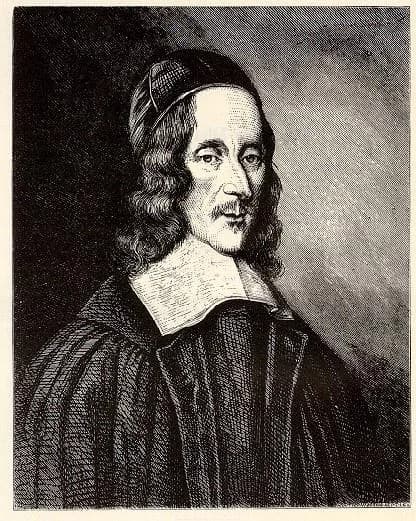
Nacido
April 3, 1593
Montgomery, United Kingdom
Falecido
March 1, 1633
Bemerton, United Kingdom
Coñecido por
Welsh-born English poet, orator and Anglican priest
George Herbert (1593–1633) was United Kingdom best known for Welsh-born English poet, orator and Anglican priest.
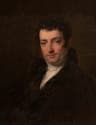
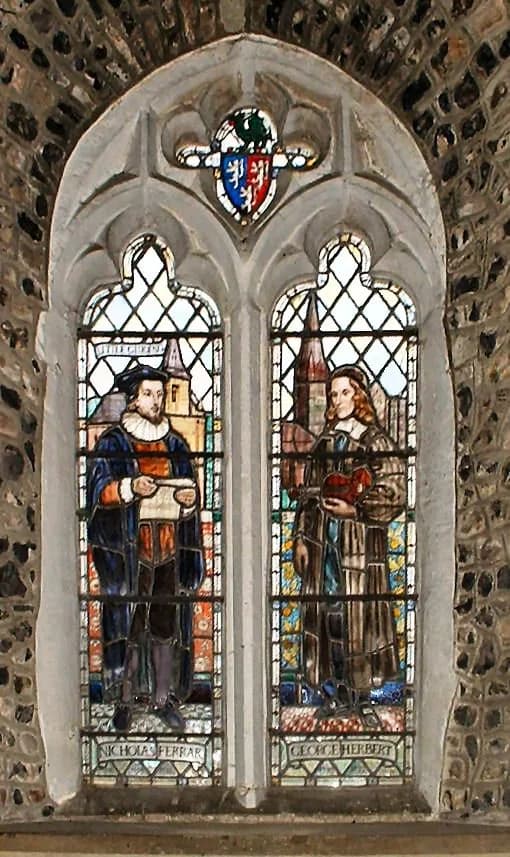
George Herbert (April 3, 1593 – March 1, 1633) was a Welsh-born English poet, orator, and Anglican priest from Montgomery, United Kingdom. He is recognized as one of the foremost British devotional lyricists, associated with the metaphysical poets. His works continue to offer deep spiritual insights into faith.
Capítulo
Capítulos da vida
Capítulo 1 · 1593· Capítulo 1 de 6
Early Life and Origins
Born on April 3, 1593, in Montgomery, United Kingdom, George Herbert entered a world of privilege and artistic inclination. His family was both wealthy and artistically inclined, providing him with an environment conducive to intellectual growth. He was largely raised in England, where he received an excellent education that prepared him for higher studies.
His academic journey led him to Trinity College, Cambridge, in 1609. Herbert enrolled with a clear intention of pursuing a life in the priesthood, a path that would shape much of his future endeavors and his poetic output.
Capítulo 2· Capítulo 2 de 6
Career Beginnings
While at Cambridge, George Herbert displayed exceptional intellect and oratorical skills. He became the University's Public Orator, a prestigious position that showcased his talent for public speaking and rhetoric. This role brought him considerable attention, even catching the eye of King James I, who recognized his potential and abilities.
Herbert's growing reputation extended beyond academic circles, leading to a brief foray into politics. He sat in the Parliament of England in 1624, serving as a representative. He also held a parliamentary seat briefly in 1625, demonstrating his engagement with public life beyond his ecclesiastical and literary pursuits.
Capítulo 3· Capítulo 3 de 6
Major Achievements and Career Highlights
George Herbert's primary achievement lies in his distinctive poetic voice and his dedication to his spiritual calling. As an Anglican priest, he embodied the values he often expressed in his verses, living a life of devout service. His association with the metaphysical poets solidified his place in literary history, defining a unique style of devotional poetry.
His ability to intertwine complex theological concepts with deeply personal emotion, using intricate poetic structures, distinguishes his work. This blend of intellectual rigor and heartfelt faith earned him recognition as a significant figure in 17th-century English literature.
Capítulo 4· Capítulo 4 de 6
Notable Works or Contributions
Herbert's literary contributions primarily consist of his sacred poems, which explore themes of faith, doubt, and the human relationship with God. Among his notable works, "The Temple; or, Sacred Poems and Private Ejaculations" stands as his most famous collection, published posthumously. This collection encapsulates his unique style and spiritual depth.
Other important works include "Lacrymae Cantabrigienses" and "Jacula Prudentum," a collection of proverbs. His "English Poems" and various manuscripts of his Latin and English verses further showcase his prolific output. The collection titled "A priest to The temple; or, The country parson, his character and rule of holy life" provides insight into his clerical duties and his vision for pastoral care.
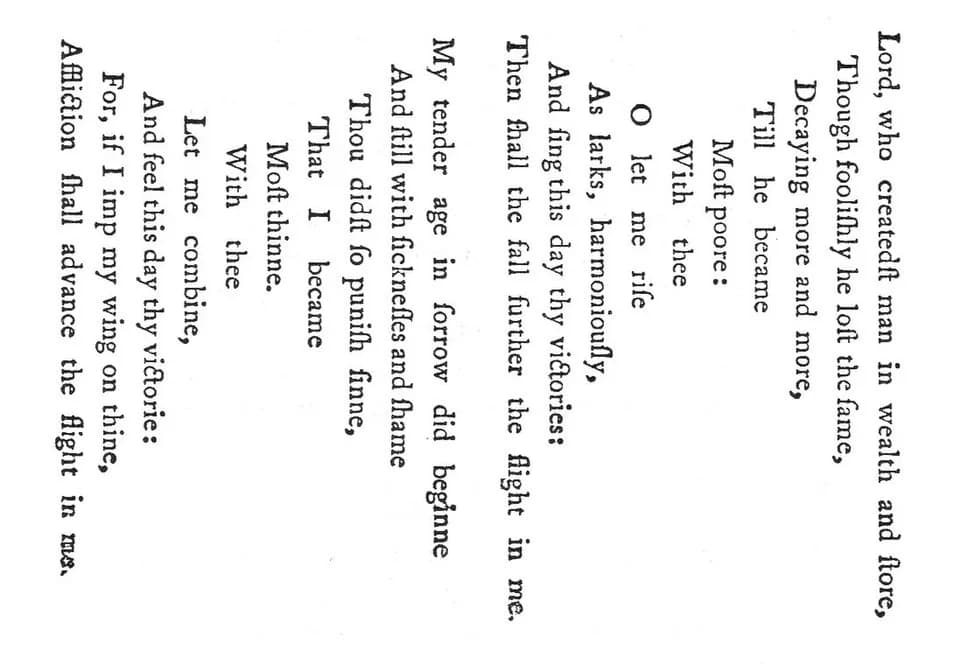
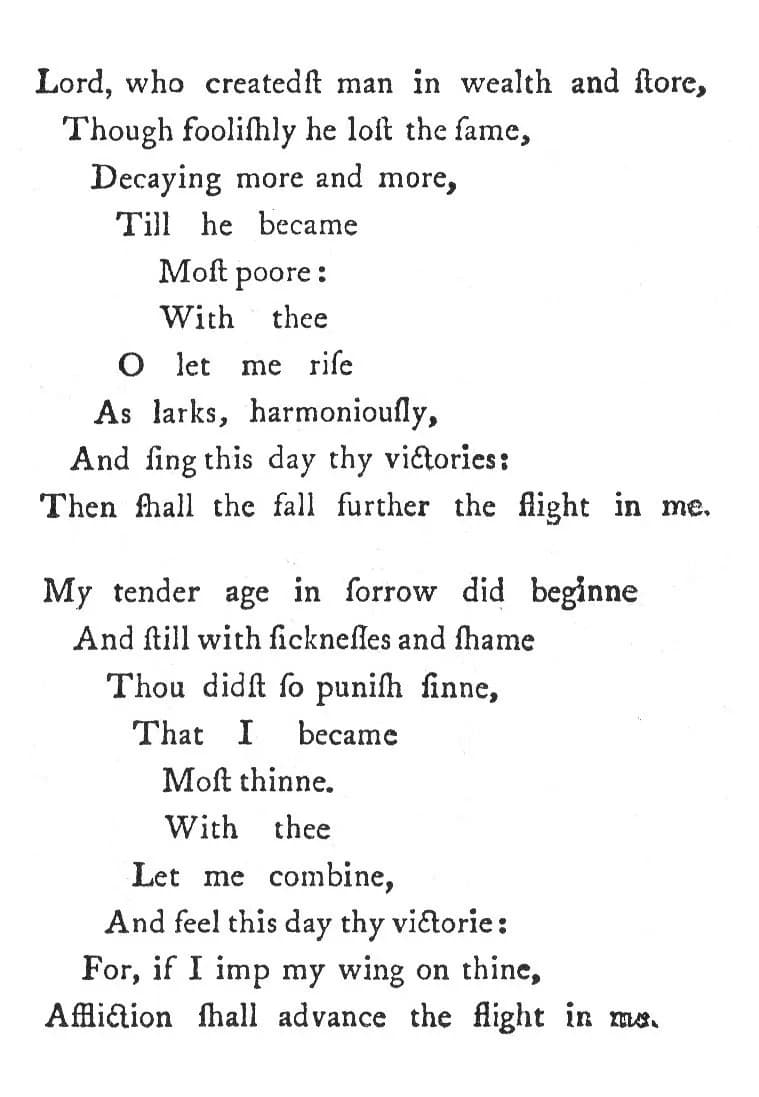
His celebrated poems, such as "Easter Wings," exemplify his innovative use of form and content, with its shape mirroring the poem's subject: "Lord, who createdst man in wealth and store, / Though foolishly he lost the same, / Decaying more and more, / Till he became;". In "Sin's Round," he confronts human failings with profound introspection: "Sorry I am, my God, sorry I am, / That my offences course it in a ring. / My thoughts are working like a busy flame, / Until their cockatrice they hatch and bring:". "Sonnet (I)" questions spiritual ardor: "My God, where is that ancient heat towards thee, / Wherewith whole showls of Martyrs once did burn, / Besides their other flames? Doth Poetry / Wear Venus livery? only serve her turn?". "Life" reflects on mortality and the passage of time: "I made a posie, while the day ran by: / Here will I smell my remnant out, and tie / My life within this band. / But time did becken to the flowers, and they;". "H. Baptism II" delves into the profound significance of religious rites from infancy: "Since, Lord, to thee / A narrow way and little gate / Is all the passage, on my infancy / Thou didst lay hold, and antedate". These excerpts demonstrate his consistent engagement with spiritual themes and his mastery of poetic craft.
Capítulo 5· Capítulo 5 de 6
Later Years
After his time in Parliament, George Herbert fully embraced his calling to the priesthood. He served as an Anglican priest, dedicating his final years to his spiritual duties and to the composition of his devotional poetry. His life in Bemerton, United Kingdom, where he passed away, was characterized by his commitment to his parishioners and his continued literary work.
Despite his relatively short life, dying on March 1, 1633, at the age of 39, Herbert produced a substantial body of work. His final years were marked by a serene devotion that permeates his later writings, leaving behind a legacy of profound spiritual insight.
Capítulo 6· Capítulo 6 de 6
Legacy and Impact
George Herbert's legacy is primarily that of a master devotional lyricist whose influence on religious poetry remains significant. He helped shape the literary tradition in English, particularly within the metaphysical style, inspiring generations of poets with his intellectual wit and spiritual sincerity. His poems continue to be studied for their theological depth, linguistic precision, and innovative forms.
His work offers enduring insights into faith, doubt, and the complexities of spiritual life, making him a timeless voice in English poetry. Herbert's quiet but powerful influence continues to be felt in literary and theological circles, securing his place as an essential figure in the history of British letters.
Unha vida en momentos
Os momentos que deron forma a unha vida
Preguntas frecuentes
Preguntas frecuentes
Cando morreu George Herbert?
George Herbert morreu o 1 de marzo de 1633 en Bemerton, United Kingdom aos 39 anos.
Onde naceu George Herbert?
George Herbert naceu en Montgomery, United Kingdom o 3 de abril de 1593.
Por que é máis coñecido(a) George Herbert?
George Herbert é coñecido(a) sobre todo por Welsh-born English poet, orator and Anglican priest.
Cantos anos tiña George Herbert cando morreu?
George Herbert tiña 39 anos no momento da súa morte.
Cal era a nacionalidade de George Herbert?
George Herbert era de United Kingdom.
Cronoloxía
A vida en resumo
Galería de fotos
Unha vida en imaxes
Fai clic en calquera polaroid para ampliar · 24 fotos
Código QR
Compartir esta biografía
Imprimir e Compartir
Escanea para visitar esta páxina de biografía. Imprime para eventos, exposicións ou materiais educativos.