Syntynyt
March 6, 1361
Nuremberg, Germany
Kuollut
August 25, 1419
Nový hrad u Kunratic, Czech Republic
Tunnettu
king of Bohemia and Germany
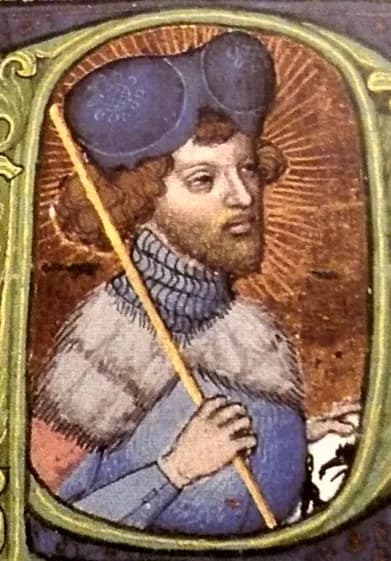
Wenceslaus IV of Bohemia (1361–1419) was Germany best known for king of Bohemia and Germany.
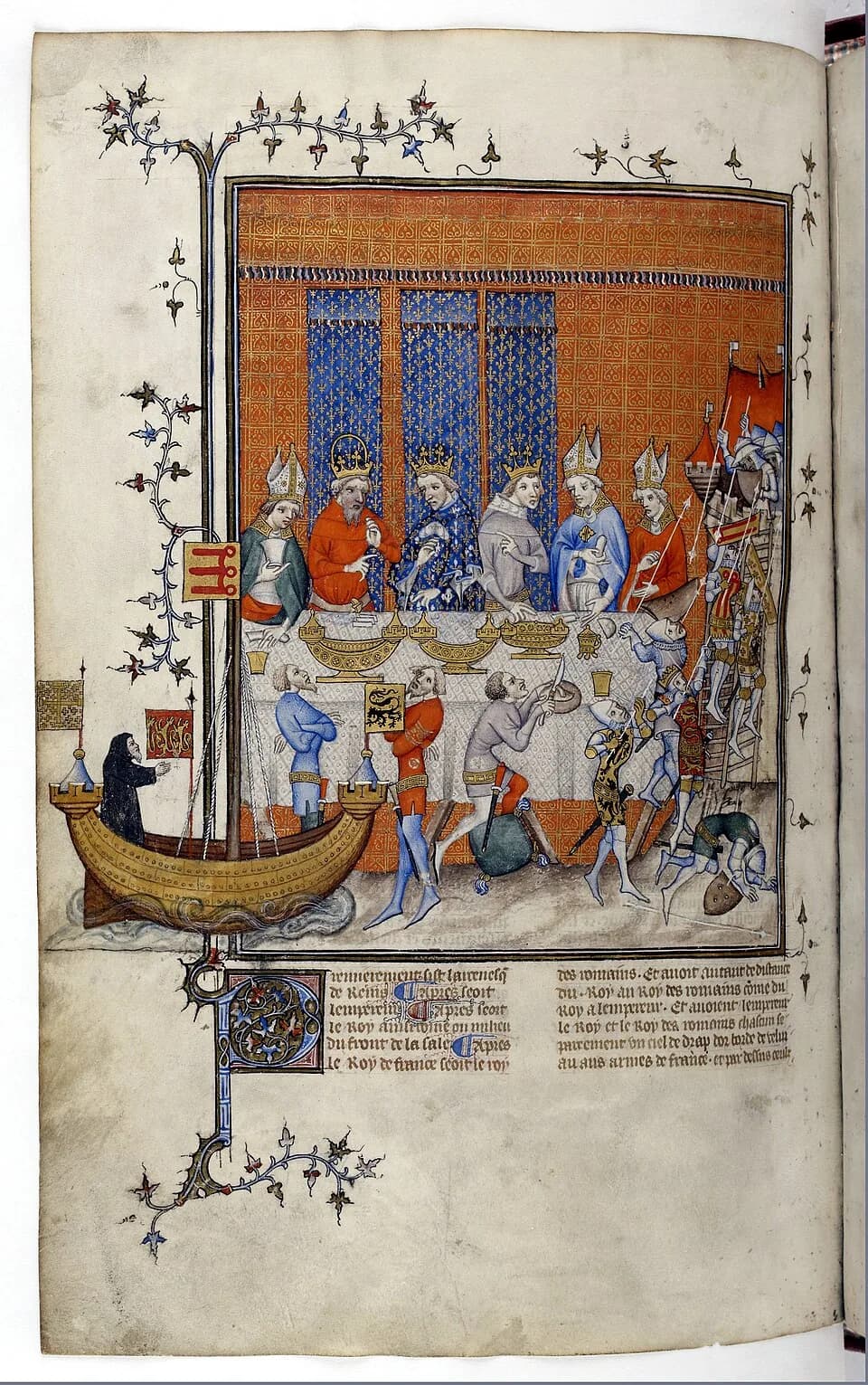
Wenceslaus IV (March 6, 1361 – August 25, 1419) was a king of Bohemia and Germany, and a mint lord. He ruled Bohemia for over four decades and was also Duke of Luxembourg. His life was central to the political landscape of late medieval Europe.
Luku
Elämän luvut
Luku 1 · 1361· Luku 1 / 6
Early Life and Origins
Wenceslaus IV entered the world on March 6, 1361, in the historic and economically significant city of Nuremberg, situated in modern-day Germany. His birth in this prominent imperial city underscored his early ties to the wider European political landscape. As a direct descendant and esteemed member of the illustrious House of Luxembourg, Wenceslaus was born into one of the most powerful and influential noble dynasties of medieval Europe. This distinguished lineage ensured that from his very earliest days, he was destined for a life of considerable responsibility and the high expectations associated with royal birthright and dynastic prestige.
The House of Luxembourg, during this era, commanded vast territories and exerted significant influence over the complex affairs of the Holy Roman Empire, an entity comprising numerous principalities and states. Growing up within such a powerful and politically active family meant Wenceslaus's formative years, though not extensively documented in specific daily detail, would have been steeped in the traditions of governance, diplomacy, and aristocratic life. This environment would have undoubtedly instilled in him an understanding of the intricate power structures and the demanding nature of medieval kingship, preparing him for the multifaceted challenges he would face as a ruler of multiple kingdoms and ducal lands.
Luku 2 · 1376· Luku 2 / 6
Career Beginnings
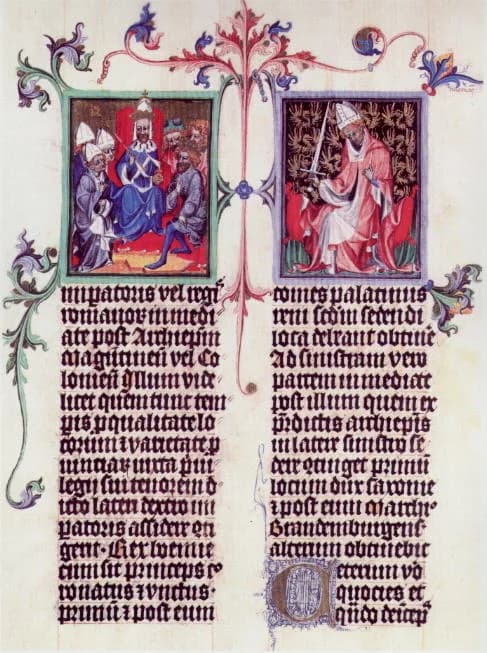
Wenceslaus's ascent to royal power began remarkably early in his life, firmly establishing him as a central political figure of his epoch. In 1376, he was formally recognized and crowned as the King of the Romans and King of Germany, prestigious titles that inherently placed him at the very heart of imperial authority. These significant positions endowed him with substantial political weight, administrative obligations, and the responsibility for overseeing a vast and often fragmented territory within the Holy Roman Empire.
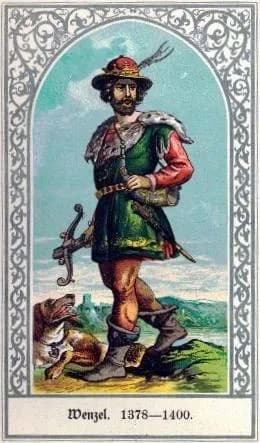
Building upon this foundation, just two years later, in 1378, Wenceslaus formally inherited the revered title of King of Bohemia, succeeding his father to the ancestral throne. This succession solidified his rule over his native kingdom, a realm he would diligently govern for the entire remainder of his life. These initial appointments were far from merely ceremonial; they marked the immediate commencement of a challenging and demanding royal career, compelling him to address a diverse array of political, economic, and social concerns across his various domains, right from his early adulthood.
Luku 3 · 1378· Luku 3 / 6
Major Achievements and Career Highlights
Wenceslaus IV's reign as King of Bohemia was exceptionally long, spanning from 1378 until his death in 1419, a considerable period exceeding four decades. Throughout these forty-one years, he served as the sovereign ruler of a vital Central European kingdom, bearing the immense responsibility for its governance, administration, and defense. His extended tenure allowed him to exert a lasting influence on Bohemian society, law, and politics, shaping the kingdom's trajectory for generations.
Concurrently with his Bohemian rule, Wenceslaus also held the distinguished title of Duke of Luxembourg, known as Wenceslaus II, for a period between 1383 and 1388. This ducal role further expanded his administrative scope, requiring him to manage the specific affairs and interests of this important territory. His simultaneous and intertwined responsibilities as King of the Romans and King of Germany, which he held from 1376 until his deposition in 1400, positioned him directly within the intricate and often volatile power dynamics of the Holy Roman Empire, a complex confederation of diverse states, principalities, and free cities.
These numerous and significant royal and ducal titles collectively underscore a life that was deeply committed to and entangled with the highest echelons of medieval European governance. His consistent presence as a ruler in these various capacities throughout the late 14th and early 15th centuries firmly establishes his enduring impact on the political geography and historical narrative of the period. His multi-faceted rule necessitated constant engagement with both domestic and international affairs, demanding strategic foresight and continuous diplomatic engagement.
Luku 4· Luku 4 / 6
Notable Works or Contributions
Beyond the demanding and overarching responsibilities of being a king and a duke, Wenceslaus IV also held the highly specific and professional title of a mint lord. This particular responsibility was much more than a mere honorary designation; it represented a fundamental administrative and economic function within the structure of his kingdoms. As a mint lord, he was directly entrusted with the critical and highly regulated process of coinage, overseeing the careful production and systematic issuance of all currency within his territories.
This pivotal role involved a meticulous oversight of several crucial aspects, including the setting of precise standards for the precious metal content of coins, ensuring the unwavering integrity and purity of the currency, and managing the skilled artisans and laborers involved in the complex minting operations. The economic stability, the facilitation of trade, and the overall fiscal health of his realms were profoundly dependent upon the efficient, transparent, and trustworthy operation of the royal mints under his direct supervision. His active involvement as a mint lord thus highlights a practical, hands-on engagement with the fundamental economic infrastructure that not only underpinned his royal authority but also directly contributed to the prosperity and well-being of his subjects across Bohemia and other domains.
Luku 5 · 1400· Luku 5 / 6
Later Years
The latter part of Wenceslaus IV's extensive life was characterized by significant political shifts and considerable challenges that impacted his sovereign standing. A defining moment in his career occurred in the year 1400 when he faced deposition from his powerful positions as King of the Romans and King of Germany. This significant political event had substantial repercussions for the delicate balance of power within the Holy Roman Empire and undoubtedly affected his personal prestige and influence as a monarch on the European stage.
Despite this major political setback and the loss of imperial titles, Wenceslaus IV steadfastly continued to govern as King of Bohemia, maintaining his cherished sovereignty over his native lands. His resilience allowed him to remain on the Bohemian throne for nearly two more decades following his deposition from the German kingship. He continued to lead his kingdom through various internal and external pressures until his eventual passing on August 25, 1419. His long and eventful life as a ruler concluded at Nový hrad u Kunratic, a historical site located in what is now the modern-day Czech Republic.
Luku 6· Luku 6 / 6
Legacy and Impact
Wenceslaus IV's enduring legacy is most prominently defined by his remarkably long and impactful reign as King of Bohemia, which spanned an impressive period of over four decades. His lengthy tenure allowed him to be a constant presence in the kingdom's development, shaping its historical trajectory during a complex and often turbulent era of European history. As a central member of the influential House of Luxembourg, he played a crucial role in the intricate dynastic struggles, political negotiations, and power machinations that characterized the late medieval period across the continent.
His distinctive historical experience, marked by his dual role as both a deposed King of the Romans and an enduring, long-serving King of Bohemia, distinctly illustrates the turbulent and often unpredictable political climate of his time. Wenceslaus IV’s life and extensive rule provide invaluable insights into the multifaceted challenges, immense responsibilities, and constant pressures faced by monarchs and rulers in Central Europe during the critical juncture of the 14th and early 15th centuries. His historical footprint remains an integral and significant part of the rich historical narrative of European monarchy, reflecting an era of evolving power structures and complex governance.
Elämä hetkissä
Hetket, jotka muovasivat elämää
UKK
Usein kysyttyä
Milloin Wenceslaus IV of Bohemia kuoli?
Wenceslaus IV of Bohemia kuoli 25. elokuuta 1419 Nový hrad u Kunratic, Czech Republicssa, 58 vuoden iässä.
Missä Wenceslaus IV of Bohemia syntyi?
Wenceslaus IV of Bohemia syntyi Nuremberg, Germanyssa 6. maaliskuuta 1361.
Mistä Wenceslaus IV of Bohemia on tunnetuin?
Wenceslaus IV of Bohemia on tunnetuin king of Bohemia and Germany.
Kuinka vanha Wenceslaus IV of Bohemia oli kuollessaan?
Wenceslaus IV of Bohemia oli 58-vuotias kuollessaan.
Mitä kansallisuutta Wenceslaus IV of Bohemia oli?
Wenceslaus IV of Bohemia oli kotoisin maasta Germany.
Aikajana
Elämä lyhyesti
Valokuvagalleria
Elämä kuvina
Klikkaa mitä tahansa polaroidia laajentaaksesi · 24 valokuvaa
QR-koodi
Jaa tämä elämäkerta
Tulosta ja jaa
Skannaa vieraillaksesi tällä elämäkerrallisella sivulla. Tulosta tapahtumiin, näyttelyihin tai opetusmateriaaleihin.