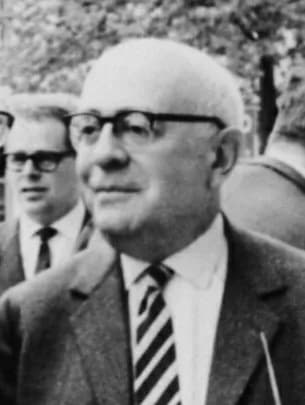
Syntynyt
September 11, 1903
Frankfurt, Francia
Kuollut
August 6, 1969
Visp, Switzerland
Tunnettu
German philosopher, sociologist and theorist
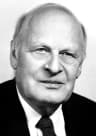
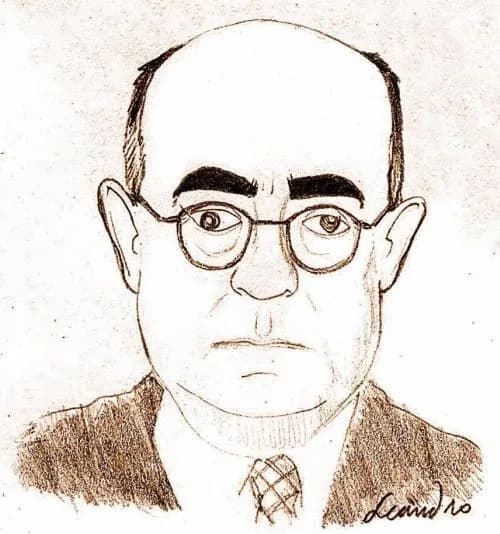
Theodor W. Adorno (1903–1969) was Francia best known for German philosopher, sociologist and theorist.
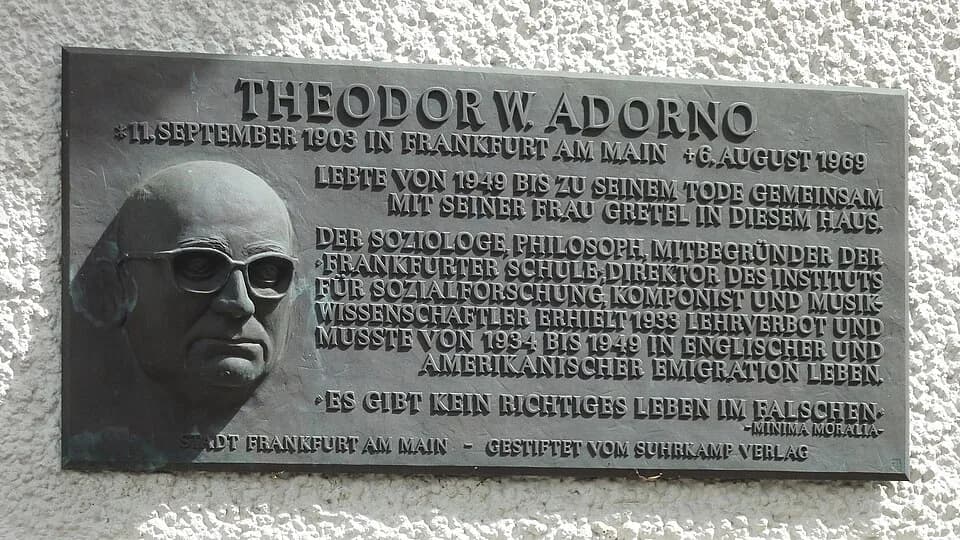
Theodor W. Adorno (September 11, 1903 – August 6, 1969) was a German philosopher, sociologist, and theorist. He was a leading figure of the Frankfurt School, known for his critiques of fascism and the culture industry. His writings, including Minima Moralia, significantly influenced the European New Left.
Luku
Elämän luvut
Luku 1 · 1903· Luku 1 / 8
Early Life and Origins
Born on September 11, 1903, in the vibrant city of Frankfurt, Francia, Theodor W. Adorno experienced an upbringing rich in both intellectual stimulation and artistic expression. His early life was marked by exposure to classical music and philosophical discourse, influences that would profoundly shape his future career. This foundational period provided the groundwork for his later work as a composer, pianist, and musicologist, skills he cultivated alongside his deep philosophical studies.
Adorno's environment in Frankfurt during the early 20th century fostered a critical mind, attuned to the cultural and political shifts occurring around him. The intellectual climate of his youth undoubtedly contributed to his developing interest in social theory and aesthetics. These formative years were crucial in cultivating the unique perspective that would define his contributions to critical theory and his wide-ranging scholarly pursuits.
Luku 2· Luku 2 / 8
Career Beginnings and Affiliation with the Frankfurt School
Adorno embarked on his extensive academic and creative journey, quickly establishing himself as a significant voice within emerging philosophical circles. His early work began to articulate the critical perspective that would define his career in philosophy and sociology. This period saw him become a leading member of the Frankfurt School of critical theory, a designation that would come to signify a particular brand of social and philosophical critique.
His association with the Frankfurt School connected him with influential thinkers such as Ernst Bloch, Walter Benjamin, Max Horkheimer, Erich Fromm, and Herbert Marcuse. These collaborations and intellectual dialogues were instrumental in forging the school's unique approach to social analysis. Adorno, alongside his colleagues, drew significantly from the works of Sigmund Freud, Karl Marx, and G. W. F. Hegel, applying their theoretical frameworks to develop a robust critique of modern society.
Luku 3· Luku 3 / 8
Major Theoretical Contributions
Theodor W. Adorno's work as a critical theorist is characterized by its rigorous analysis of societal structures and cultural phenomena. He developed compelling critiques of both the rise of fascism and the increasing standardization of mass culture, which he termed the "culture industry." His theories explored how enlightenment rationality could paradoxically lead to new forms of domination and control within modern industrial societies.
His writings, particularly those co-authored and solo, provided analytical tools for understanding the complex interplay between culture, economics, and power. These theoretical insights were not merely academic exercises but served as profound commentaries on the human condition in the post-war era. Adorno's unique blend of philosophy, sociology, and aesthetics allowed him to dissect the mechanisms through which modern society shapes individual consciousness and experience.
Luku 4 · 1947· Luku 4 / 8
Notable Philosophical Works and Literary Criticism
Among Adorno's most impactful contributions are his major philosophical treatises, which remain foundational texts in critical theory. Dialectic of Enlightenment (1947), co-authored with Max Horkheimer, stands as a seminal work that examines the self-destructive tendencies inherent in Western enlightenment. This text offers a challenging analysis of how rationality, intended to liberate, can instead become a tool of oppression and myth.
His solo philosophical works also left a lasting mark, with Minima Moralia (1951) presenting a series of aphoristic reflections on the damaged life in the wake of fascism and capitalism. Negative Dialectics (1966) further deepened his philosophical method, arguing for a dialectical thought that resists positive identification and embraces contradiction. These texts, alongside others like Notas de literatura, exemplify his deep engagement with literary criticism and aesthetic theory.
Adorno's bibliography extends to other significant titles, including Il fido maestro sostituto, Correspondência, and Scientific experiences of a European scholar in America. These works, spanning various formats and subjects, highlight his vast intellectual curiosity and his ability to address complex issues across different disciplines. He also published Kymmenen puheenvuoroa yhteiskunnasta and Der Tod in der Moderne, reflecting his ongoing engagement with social theory and contemporary concerns.
Luku 5 · 1990· Luku 5 / 8
Contributions to Musicology and Composition
Beyond his profound philosophical and sociological work, Theodor W. Adorno maintained a lifelong devotion to music as a composer, pianist, and musicologist. His musical compositions, posthumously released, include Kompositionen (1990) and Works for String Quartet (1996), showcasing his practical engagement with the art form. His unique perspective as both practitioner and theorist provided a distinct lens for his music criticism.
Adorno's critical writings on music, particularly his analyses of figures like Arnold Schönberg, positioned him as a leading voice in 20th-century musicology. The album Schönberg / Adorno (2003) further highlights this significant intellectual and artistic relationship. He explored the social and aesthetic dimensions of music, arguing for its capacity to reveal truths about society while resisting commodification.
Luku 6 · 1964· Luku 6 / 8
Academic Publications and Scholarly Impact
Adorno's academic rigor is evident in his published papers, which contribute to various fields including philosophy and social sciences. With an h-index of 3 across 12 papers, his scholarly output demonstrates consistent engagement with academic discourse. His top cited academic works include History and Freedom: Lectures 1964–1965 (2007), which garnered 86 citations, and Kierkegaard: Construction of the Aesthetic (1989), with 50 citations, illustrating the lasting relevance of his lectures and early studies.
His academic contributions continued posthumously with publications like Speaking the Unspeakable in Postwar Germany (2023) and On the University Study of Philosophy (2023), proving the ongoing interest in his thought. Additionally, works such as THE CONCEPT OF SOCIALITY IN THE LITERARY CRITICISM OF GEORG LUK ´ ACS, LUCIEN GOLDMANN, AND THEODOR W. ADORNO (2022) emphasize his enduring scholarly presence. These publications reflect his persistent exploration of complex philosophical and social questions.
Luku 7 · 1966· Luku 7 / 8
Later Years and Enduring Influence
Theodor W. Adorno remained an active and influential intellectual figure throughout his later years, continuing his work as a university teacher and philosopher. His later writings, particularly Negative Dialectics (1966), served to consolidate his methodological approaches and deepen his critique of modern philosophy. He consistently engaged with contemporary issues, offering sharp analyses until the very end of his life.
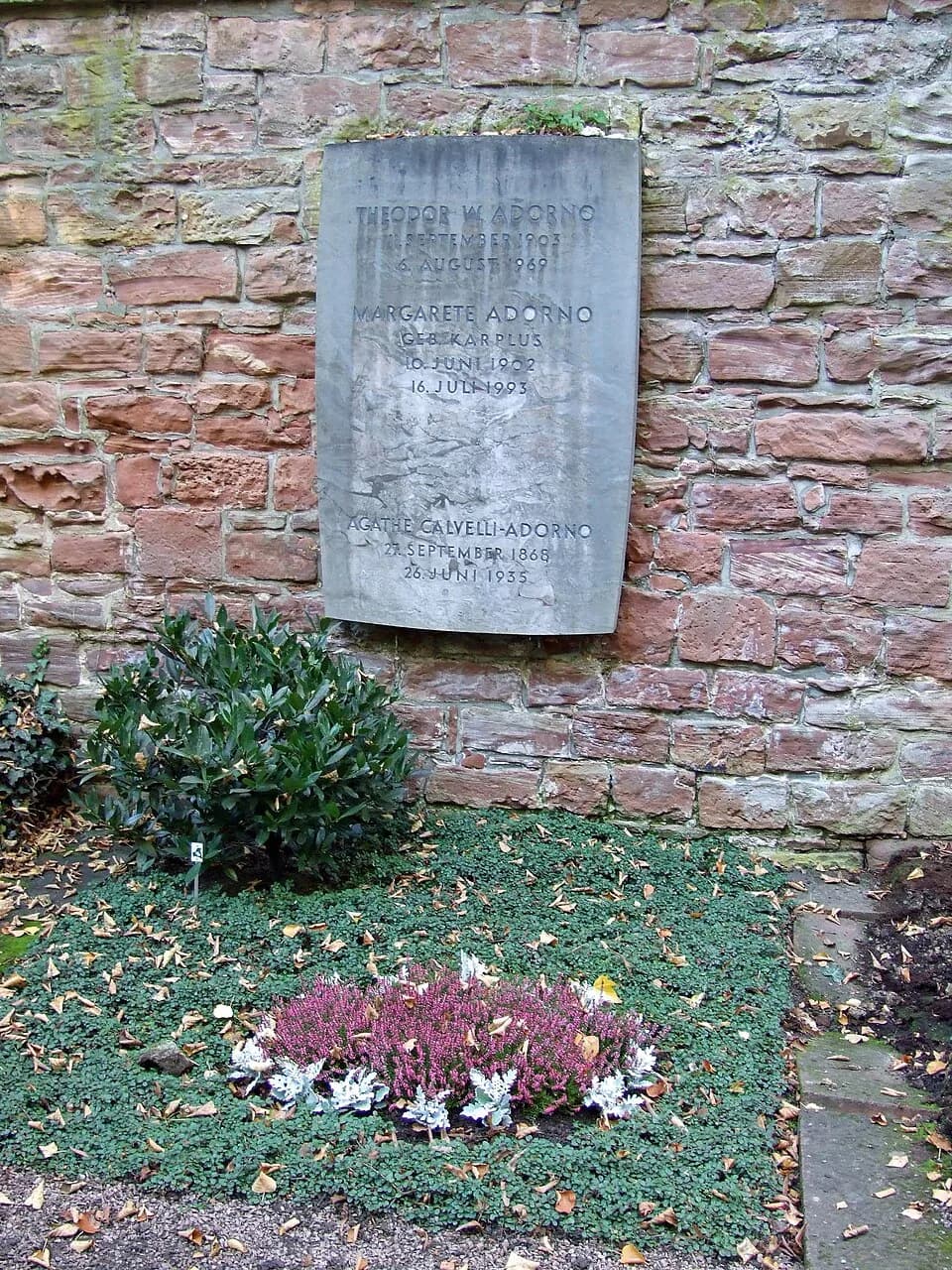
Adorno passed away on August 6, 1969, in Visp, Switzerland, but his intellectual journey did not end there. His posthumously published works and continued academic citations demonstrate a sustained engagement with his ideas across generations. His death marked the close of a life dedicated to critical thought and artistic expression.
Luku 8· Luku 8 / 8
Legacy and Lasting Impact
The legacy of Theodor W. Adorno extends far beyond his lifetime, cementing his position as a seminal figure in 20th-century intellectual history. His theories continue to be a vital resource for understanding the complexities of modernity, power structures, and cultural forms. The European New Left found profound inspiration in his rigorous critiques, utilizing his ideas to inform their movements and analyses of society.
His concept of the "culture industry" remains an essential framework for analyzing mass media, popular culture, and consumerism in the contemporary world. Adorno's insistence on negative dialectics and his critique of instrumental reason offer powerful tools for resisting simplistic solutions and fostering critical awareness. His enduring relevance is a demonstration of the depth and foresight of his philosophical and sociological work, influencing countless scholars and activists to this day.
Elämä hetkissä
Hetket, jotka muovasivat elämää
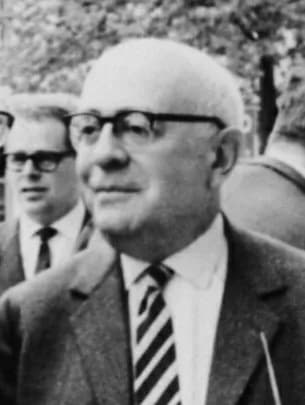
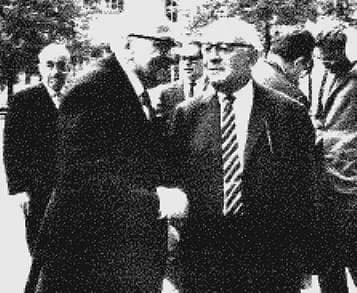
![Theodor W. Adorno - Photograph taken in Heidelberg, April 1964,[1] by Jeremy J. Shapiro at the Max Weber-Soziologentag. Horkheimer is front left, Adorno front right, and Habermas is in the background,](/_next/image?url=https%3A%2F%2Fcdn.whowasthisguy.com%2Fgallery_wikimedia_commons_1777914961826_2_751cc695e1.webp&w=1920&q=75)
UKK
Usein kysyttyä
Milloin Theodor W. Adorno kuoli?
Theodor W. Adorno kuoli 6. elokuuta 1969 Visp, Switzerlandssa, 65 vuoden iässä.
Missä Theodor W. Adorno syntyi?
Theodor W. Adorno syntyi Frankfurt, Franciassa 11. syyskuuta 1903.
Mistä Theodor W. Adorno on tunnetuin?
Theodor W. Adorno on tunnetuin German philosopher, sociologist and theorist.
Kuinka vanha Theodor W. Adorno oli kuollessaan?
Theodor W. Adorno oli 65-vuotias kuollessaan.
Mitä kansallisuutta Theodor W. Adorno oli?
Theodor W. Adorno oli kotoisin maasta Francia.
Valokuvagalleria
Elämä kuvina
Klikkaa mitä tahansa polaroidia laajentaaksesi · 46 valokuvaa
QR-koodi
Jaa tämä elämäkerta
Tulosta ja jaa
Skannaa vieraillaksesi tällä elämäkerrallisella sivulla. Tulosta tapahtumiin, näyttelyihin tai opetusmateriaaleihin.