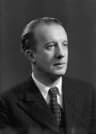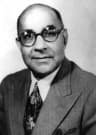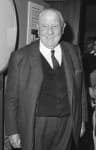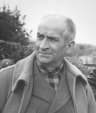
Syntynyt
July 12, 1895
Milton, United States
Kuollut
July 1, 1983
Los Angeles, United States
Tunnettu
American architect, systems theorist, author, designer, inventor and futurist
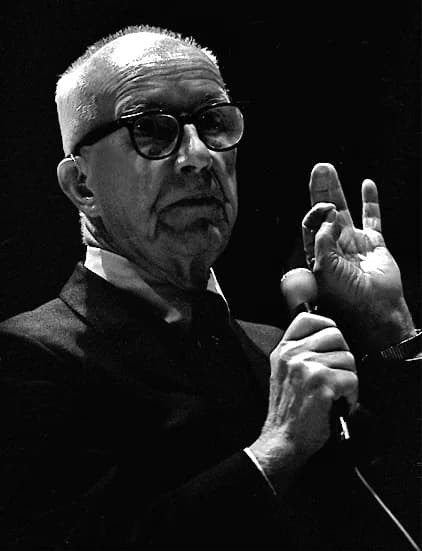
Buckminster Fuller (1895–1983) was United States best known for American architect, systems theorist, author, designer, inventor and futurist.
Richard Buckminster Fuller Jr. (July 12, 1895 – July 1, 1983) was an American architect, systems theorist, and inventor. He popularized concepts like 'Spaceship Earth' and 'Dymaxion,' advocating for design science to solve global challenges. His prolific writings and innovative designs profoundly influenced architecture, engineering, and environmentalism.
Luku
Elämän luvut
Luku 1 · 1895· Luku 1 / 7
Early Life and Origins
Buckminster Fuller's journey began in Milton, United States, where he was born on July 12, 1895. His early experiences likely shaped his unique perspective on the world and its interconnected systems. From these formative years, he developed an approach to problem-solving that was rooted in observation and a deep understanding of natural principles.
Luku 2· Luku 2 / 7
Career Beginnings
Fuller embarked on a wide and diverse professional path, encompassing roles as a scientist, writer, and architect from early in his career. He was also a poet, engineer, and mathematician, demonstrating an extraordinary range of intellectual curiosity and skill. This multi-disciplinary foundation led him to become an inventor, artist, university teacher, visual artist, designer, philosopher, and diarist, reflecting his holistic approach to understanding and shaping the world.
Luku 3· Luku 3 / 7
Major Achievements and Career Highlights
Throughout his career, R. Buckminster Fuller made significant contributions by coining and popularizing several foundational terms. Concepts like "Spaceship Earth" articulated his view of our planet as a self-sustaining but finite vessel, urging careful resource management. He also introduced "Dymaxion," a portmanteau for dynamic maximum tension, applied to various designs from homes to cars.
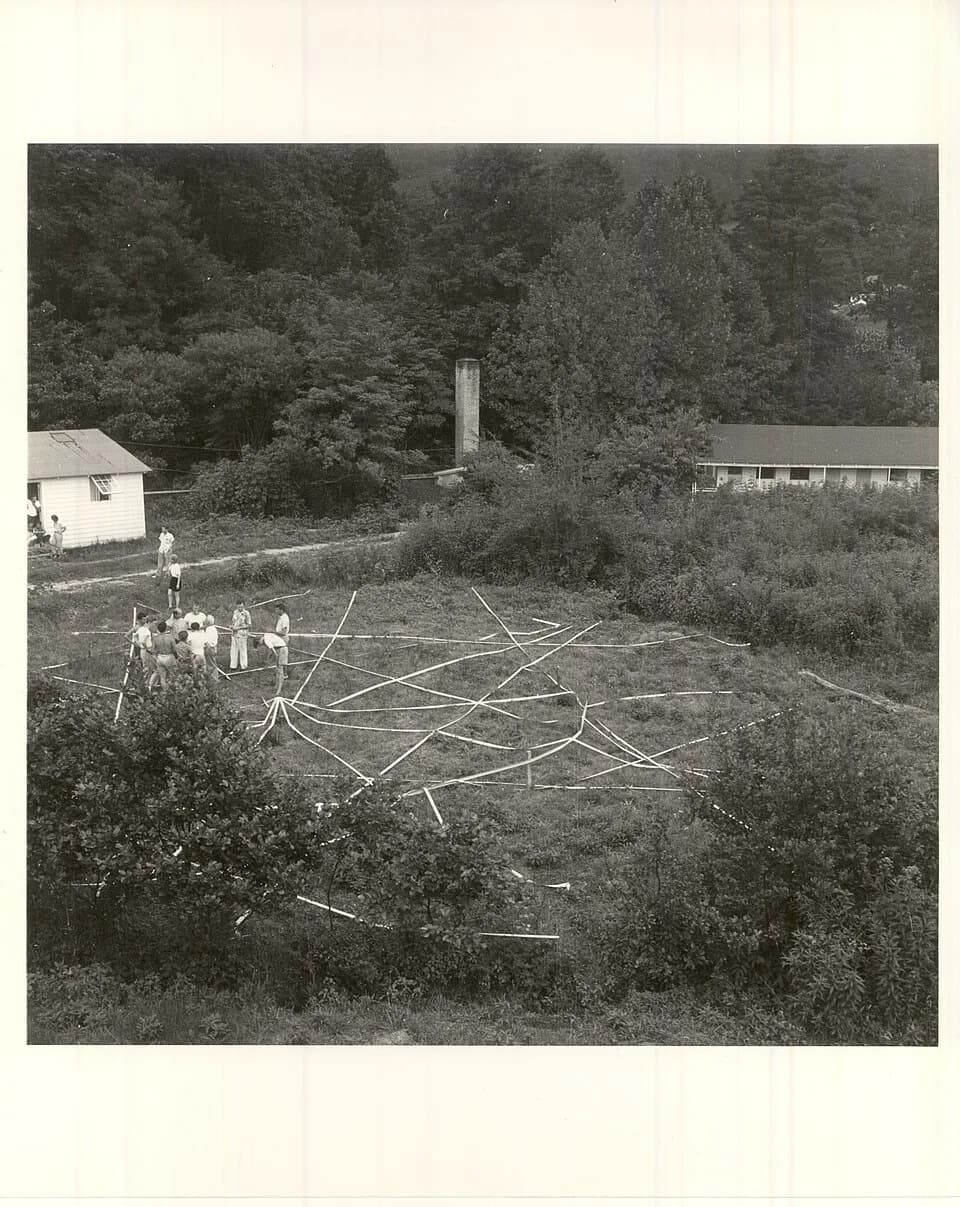
Fuller's theoretical framework included "ephemeralization," the principle of doing more with less, which sought to increase efficiency and resource optimization. His exploration of "synergetics" focused on the behavior of whole systems that cannot be predicted by summing the behavior of their parts. He also developed the concept of "tensegrity," structures that maintain their integrity through a balance of continuous tension and discontinuous compression, revolutionizing architectural and structural thinking.
Luku 4· Luku 4 / 7
Personal Life
Richard Buckminster Fuller Jr.'s private life, while not extensively detailed in public records beyond his birth and death places, was undoubtedly intertwined with his consuming intellectual pursuits. His unwavering dedication to his work, evident in his prolific writings and designs, suggests a personal commitment to global betterment. Fuller’s philosophy, which often emphasized humanity’s potential and responsibilities, likely originated from his deeply held personal convictions. He styled his name as R. Buckminster Fuller in his writings, signifying his public persona as a thought leader.
Luku 5 · 1965· Luku 5 / 7
Notable Works or Contributions
Fuller was a prolific author, publishing more than 30 books throughout his lifetime. His bibliography includes influential works such as "World design science decade, 1965-1975," which proposed a ten-year global initiative for design science. Other key publications include "Naga" and the "Dymaxion comprehensive system," detailing his innovative approach to design principles.
He further explored his ideas in "Fluid geography / by R. Buckminster Fuller," demonstrating his interest in natural systems, and in "Tetrascroll," an intricate work combining text and visuals. "American Earth" and "Approaching the Benign Environment" reflect his deep concern for environmental sustainability and humanity's relationship with its habitat. "Operating Manual for Spaceship Earth" remains one of his most widely recognized works, providing a compelling metaphor for global stewardship. His later writings, such as "Grunch of Giants," offered critiques of economic systems, while the "Buckminster Fuller Reader" provided a comprehensive collection of his diverse thought.
Beyond his writings, Fuller's design innovations extended to notable artworks and architectural concepts. The "Synergetics Folio (1977)," now part of the Met Museum's collection, visually articulates his synergetic principles. His visionary "A Minimum Dymaxion Home, Elevation (1931)," held by AIC, exemplifies his pursuit of efficient, affordable housing solutions. The Dymaxion Car series, including "Dymaxion Car, Section (1933)," "Dymaxion Car for Henry Kaiser, Longitudinal Section (c. 1943)," and "Dymaxion Car, Plan (1933)," all at AIC, showcased his radical approach to vehicle design, emphasizing aerodynamics and efficiency. Architectural projects like the "Wichita House Airbarac, Wichita, Kansas, Plan, Elevation, and Section (1945)," also at AIC, further demonstrated his innovative structural systems. His artistic exploration continued with "Tetrascroll Deluxe (1981)," and its individual components such as the "Title Page, from Tetrascroll (1975–77)," "Page 1, from Tetrascroll (1975–77)," and "Page 2, from Tetrascroll (1975–77)," all curated by AIC. These diverse works underscore his integration of art, science, and design.
Luku 6 · 1983· Luku 6 / 7
Later Years
Richard Buckminster Fuller remained an active and influential figure well into his later life, continuing to teach, write, and invent. His final years were spent sharing his extensive knowledge and vision with new generations of students and thinkers. He passed away on July 1, 1983, in Los Angeles, United States, leaving behind a substantial and extensive body of work. His life spanned 87 years, marked by an unceasing commitment to innovation and global problem-solving.
Luku 7· Luku 7 / 7
Legacy and Impact
Buckminster Fuller's legacy is immense, deeply influencing fields from architecture and engineering to environmental science and philosophy. His concept of "Spaceship Earth" has become a powerful metaphor for ecological awareness and global cooperation, deeply embedded in contemporary environmental discourse. The principles of "ephemeralization" and "tensegrity" continue to inform sustainable design and advanced structural engineering practices worldwide.
His academic contributions also demonstrate his lasting intellectual impact, with an h-index of 4 across 26 published papers. Among these, "Nine Chains to the Moon: An Adventure Story of Thought" (2019) has garnered 6 citations, highlighting its enduring relevance even decades after his death. Other works, such as "Josef Albers (1888–1976)" (2017) and "PART TWO: Planetary Planning: The Historical Philosophic Background" (2016), also reflect the breadth of his intellectual curiosity. Fuller's vision of a design science decade and his prolific writings continue to inspire thinkers seeking comprehensive solutions for humanity's challenges.
Elämä hetkissä
Hetket, jotka muovasivat elämää




UKK
Usein kysyttyä
Milloin Buckminster Fuller kuoli?
Buckminster Fuller kuoli 1. heinäkuuta 1983 Los Angeles, United Statesssa, 87 vuoden iässä.
Missä Buckminster Fuller syntyi?
Buckminster Fuller syntyi Milton, United Statesssa 12. heinäkuuta 1895.
Mistä Buckminster Fuller on tunnetuin?
Buckminster Fuller on tunnetuin American architect, systems theorist, author, designer, inventor and futurist.
Kuinka vanha Buckminster Fuller oli kuollessaan?
Buckminster Fuller oli 87-vuotias kuollessaan.
Mitä kansallisuutta Buckminster Fuller oli?
Buckminster Fuller oli kotoisin maasta United States.
Aikajana
Elämä lyhyesti
Valokuvagalleria
Elämä kuvina
Klikkaa mitä tahansa polaroidia laajentaaksesi · 24 valokuvaa
QR-koodi
Jaa tämä elämäkerta
Tulosta ja jaa
Skannaa vieraillaksesi tällä elämäkerrallisella sivulla. Tulosta tapahtumiin, näyttelyihin tai opetusmateriaaleihin.