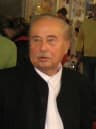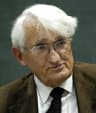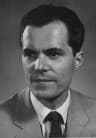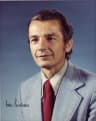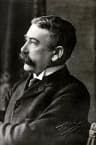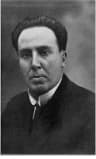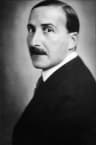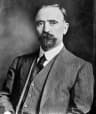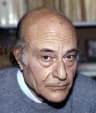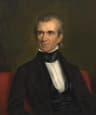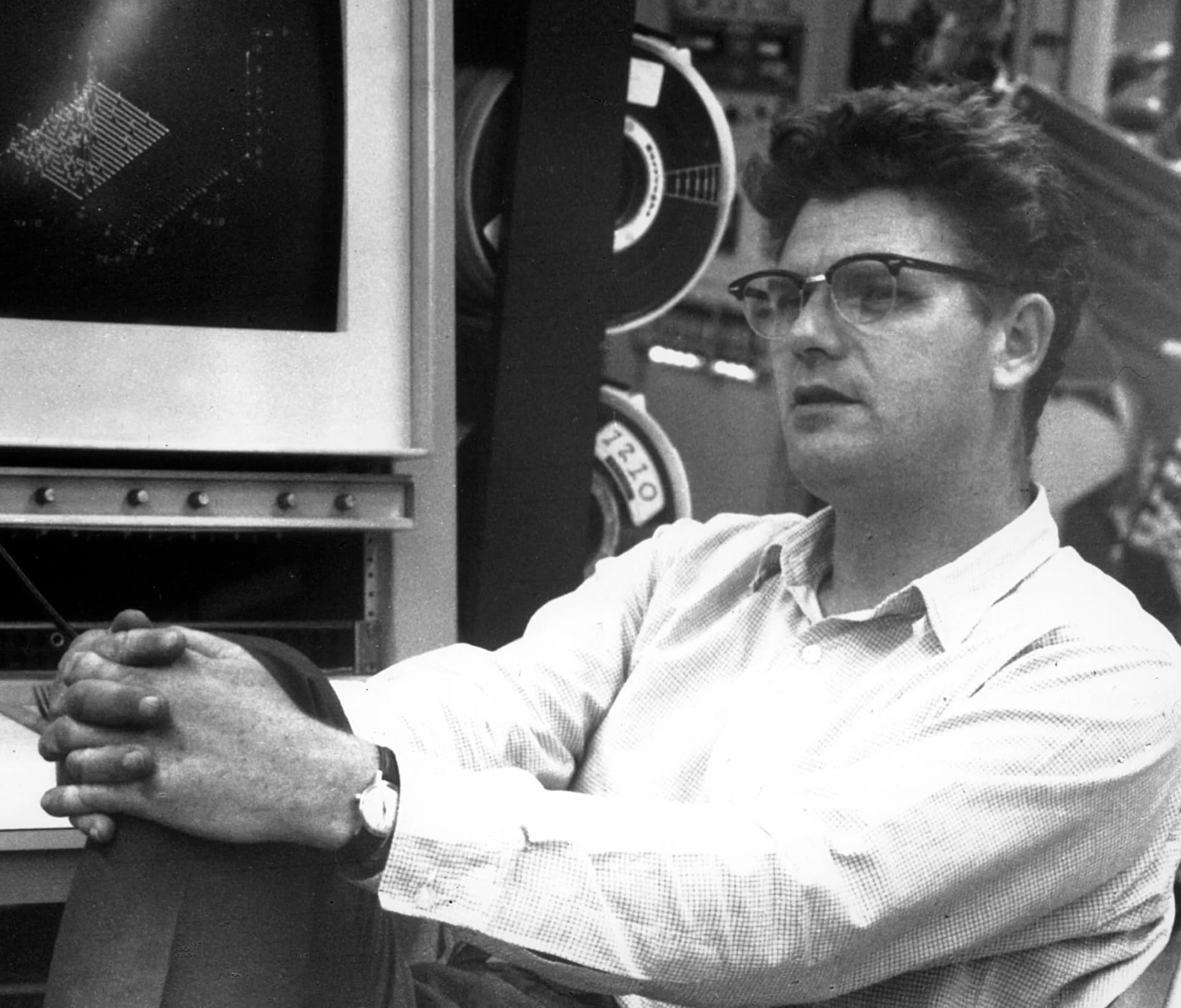
متولد
November 2, 1929
Medicine Hat, Canada
درگذشته
February 22, 2018
Stanford, United States
شناخته شده برای
Canadian physicist
Richard E. Taylor (1929–2018) was Canada best known for Canadian physicist.
Richard Edward Taylor (1929-2018) was a Canadian physicist who shared the 1990 Nobel Prize in Physics for experiments that provided crucial evidence for quarks. His deep inelastic scattering research fundamentally changed our understanding of particle physics. Taylor's work established the foundation for the Standard Model of particle physics.
فصل
فصلهای زندگی
فصل 1 · 1929· فصل 1 از 6
Early Life and Origins
Richard Edward Taylor was born on November 2, 1929, in Medicine Hat, a small city in southeastern Alberta, Canada. Growing up in the Canadian prairies during the Great Depression, Taylor developed an early fascination with how things worked. His curiosity about the natural world would eventually lead him to pursue physics, though his path to becoming one of the world's leading particle physicists was not immediately clear from his humble beginnings in Alberta.
Taylor's educational journey took him through Canadian universities where he honed his skills in experimental physics. His early academic work focused on understanding the fundamental properties of matter, setting the stage for the revolutionary discoveries that would define his career. The rigorous training he received in experimental techniques would prove invaluable in the complex particle physics experiments he would later conduct.
فصل 2· فصل 2 از 6
Career Beginnings
Taylor's career in physics began during an exciting period in the field, as scientists were just beginning to understand the complex structure of atomic nuclei. He started his research career focusing on electron scattering experiments, a technique that uses high-energy electrons as probes to investigate the internal structure of atomic particles. This experimental approach would become his specialty and the foundation for his most significant contributions to science.
His early work involved developing sophisticated experimental apparatus and techniques for studying particle interactions. Taylor showed particular skill in designing and conducting precision experiments that could reveal subtle details about particle structure. These early experiences prepared him for the ambitious research program he would later lead at Stanford University.
فصل 3· فصل 3 از 6
Major Achievements and Career Highlights
Taylor's most significant achievement came through his collaboration with Jerome Friedman and Henry Kendall on deep inelastic scattering experiments. These experiments involved firing high-energy electrons at protons and neutrons to study their internal structure. The results were revolutionary, providing the first direct evidence that protons and neutrons contained smaller constituents - what we now know as quarks.
The 1990 Nobel Prize in Physics recognized Taylor, Friedman, and Kendall 'for their pioneering investigations concerning deep inelastic scattering of electrons on protons and bound neutrons, which have been of essential importance for the development of the quark model in particle physics.' This work fundamentally changed how physicists understand the structure of matter. Their experiments confirmed theoretical predictions about quarks and established the foundation for our modern understanding of particle physics.
Taylor's experimental work was conducted primarily at the Stanford Linear Accelerator Center (SLAC), where he had access to some of the world's most powerful particle accelerators. The precision and ingenuity of his experimental designs allowed him to probe deeper into atomic structure than anyone had before. His results provided crucial support for the theoretical framework known as the Standard Model of particle physics.
فصل 4· فصل 4 از 6
Academic Career at Stanford
Taylor spent much of his career as a professor at Stanford University, where he combined cutting-edge research with teaching the next generation of physicists. His role at Stanford allowed him to work closely with graduate students and postdoctoral researchers, many of whom went on to make their own significant contributions to particle physics. He was known for his meticulous approach to experimental design and his ability to extract meaningful results from complex data.
At Stanford, Taylor continued his research into particle physics while also taking on administrative responsibilities. He helped shape the direction of physics research at one of America's leading universities. His presence at Stanford during its golden age of particle physics research helped establish the institution as a world center for this field of study.
فصل 5· فصل 5 از 6
Scientific Legacy and Impact
Taylor's experimental work provided crucial evidence for the quark model, which describes protons, neutrons, and other particles as being composed of smaller fundamental particles called quarks. Before his experiments, quarks were purely theoretical constructs. His deep inelastic scattering experiments gave physicists the first direct evidence that these theoretical particles actually existed inside protons and neutrons.
The impact of Taylor's work extends far beyond his Nobel Prize. His experimental techniques and results helped establish the Standard Model of particle physics, which remains our best description of the fundamental particles and forces in nature. Modern particle physics research, including work at facilities like the Large Hadron Collider, builds directly on the foundation that Taylor and his colleagues established through their careful experimental work.
فصل 6· فصل 6 از 6
Later Years and Passing
Taylor continued his research and teaching well into his later years, remaining active in the particle physics community even after his formal retirement. He witnessed the continued development of the field he had helped establish, seeing new generations of experiments confirm and extend the quark model that his work had helped prove. His later years were spent at Stanford, where he had made his most significant contributions to science.
Richard Taylor passed away on February 22, 2018, at Stanford, California, at the age of 88. His death marked the end of an era in particle physics, as he was one of the last surviving members of the generation that established our modern understanding of the fundamental structure of matter. The physics community mourned the loss of not only a brilliant experimentalist but also a dedicated teacher and mentor who had influenced countless students and colleagues throughout his long career.
یک زندگی در لحظات
لحظاتی که یک زندگی را شکل دادند

پرسش و پاسخ
پرسشهای متداول
Richard E. Taylor چه زمانی درگذشت؟
Richard E. Taylor در تاریخ ۳ اسفند ۱۳۹۶ در Stanford, United States درگذشت در سن 88 سالگی.
Richard E. Taylor کجا متولد شد؟
Richard E. Taylor در Medicine Hat, Canada در تاریخ ۱۱ آبان ۱۳۰۸ متولد شد.
Richard E. Taylor بیشتر برای چه چیزی شناخته میشود؟
Richard E. Taylor بیشتر به خاطر Canadian physicist شناخته میشود.
Richard E. Taylor هنگام مرگ چند سال داشت؟
Richard E. Taylor هنگام مرگ 88 ساله بود.
ملیت Richard E. Taylor چه بود؟
Richard E. Taylor اهل Canada بود.
خط زمانی
نگاهی به زندگی
گالری عکس
یک زندگی در تصاویر
روی هر پولاروید کلیک کنید تا بزرگ شود · 21 عکس
کد QR
اشتراک این زندگینامه
چاپ و اشتراکگذاری
برای بازدید از این صفحه زندگینامه اسکن کنید. برای رویدادها، نمایشگاهها یا مواد آموزشی چاپ کنید.