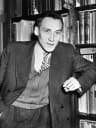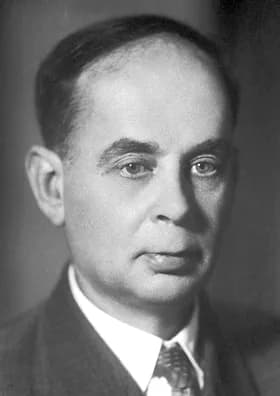
متولد
October 23, 1908
Saint Petersburg, Russia
درگذشته
June 22, 1990
Moscow, Duchy of Moscow
شناخته شده برای
Soviet physicist
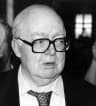
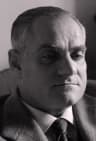
Ilya Mikhailovich Frank (1908–1990) was Russia best known for Soviet physicist.
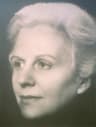
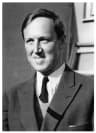
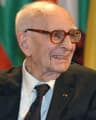
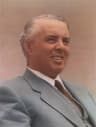
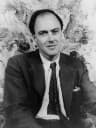
Ilya Mikhailovich Frank (October 23, 1908 – June 22, 1990) was a Soviet physicist from Saint Petersburg, Russia. He received the 1958 Nobel Prize in Physics for his crucial work in explaining the phenomenon of Cherenkov radiation. His contributions significantly advanced our understanding of light emission by charged particles.
فصل
فصلهای زندگی
فصل 1 · 1908· فصل 1 از 6
Early Life and Origins
Ilya Mikhailovich Frank began his journey in Saint Petersburg, Russia, where he was born on October 23, 1908. While specific details of his early family life and upbringing are not widely documented, his early years in this historic Russian city laid the foundation for his future scientific pursuits. Saint Petersburg, a hub of intellectual and scientific activity, likely provided an inspiring environment for a young mind destined for groundbreaking discoveries in physics.
فصل 2· فصل 2 از 6
Career Beginnings
Frank's professional life was firmly rooted in the field of physics, where he established himself as a keen researcher and theoretician. Although the exact specifics of his initial professional steps are not detailed in historical records, his work quickly progressed towards fundamental problems in experimental and theoretical physics. His early career set the stage for the crucial collaborations and investigations that would later define his international standing.
فصل 3 · 1958· فصل 3 از 6
Major Achievements and Career Highlights
The pinnacle of Ilya Mikhailovich Frank's scientific career was undoubtedly the 1958 Nobel Prize in Physics, which he shared with his Soviet colleagues, Pavel Alekseyevich Cherenkov and Igor Y. Tamm. This prestigious award recognized their collective efforts in explaining the phenomenon of Cherenkov radiation, a crucial contribution to nuclear and particle physics. This explanation elucidated how charged particles moving through a dielectric medium at speeds exceeding the speed of light in that medium emit electromagnetic radiation, a concept that had significant implications for experimental physics and detector technology.
Beyond the Nobel Prize, Frank's exceptional contributions to Soviet science were recognized with several high honors within his own country. He was awarded the Stalin Prize twice, first in 1946 and again in 1953, reflecting his consistent output of high-impact research. Later in his career, he received the USSR State Prize in 1971, further solidifying his status as one of the Soviet Union's most esteemed physicists. These accolades highlight a career marked by continuous innovation and significant advancements in scientific understanding.
فصل 4· فصل 4 از 6
Notable Works or Contributions
Ilya Mikhailovich Frank's most significant scientific legacy centers on his theoretical explanation of Cherenkov radiation. Working alongside Pavel Cherenkov, who observed the blue glow produced by relativistic charged particles in water, and Igor Tamm, Frank provided the theoretical framework that accurately described this peculiar luminescence. Their collaborative efforts detailed the conditions under which such radiation occurs and characterized its properties, a phenomenon now universally known as Cherenkov radiation.
This theoretical explanation was not merely an academic exercise; it provided a powerful tool for experimental physicists. Cherenkov radiation detectors became essential instruments for identifying and measuring the speed of high-energy charged particles, finding applications in nuclear physics, particle physics, and astrophysics. Frank’s insights thus transformed a curious observation into a fundamental principle with wide-ranging practical and experimental utility, shaping much of modern physics research.
فصل 5 · 1990· فصل 5 از 6
Later Years
Ilya Mikhailovich Frank continued his work as a physicist and university teacher throughout his life, contributing to the academic and scientific communities in the Soviet Union. He passed away on June 22, 1990, in Moscow, Duchy of Moscow. His passing marked the end of a long and distinguished career that spanned decades of significant scientific progress and political change.
فصل 6· فصل 6 از 6
Legacy and Impact
The legacy of Ilya Mikhailovich Frank is enduring, primarily through his fundamental contributions to the understanding of Cherenkov radiation. His work transformed what was once an unexplained observation into a fully understood physical phenomenon, providing physicists with a critical tool for research. The principles he helped establish continue to be taught in physics curricula worldwide and are applied in various fields of scientific inquiry today.
Frank's recognition with the Nobel Prize in Physics, alongside multiple national awards, underscores the lasting impact of his scientific achievements. He remains an inspirational figure within the physics community, particularly for his role in advancing Soviet science and for his dedication to both research and education. His contributions continue to resonate, influencing new generations of physicists and deepening our collective understanding of the universe.
یک زندگی در لحظات
لحظاتی که یک زندگی را شکل دادند


پرسش و پاسخ
پرسشهای متداول
Ilya Mikhailovich Frank چه زمانی درگذشت؟
Ilya Mikhailovich Frank در تاریخ ۱ تیر ۱۳۶۹ در Moscow, Duchy of Moscow درگذشت در سن 81 سالگی.
Ilya Mikhailovich Frank کجا متولد شد؟
Ilya Mikhailovich Frank در Saint Petersburg, Russia در تاریخ ۱ آبان ۱۲۸۷ متولد شد.
Ilya Mikhailovich Frank بیشتر برای چه چیزی شناخته میشود؟
Ilya Mikhailovich Frank بیشتر به خاطر Soviet physicist شناخته میشود.
Ilya Mikhailovich Frank هنگام مرگ چند سال داشت؟
Ilya Mikhailovich Frank هنگام مرگ 81 ساله بود.
ملیت Ilya Mikhailovich Frank چه بود؟
Ilya Mikhailovich Frank اهل Russia بود.
خط زمانی
نگاهی به زندگی
گالری عکس
یک زندگی در تصاویر
روی هر پولاروید کلیک کنید تا بزرگ شود · 18 عکس
کد QR
اشتراک این زندگینامه
چاپ و اشتراکگذاری
برای بازدید از این صفحه زندگینامه اسکن کنید. برای رویدادها، نمایشگاهها یا مواد آموزشی چاپ کنید.