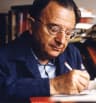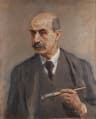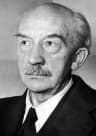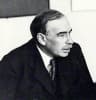
متولد
June 5, 1900
Budapest, Hungary
درگذشته
February 8, 1979
London, Roman Empire
شناخته شده برای
Nobel Prize-winning physicist and inventor of holography
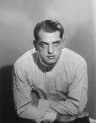
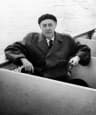
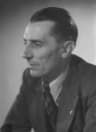
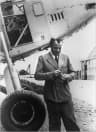
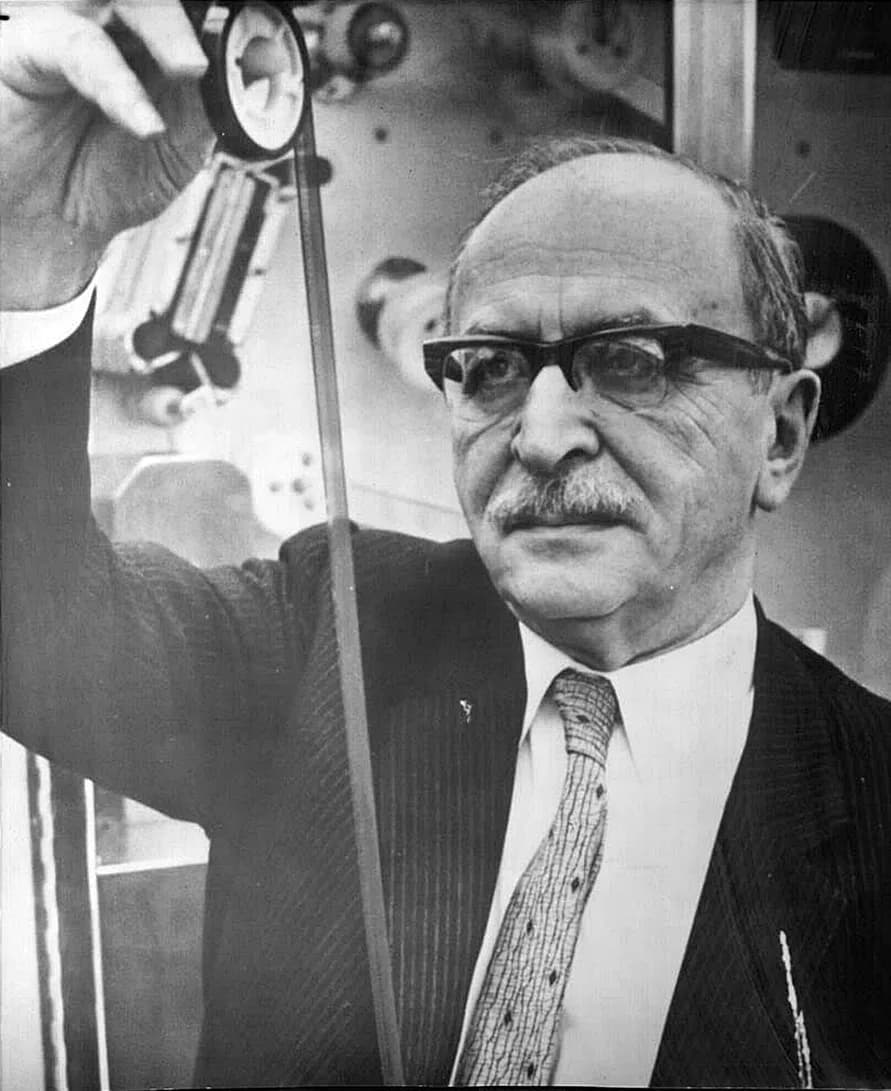
Dennis Gabor (1900–1979) was Hungary best known for Nobel Prize-winning physicist and inventor of holography.
Dennis Gabor (June 5, 1900 – February 8, 1979) was a Hungarian-British physicist and inventor. He received the Nobel Prize in Physics in 1971 for his revolutionary invention of holography. His work fundamentally transformed optical sciences and various technological applications.
فصل
فصلهای زندگی
فصل 1 · 1900· فصل 1 از 6
Early Life and Origins
Born on June 5, 1900, in Budapest, Hungary, Dennis Gabor began his journey in a vibrant central European city. His early life was rooted in Hungarian culture, where he developed an initial curiosity for science and engineering. He would later, in 1946, obtain British citizenship, choosing England as his home for the majority of his professional and personal life.
فصل 2· فصل 2 از 6
Career Beginnings
Gabor embarked on his career as a physicist, a path that combined rigorous scientific theory with practical invention. His early work established him as a diligent researcher and an innovative thinker, qualities that would define his professional trajectory. He also engaged in university teaching, sharing his expertise and fostering future generations of scientists.
فصل 3 · 1971· فصل 3 از 6
Major Achievements and Career Highlights
The pinnacle of Gabor's career arrived in 1971 when he was awarded the Nobel Prize in Physics. This prestigious honor recognized his invention and development of the holographic method, a truly revolutionary contribution to science. This achievement underscored decades of persistent research and inventive problem-solving. His decision to become a British citizen in 1946 marked a significant personal and professional transition, cementing his long-term association with England.
فصل 4· فصل 4 از 6
Notable Works or Contributions
Gabor's most celebrated contribution was undoubtedly the invention of holography, a technique that allows for the recording and reconstruction of a three-dimensional image. His work in this field opened entirely new avenues in optical physics and engineering. Beyond his direct inventions, Gabor was also a prolific academic publisher, boasting an h-index of 32 across 129 papers.
Among his significant published works are "Beyond the age of waste." from 1978, which garnered 34 citations, and "Beyond the Age of Waste: A Report to the Club of Rome," also published in 1978 with 14 citations. Other notable titles include "LECTURES On COMMUNICATION THEORY," published in 2015, and "Wiener and the art of communication" from 1996. He also authored "The Electron Microscope, its Development, Present Performance and Future Possibilities," which was published in 2015.
فصل 5 · 1979· فصل 5 از 6
Later Years
Dennis Gabor continued to contribute to his field throughout his life, evolving as a physicist, inventor, and holographer. He passed away on February 8, 1979, in London, Roman Empire, concluding a life rich with scientific exploration and innovation. His final years were spent in the country he had adopted as his own, leaving behind a substantial scientific heritage.
فصل 6· فصل 6 از 6
Legacy and Impact
The legacy of Dennis Gabor is indelibly linked to the holographic method, which transformed numerous scientific and technological fields. His invention found applications in diverse areas, from art and security to data storage and medical imaging. As a Nobel Prize-winning physicist, his influence extended beyond his specific inventions, inspiring generations of scientists and engineers to pursue innovative solutions. His pioneering spirit ensured that his name remains synonymous with vision and ingenuity in the annals of science.
یک زندگی در لحظات
لحظاتی که یک زندگی را شکل دادند

پرسش و پاسخ
پرسشهای متداول
Dennis Gabor چه زمانی درگذشت؟
Dennis Gabor در تاریخ ۱۹ بهمن ۱۳۵۷ در London, Roman Empire درگذشت در سن 78 سالگی.
Dennis Gabor کجا متولد شد؟
Dennis Gabor در Budapest, Hungary در تاریخ ۱۵ خرداد ۱۲۷۹ متولد شد.
Dennis Gabor بیشتر برای چه چیزی شناخته میشود؟
Dennis Gabor بیشتر به خاطر Nobel Prize-winning physicist and inventor of holography شناخته میشود.
Dennis Gabor هنگام مرگ چند سال داشت؟
Dennis Gabor هنگام مرگ 78 ساله بود.
ملیت Dennis Gabor چه بود؟
Dennis Gabor اهل Hungary بود.
خط زمانی
نگاهی به زندگی
گالری عکس
یک زندگی در تصاویر
روی هر پولاروید کلیک کنید تا بزرگ شود · 41 عکس
کد QR
اشتراک این زندگینامه
چاپ و اشتراکگذاری
برای بازدید از این صفحه زندگینامه اسکن کنید. برای رویدادها، نمایشگاهها یا مواد آموزشی چاپ کنید.