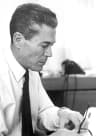
Jaioa
October 14, 1914
Washington, D.C., United States
Hila
May 31, 2006
New York City, United States
Ezaugarriak
American scientist
Raymond Davis Jr. (1914–2006) was United States best known for American scientist.
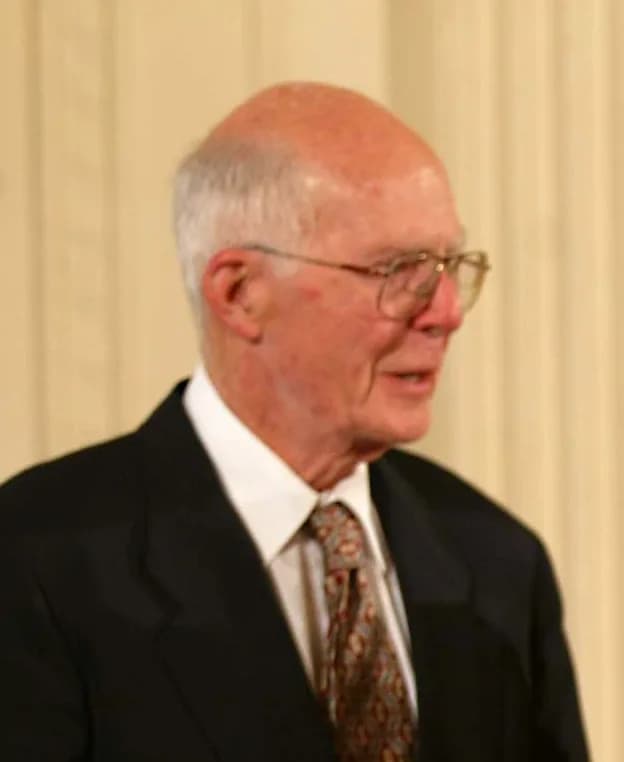
Raymond Davis Jr. (October 14, 1914 – May 31, 2006) was an American physicist and chemist. He is renowned for leading the Homestake experiment, the first to detect solar neutrinos. This achievement earned him a share of the 2002 Nobel Prize in Physics, verifying solar models.
0 kapitulua
Bizitzako kapituluak
1 kapitulua · 1914· 1. kapitulua 7tik
Introduction
Raymond Davis Jr., an eminent American scientist, physicist, and chemist, was born on October 14, 1914, and passed away on May 31, 2006. His extraordinary career was defined by his relentless pursuit of understanding the universe's most elusive particles. Davis Jr. earned international recognition for his groundbreaking work in detecting solar neutrinos, a monumental achievement that reshaped astrophysics.
His contributions culminated in sharing the 2002 Nobel Prize in Physics, celebrating a lifetime of dedication to scientific inquiry. He is remembered as a quiet but determined researcher whose experimental prowess unlocked new insights into the fundamental processes powering our Sun.
2 kapitulua· 2. kapitulua 7tik
Early Life and Origins
Raymond Davis Jr. began his life in Washington, D.C., United States, where he was born. This city served as his initial home before he ventured into a distinguished academic and research career. While details of his early family life and specific upbringing are not widely known, his foundational years certainly prepared him for a path in scientific exploration.
His early education would have laid the groundwork for his eventual pursuits in physics and chemistry. The precise institutions and early influences that guided his intellectual development are not extensively documented in public records, yet his later achievements speak to a profound curiosity and intellectual rigor developed from a young age.
3 kapitulua· 3. kapitulua 7tik
Career Beginnings
Davis Jr. pursued a career as a physicist, a university teacher, and a chemist, reflecting a broad scientific aptitude. These early professional roles allowed him to hone his experimental skills and deepen his understanding across various scientific disciplines. His work as a university teacher likely shaped his ability to conceptualize complex problems and devise innovative solutions.
His initial professional endeavors, though not individually detailed, provided the essential experience needed for his later, more ambitious projects. This foundation in both theoretical and practical science proved crucial for the challenges he would face. It prepared him for leadership in experiments that pushed the boundaries of what was scientifically possible.
4 kapitulua· 4. kapitulua 7tik
Major Achievements and Career Highlights
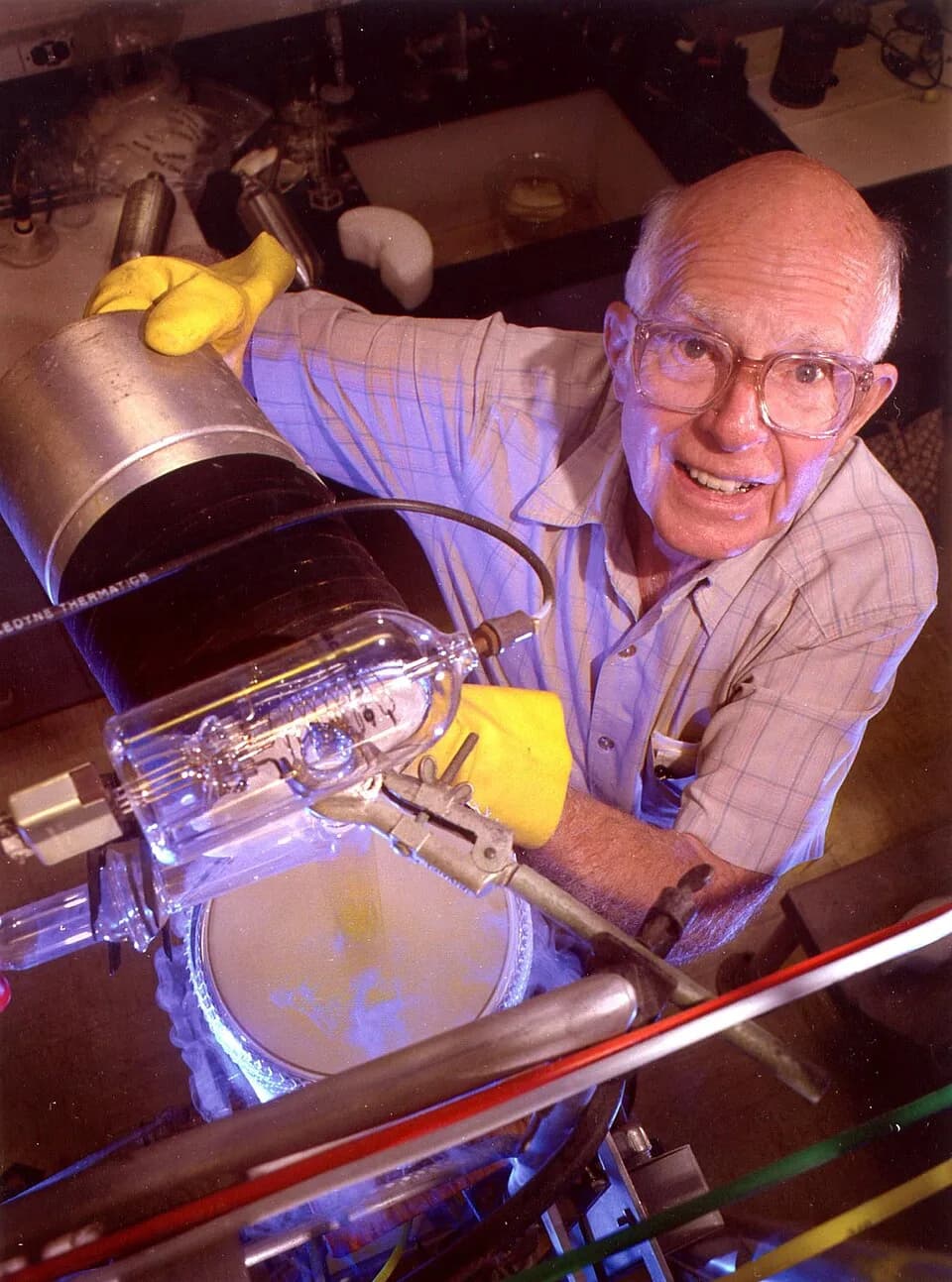
Raymond Davis Jr. is primarily known as the leader of the Homestake experiment, an ambitious scientific undertaking that spanned from the 1960s to the 1980s. This experiment marked the first instance of successfully detecting neutrinos emitted from the Sun. His persistent efforts brought a new era of understanding to solar physics.
His dedication to this complex experiment helped solve the long-standing "solar neutrino problem," providing empirical evidence for nuclear fusion processes within the Sun. This profound accomplishment brought him worldwide acclaim. It was a testament to his inventive experimental design and his unwavering commitment to scientific truth.
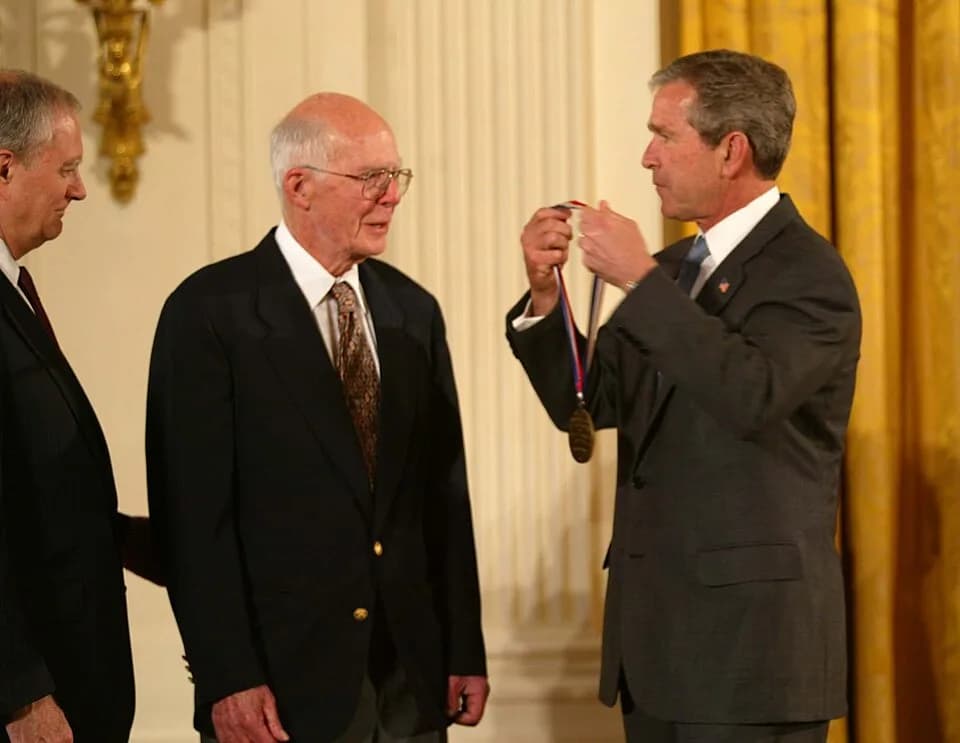
In recognition of these pioneering contributions to astrophysics, particularly for the detection of cosmic neutrinos, Raymond Davis Jr. shared the 2002 Nobel Prize in Physics. This prestigious award acknowledged the immense significance of his work. It highlighted how his experimental results verified theoretical predictions about the Sun's energy source.
5 kapitulua· 5. kapitulua 7tik
Notable Works or Contributions
The Homestake experiment stands as Raymond Davis Jr.'s most significant and notable contribution to science. Located deep underground in a former gold mine in South Dakota, the experiment utilized a massive tank of perchloroethylene to capture fleeting solar neutrinos. This ingenious setup allowed for the detection of these weakly interacting particles.
His meticulous design and careful execution of the Homestake experiment allowed scientists to observe solar neutrinos directly for the first time. This vital work provided crucial empirical data that supported the standard model of solar operation. It confirmed that the Sun generates energy through nuclear fusion, a concept that was previously theoretical.
6 kapitulua · 2002· 6. kapitulua 7tik
Later Years
In his later years, Raymond Davis Jr. witnessed the full recognition of his life's work. The culmination of his efforts arrived in 2002 when he was awarded the Nobel Prize in Physics. This honor brought his decades of dedicated research into the global spotlight.
Raymond Davis Jr. passed away on May 31, 2006, in New York City, United States. He lived long enough to see his pioneering experiment celebrated at the highest levels of the scientific community. His final years were marked by the enduring legacy of his profound contributions to physics.
7 kapitulua· 7. kapitulua 7tik
Legacy and Impact
Raymond Davis Jr.'s legacy is firmly rooted in his definitive detection of solar neutrinos. His work profoundly influenced astrophysics by confirming the energy generation mechanisms of the Sun. This empirical evidence solidified our understanding of stellar processes.
The Homestake experiment effectively opened the field of neutrino astronomy, allowing scientists to use neutrinos as a new tool to study celestial objects. His pioneering efforts demonstrated the feasibility of detecting these elusive particles, paving the way for future neutrino observatories. His scientific vision continues to inspire new generations of physicists and astronomers.
Bizitza uneetan
Bizitza moldatu zuten uneak


Ohiko galderak
Maiz egindako galderak
Noiz hil zen Raymond Davis Jr.?
Raymond Davis Jr. 2006(e)ko maiatzaren 31(a) hil zen New York City, United States-n, 91 urte zituela.
Non jaio zen Raymond Davis Jr.?
Raymond Davis Jr. Washington, D.C., United States-n jaio zen 1914(e)ko urriaren 14(a).
Zertarako da ezagunena Raymond Davis Jr.?
Raymond Davis Jr. ezagunena da American scientist-rengatik.
Zenbat urte zituen Raymond Davis Jr.-k hil zenean?
Raymond Davis Jr.-k 91 urte zituen hil zenean.
Zer nazionalitatekoa zen Raymond Davis Jr.?
Raymond Davis Jr. United States-koa zen.
Denbora-lerroa
Bizitza begirada batean
- 1914
Introduction
- 2002
Later Years
Argazki galeria
Bizitza iruditan
Egin klik edozein polaroidetan handitzeko · 16 argazki
QR kodea
Partekatu Biografia Hau
Inprimatu eta partekatu
Eskaneatu biografia orri hau bisitatzeko. Inprimatu ekitaldi, erakusketa edo hezkuntza materialetarako.